Google to send AI chips into orbit as Project Suncatcher takes first step towards space data centres

6 min read
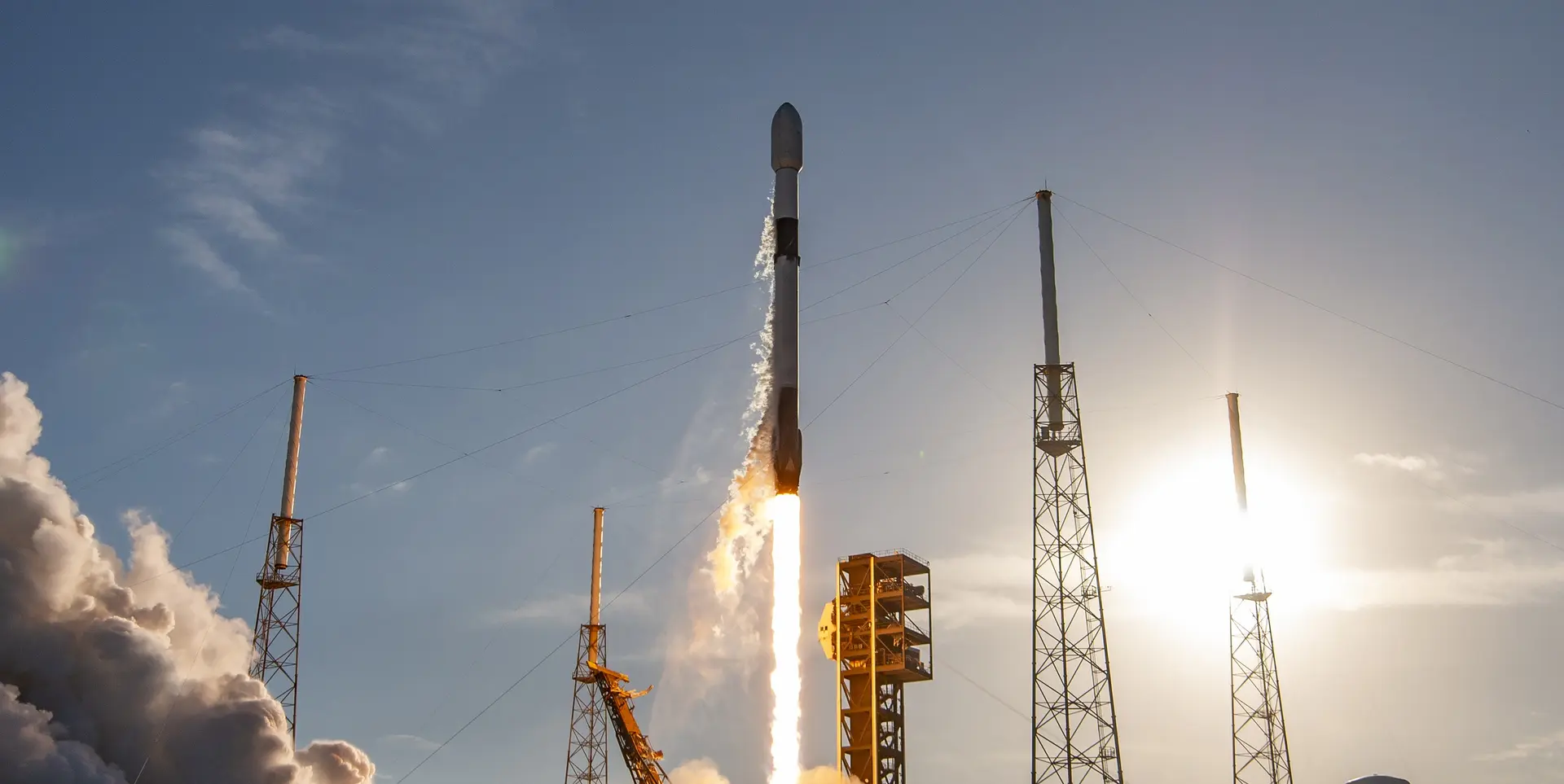
Google will send its artificial intelligence chips into orbit for the first time next week, beginning a real-world test of an ambitious idea that could eventually move some of the enormous computing infrastructure needed for AI away from Earth.
The prototype satellite will fly aboard SpaceX’s Transporter-18 rideshare mission and carry Google Tensor Processing Units, or TPUs, the specialised processors the company uses for demanding AI workloads.
For all the talk about putting data centres in space, Google says the first mission has a much more basic purpose: to see whether the hardware can survive the journey and keep working once it gets there.
“Can our TPUs survive and operate in space? Well, we’re going to find out,” Google and Alphabet chief executive Sundar Pichai wrote on X as he announced the mission. “Project Suncatcher is hitching a ride aboard SpaceX’s Transporter-18 mission, testing a prototype satellite built in partnership with Planet,” he added, before borrowing from one of spaceflight’s most famous lines: “One small step for TPUs….”
The flight marks the first orbital test for Project Suncatcher, Google’s long-term research programme examining whether large-scale AI computing could eventually be moved into space. The project was announced in November 2025, but until now much of the work has taken place in laboratories and test facilities on Earth.
Google says the attraction is energy. Satellites in low Earth orbit can have access to near-continuous sunlight and potentially generate up to eight times as much solar power as comparable systems on Earth. The longer-term concept is to connect large numbers of solar-powered satellites carrying AI processors, creating computing clusters in orbit.
That remains a distant prospect. Next week’s experiment starts with the considerably less glamorous problem of keeping a computer chip alive.
Getting Google’s TPUs into orbit is itself part of the experiment
The roughly 10-minute ride to low Earth orbit subjects a spacecraft to severe vibration and sustained acceleration of as much as 10 times Earth’s gravity. Individual components such as the processors can experience forces of between 50g and 100g, according to Google.
Engineers have already tried to reproduce that punishment on Earth. They shook the satellite along all three axes to mimic the frequencies it will encounter during launch.
“Tests like this rarely go as planned, so we were pleasantly surprised that the hardware held up to the force,” Google said.
Surviving launch, however, is only the first hurdle
Once in orbit, the chips leave behind much of the protection provided by Earth’s atmosphere. Solar activity and cosmic rays can interfere with electronics, sometimes changing individual bits of stored information in what engineers call a “bit flip”.
Google subjected its Trillium TPUs to a proton beam at the Crocker Nuclear Laboratory at the University of California, Davis, while the processors were running AI workloads.
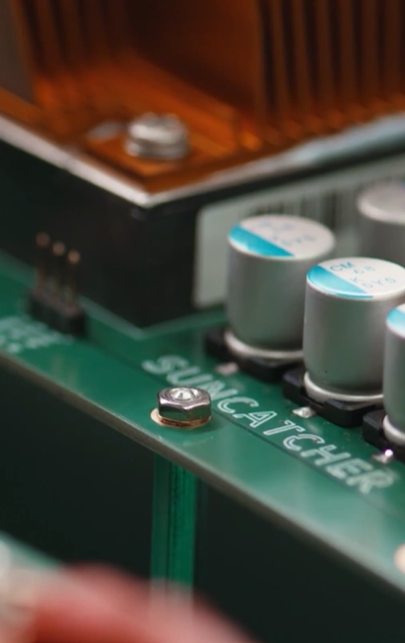
The company said its initial testing showed the processors could withstand a total ionising radiation dose greater than what they would be expected to receive during a five-year space mission.
There is, however, only so much that a laboratory can reproduce. “Some things can only be tested in space,” Google said. “Putting our first TPUs in orbit next week will help us get data and learnings to inform future launches.”
That distinction is important. Project Suncatcher is not launching an operational data centre next week. Google is sending hardware into orbit to discover what fails before it attempts anything much larger.
How do you cool a computer when there is no air?
Keeping the chips running presents another problem that terrestrial data centres do not face in quite the same way.
AI processors generate considerable heat. On Earth, data centres use elaborate cooling systems to prevent thousands of processors from overheating. In the vacuum of space, there is no surrounding air to carry that heat away.
“In a vacuum, you can only diffuse heat via radiators, which requires a totally different approach to cooling electronics,” Google said.
Project Suncatcher engineers are experimenting with a combination of heat pipes and radiators. The system has already been operated inside a thermal vacuum chamber that reproduces some of the temperature and vacuum conditions encountered in space.
The orbital mission will show whether it behaves as expected outside the laboratory. “We’ll see how our new TPU cooling system works in space and refine our designs as we learn more,” the company said.
It is one of several engineering problems that illustrate the distance between putting a few processors aboard a satellite and building anything resembling the giant AI data centres operating on Earth.
Why put AI computers in space at all?
The attraction becomes clearer when the experiment is viewed against the rapid growth of AI on Earth.
Training and operating increasingly capable AI models requires enormous amounts of computing power, which in turn requires electricity and cooling infrastructure. Technology companies are investing heavily in new data centres and the power generation needed to support them.
Google itself expects capital expenditure of about $190 billion in 2026, with AI infrastructure forming a major part of its investment.
Space offers an intriguing alternative because sunlight is abundant and, depending on the orbit, available for much longer periods than at a solar installation on Earth.
Google’s vision is therefore not to launch a conventional building-sized data centre into orbit. Instead, future Project Suncatcher spacecraft could each carry dozens of TPUs and operate together in clusters. Multiple clusters might eventually be linked to handle larger AI workloads. That creates yet another challenge: the computers have to talk to one another extremely quickly.
The next challenge is hitting a moving coin from miles away
Google plans to use laser communications to connect future Suncatcher satellites. Laser links between spacecraft already exist, but Google’s proposed AI network would require very high bandwidth between satellites flying relatively close together. Each spacecraft would also need to know precisely where it is in relation to its neighbours.
Google compares the required accuracy to hitting a coin-sized target from miles away while both the target and the shooter are moving.
That part of the experiment comes next. The company plans to put two satellites into orbit in 2027 to test the high-bandwidth optical links needed to connect future computing clusters.
Project Suncatcher is also entering an increasingly crowded field
SpaceX and Starcloud are among companies exploring orbital computing infrastructure. The attraction is broadly similar: abundant solar energy in orbit could provide another route to expanding AI computing capacity as electricity demand from terrestrial data centres rises. Reuters reported that high launch costs, spacecraft manufacturing constraints and difficult engineering problems nevertheless mean commercial orbital data centres remain years away.
Elon Musk, who has repeatedly argued that large-scale computing will eventually migrate into space, responded to Google’s announcement by writing that “the amount of compute in space will obviously round up to 100 per cent of all compute.”
The amount of compute in space will obviously round up to 100% of all compute https://t.co/BJJhy1JQ1t
— Elon Musk (@elonmusk) September 24, 2026
Google is making no such prediction about when that might happen. Its engineers describe Project Suncatcher as a long-term research effort. Next week’s satellite is intended to discover problems rather than prove that an orbital data centre is ready for deployment.
“Exploring space as a viable location for scalable AI compute won’t happen all at once,” Google said.
The company said the first flight is about determining what works, finding where the system fails and using those lessons for subsequent missions.
Therefore, the grand question of whether fleets of satellites could one day become AI data centres can wait. Google first needs an answer to Pichai’s much simpler one: can its AI chips survive in space?
Next week, it begins finding out.
Sign up for our newsletter and get our latest content in your inbox.


More from

September 25, 20264 min read

September 25, 20264 min read