


Japan’s F-2 completes first fighter deployment to India alongside Tejas, Rafale and Su-30MKI

5 min read
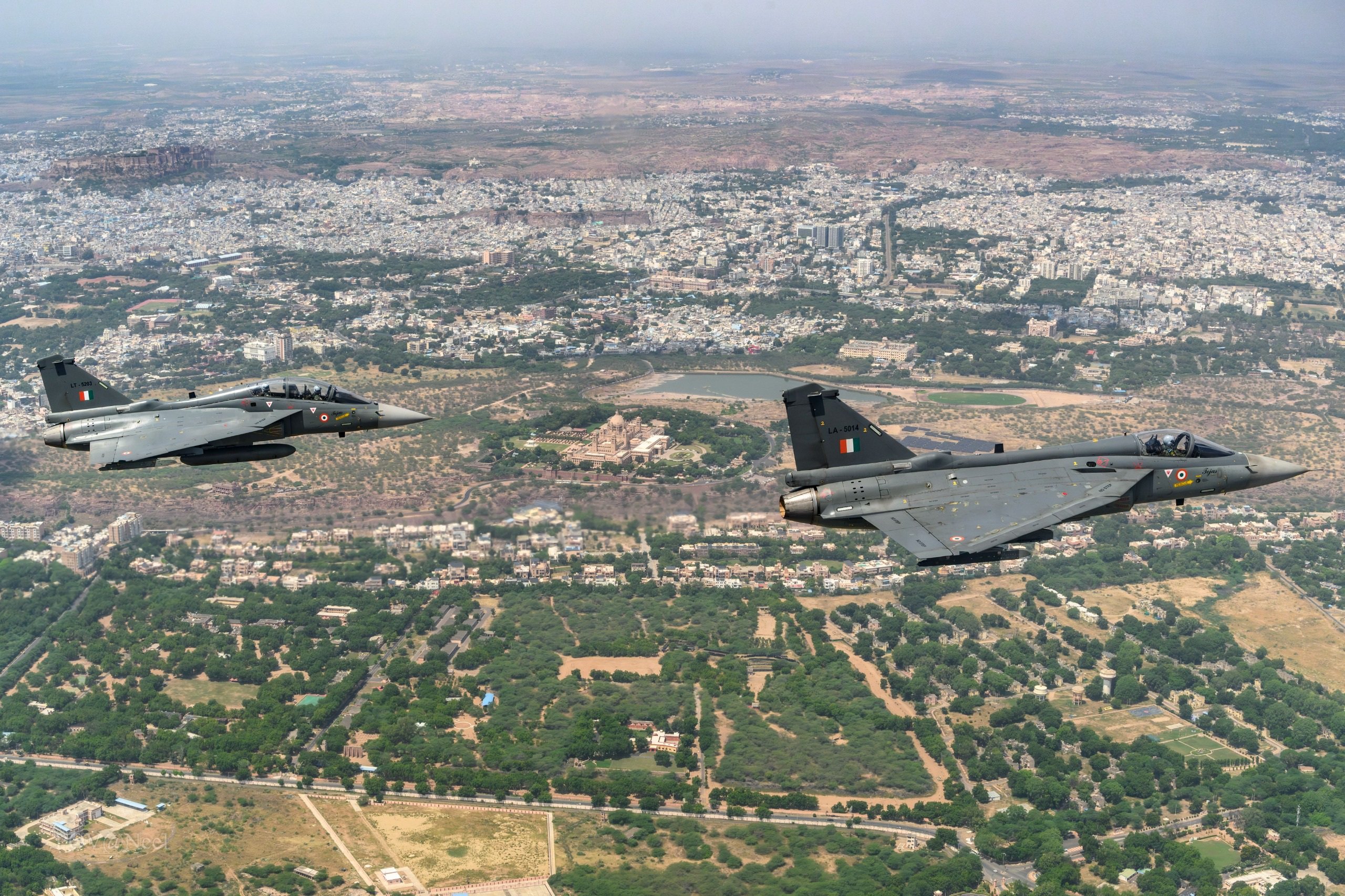
Japan’s Mitsubishi F-2 has operated from an Indian air base for the first time, flying alongside the Tejas Light Combat Aircraft (LCA), Rafale and Su-30MKI fighters during a two-week exercise that concludes at Jodhpur in western India today (22 September.)
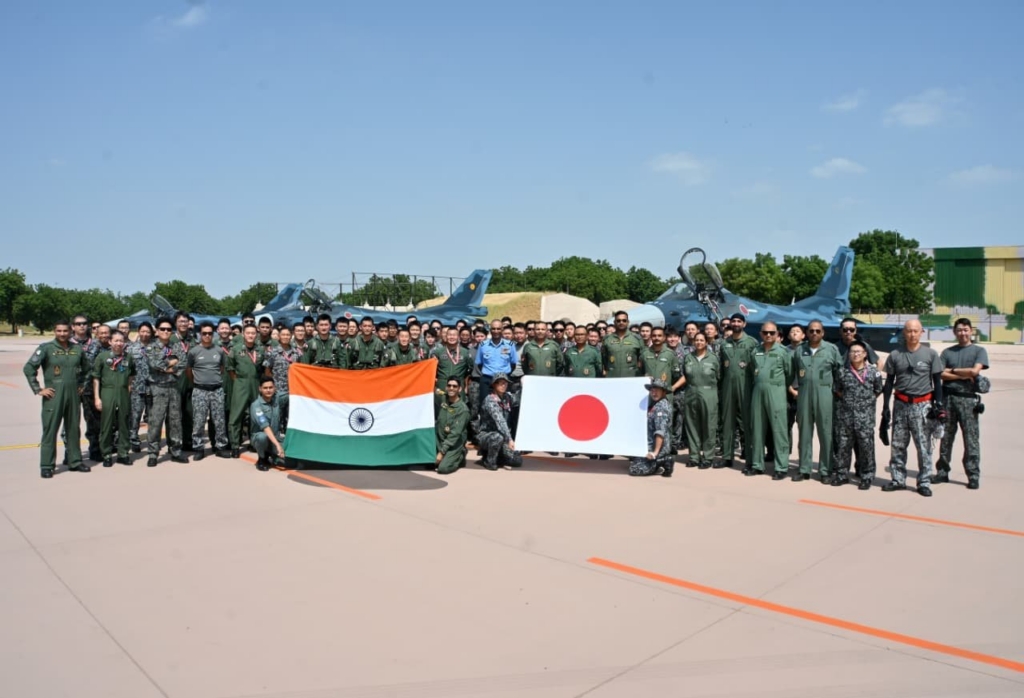
The deployment is a first for the Japan Air Self-Defense Force (JASDF). Its fighters had never previously operated from Indian soil in a bilateral exercise, making Veer Guardian 2026 a considerably different undertaking from the inaugural edition held in Japan three years ago.
Three F-2s from the JASDF’s 8th Air Wing at Tsuiki Air Base in Fukuoka were deployed for the exercise, supported by about 110 personnel. The aircraft travelled to India through Okinawa and Thailand, with US Air Force aerial refuelling support during the deployment.
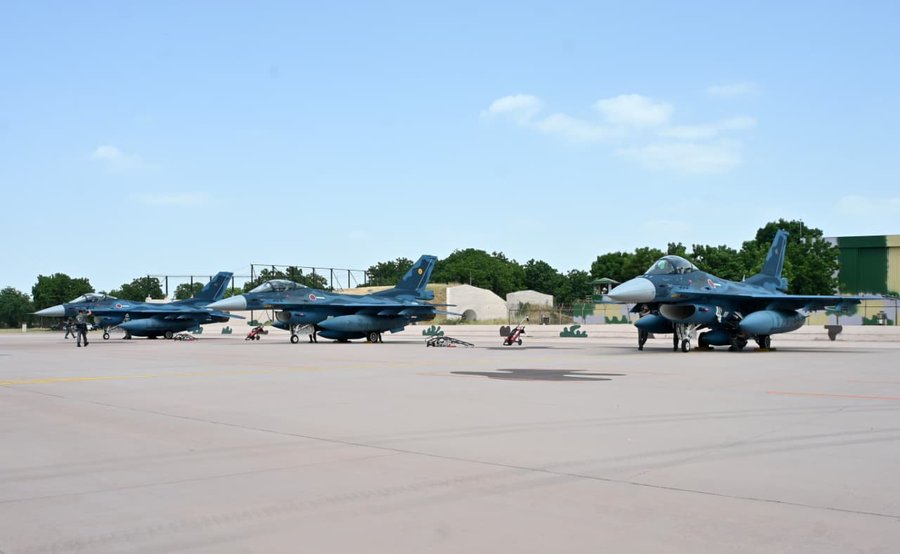
Once at Jodhpur, the Japanese aircraft joined an unusually varied Indian fighter line-up. The Indian Air Force (IAF) fielded its indigenous Tejas light fighter alongside the French-built Rafale and Russian-origin Su-30MKI, while the JASDF brought the F-2A, and the Kawasaki C-2 transport aircraft.
For aircrews, that put four fighters with very different origins, sizes and operating philosophies into the same exercise.
“The 14-day programme included advanced operational missions as well as joint mission planning. Personnel also exchanged experience on engineering and aerospace safety. The emphasis, however, was on fighter operations and improving tactical proficiency between the two air forces,” a Japanese defence official told AGN.
Japan reverses the route taken by Indian fighters in 2023
Veer Guardian is still a relatively young exercise.
The first edition was held at Hyakuri Air Base and surrounding airspace in Japan in January 2023. The JASDF fielded four F-2s and four F-15s, while India sent four Su-30MKIs, supported for the deployment by two C-17 transports and an Il-78 tanker.
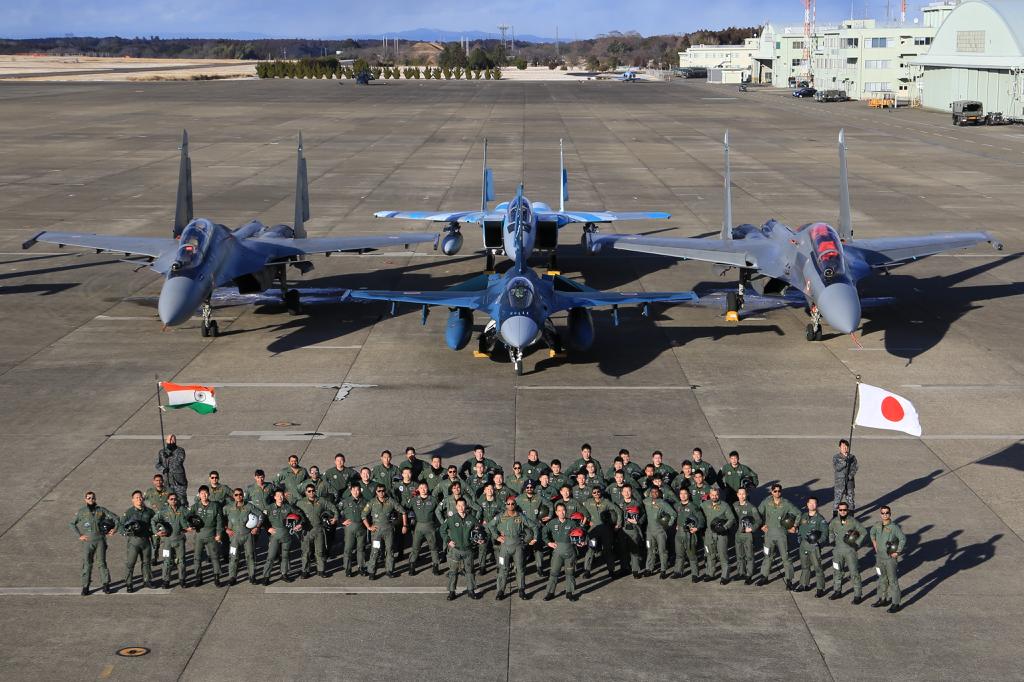
Those aircraft conducted air combat manoeuvring, interception and air-defence missions in visual and beyond-visual-range scenarios. Aircrews were also given exposure to each other’s aircraft to better understand how the two forces operated.
Veer Guardian 2026 effectively reversed that deployment.
Instead of Indian fighters travelling to Japan, the JASDF had to move its F-2s several thousand kilometres from their home base and sustain them at Jodhpur for the exercise.
That matters operationally. Moving fighters overseas involves far more than ferrying the aircraft themselves. Ground crews, maintenance equipment, spares and support personnel have to move with them, while fuel, servicing and flight operations have to be supported from an unfamiliar base.
The deployment also fits a wider change in JASDF operations. Japan sent F-15J fighters to Europe for the first time in 2025, and Japanese fighters are increasingly appearing in exercises farther from their normal operating bases.
Japan’s defence minister Shinjirō Koizumi, during his recent visit to India, described Veer Guardian as the second bilateral fighter exercise with India and confirmed that this year’s deployment marked the first visit by JASDF fighters to India.
Japan’s air chief gets a close look at the Tejas
The exercise produced another aviation first of a different kind when JASDF Chief of Staff General Takehiro Morita climbed into an Indian Tejas.
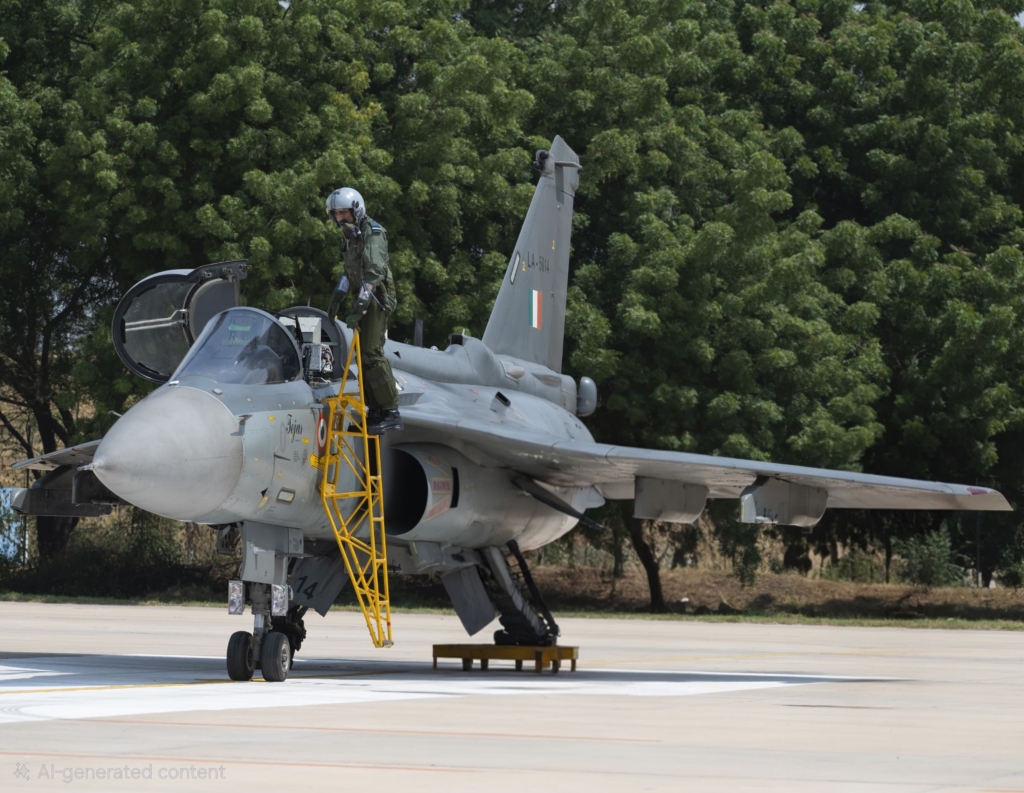
On September 20, Morita and IAF Chief Air Chief Marshal A.P. Singh took part in a Tejas formation sortie from Jodhpur.
Singh flew a single-seat fighter and led the formation. Morita flew in a twin-seat Tejas with Group Captain I. Samrat, commanding officer of the Tejas squadron, as aircraft captain. The formation passed over the airfield before carrying out a peel-off for landing.
For Morita, it was more than a ceremonial flight. It gave the head of the JASDF first-hand exposure to India’s domestically developed fighter at a time when the aircraft is becoming increasingly important to the IAF’s future force structure.
“I will remember it not only as a truly invaluable experience, but also as a powerful symbol of the trust, confidence, and partnership that have been built between our two air services over many years,” Morita said after the sortie.
Singh described Morita’s willingness to fly the aircraft as a demonstration of confidence in the Indian-built fighter.
“This exercise, especially because the Japanese fighters are operating from Indian soil for the first time, is a great milestone in our history of our relationship and our partnership,” Singh said during a joint media interaction.
He also put the operational value of the exercise more simply: “When we do exercises together, we learn from each other. We fly together. We train together. So both sides improve together.”
The F-2 brought a distinctly Japanese fighter to Jodhpur
Although its origins lie in the F-16, the Mitsubishi F-2 is far more than a standard Fighting Falcon carrying Japanese markings.
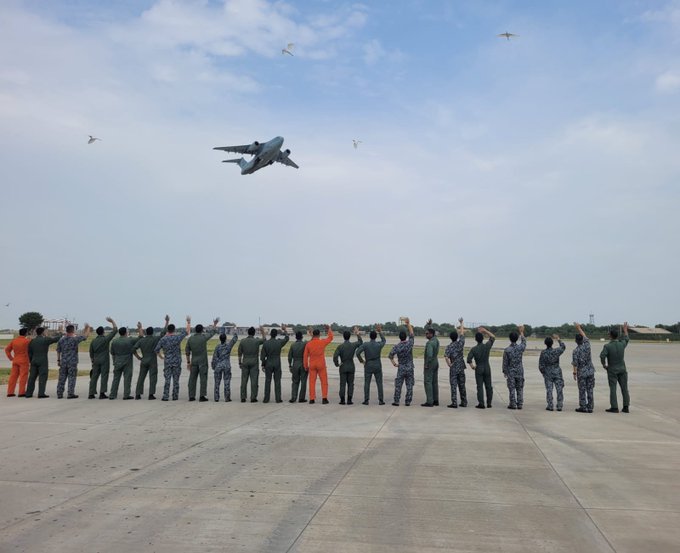
The aircraft was jointly developed by Japan and the United States, with Mitsubishi Heavy Industries as prime contractor and Lockheed Martin as the principal US subcontractor. The first prototype flew in October 1995 and the first production aircraft was delivered in 2000.
Compared with the F-16 on which it was based, the F-2 has a roughly 25% larger wing, providing greater internal fuel capacity and two additional weapons stations. Its fuselage is also around 17 inches longer, while the horizontal tails are larger.
Japan incorporated considerable domestic technology into the aircraft, including its integrated electronic warfare system and flight controls. Most notably, the F-2 became the first production fighter equipped with an active electronically scanned array radar.
The aircraft is capable of air-to-air and air-to-surface missions, although its design placed particular emphasis on the maritime strike role needed to defend Japan’s sea approaches.
That makes the mix at Jodhpur interesting in its own right. The F-2 was operating in the same exercise environment as India’s lightweight Tejas, heavyweight twin-engine Su-30MKI and Rafale multirole fighter.
Veer Guardian does not mean those aircraft were being directly tested against one another in a competitive evaluation, and neither air force has released detailed tactical results from the missions.
But for the JASDF, the exercise provided something it had not previously done in India: deploy its own combat aircraft, support them from an Indian base and fly operational training with several of the IAF’s principal fighter types.
When the Japanese contingent leaves Jodhpur after Veer Guardian ends, that may be the more significant aviation milestone than the exercise’s diplomatic symbolism.
Sign up for our newsletter and get our latest content in your inbox.


More from


September 21, 20263 min read


