


FAA’s new SMART system could predict flight delays before they happen

5 min read

For millions of air travellers, a delayed or cancelled flight can feel like an event that arrives without warning. But the US Federal Aviation Administration (FAA) is preparing to change that equation with a new software system designed to identify potential disruption before it cascades through the aviation network.
The system, known as SMART (Strategic Management of Airspace, Routes, and Trajectories), is being rolled out as part of a broader effort to modernise America’s ageing air traffic control infrastructure.
How the FAA is using technology to predict flight disruption
Reuters reports that the system uses predictive analytics to examine airline schedules, weather, airport capacity, airspace conditions and other operational constraints, allowing potential conflicts and congestion to be identified earlier.
FAA Administrator Bryan Bedford has described the technology as potentially “transformational”, arguing that better decision-making tools should allow regulators and airlines to make better operational choices.
Initially, SMART is expected to help airlines reschedule flights that have already been cancelled, particularly because of bad weather. Its capabilities could subsequently be expanded to strategic coordination of schedules and flight trajectories before aircraft even leave the ground.
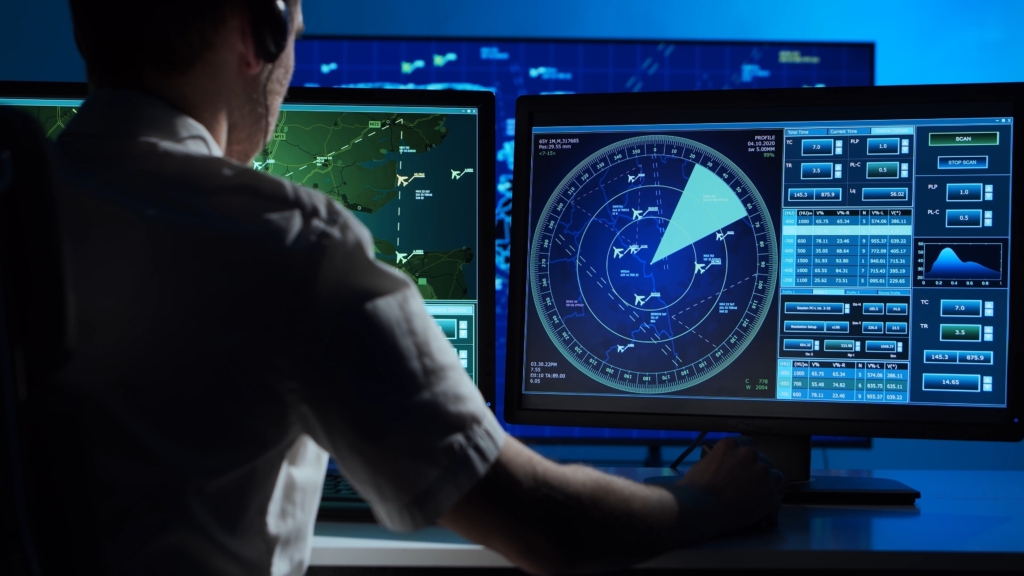
The timing is significant. The US airline industry has faced a difficult combination of rising passenger demand, severe weather, airport congestion, and shortages of air-traffic controllers.
Those pressures can turn an isolated problem into a much larger operational failure. A delayed aircraft may miss its next departure slot; its crew can then become unavailable for another flight; passengers and aircraft may be displaced; and the resulting disruption can spread across an airline’s network.
Reuters reported that aviation consultant Bob Mann believes software capable of reducing this ‘domino effect’ already exists but has not been widely used by airlines.
The FAA’s initiative therefore represents an attempt to move from reacting to disruption towards anticipating it.
JetBlue’s disrupted summer season – a case in point
The challenge is particularly visible at JetBlue Airways, which has suffered a sharp deterioration in operational performance during a summer marked by storms and air traffic control constraints.
According to Cirium data cited by Reuters, JetBlue recorded an 8.3% cancellation rate in July. That compared with cancellation rates below 3% at several major competitors, including Frontier, Delta Air Lines and United Airlines.
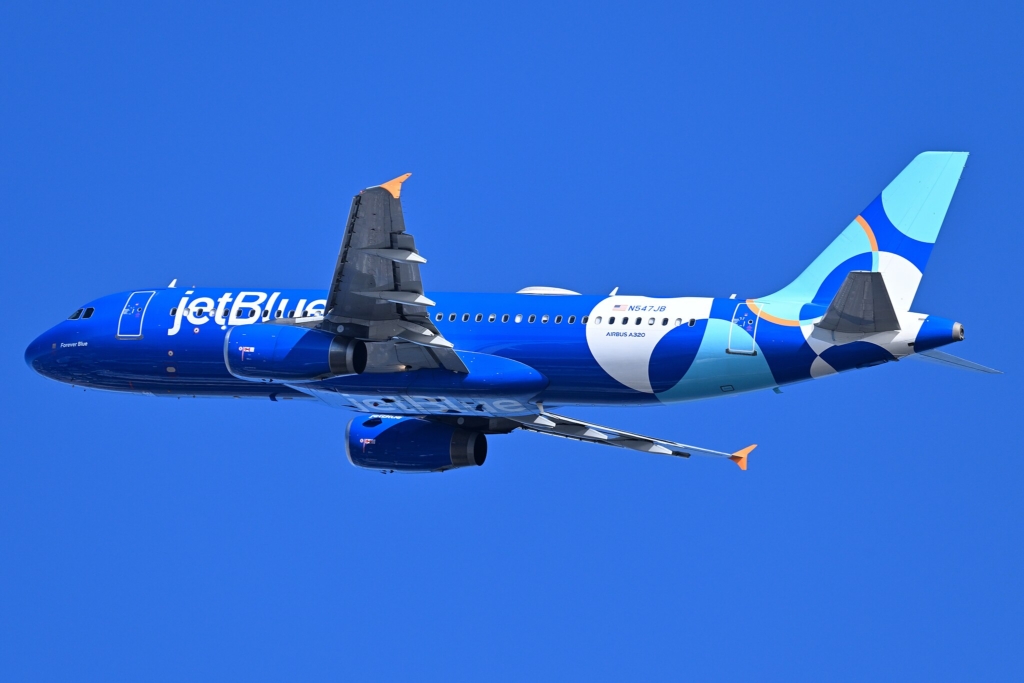
The problem was not confined simply to cancellations. JetBlue said that air-traffic-control-related cancellations in the US Northeast nearly doubled this summer compared with the average of the previous three summers.
At the same time, severe airport-weather days across the United States were 40% higher than the average for the previous three summers.
JetBlue’s exposure to the problem is unusually significant because of its concentration in the Northeast, one of the most congested areas of US airspace.
The airline said that unpredictable weather and air-traffic-control restrictions made advance planning considerably harder and allowed disruptions to compound rapidly.
The operational consequences also reached crews. JetBlue’s pilots’ union urged management to improve its response to disruption after pilots experienced difficulties obtaining reassignment and hotel accommodation during July’s operational problems.
The union acknowledged that storms and air-traffic restrictions cannot be eliminated but argued that an airline’s preparedness and ability to recover from them can be improved.
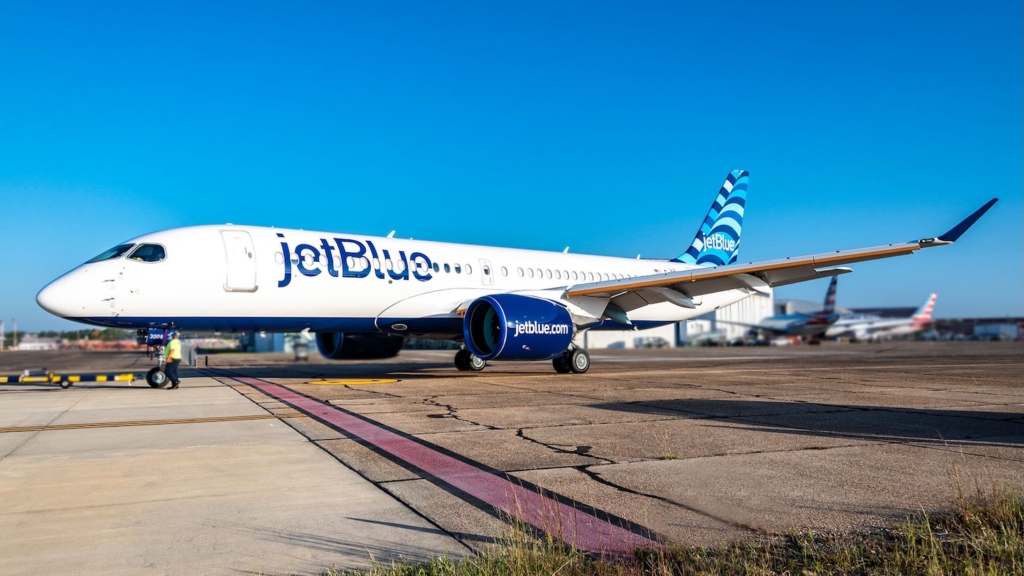
The deterioration has also had financial consequences. JetBlue said weather and air traffic control disruption in July and August contributed to higher cancellations and pushed its expected third-quarter non-fuel unit-cost increase to between 6% and 8%, up from its previous forecast of 2.5% to 4.5%.
What the airlines think about the SMART technology
The major US airlines appear broadly supportive of the FAA’s attempt to make the airspace system more predictive, although the practical question will be how the technology is implemented.
Bedford met with chief executives from major carriers including American Airlines, United Airlines, Delta Air Lines and Southwest Airlines to discuss the SMART programme.
Airlines for America, the industry’s main trade group, has said the system should make air traffic more efficient and timely while maintaining safety. It also expects airlines to benefit from more efficient routings and more predictable information about system capacity.
United CEO Scott Kirby has also backed the potential of the technology to reduce delays and cancellations, particularly during difficult weather conditions.
The industry’s support reflects a straightforward operational reality: airlines have limited control over storms, airport capacity or the availability of air-traffic controllers, but better information can give them more options before those constraints become crises.
JetBlue has likewise welcomed the initiative. The carrier said SMART could give both the FAA and airlines better information and tools to anticipate constraints earlier, make better operational decisions and recover more effectively when disruption occurs.
There are nevertheless questions around implementation. Reuters reported that airlines have privately expressed concerns about how the FAA will decide which flights should be moved when conflicts occur and whether the system can be introduced as quickly as planned.
Those questions matter because predictive technology does not remove the underlying shortage of capacity: it changes how that limited capacity is allocated.
A shift from reaction to prediction
The significance of SMART therefore goes beyond simply reducing the number of delayed flights. Its central promise is to change the way disruptions are managed.
Today, airlines and air-traffic managers often have to respond after a weather system, staffing shortage or congestion problem has already begun affecting the network.
A predictive system could instead identify a developing conflict while there is still time to adjust schedules, routes or aircraft movements.
That could be particularly valuable for airlines such as JetBlue, where disruption in a concentrated region can quickly spread through the wider network. For passengers, that distinction could ultimately be the difference between receiving a warning about a problem hours before departure — and discovering it only after arriving at the airport.


