


Jin Air, Air Busan, and Air Seoul merger: What South Korea’s biggest budget airline will mean for passengers

5 min read
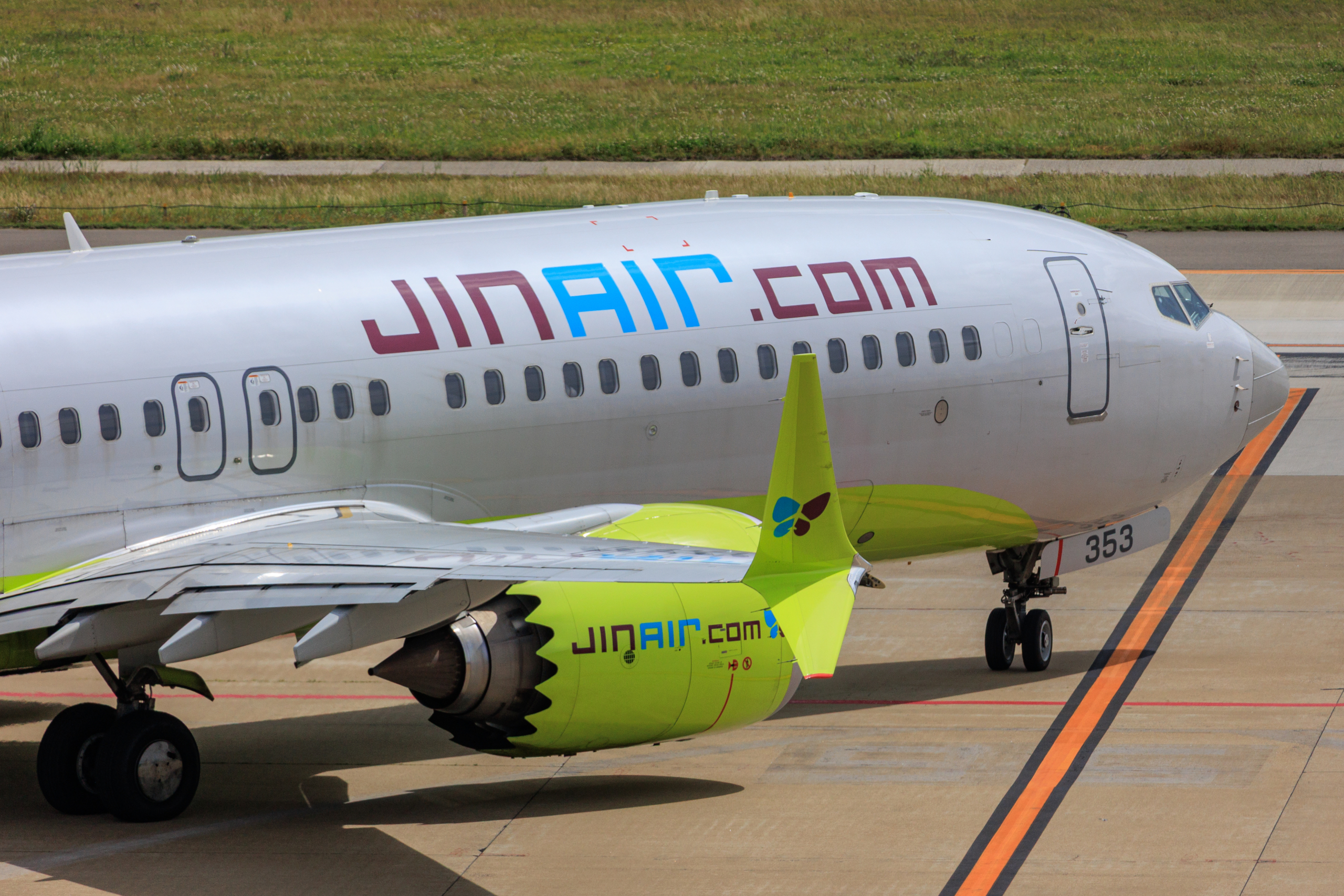
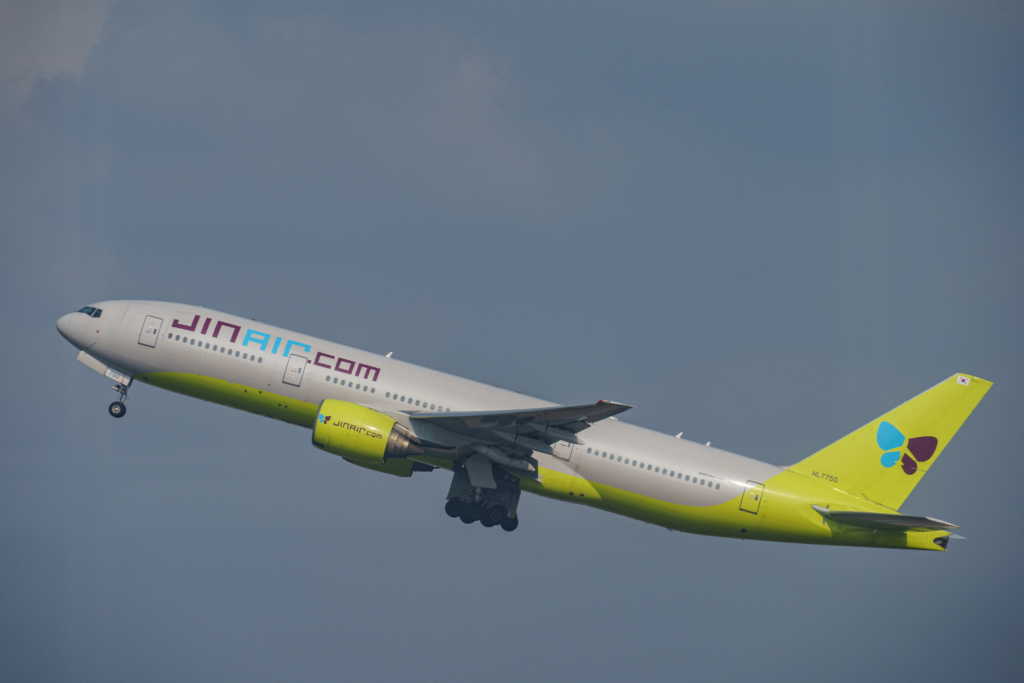
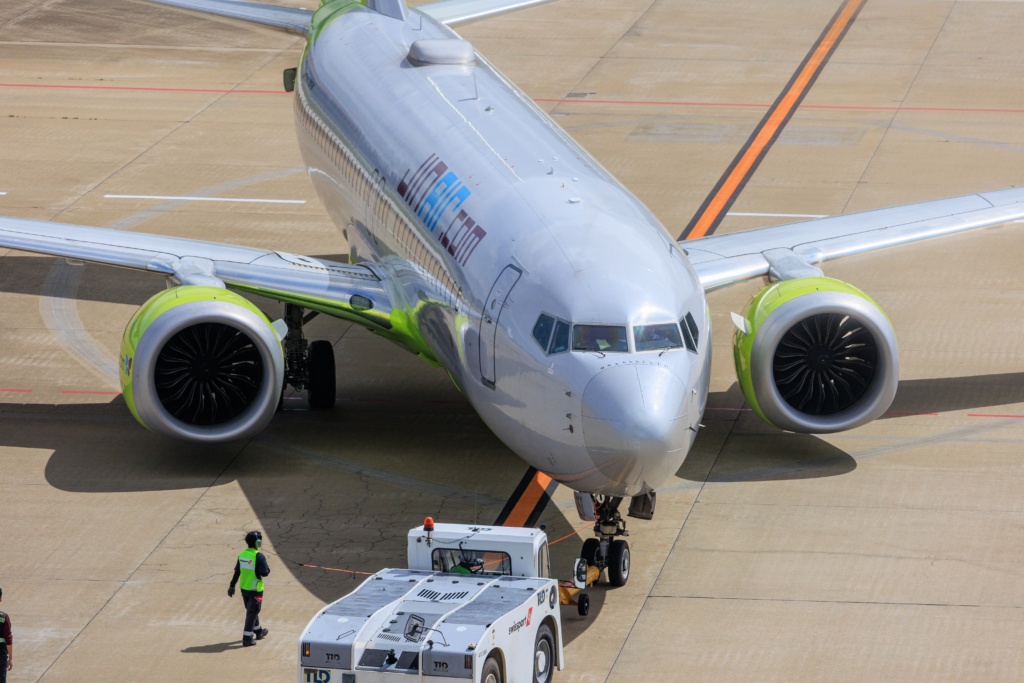
South Korea’s low-cost airline market is about to undergo one of the biggest transformations in its history. On 21 August, it was announced that Jin Air, Air Busan and Air Seoul have agreed to merge into a single carrier under the Jin Air brand, creating what is expected to become the country’s largest low-cost carrier (LCC).
The integrated airline is scheduled to launch on 17 March 2027, subject to shareholder and regulatory approvals.
The merger involves the low-cost carriers in the much larger integration of Korean Air and Asiana Airlines. Korean Air’s merger with Asiana is scheduled to take effect in December 2026, bringing the three LCCs under common ownership and setting the stage for a restructuring of South Korea’s airline industry.
Reshaping the Korean low-cost air travel sector
The scale of the new Jin Air will be significant. Based on the airlines’ fleets at the end of 2025, the combined carrier is expected to have 59 aircraft: 32 from Jin Air, 21 from Air Busan, and six from Air Seoul.
That would put it ahead of low-cost competitors Jeju Air (45 aircraft) and T’way Air (47 aircraft) in fleet size, making it the largest budget airline in South Korea.
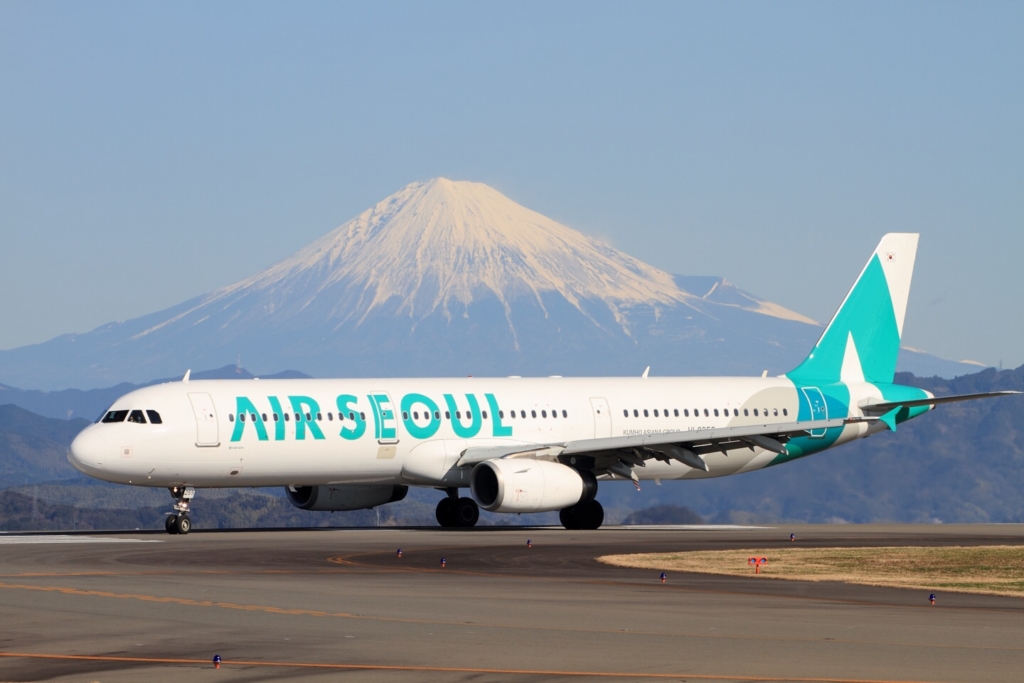
More importantly, the three airlines bring different strengths to the merger. Jin Air has a strong presence at Seoul-Incheon Airport (ICN) and is already closely connected to Korean Air.
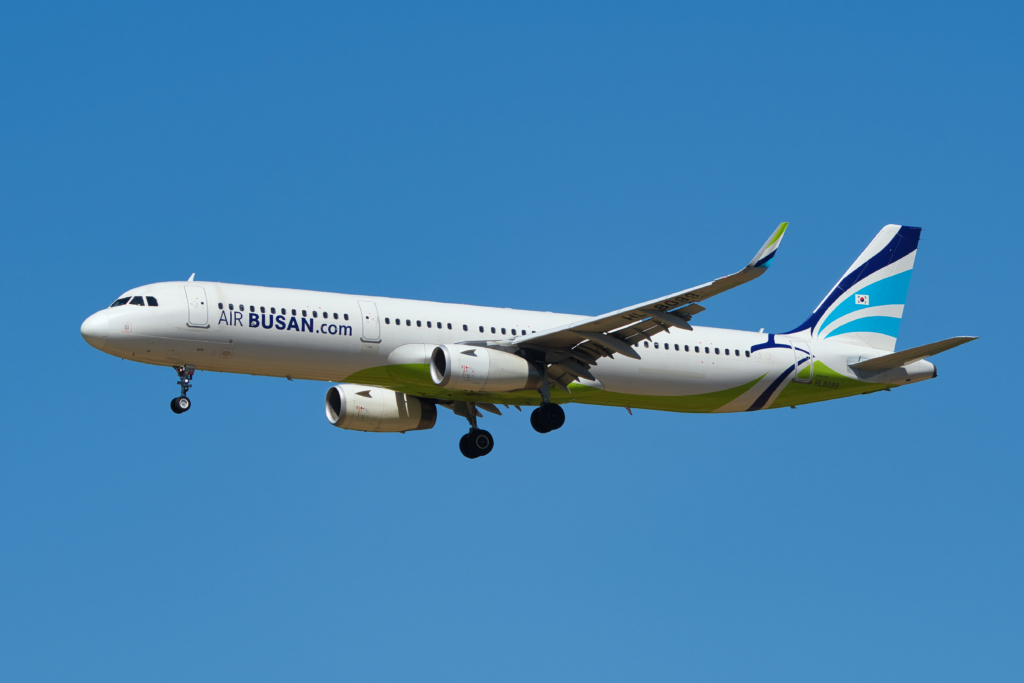
Air Seoul has also developed an international network centred on the Seoul metropolitan market. Air Busan has a particularly important role at Busan Gimhae International Airport (PUS) and in serving southeastern Korea.
Combining the three route networks could allow the new airline to operate a more coherent national network rather than having three separate carriers competing for overlapping passengers. The companies have said they intend to connect their Incheon and Busan operations more effectively, while strengthening international services from regional airports.
How will the merger affect passengers?
For travellers, perhaps the biggest immediate change will be simplicity. At present, customers have to search three separate websites and booking systems when comparing Jin Air, Air Busan, and Air Seoul.
Following the merger, reservation and ticketing systems, mobile platforms, and airport check-in systems are expected to be unified under Jin Air.
That could make a meaningful difference for passengers. Someone travelling between Seoul and Japan, for example, can search a much larger combined network without knowing which of the three legacy airlines operates a particular route.
The larger fleet should also give the airline more flexibility. The company says it plans to reorganise routes and schedules according to demand, allowing aircraft to be moved between markets more efficiently. That could mean more destinations, better-timed flights, and greater resilience when aircraft or service disruptions occur.
However, the benefits will not necessarily be universal. A merger inevitably creates opportunities to eliminate overlapping routes and consolidate schedules.
A destination that currently has flights operated by two or even three of the airlines could end up with fewer frequencies if the combined carrier decides that the capacity is uneconomic. Passengers should therefore expect more network coherence, but not necessarily more flights on every route.
What is the likely effect on low-cost air fares?
This is likely to be the most important question for consumers. A larger airline can achieve economies of scale by combining aircraft, maintenance, training, technology, and administrative functions. In theory, those savings can support competitive fares and allow the carrier to expand into new markets.
But consolidation can also reduce competition. Before the merger, Jin Air, Air Busan, and Air Seoul could compete against one another on some routes. After March 2027, that internal competition will disappear, with the resulting potential that air fares could rise.
The Korean low-cost market will still have significant competitors, including Jeju Air, T’way, Eastar Jet, Aero K, and other carriers. The Centre for Aviation (CAPA) noted that the market remains highly competitive despite the planned merger.
Nevertheless, regulators will have to watch closely for situations in which the new Jin Air gains excessive market power on particular routes. The wider Korean Air/Asiana merger has already raised significant government concerns about competition and consumer protection, with conditions imposed to protect capacity on certain routes.
The difficult part of the merger: integration
The biggest risk is not the merger agreement itself but making three airlines operate as one. Each carrier has its own aircraft, employees, operating procedures, corporate culture, and technology systems.
The companies are already preparing for the integration by standardising training and operational manuals, while Jin Air is investing in an A320neo simulator and preparing to integrate flight operations, maintenance and crews.
That process will need to be handled carefully. Aviation mergers are operationally complex, and regulators will be particularly concerned about ensuring that cost savings never come at the expense of safety.
A major change for Korean aviation
For the Korean aviation industry, the merger represents a move towards scale. South Korea has developed a crowded low-cost airline sector over the past two decades, with several airlines competing for passengers across a relatively concentrated domestic and regional market. The creation of a 59-aircraft Jin Air changes that balance.
The newly merged entity will have greater purchasing power, a larger pool of aircraft and crews, and a broader network from which to build international services. It could be particularly well positioned to compete in the huge, short-haul markets linking Korea with Japan, China, and Southeast Asia.
The merger could also strengthen the role of regional airports. Air Busan’s existing position in Busan gives the combined airline an important second base beyond the Seoul area.
If the new company successfully develops both Incheon and Busan rather than concentrating everything on the capital, it could help improve international connectivity for passengers outside Seoul.
If the integration succeeds, however, South Korea could emerge with a two-tier airline structure dominated by a powerful full-service Korean Air and a powerful LCC under Jin Air, alongside independent competitors such as Jeju Air and T’way.
For passengers, the result could ultimately be a larger and easier-to-use low-cost airline with a broader network. But the real test will be whether the new Jin Air uses its increased scale to offer more choice and better connectivity or simply becomes a bigger airline but with less competition.
The answer will become clearer as the three airlines move towards their planned launch as a single carrier in March 2027.


