Emirates turns Airbus A380 and Boeing 777 parts into giant Arsenal crest

3 min read
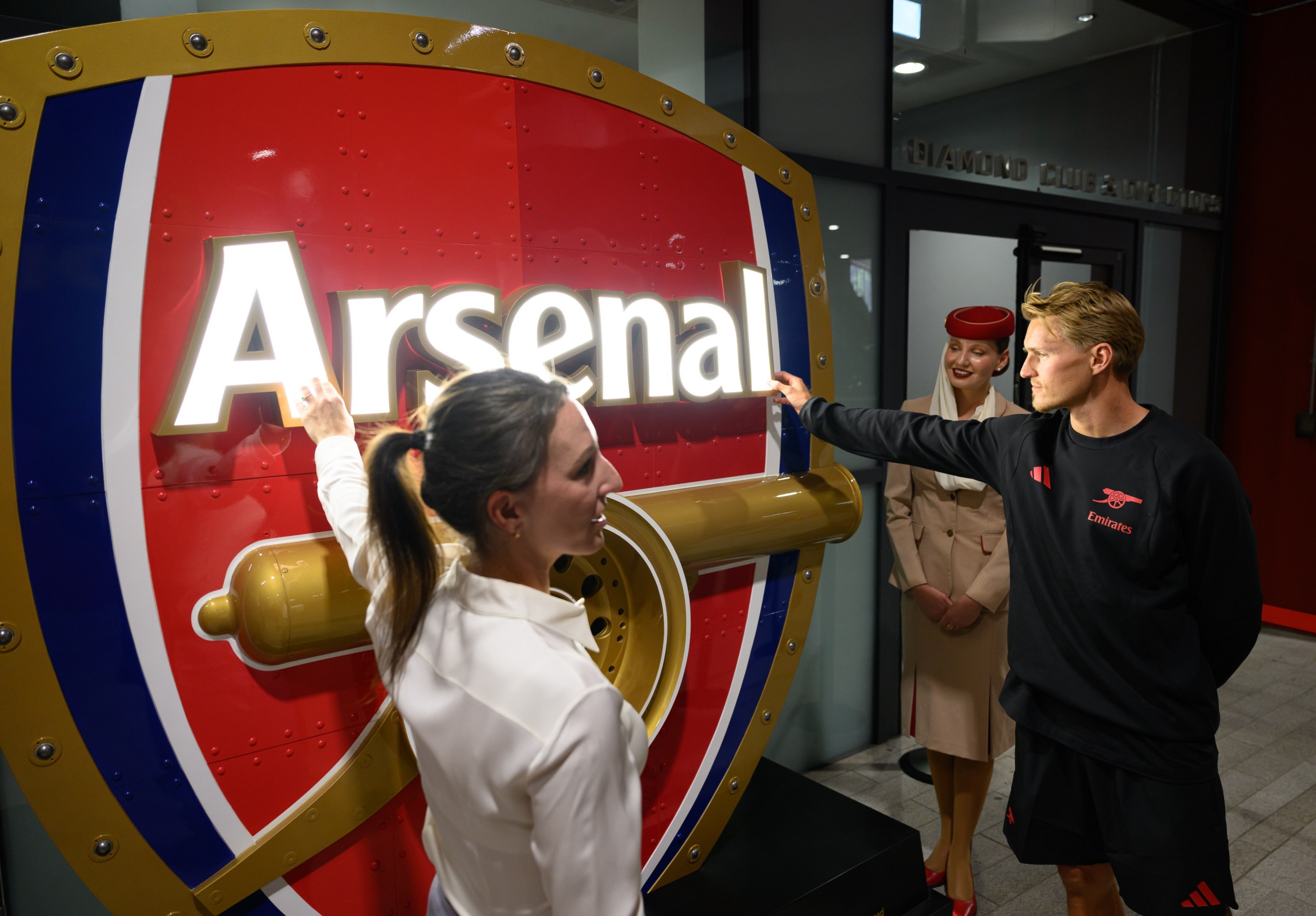
Emirates has found an unusual second life for parts from its Airbus A380s and Boeing 777s, turning unwanted aircraft scrap into a giant Arsenal Football Club crest.
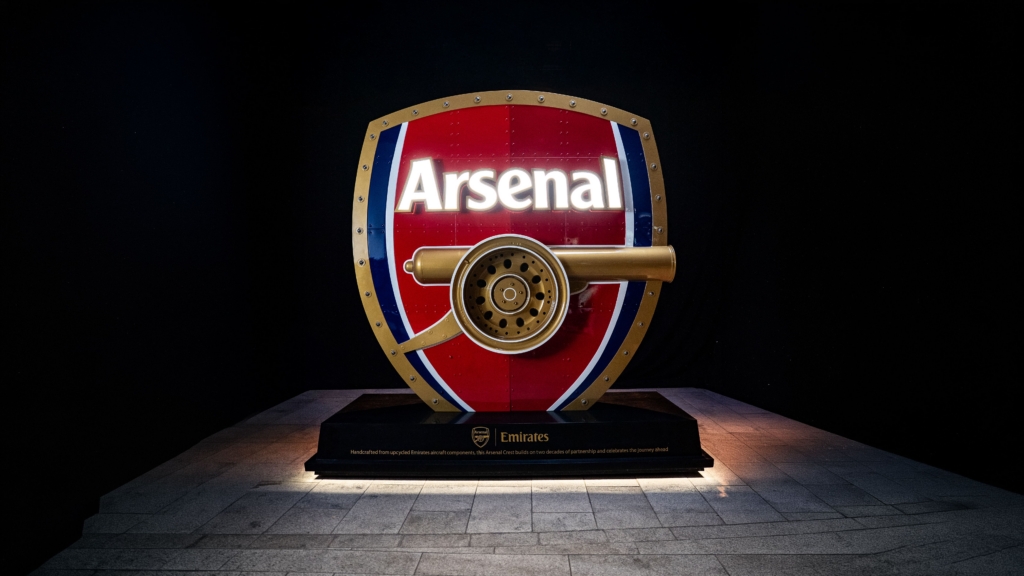
The 2.4-metre-high illuminated sculpture was built by Emirates Engineering in Dubai to mark 20 years of the airline’s partnership with Arsenal, before being transported to London aboard an Emirates SkyCargo freighter.
But look closely, and the crest is perhaps more aircraft than football memorabilia.
In the middle, Arsenal’s famous cannon incorporates the wheel hub from an A380 main landing gear assembly, while part of the superjumbo’s titanium bleed-air duct was cut and reshaped to form the cannon barrel.
The shield itself is clad in aluminium fuselage skin taken from a Boeing 777, while aircraft cargo tracks form parts of its outer edge and supporting structure.
Perhaps the most unusual transformation is reserved for the Arsenal name: each of the letters was made from aircraft windows and illuminated from behind.
How Emirates turned aircraft parts into the Arsenal crest
Creating the ‘Aircrafted’ Arsenal Crest took 34 days and involved a team of 15 engineers, designers, mechanics, technicians and painters from Emirates Engineering.
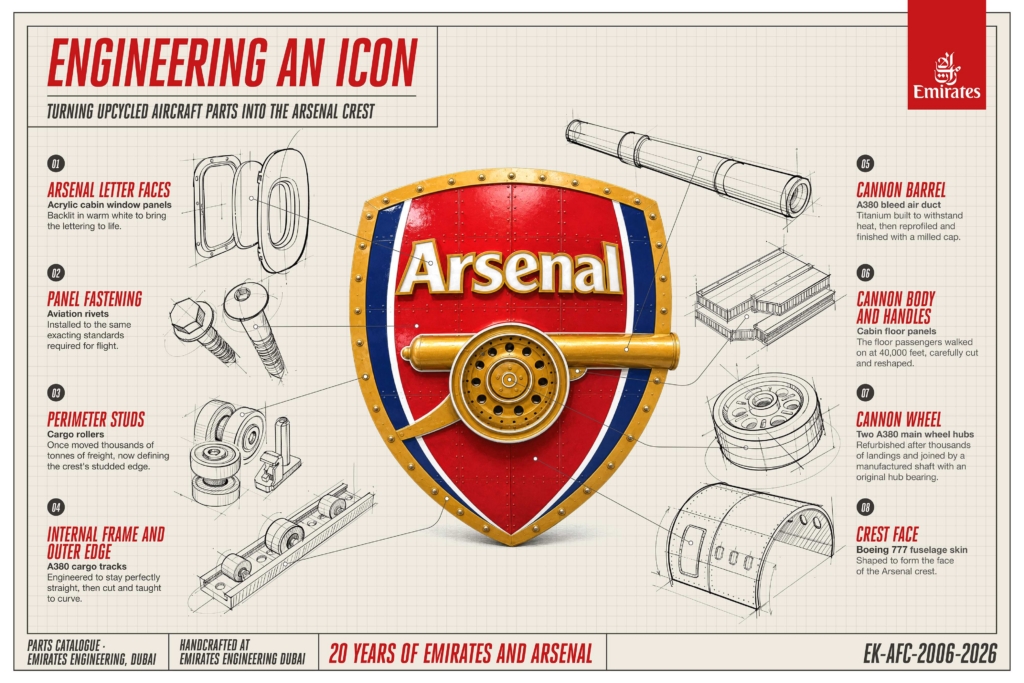
Components were selected by the airline’s Aircraft Material Upcycling team before being cleaned and subjected to a surprisingly aircraft-like production process of cutting, machining, curving, riveting and assembly.
Composite aircraft floor panels were layered to create the three-dimensional body of the cannon, while cargo floor panels and roller components were also incorporated into the finished structure.
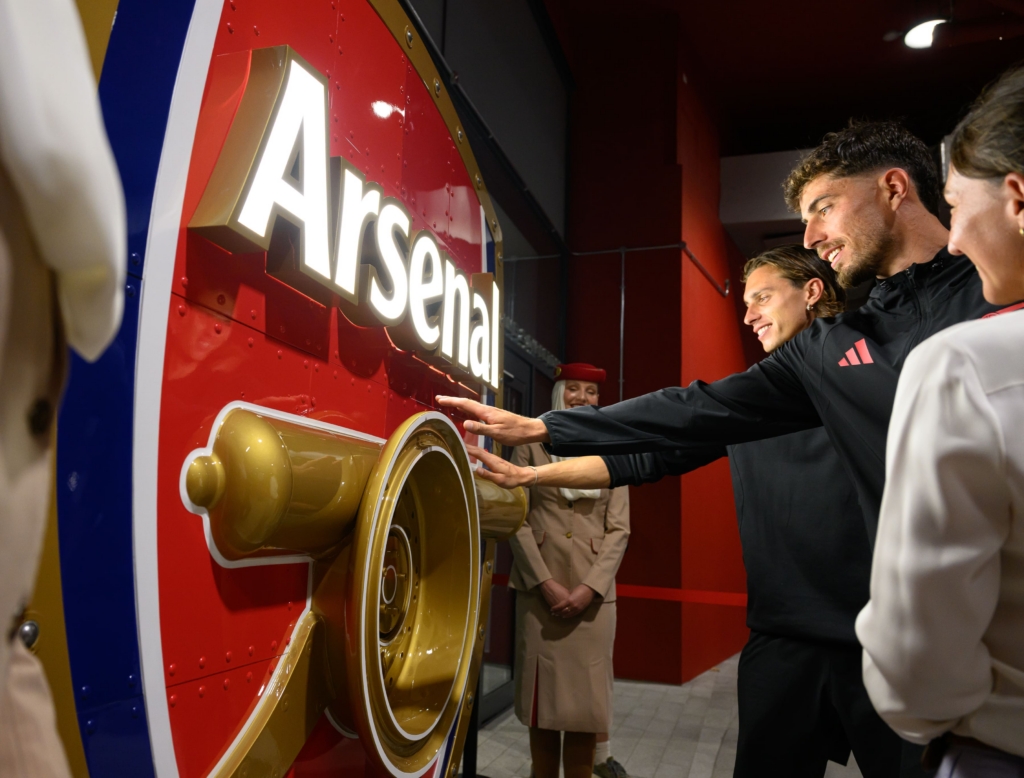
Once assembled, the crest was painted in Arsenal’s official colours and shipped from Dubai to London.
The finished sculpture was unveiled at Emirates Stadium on 9 August by Emirates Airline President Sir Tim Clark and Arsenal Chief Executive Richard Garlick.
“The craftsmanship behind the Crest is exceptional,” Clark said. “It reflects the precision, discipline and ambition that define both aviation and elite sport, while giving these aircraft materials an entirely new purpose.”
A380 and 777 parts find a second life
Emirates operates the world’s largest fleets of both the Airbus A380 and Boeing 777, creating a considerable stream of components and materials removed as aircraft pass through maintenance, cabin refurbishment and, eventually, retirement.
Rather than all of those materials leaving the airline as waste, Emirates has increasingly used its upcycling programme to turn selected components into furniture, accessories and other objects.
The Arsenal project combines that approach with a particularly appropriate piece of industrial history.
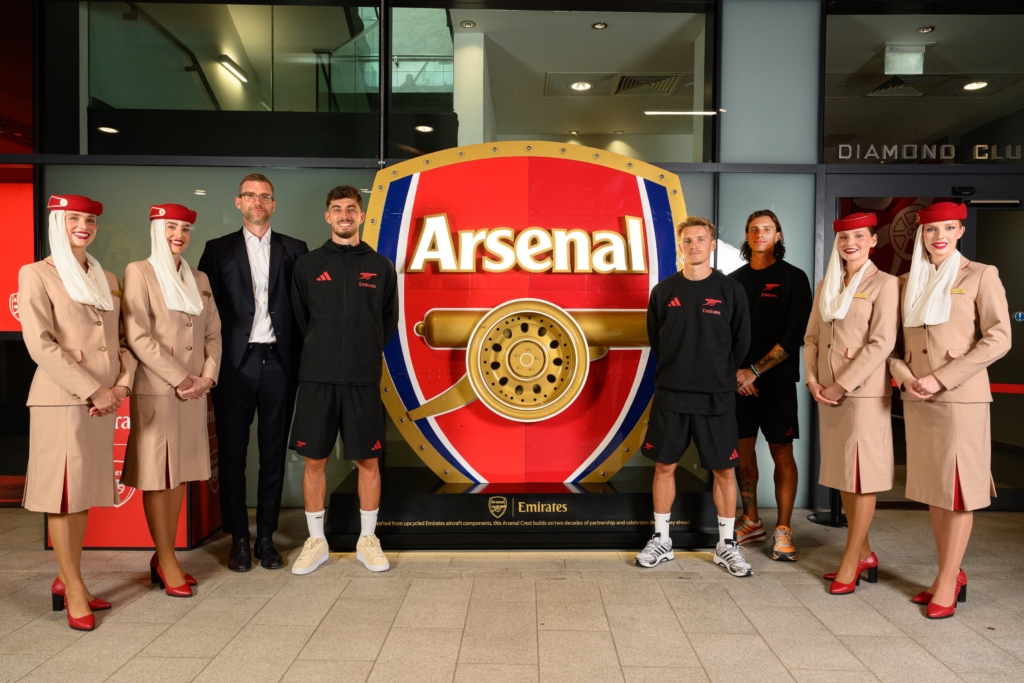
The cannon has appeared in versions of Arsenal’s emblem since 1905 and refers to the club’s origins among workers at the Royal Arsenal in Woolwich, from which its “Gunners” nickname derives. This time, however, the cannon has been constructed partly from the hardware of one of the world’s largest passenger aircraft.
The crest marks two decades since Arsenal and Emirates began their relationship in 2006, when the club moved from Highbury to the newly built Emirates Stadium.
Just days before the sculpture was unveiled, the two organisations extended their commercial partnership until 2033, with Emirates continuing as Arsenal’s front-of-shirt sponsor, training kit sponsor and stadium naming-rights partner.
The aircraft-built crest will now remain permanently on display in Emirates’ hospitality area at the stadium.