


Loganair plans to acquire up to 10 ALIA aircraft from BETA Technologies

2 min read

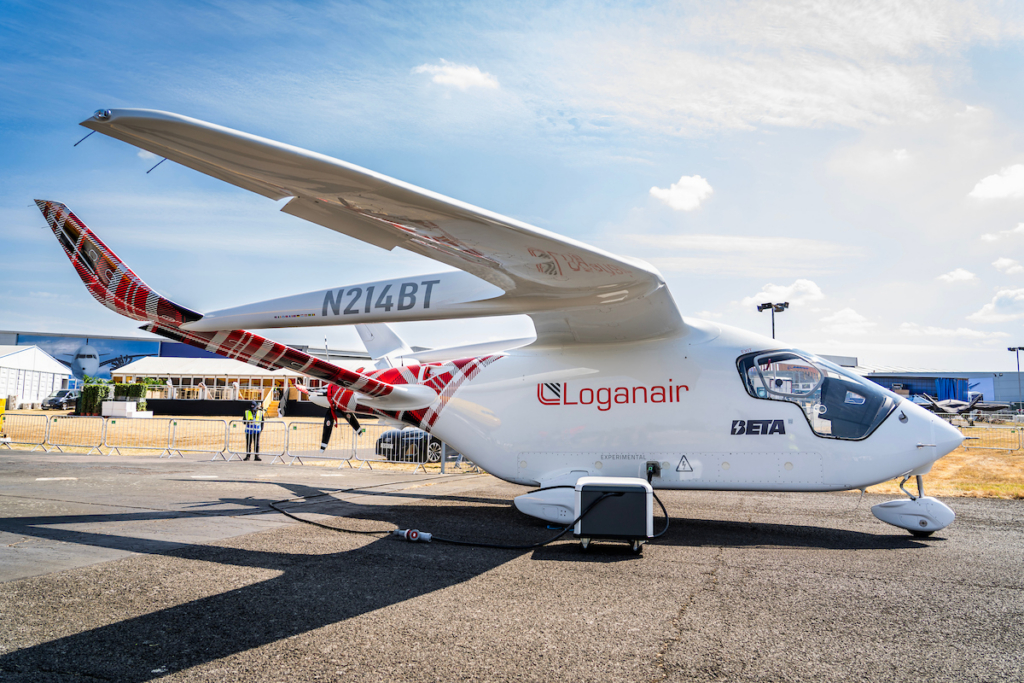
As day one of Farnborough International Airshow (FIA) gets underway, Loganair has agreed to acquire five all-electric (CX300) aircraft from BETA Technologies with options for five more.
The UK’s largest regional carrier, Loganair, has signed an agreement to purchase five all-electric ALIA CX300 conventional take-off and landing (CTOL) aircraft, with options for five more from BETA Technologies.

Loganair prepares to operate all-electric fleet
The aircraft are slated to enter service in 2029 and will position Loganair as Europe’s first commercial airline to operate an electric aircraft fleet if the deal goes ahead as planned. The regional carrier is headquartered at Glasgow Airport and connects remote islands, the Scottish Highlands and major business hubs across the UK.
It also builds on an existing collaboration between the two companies, which saw the UK’s first electric flight demonstration programme completed in March. BETA’s CTOL flew 23 flights in 10 days across Loganair’s network for the demonstration, connecting Glasgow, Dundee, Aberdeen, Inverness, Wick and Kirkwall.
Luke Farajallah, CEO of Loganair, described the agreement as a “truly historic moment for Loganair and European aviation.”
A model for sustainable regional aviation
Demonstrating a model for short, sustainable routes across the UK, the demonstration flights covered more than 1,000 nautical miles in real-world conditions. The aircraft flew routes to some of Scotland’s most remote communities, proving that electric aviation is no longer a concept of the future. It also validated ground handling, charging and integration into existing airport and airspace systems.
“The aircraft demonstrated the potential to reduce operating costs by up to 80% while maintaining the reliable regional connectivity our customers and communities depend on.”
The CX300 will support passenger and cargo services across Loganair’s network and includes plans for technical support and integration into the airline’s existing fleet.
“Signing this agreement is the natural next step… It reflects our confidence in the technology, our partnership with BETA and our ambition to remain at the forefront of sustainable regional aviation,” continued Farajallah.
He was joined by BETA Technologies CEO Kyle Clark, who said the agreement is “what happens when demonstrated performance meets an operator serious about the future of regional aviation.”
Sign up for our newsletter and get our latest content in your inbox.


More from

September 21, 20263 min read


September 18, 20263 min read
