


Boeing T-7A Red Hawk investigation exposes data rights and sustainment concerns

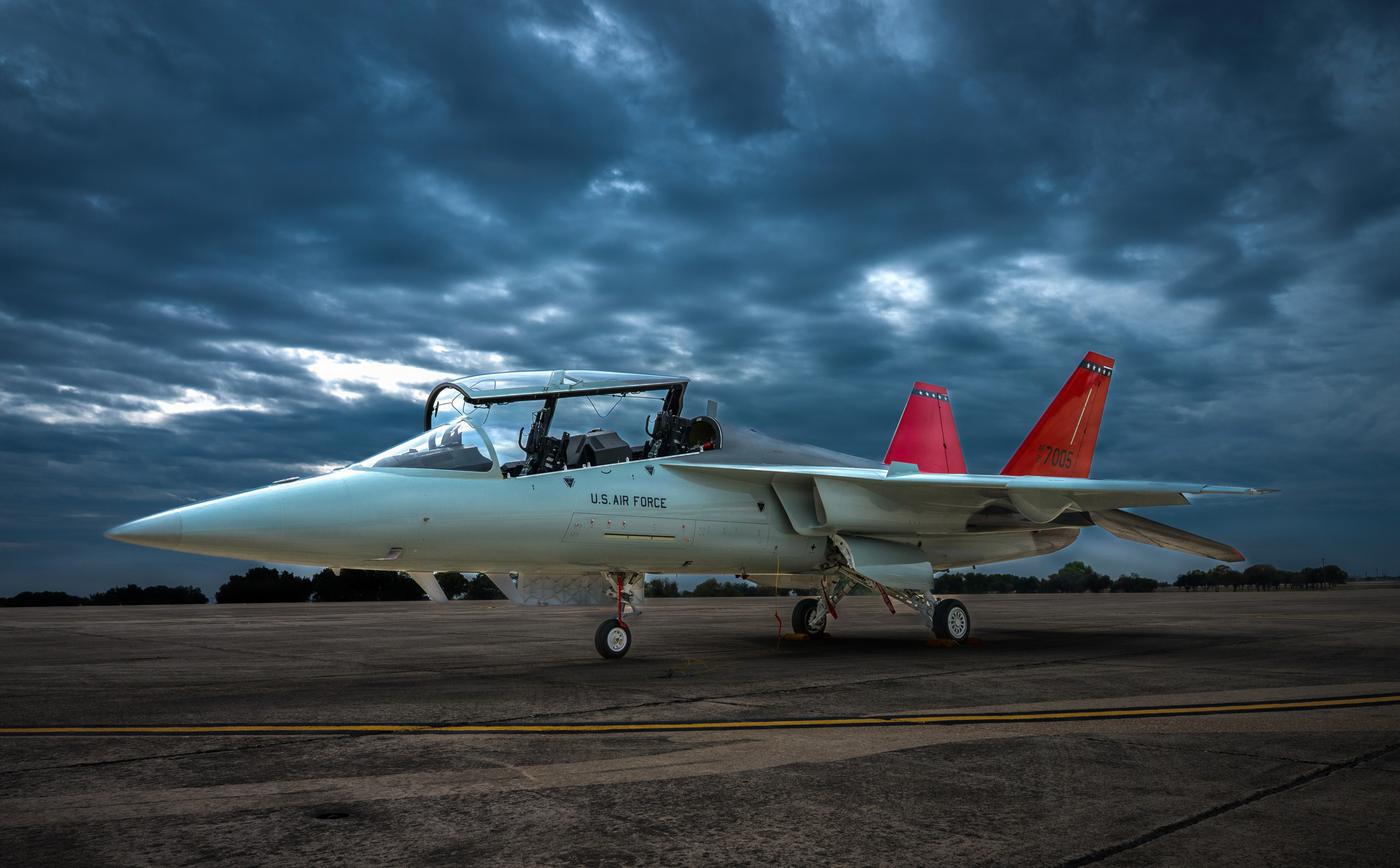
The US Air Force’s long-delayed T-7A Red Hawk has finally begun turning a corner.
In May, the Boeing-Saab advanced jet trainer received approval to enter low-rate initial production following Milestone C, marking the programme’s transition from development to manufacturing. Weeks later, Air Education and Training Command accepted the first eight Ground Based Training System (GBTS) devices that will prepare instructors and student pilots before the aircraft enters operational service.
After years of delays, redesigns and mounting development costs, the milestones signal that the Red Hawk programme is beginning to move forward. Yet behind that progress, a detailed three-part investigation published by Breaking Defense paints a more complicated picture.

Based on previously unpublished Air Force documents and interviews with current and former officials, the investigation reports that the service has accepted several programme risks to keep the aircraft on track for fielding while continuing to grapple with sustainment, technical data rights and long-term support arrangements.
Among the investigation’s key findings are an internal Air Force assessment projecting a “serious” airworthiness risk for the first 82 production aircraft, a “high risk” rating for sustainment, concerns over Boeing’s failure to provide certain technical data required by the service, continuing problems with the aircraft’s ability to operate in rain and ground-based training systems, and a proposal that could add up to $1.5 billion to programme costs through changes to engine procurement.
All of those findings were first reported by Breaking Defense.
None of those issues means the aircraft is unsafe to fly. Nor do they suggest the programme is in danger of cancellation. Rather, they illustrate the increasingly difficult balance the Air Force faces between replacing a trainer that first entered service more than 60 years ago and ensuring that its successor can be sustained efficiently over the next four decades.
Why the Air Force needs the T-7A to replace the T-38 Talon
Replacing the Northrop T-38 Talon has become one of the Air Force’s highest acquisition priorities.
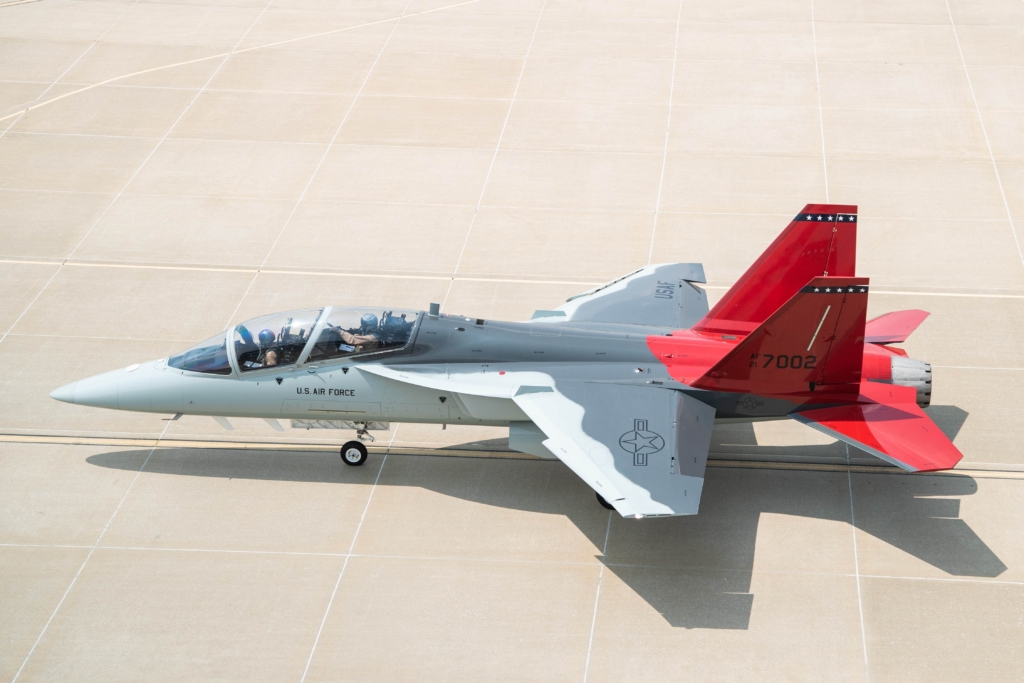
Introduced in 1961, the T-38 has trained generations of American military pilots but was designed long before digital cockpits, sensor fusion and networked combat operations became standard features of modern air warfare. The T-7 Red Hawk was conceived to bridge that gap.
Developed jointly by Boeing and Saab, the aircraft combines a digital cockpit with embedded training and a fully integrated ground-based simulation system.
Student pilots can rehearse radar operation, electronic warfare, weapons employment and tactical scenarios through simulated systems before progressing to frontline aircraft such as the F-35A Lightning II, F-15EX Eagle II, B-21 Raider and future sixth-generation combat aircraft.
Unlike previous trainer programmes, the aircraft and simulator were designed as a single training ecosystem.
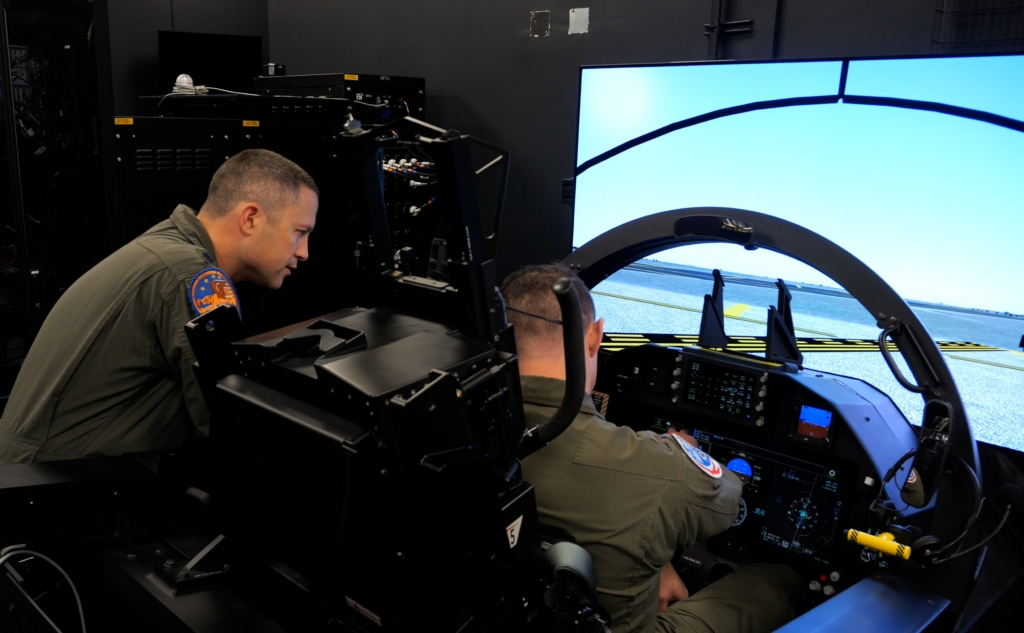
The first eight Ground Based Training System devices accepted this month are the beginning of a planned fleet of 46 simulators that will eventually equip Air Education and Training Command bases across the United States.
Using the same operational flight software as the aircraft itself, the simulators reproduce identical cockpit displays, flight controls and aircraft behaviour, allowing pilots to transition seamlessly from the classroom to live flying.
The Air Force believes this combination of Embedded Training and Integrated Live, Virtual and Constructive capability will significantly reduce the cost of advanced training while exposing students to complex combat scenarios that would otherwise require operational aircraft and expensive mission systems.
The T-7A’s biggest risk may not be the aircraft itself
While the Red Hawk’s technical problems have received considerable attention over the past few years, Breaking Defense notes that the programme’s biggest questions may now lie elsewhere.
The documents attribute that assessment not to a known design flaw but to Boeing’s failure to provide sufficient technical information needed to fully satisfy the Air Force’s continuing airworthiness process for certain critical components.

The publication reports that the missing information relates to Critical Safety Items—components whose failure could result in the loss of an aircraft or crew. Internal Air Force documents viewed by Breaking Defense describe Boeing’s inability to supply parts of that data as “non-compliance”, although officials interviewed by the publication stressed there is no evidence that the affected components themselves are unsafe.
Rather, the issue concerns the documentation required to independently verify their continued airworthiness throughout the aircraft’s service life.
Current and former officials interviewed by Breaking Defense also expressed concern that pressure to deliver the aircraft more quickly could expose inexperienced student pilots to greater programme risk during the early years of operation. Others, however, argued that delaying replacement of the ageing T-38 would carry its own operational consequences for Air Education and Training Command.
The findings illustrate a dilemma familiar to many modern acquisition programmes.
Should a military service delay introducing an urgently needed capability until every technical issue is resolved, or should it accept manageable programme risks while continuing to address them after fielding?
For the Air Force, that debate increasingly extends well beyond the aircraft itself.
Technical data rights emerge as a major T-7A Red Hawk risk
At the centre of the Breaking Defense investigation is an issue that rarely attracts public attention but has become increasingly important in modern defence acquisition: technical data rights.
Owning an aircraft does not necessarily mean owning all the engineering information needed to maintain, repair or modify it independently.
That information includes engineering drawings, software interfaces, manufacturing specifications, maintenance procedures and repair manuals. Without it, an operator can remain dependent on the original manufacturer for decades.
The implications extend far beyond routine maintenance. Without complete technical data, establishing depot-level repairs, introducing modifications, or completing future sustainment contracts becomes significantly more difficult.
The issue also affects the Air Force’s ability to control long-term operating costs, particularly for a fleet expected to remain in service well into the second half of the century.
According to Breaking Defense, concerns over sustainment have become one of the principal reasons the programme continues to receive close scrutiny inside the Air Force, even as production moves forward.
F404 engine proposal could add up to $1.5bn to T-7A costs
The investigation also revealed a proposal that could fundamentally alter how the Red Hawk’s engines are acquired.
According to Breaking Defense, Air Force officials are considering purchasing the aircraft’s General Electric F404 engines directly from GE Aerospace rather than through Boeing.
Internal Air Force presentations reviewed by the publication suggest the proposal could simplify future sustainment by giving the service a direct contractual relationship with the engine manufacturer while improving access to technical data.

The proposal comes at a cost.
An internal Air Force briefing cited by Breaking Defense estimates that switching to government-furnished engines could increase programme costs by between $1 billion and $1.5 billion, as the government would assume responsibilities currently managed through Boeing’s contract.
The publication also reported that discussions surrounding the engine proposal are linked to wider negotiations over Boeing’s provision of technical data for the Air Force’s future Survivable Airborne Operations Center (SAOC), based on the 747-8 platform. Officials familiar with those discussions described them to Breaking Defense as part of a broader effort to resolve technical data issues across multiple programmes.
Rodney Stevens, the Air Force’s Program Executive Officer for Training, told Breaking Defense that discussions remain preliminary and no final decision has been made regarding the engine acquisition strategy.
Rain certification and simulator issues remain for T-7A Red Hawk
The investigation highlights several additional issues that continue to affect the programme.
According to Breaking Defense, the aircraft is currently unable to operate in rain because certification work for the pitot probe system has not yet been completed. The publication also reported ongoing difficulties with elements of the Ground Based Training System, although Air Force officials told the publication both issues are being addressed as the programme progresses.
While these shortcomings have attracted attention, officials interviewed by Breaking Defense stressed that they should not be interpreted as evidence that the aircraft itself is fundamentally flawed. Rather, they reflect the challenges of bringing a digitally designed aircraft and its integrated training system into operational service while simultaneously managing schedule, cost and certification requirements.
Air Force and Boeing defend progress on T-7A Red Hawk
Despite the concerns outlined in the investigation, both the Air Force and Boeing maintain that the Red Hawk is moving in the right direction.
The Air Force points to Milestone C approval, the start of low-rate initial production and the acceptance of the first Ground Based Training System devices as evidence that the programme has entered a new phase. Instructor qualification and maintenance training are now underway ahead of Initial Operational Test and Evaluation.

Stevens told Breaking Defense that “While the programme previously experienced significant challenges related to the fulfilment of contractual data obligations,” a new active management strategy implemented last year has enabled officials to forge “a new path forward.”
“Through the Active Management Strategy, both parties are now engaged in a collaborative effort to ensure all necessary technical data is delivered. This partnership is proving effective in posturing the program for operational training and long-term success,” he said.
He, however, added that the Air Force would continue holding Boeing accountable for meeting contractual requirements while ensuring the aircraft meets the service’s safety standards. He rejected suggestions that programme oversight had been relaxed in an effort to accelerate fielding.
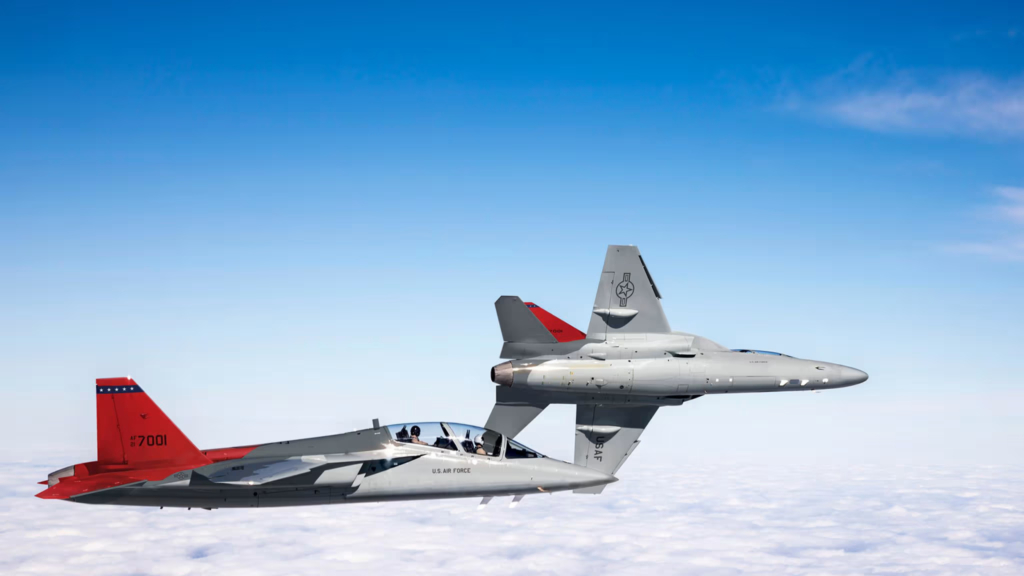
Boeing likewise defended the programme, telling Breaking Defense that the Red Hawk has accumulated more than 350 flight tests and over 340 flight hours while continuing to mature towards production. The company said it remains committed to working with the Air Force to deliver a safe and effective training system.
T-7A Red Hawk becomes a test case for modern defense acquisition
The T-7 Red Hawk was conceived to prepare a new generation of pilots for increasingly complex combat aircraft.
Ironically, it may also become one of the Pentagon’s most closely watched case studies in modern defence acquisition.
The Breaking Defense investigation suggests that the programme’s future will depend not only on how well the aircraft performs in the air, but also on how successfully the Air Force and Boeing resolve questions surrounding technical data, sustainment and long-term ownership of the information needed to support the fleet.
For the Air Force, replacing the T-38 is an operational necessity. Ensuring the Red Hawk can be maintained, upgraded and sustained over the next four decades may prove the programme’s most enduring challenge.
As the first aircraft move towards operational service, the Red Hawk appears to have cleared many of the engineering hurdles that once threatened its future.
The next phase of the programme, however, is likely to be decided less by flight testing than by contracts, intellectual property and sustainment, issues that increasingly define the success of modern military aircraft programmes long after the first aircraft leaves the production line.
Featured image: USAF/Benjamin Faske


