


From Caspian Sea Monster to consumer craft: China’s WaveFly 5X takes flight

6 min read
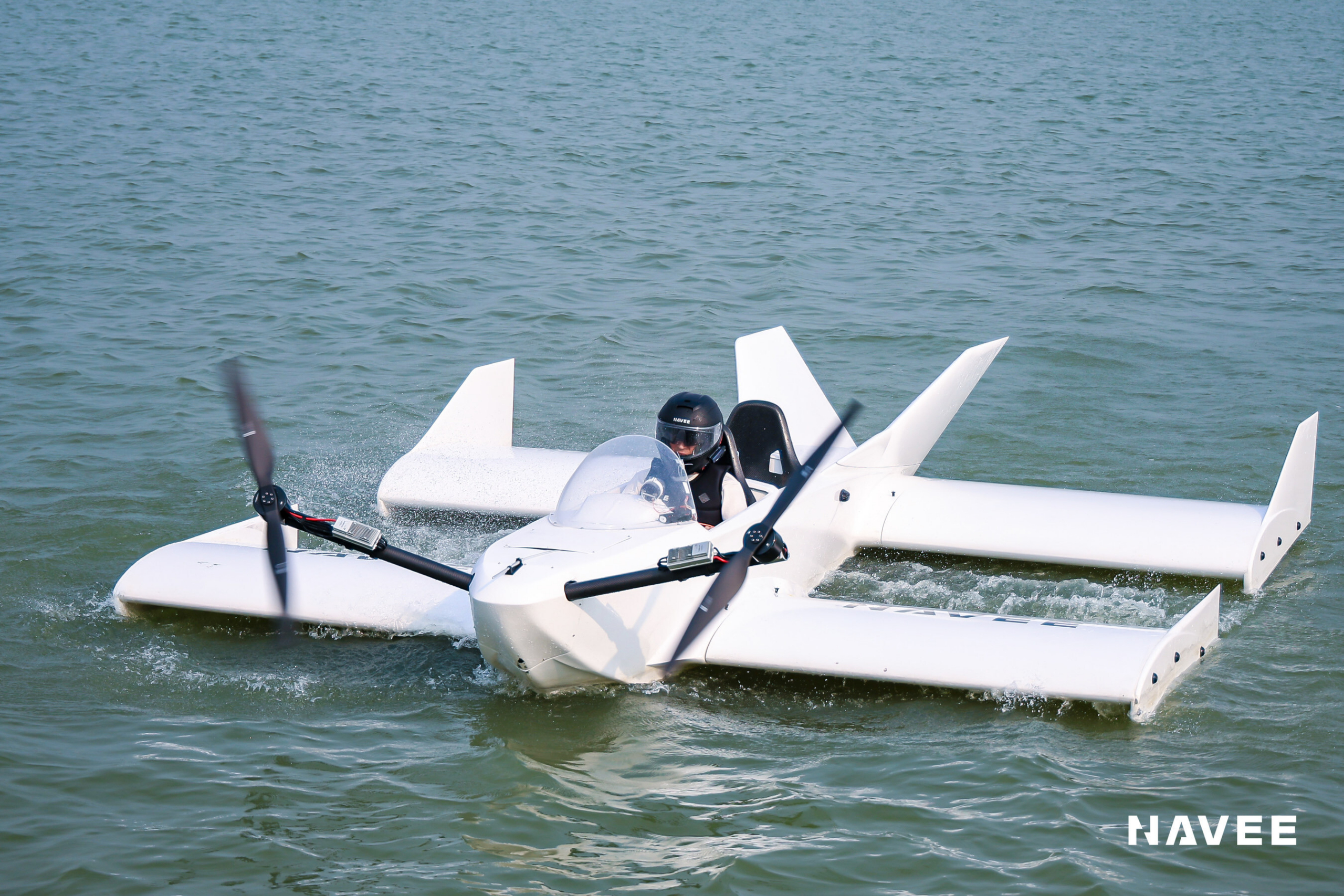
A technology once associated with some of the Soviet Union’s most ambitious military experiments has taken an unexpected turn towards the consumer market.
Chinese mobility company Navee has completed the maiden flight of its WaveFly 5X, a two-seat wing-in-ground-effect (WIG) craft designed to skim above the surface of lakes and coastal waters.
The company describes it as the world’s first consumer-grade WIG vehicle, marking a rare attempt to commercialise a technology that has spent much of its history on the fringes of aviation and maritime transport.
The demonstration flight took place on 5 June on Dong Taihu Lake in Suzhou, where the WaveFly 5X completed low-altitude flights above the water’s surface and water-borne manoeuvres in front of international media and industry representatives.
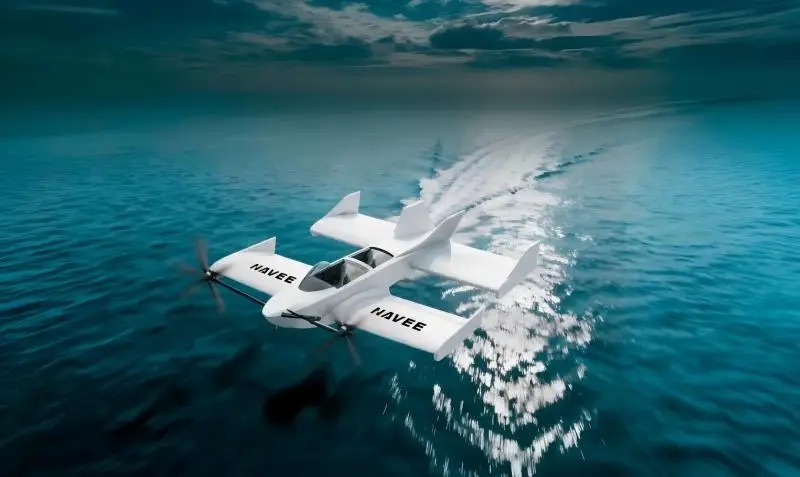
At first glance, the aircraft resembles a compact seaplane. Yet it belongs to a category of vehicles that occupy a unique space between aircraft and boats.
The concept is not new. What has changed is the technology supporting it.
The Soviet Union’s giant ekranoplans
Wing-in-ground-effect vehicles, commonly known as ekranoplans, emerged during the Cold War when Soviet engineers began exploring ways to exploit a little-known aerodynamic phenomenon.
When an aircraft flies very close to the ground or water, air becomes compressed between the wing and the surface below. This creates additional lift while reducing aerodynamic drag, allowing the vehicle to travel more efficiently than a conventional aircraft operating at higher altitudes.
The Soviet Union saw potential military advantages.

Beginning in the 1960s, Soviet designers developed a series of giant ekranoplans for operations over the Caspian Sea. The most famous was the KM, better known in the West as the Caspian Sea Monster, a vast experimental vehicle that stretched more than 90 metres in length and was among the largest flying machines of its era.
Later designs included the Lun-class ekranoplan, which was intended to carry anti-ship missiles at high speed while flying just above the water’s surface.
Part aircraft, part ship and part hovercraft, these vehicles promised speed and payload capacities that conventional vessels struggled to match.

Yet despite decades of experimentation, ekranoplans never entered widespread service. Their operational limitations, including sensitivity to sea conditions and high operating costs, prevented them from becoming a mainstream transportation solution.
Following the collapse of the Soviet Union, most programmes disappeared altogether. For decades, the technology appeared destined to remain a historical curiosity.
Why wing-in-ground-effect flight is attracting attention again
The WaveFly 5X reflects a growing belief that advances in materials, propulsion and navigation systems may finally make WIG vehicles commercially viable.
Unlike Soviet military projects, Navee’s aircraft is designed for personal use.
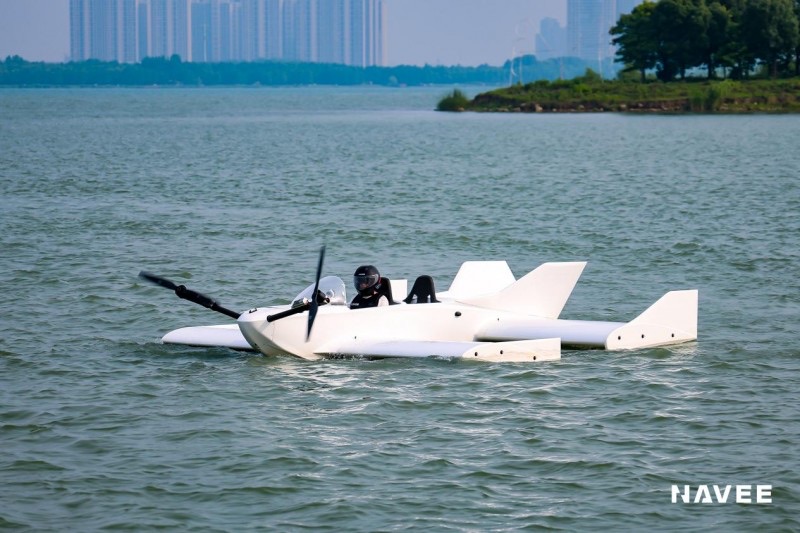
Constructed from aerospace-grade carbon fibre, the WaveFly 5X uses a dual tandem-wing configuration and operates between 11.8 inches and 19.7 inches (30 cm – 50 cm) above the water’s surface. The vehicle can reach speeds of up to 52.8 mph (85 km/h), carry a maximum payload of 309 lb (140 kg) and travel up to 49.7 miles (80 km) on a single charge.
The company says the aircraft can operate directly from lakes, reservoirs and other calm waterways without requiring a conventional runway.
Its designers are also positioning it as something closer to a recreational watercraft than an aircraft.
According to Navee, users would not require the level of professional flight training associated with traditional aviation, although operational requirements will ultimately depend on national regulators.
That distinction highlights one of the longstanding challenges facing WIG vehicles.
Even after decades of development, regulators around the world continue to debate whether they should be treated primarily as aircraft, marine vessels or something in between.
Could WIG vehicles become part of the low-altitude economy?
Navee’s announcement also reflects growing interest in what policymakers and investors increasingly describe as the “low-altitude economy”.
Much of the discussion surrounding future mobility has focused on drones, electric vertical take-off and landing aircraft, and advanced air mobility concepts. Water-surface transportation has received far less attention.
Navee believes that gap represents an opportunity.
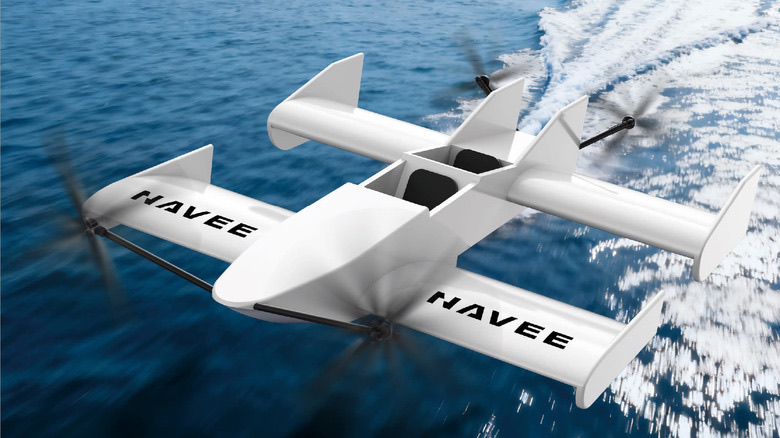
The company argues that personal water-surface flight could emerge as a new mobility category, particularly as lightweight materials and electric propulsion systems continue to improve.
According to figures cited during the launch event, Morgan Stanley estimates the global low-altitude economy could exceed $2 trillion by 2030.
Whether consumers embrace such vehicles remains an open question.
The WaveFly 5X is being offered at a price of approximately $100,000, placing it closer to a luxury recreational purchase than a mass-market transportation product.
Even so, the aircraft’s arrival suggests that WIG technology is beginning to move beyond experimental programmes and specialist operators.
Regent, DARPA and China: Why ekranoplans are making a comeback
The renewed interest in ground-effect flight extends well beyond China’s consumer market.
In the United States, Rhode Island-based Regent Craft has emerged as one of the most prominent commercial developers of the technology.

The company’s Viceroy seaglider is being designed to carry passengers on regional coastal routes using electric propulsion and ground-effect flight.
The programme has attracted significant attention from both commercial operators and government organisations interested in alternative transportation systems.
Military interest has also returned.
In 2022, the US Defense Advanced Research Projects Agency launched the Liberty Lifter programme, exploring whether large seaplanes and ground-effect technologies could provide new options for moving cargo and personnel across long distances.

The programme seeks to combine some of the payload advantages of maritime transport with the speed traditionally associated with aviation.
China, meanwhile, appears to be pursuing multiple strands of development.
Beyond the WaveFly 5X, analysts have noted signs of larger military-oriented WIG projects. Images circulating online in 2025 appeared to show a significantly larger ground-effect vehicle undergoing testing near the Bohai Sea, prompting comparisons with Soviet-era ekranoplans.
While little is publicly known about the programme, the sightings renewed speculation about possible military applications ranging from logistics to amphibious operations.
Can the WaveFly 5X succeed where Soviet ekranoplans failed?
The challenge facing WIG vehicles today is largely the same one that confronted Soviet designers decades ago: Can they find a role that neither aircraft nor boats perform more effectively?
Advocates argue that ground-effect vehicles offer a compelling combination of speed, efficiency and operational flexibility. Critics point out that they remain limited by sea state, weather conditions and operational complexity.
The answer may ultimately depend on scale.
The Soviet Union attempted to build some of the largest examples ever conceived. Navee is attempting something much smaller: a personal vehicle designed for leisure and short-range travel. That contrast says much about how the technology has evolved.
The Caspian Sea Monster was a symbol of Cold War military ambition. The WaveFly 5X is being marketed as a consumer product.
Whether that proves to be the breakthrough that ground-effect flight has long awaited remains to be seen.
But after decades spent on the margins of aviation history, the ekranoplan concept is attracting attention once again, this time not from admirals and defence planners, but from entrepreneurs looking for the next frontier in mobility.
Featured image: Navee


