Canada is leasing firefighting aircraft for the first time — Here’s what it’s getting

6 min read
The Canadian government is launching its first federally funded aerial wildfire fleet. Under the Pan-Canadian Aerial Asset Program, it is leasing 10 firefighting aircraft and two support assets for the 2026 wildfire season.
“As wildfire seasons become more severe, we took an engagement last budget to bolster our wildfire aerial capacity and show more leadership on the emergency management side by investing in practical, on‑the‑ground support to help provinces and territories respond quickly and effectively,” said the Honourable Eleanor Olszewski, Minister of Emergency Management and Community Resilience and Minister responsible for Prairies Economic Development, Canada, in the announcement. “These additional aircraft will strengthen Canada’s wildfire response, protect frontline personnel and protect communities across the country.”
Canada is investing C$316.7 million over the next five years to increase its aerial wildfire firefighting capacity.
What firefighting aircraft is Canada leasing?
Canadian provinces and territories have largely managed their own firefighting fleets or relied on shared aircraft coordinated through the Canadian Interagency Forest Fire Centre (CIFFC). The CIFFC, jointly owned and operated by federal, provincial, and territorial governments, coordinates firefighting resources for wildfire management agencies in Canada and internationally.
The new federally funded aircraft will serve as a national surge fleet, deployable wherever fires intensify. The fleet includes four aerial firefighting air tankers, one birddog/spotter aircraft, five heavy-lift helicopters and two support assets for operations and logistics.
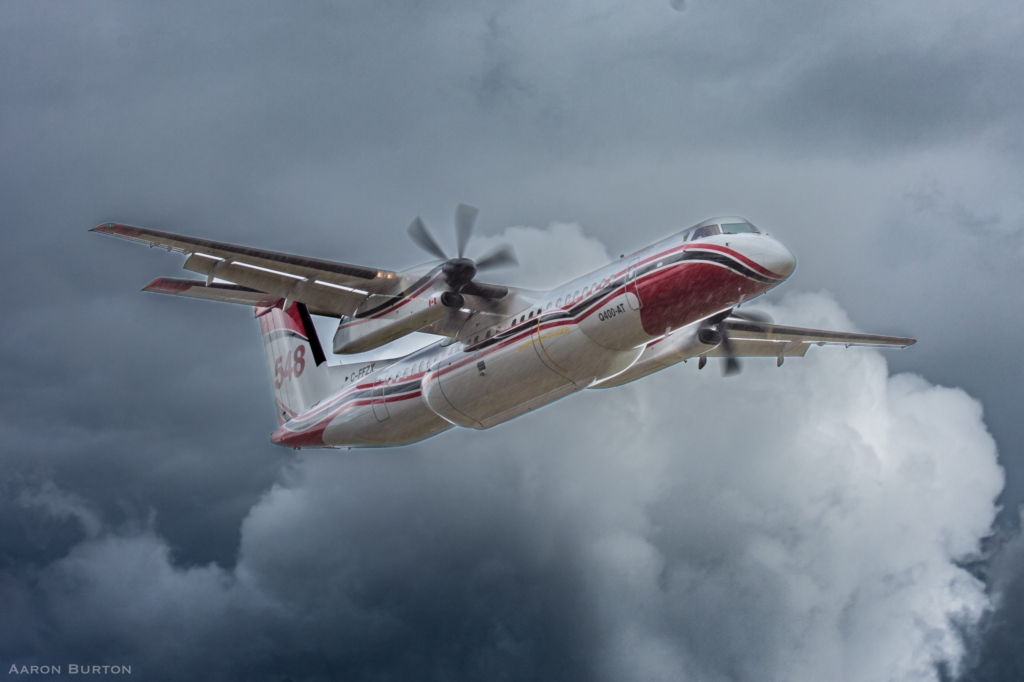
CIFFC awarded 150-day lease contracts to Conair Group Inc., Coldstream Helicopters and VIH Helicopters, effective from May 1 to September 27, 2026.
“For six decades, Canada has been at the forefront of designing, building, and operating specialised aircraft to combat wildfires. Today, the nation is building upon that legacy. For the first time, Canada has its own national fleet to bolster provincial and territorial firefighting capacity,” said Chris Niemann, President and CEO, Conair, in the announcement of the contract.
According to the government’s fact sheet, the aerial firefighting assets leased from each company include:
Conair Group Inc.
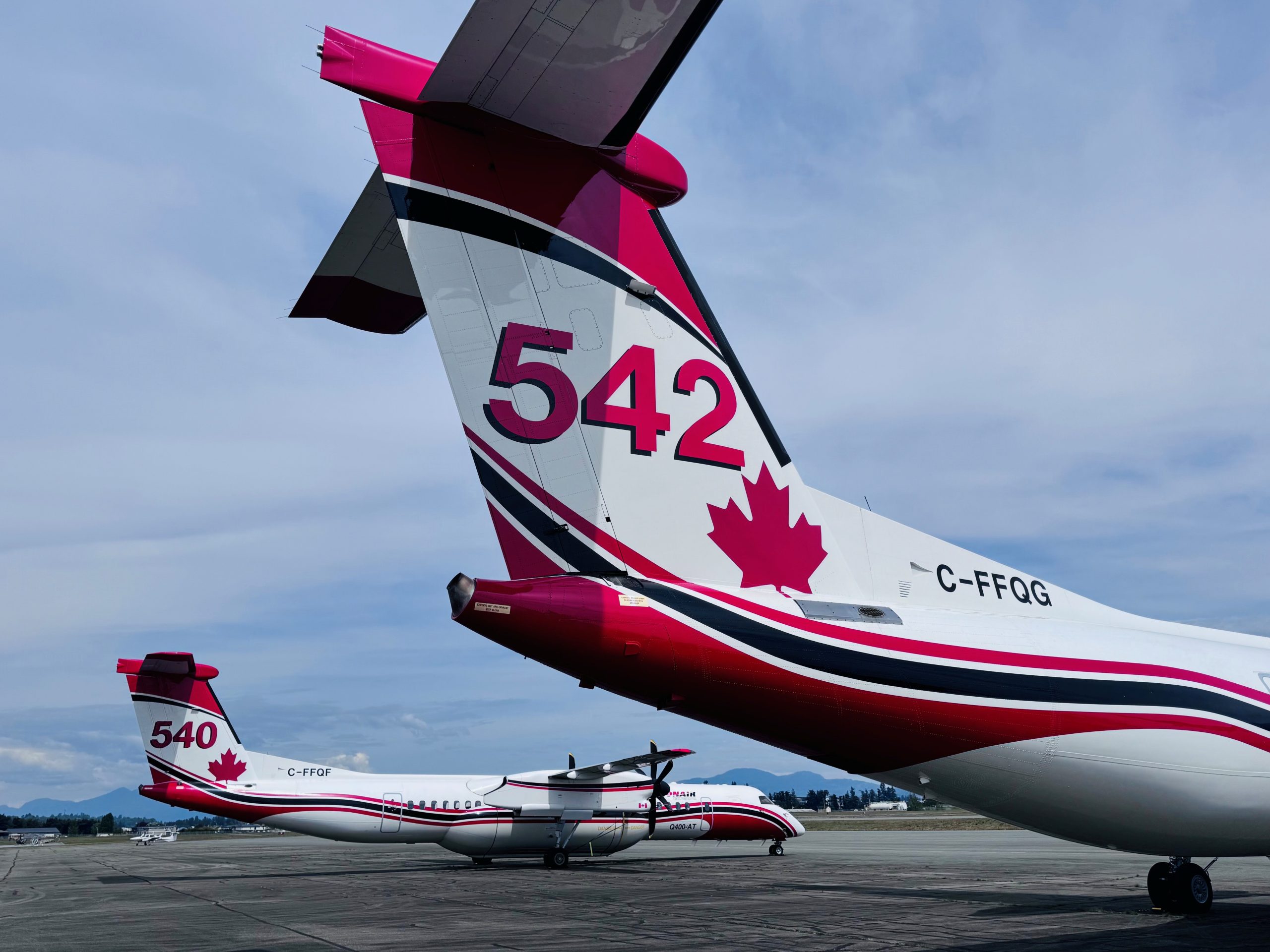
- 4 Dash 8-400 AT (Land-based Airtankers)
- Max Tank Capacity – 10,000 L
- Cruise Speed of 600 km/h
- Drop speed of 230 km/h
- Operational on a 5,000 ft runway
- Deployment configuration – deployed as a group with Birddog or as a single resource
- Base location: Abbotsford, British Columbia
- 1 TBM 960AA aircraft
- Air Attack Platform
- Cruise Speed of 600 km/h
- Air Attack Speed of 230 km/h
- A trainer seat that can be in various locations
- Smoke equipped
- HomeSafe emergency system
- Glass cockpit
- Newest technology for radio communication
- Base location: Abbotsford, British Columbia
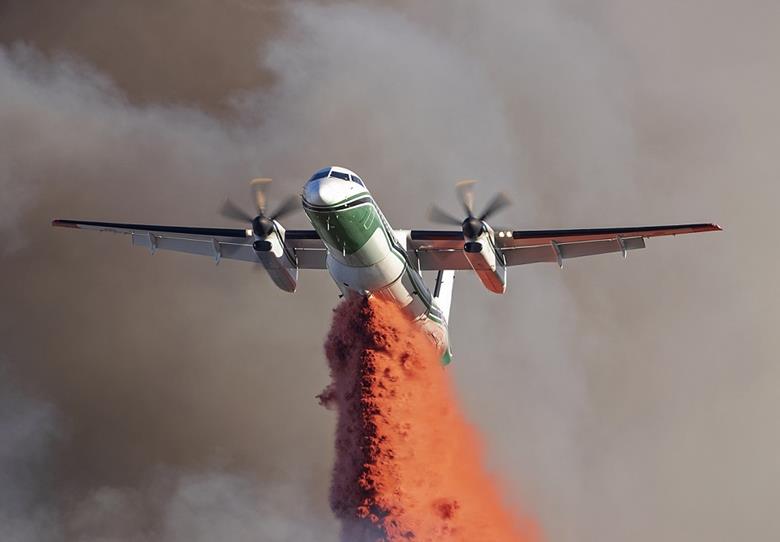
The Conair contract also includes provisions for two Forward Attack Tanker Bases (FATB), which consist of “strategically placed aerial firefighting equipment set up at temporary airport locations to support retardant operations in areas that do not usually operate land-based airtanker groups.” The FATBs will be positioned in central and eastern Canada and are under the same 150-day contract.
The TBM 960AA: A fast initial-attack fire bomber
The TBM 960AA is based on the Daher TBM 960 turboprop aircraft modified for aerial firefighting. Conair developed the “Aerial Attack” variant as a rapid-response platform capable of both reconnaissance and retardant delivery.
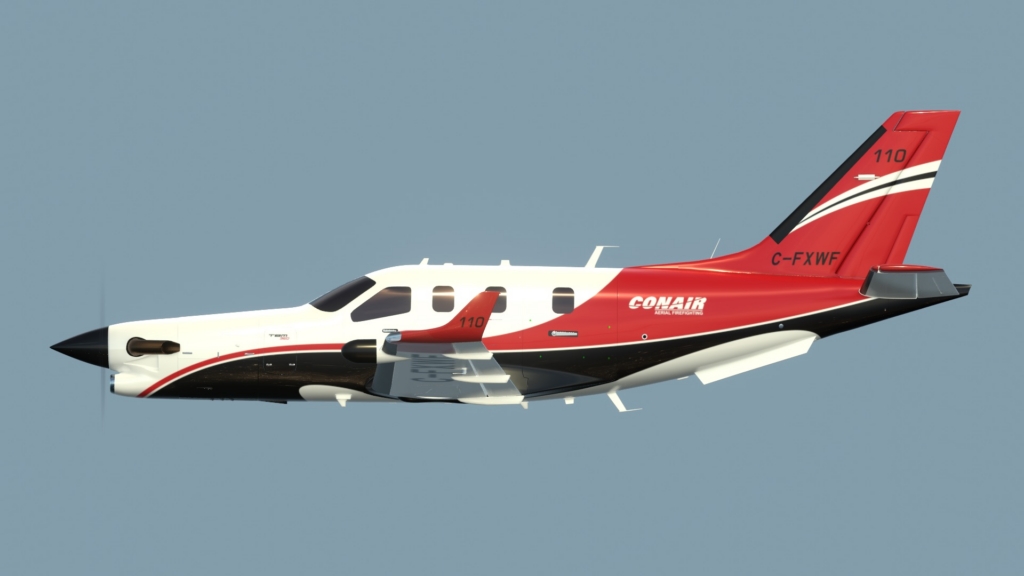
Compared with larger water bombers such as the De Havilland Canadair CL-415 or future CL-515, the TBM 960AA is designed for speed and agility. The aircraft can quickly reach emerging fires and support initial attack operations before larger tankers arrive.
The birddog aircraft included in the program will guide tanker operations over fires, coordinating retardant drops and helping maintain safe separation between aircraft operating in smoky, turbulent conditions.
Coldstream Helicopters
- 3 Airbus AS332 L & L1 (Heavy rotary wing helicopters)
- 3,410 L or 4000 L bucket with Powerfill and Multi-Drop Capabilities
- Cruise speed of 270 km/h
- Configuration: Group or single resource
- Base location: Kelowna, British Columbia and Southport, Manitoba
VIH Helicopters
- 2 Sikorsky S-92A (Heavy rotary wing helicopters)
- 5000 L Helitank with rapid-hover fill
- Cruise speed of 270 km/h
- Configuration: Group or single resource
- Base location: North Saanich, British Columbia
Heavy-lift helicopters add flexibility
The five leased helicopters will provide flexible wildfire response, especially in rugged terrain where fixed-wing tankers may be less effective.
Heavy-lift helicopters can carry water buckets for precision drops, transport firefighters and equipment, and support evacuations. They can also operate closer to fire lines than larger tankers.
Why Canada is adding firefighting capacity now
Canada’s 2025 wildfire season was the country’s most intenses since the catastrophic 2023 season. Nearly 90,000 square kilometres burned in 2025 alone. In response, the federal government committed C$316.7 million over five years to establish the national aerial firefighting surge capacity.
“Following the second-worst wildfire season in our history, our government is showing leadership and making bold investments that will provide critical support to provinces and territories,” Olszewski said when the Pan-Canadian Aerial Asset Program was first announced in February. “The aircraft leased by CIFFC using this funding will help frontline firefighters respond faster, slow the spread, and minimise the impact of wildfires on communities across Canada for 2026 and future wildfire seasons.”
The Honourable Tim Hodgson, Minister of Energy and Natural Resources, added that the investment provides the provinces and territories “with critical firefighting capacity when they need it most.”
Kelsey Winter, Executive Director of the Canadian Interagency Forest Fire Centre, described a pan-Canadian response to wildfires as “paramount,” adding: “Together, we are building a more wildfire resilient future for our country.”
Not yet a permanent federal fleet
NDP MP Gord Johns praised the investment in aerial firefighting capabilities while renewing calls for a permanently owned national fleet of Canadian-built water bombers.
“With another dangerous wildfire season already underway, leasing aircraft is an important step, but Canada also needs a long-term strategy that builds permanent domestic capacity,” Johns said in a statement, adding: “We will continue pushing the federal government to work with Canadian companies like Coulson Aviation to retrofit retired CC-130 Hercules aircraft into next-generation airtankers built here in Canada. We have the skilled workers, the aerospace expertise, and the industrial capacity to build a stronger long-term wildfire response system while creating good jobs.”
Canada’s new CL-515 amphibious tanker is on track for European customers
While leasing aerial firefighting capacity for domestic use, Canada is also supplying countries with firefighting aircraft.
This week, Canadian Commercial Corporation (CCC) announced that De Havilland Aircraft of Canada is on track to deliver its new CL-515 amphibious tanker to six European customers, including Croatia, Spain, Italy, Greece, Portugal, and France, under a contract signed in 2024 which covers the first 22 Canadair 515 produced by De Havilland.
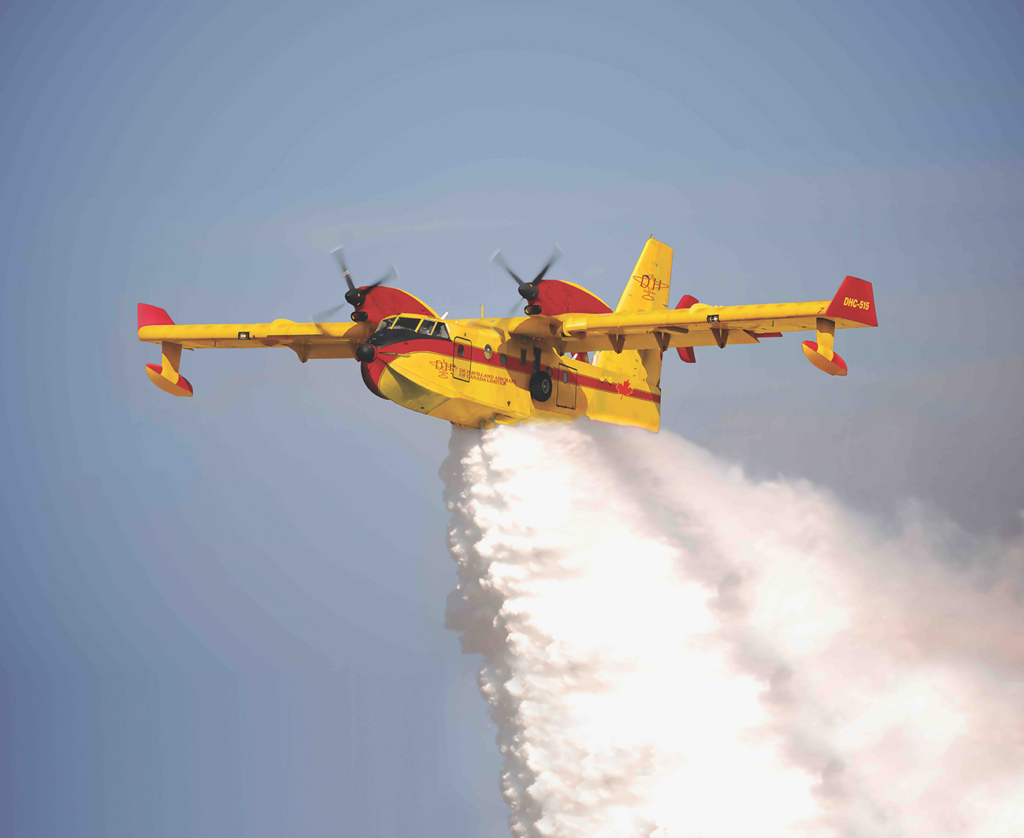
The DHC-515 builds on the Canadair CL-415 aerial firefighter platform, adding modern avionics and enhanced safety features and using updated production standards.
In its latest update on the program, published in March, De Haviland stated: “Production is progressing on the first DHC-515 aircraft, with structures being assembled in our Canadian manufacturing facilities. The cockpit and the hull have been recently joined in our Calgary aerostructure assembly line to form the forward fuselage. In addition, we recently completed the assembly of the first DHC-515 wing box, an impressive 28.6-meter-long structure.“
For now, Ottawa’s aircraft leasing strategy will boost firefighting capacity ahead of what could again be an intense wildfire season across much of Canada.
Featured Image: Conair