


DARPA’s XRQ-73 SHEPARD hybrid-electric ‘flying wing’ drone completes maiden flight

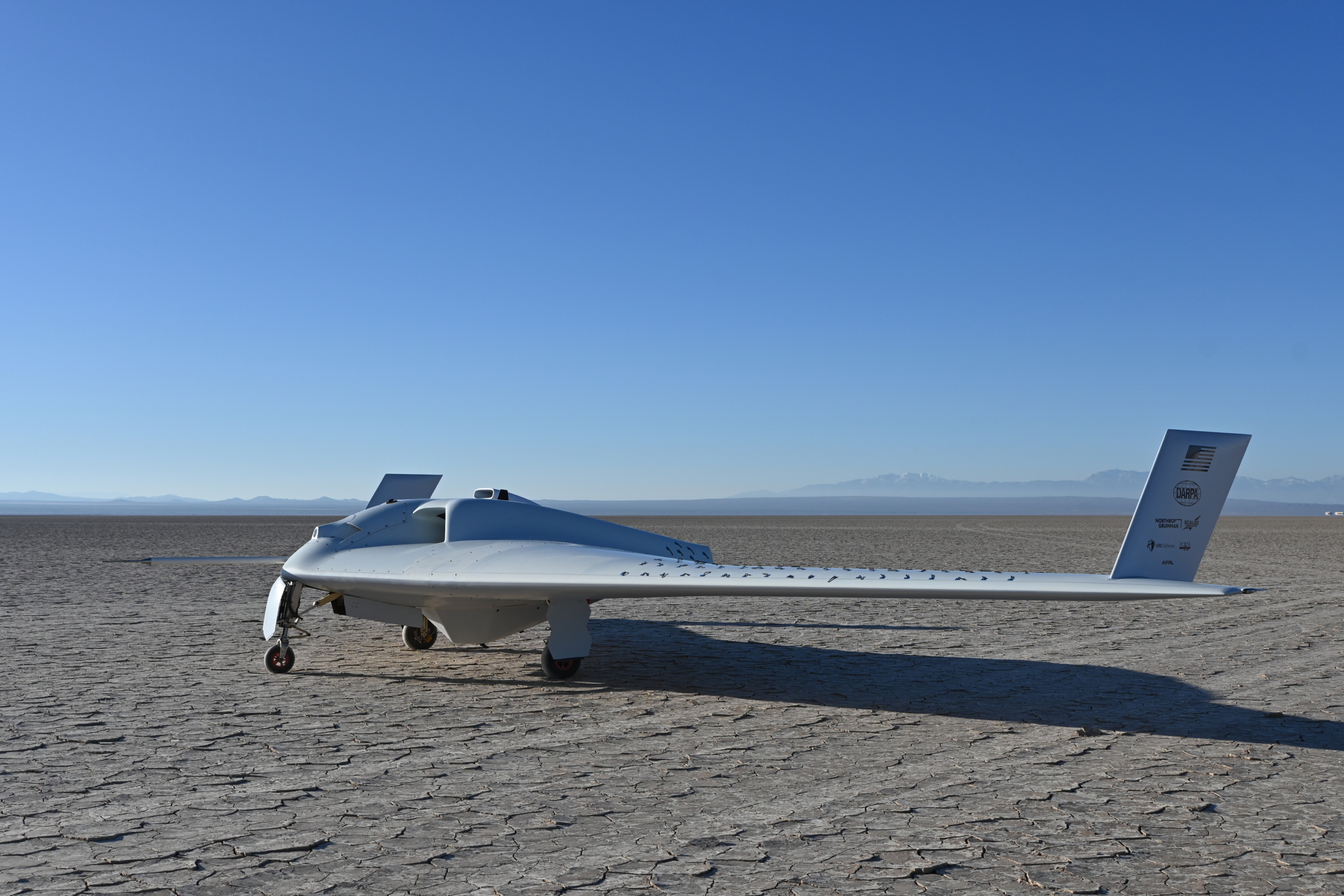
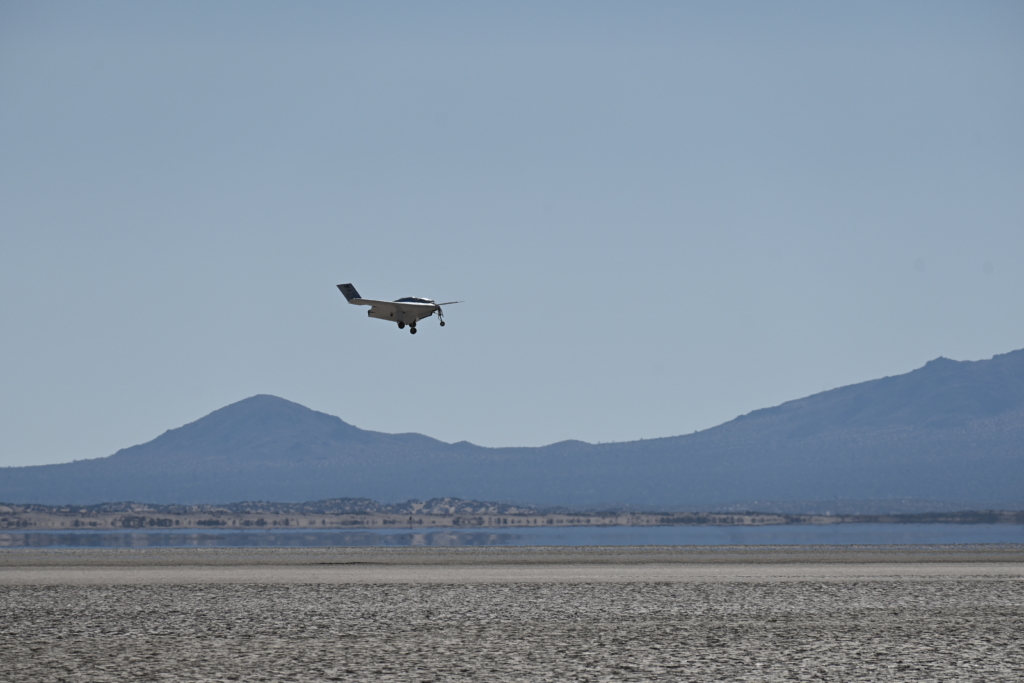
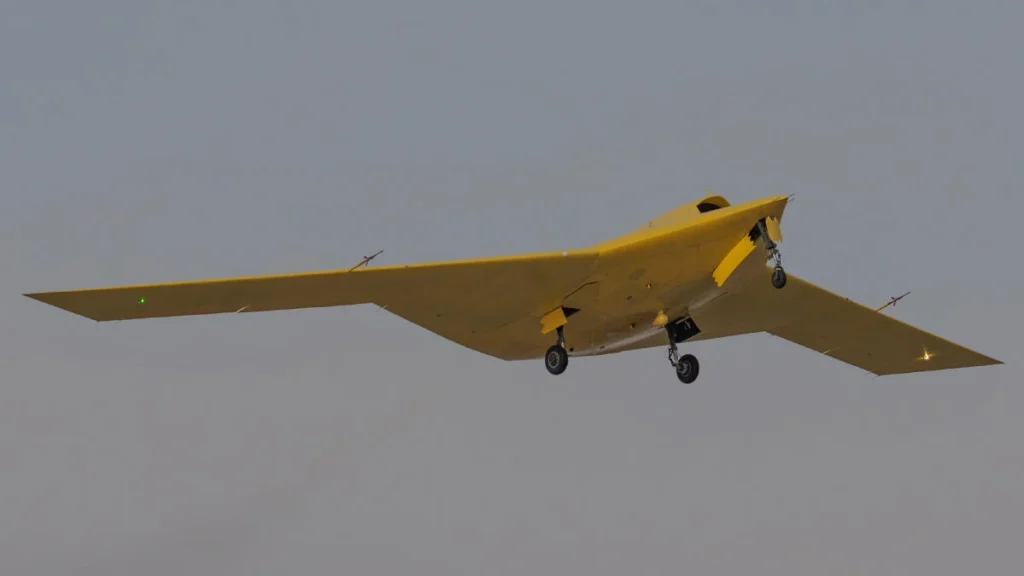
Yesterday, Northrop Grumman announced its XRQ-73 SHEPARD hybrid electric experimental drone has begun flight testing at Edwards Air Force Base in California. The aircraft conducted its maiden flight in April.
First flight of DARPA’s experimental XRQ-73
The XRQ-73 is a collaboration between the Defense Advanced Research Projects Agency (DARPA), Air Force Research Laboratory and Northrop Grumman.
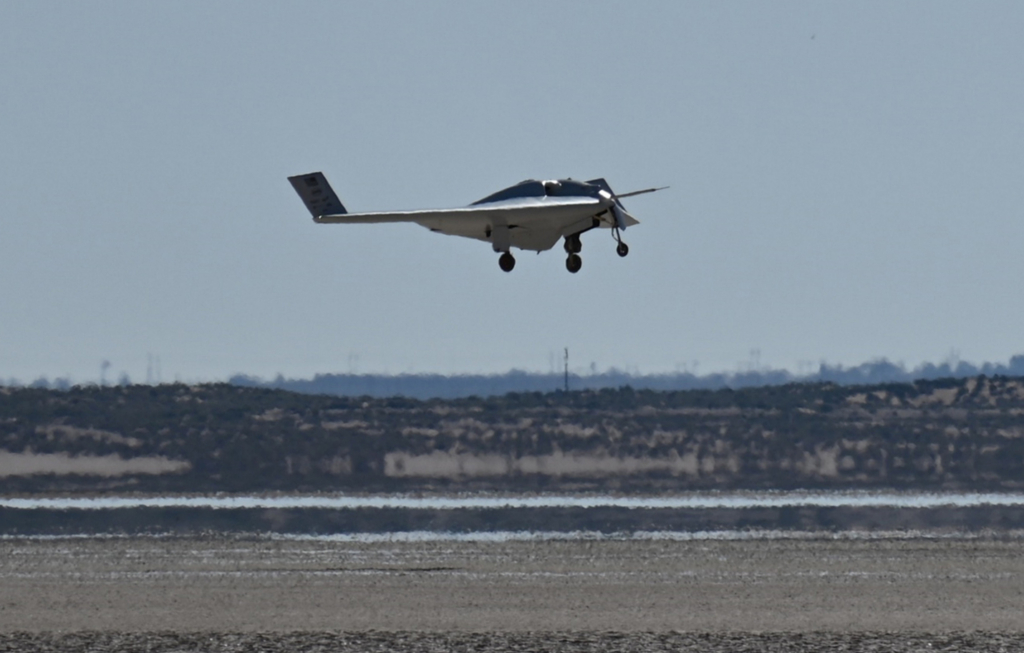
While DARPA has not disclosed what its intended use case is, the designation “XRQ” suggests it is an experimental intelligence, surveillance, and reconnaissance (ISR) drone. It is unclear if it will be configured for other missions.
Northrop Grumman’s subsidiary, Scaled Composites, is also heavily involved in the programme. The XRQ-73 evolved directly from Scaled Composites’ XRQ-72A. DARPA has previously said the XRQ-73 weighs around 1,250 pounds.
The XRQ-73 is being developed as part of the Series Hybrid Electric Propulsion AiRcraft Demonstration (SHEPARD) programme. The aircraft was first unveiled in 2024.
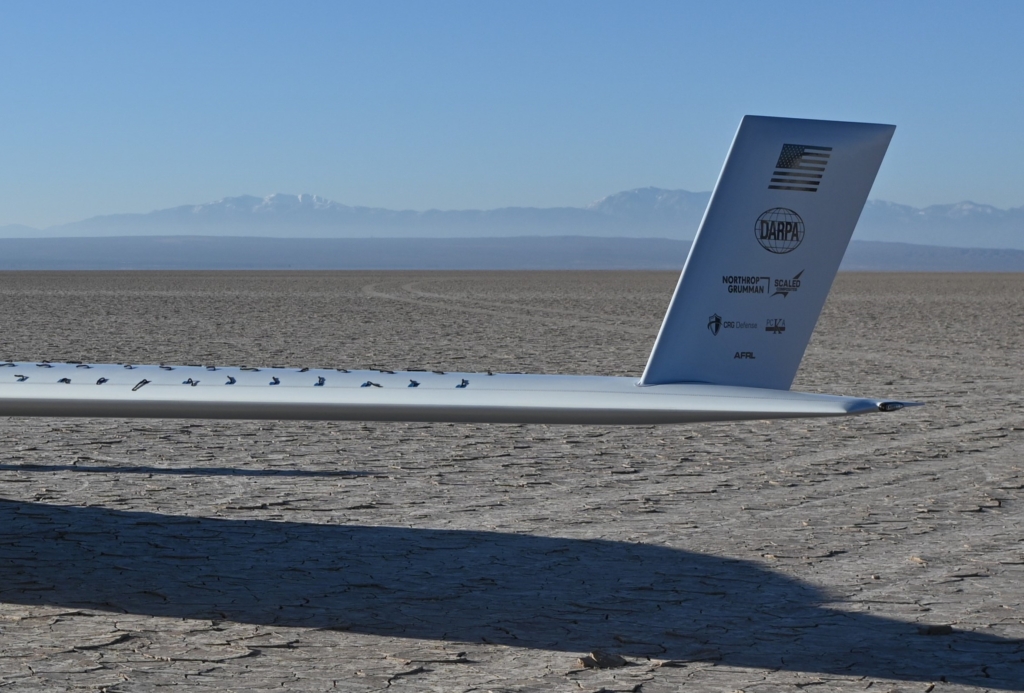
It had been planned for the aircraft to fly in 2024, although it’s unclear why it was delayed to April 2026. Images released show noticeable redesigns (e.g., the addition of two vertical stabilisers) compared with renders in 2024.
Developing high-efficiency and quiet propulsion
The primary goal of the SHEPARD experimental aircraft is to develop high-efficiency and very quiet propulsion technologies.
In the military world, the attractiveness of fuel efficiency lies less with lowering emissions or the cost of fuel, and more with extending the range and endurance of aircraft. Reducing the fuel weight is also important.
Northrop noted, “The XRQ-73’s innovative hybrid-electric propulsion system combines fuel efficiency, reduced emissions and enhanced operational flexibility – enabling new mission possibilities and supporting the evolution of new aircraft designs.”
While the XRQ-73 visibly has features that will lower its radar cross-section, noise is an often overlooked aspect of stealth or low observable operations. Enemy soldiers and instruments can be alerted to the presence of an aircraft by its sound, even if it hasn’t been seen.
Northrop Grumman is a leader in flying wing stealth aircraft
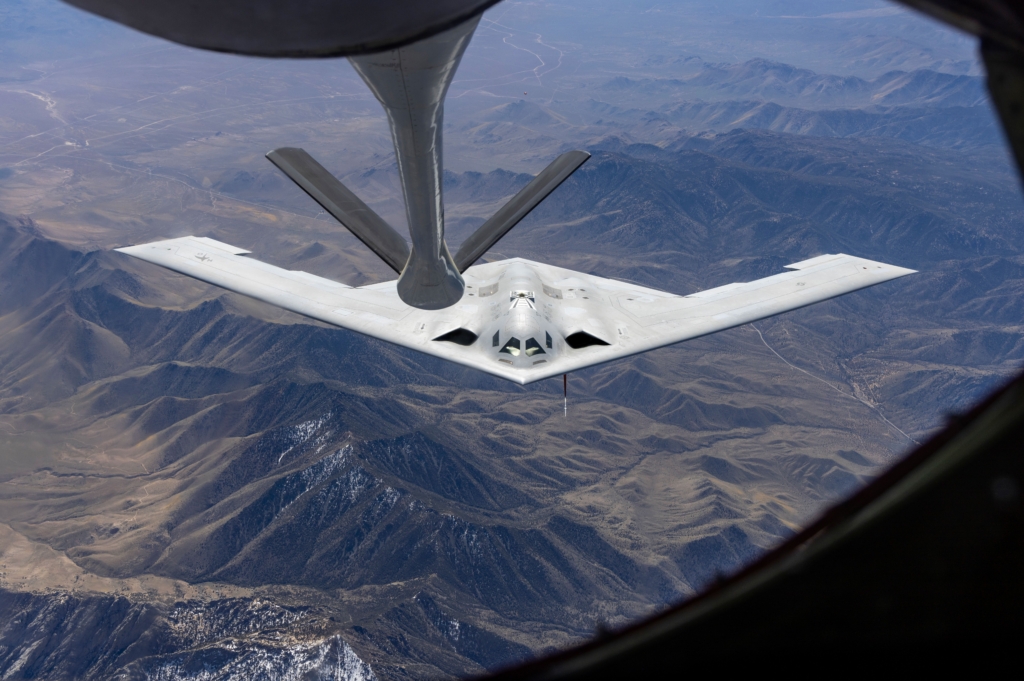
Northrop is best known for its B-2 Spirit; it has also built other various stealthy flying wing autonomous reconnaissance aircraft. The most notable of these is arguably the massive, but secretive RQ-180 that the US Air Force doesn’t officially acknowledge to exist.
The older RQ-170 stealth/low observable flying wing has been acknowledged by the US Air Force, although it is built by Lockheed Martin.
Northrop Grumman is also building the next-generation B-21 Raider strategic bomber to replace the B-1B Lancer and B-2 Spirit.
Notably, the XRQ-73 is not the only aircraft of its type in development for the USAF. The War Zone reported in 2025 that a $99 million contract had been awarded to General Atomics for its GHOST programme.
The description of the GHOST programme is “hybrid-electric propulsion ducted fan next-generation intelligence, surveillance, reconnaissance/strike unmanned aerial system,” which seems very similar to the XRQ-73.
China is also developing a large range of low-observable flying wing autonomous aircraft.
Speaking of the XRQ-73, SHEPARD program manager, Lt. Col. Clark McGehee, said, “The architecture proven by the XRQ-73 paves the way for new types of mission systems and delivered effects. We look forward to advancing this technology through the flight test program and delivering new capabilities for our warfighters.”
Featured Image: DARPA


