


Qatar’s Hamad Airport reopens to foreign airlines within a narrow window for operations

5 min read
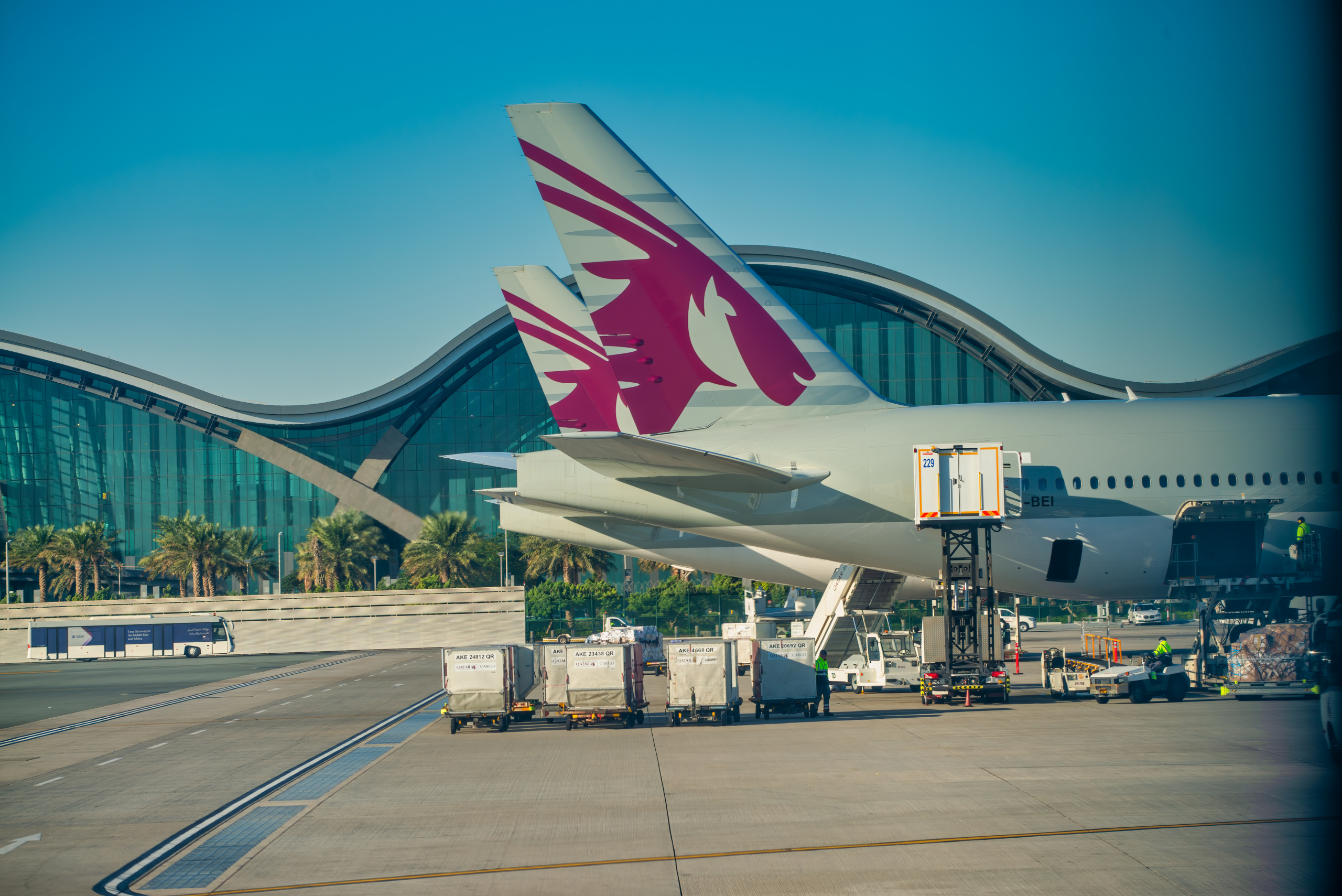
The Qatar Civil Aviation Authority has authorised a phased reopening of Hamad International Airport to foreign carriers, potentially restoring international connectivity through Doha.
Under the latest Notice to Airmen (NOTAM), foreign airlines are now permitted to resume operations, subject to prior approval and enhanced safety procedures. The NOTAM expands access to Qatar beyond the limited services offered by Qatar Airways.
The national carrier has been the sole airline operating from Hamad, with restricted repatriation and special-authorisation flights, since the hostilities between the United States, Israel, and Iran forced the Gulf nation to more tightly control its airspace.
However, the reopening does not yet signal a return to normal, and with a tenuous ceasefire in the Iran conflict about to expire, the window available to international airlines to resume service to Qatar may be brief.
CAA issues ‘Resumption of Foreign Airlines’ Operations to Qatar’ NOTAM
In an official statement published on April 20, Qatar’s Civil Aviation Authority announced it had issued NOTAM permitting a “gradual resumption of operations for foreign airlines in the State of Qatar via Hamad International Airport.”
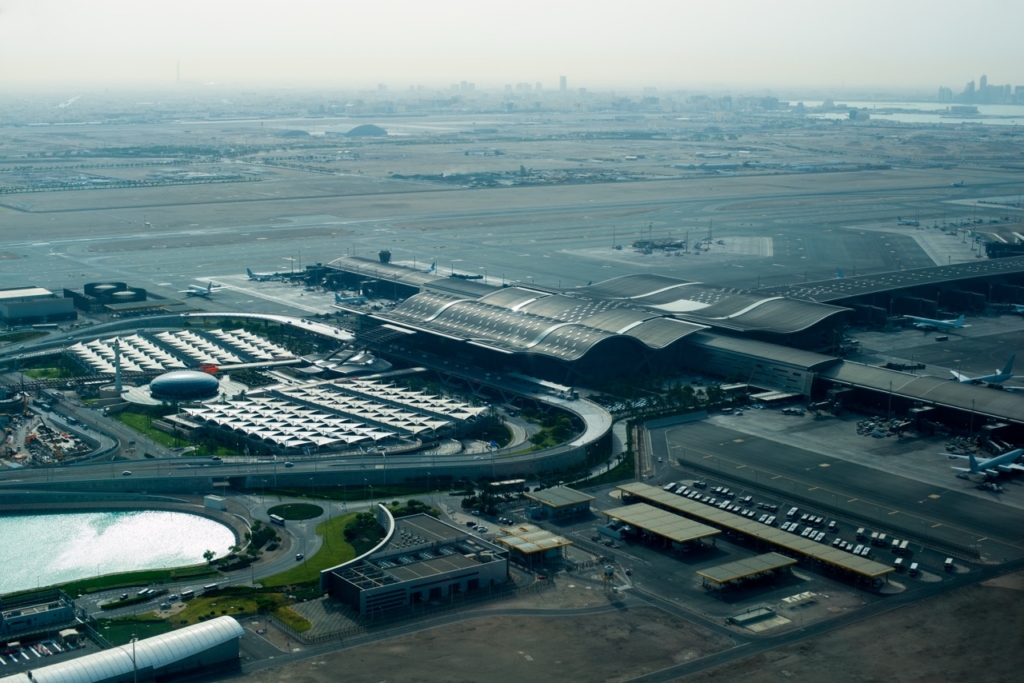
The CAA said its decision to permit foreign carrier operations followed “a comprehensive assessment of the situation, conducted in coordination with all relevant national entities, to ensure the highest levels of readiness and operational efficiency.”
The authority confirmed that “all flights and related operations will be carried out in accordance with the highest internationally recognised safety and security standards, with all necessary measures and precautions in place to safeguard passengers and aviation personnel,” adding that “the safety and security of all” remains its “top priority.”
Pre-reopening conditions still define airline operations in Doha
An April 13 operational update from OpsGroup—reflecting conditions before the latest NOTAM—still showed the region functioning under a “central corridor shutdown,” with large parts of Middle East airspace unavailable to civil aviation.
While the April 8 ceasefire allowed for the reopening of the airspace in Syria, Iraq and Bahrain, airlines are still mainly using two limited routes, including the northern Caucasus corridor and the southern Arabian Sea corridor to connect Europe and Asia.
The use of Gulf airspace and airport hubs has been primarily restricted to national carriers operating limited critical flights.
Qatar Airways is still the only active carrier at Hammad
Until the recent NOTAM, Doha FIR was open but heavily restricted. Operations at Hamad International Airport have been limited to Qatar Airways and Qatar Airways Cargo.
As of the time of writing, the only flights active at Hamad International Airport and in Qatari airspace were still operated exclusively by Qatar Airways.
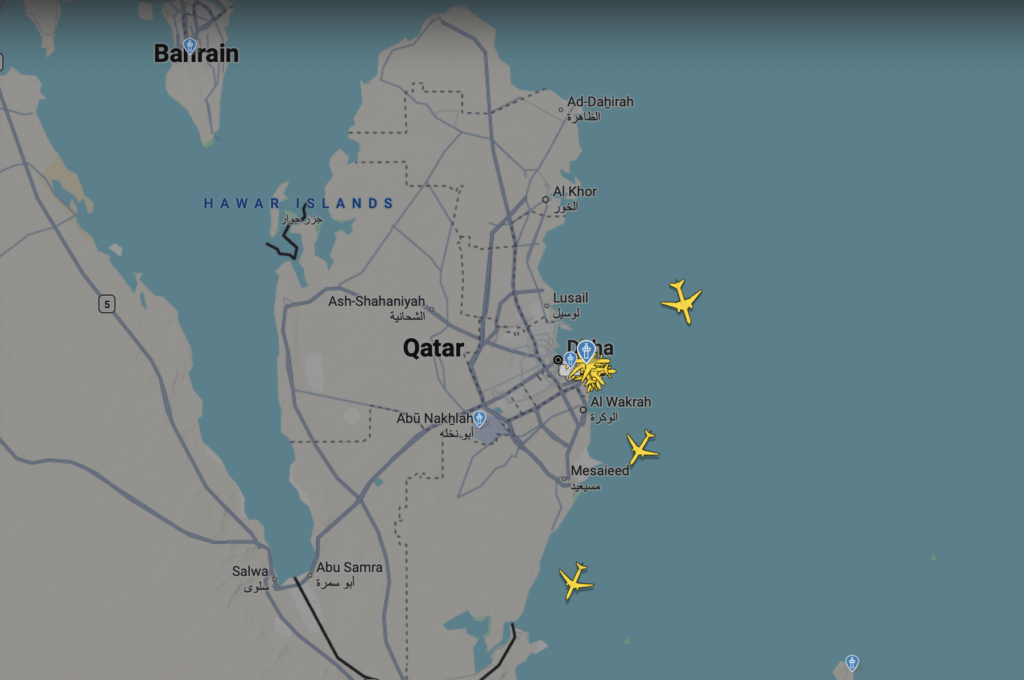
According to Flightradar24 data for Hamad International Airport over the past seven days:
- The airport has served 115 destinations across 63 countries
- The busiest routes were:
- Doha–London Heathrow: 33 flights
- Doha–Hong Kong: 31 flights
- Doha–Riyadh: 30 flights
- The airport has seen a total of 1,917 aircraft movements, including 1,034 takeoffs and 883 landings.
The latest CAA decision does not entirely remove airspace constraints, though it allows foreign airlines to operate within the same tightly controlled structure.
Hammad International Airport arrivals and departures show limited foreign flights that may not operate
Although the arrivals and departures board shows other carriers have scheduled flights, these flights have not taken place.
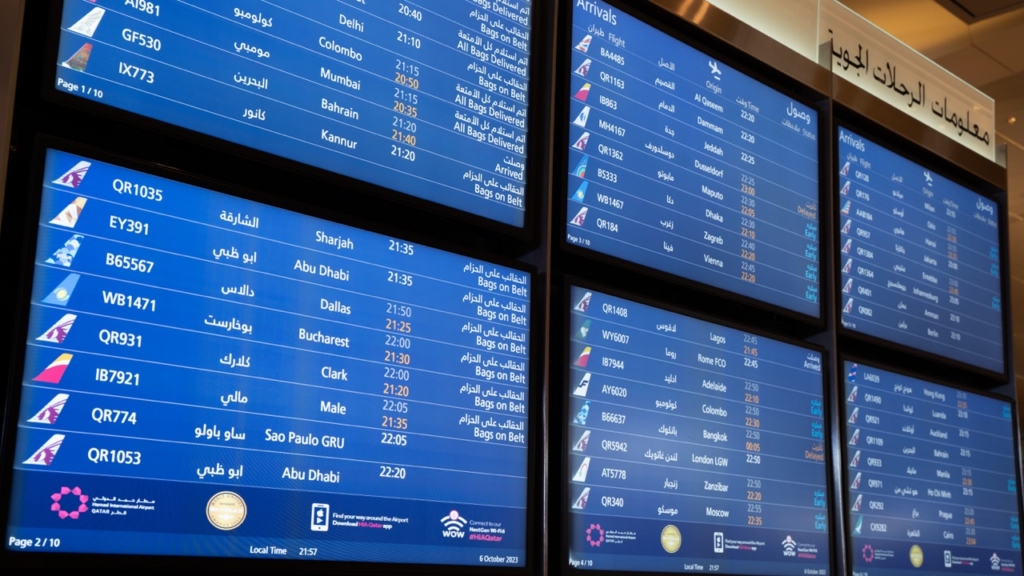
The arrivals board showed eight foreign carriers with slots on April 21:
- Nepal Airlines flight RA253 from Kathmandu (status unknown). Previously scheduled on April 9, 13 and 16, but did not operate.
- RwandaAir flight WB300 from Kigali (status unknown). Previously scheduled on April 1, 3, 6, and 13, but did not operate. Last flight on February 18.
- Turkish Airlines flight TK6182 from Istanbul (status unknown). Previously scheduled on April 7 and April 14, but did not operate.
- Himalaya Airlines flight H9353 from Kathmandu (status scheduled). Previously scheduled daily flights appear from April 12, but did not operate.
- Egypt Air flight MS935 from Cairo (status cancelled). Previously scheduled and cancelled on March 22. This was a daily flight, but the last flight to arrive in Doha was on 27 February.
- Kuwait Airways flight KU619 from Kuwait City (status scheduled). This daily flight has remained on the schedule since March 29 but has not operated. The last flight arriving in Doha was on February 27.
- Cargolux flight CV4802 from Luxembourg (status scheduled). Cargolux has previously used Doha as a connection hub for flights from Luxembourg to Hong Kong. The cargo carrier has been operating direct flights to Hong Kong since March 10, but has kept the Doha stop on the schedule.
- Badr Airlines flight J4680 from Port Sudan (status scheduled). The airline has maintained this three-times-weekly flight on the schedule since March 29, but has not operated it since February 26.
All other arrivals are either Qatar Airways or Qatar Cargo flights. The status of foreign carrier departures on the board is equally uncertain. Many are corresponding outbound flights for the scheduled arrivals.
Flightradar24 shows an increase in departures at DOH during the ceasefire—all Qatar Airways flights.
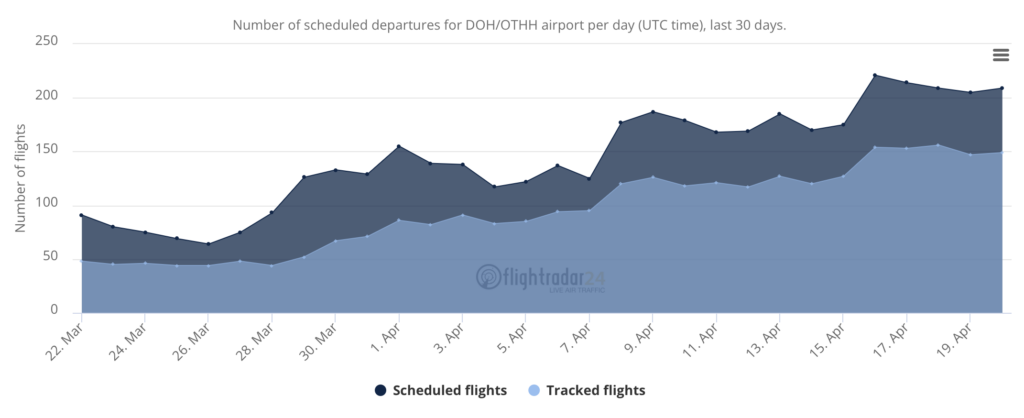
While the CAA has reauthorised foreign carrier operations, airlines have not been quick to reinstate their services.
Short ceasefire window adds uncertainty
The reopening of Hamad International Airport to international carriers comes within a narrow diplomatic window. The two-week ceasefire between the United States and Iran, in effect since April 8, could expire as soon as April 22 if planned peace talks on Wednesday collapse.
President Donald Trump told PBS News that if there has been no resolution to existing disputes with Iran when the ceasefire expires, “then lots of bombs start going off.”
Airlines would be operating in a temporary de-escalation environment for a few hours, but the situation could shift rapidly. A return to hostilities could lead to immediate airspace closures and revised NOTAMs, forcing airlines to suspend any newly resumed operations.
Doha’s reopening is a notable policy shift, but it may not lead to an immediate operational restart for carriers that have already gone weeks without service and will be wary of the high risks and potential disruptions. That may only change if the ceasefire holds.
Featured Image: jovannig / stock.adobe.com
Sign up for our newsletter and get our latest content in your inbox.


More from

September 13, 20264 min read

September 12, 20264 min read


