Airbus partners with Virgin Atlantic to cut cabin food waste with AI

April 15, 2026
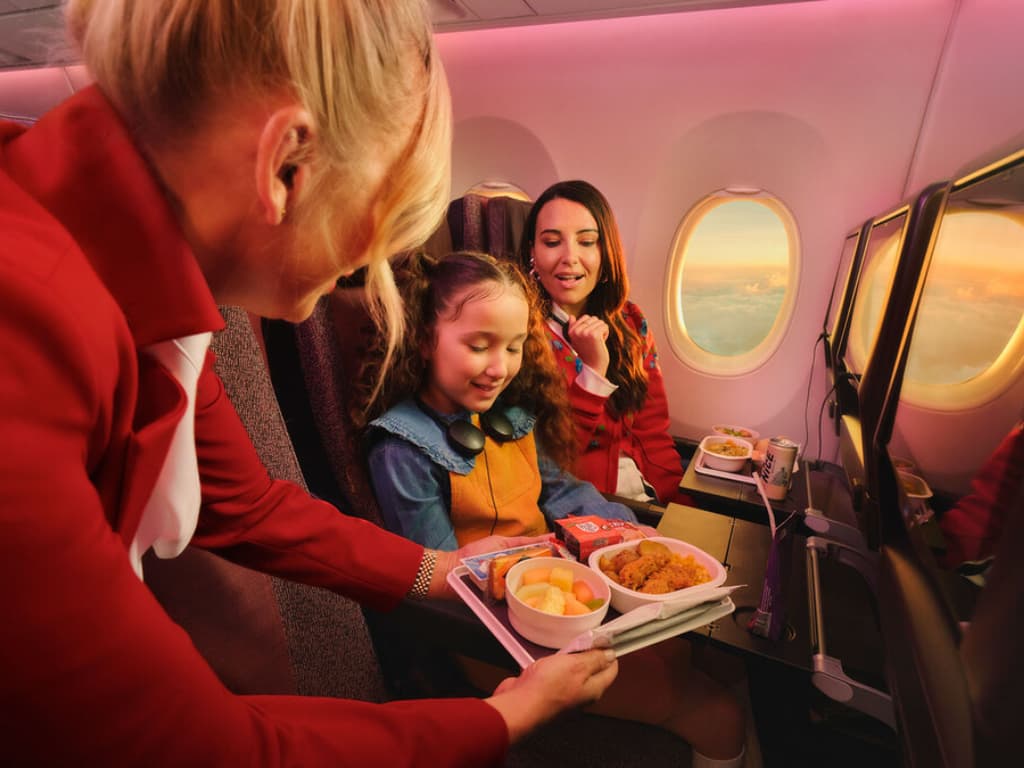
Airbus and Virgin Atlantic have teamed up to develop an artificial intelligence (AI) tool that can help reduce the amount of food waste being generated by long-haul flights.
Known as ‘Smart Catering’, Airbus hopes that by adopting the technology, airlines will be able to achieve double-digit reductions in preventable waste associated with serving food and beverages on board their flights.
Airbus tackles in-flight food waste issue with new AI-driven solution
Airbus is partnering with Virgin Atlantic to introduce new technology to help reduce the amount of food and drink that goes to waste on commercial passenger flights. While the new technology is still under development, it is hoped that, once rolled out, it will assist airlines in planning so that less food ends up in landfill or incinerated.

A significant portion of airline food waste (between 18% and 20%) is untouched food and drink. Airbus identified this food waste as a challenge that needs to be addressed to support the UN 2030 Agenda for Sustainable Development. Since then, the company has been working on its response to the issue, and Smart Catering is its latest innovation.
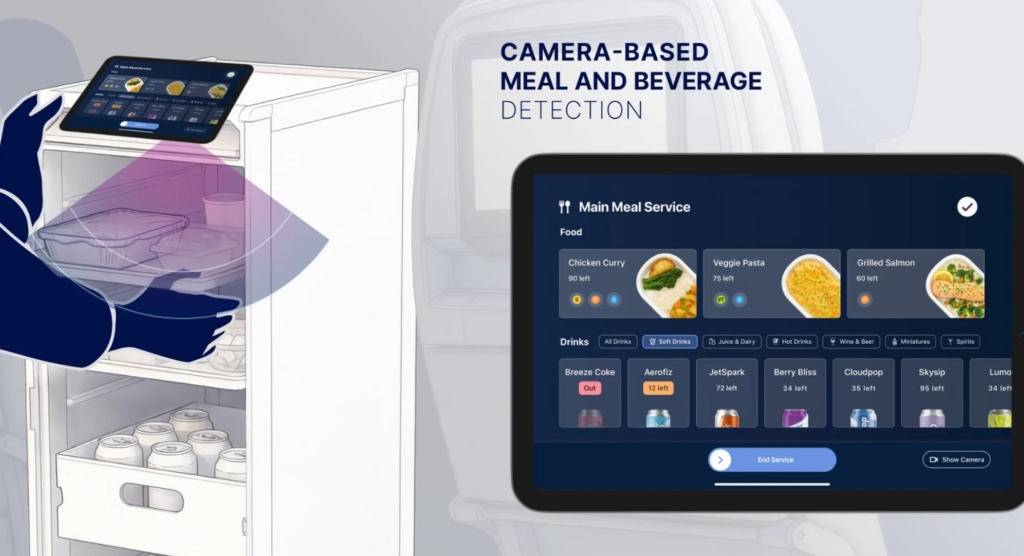
According to Airbus, its Smart Catering solution incorporates AI software that can be installed on existing crew tablets and mobile devices. The software then analyses the contents of meal trays as they are withdrawn from standard catering trolleys by crew members on passenger flights during meal services.
How the Airbus AI tool helps airlines drive down food waste
The AI relies on the existing camera of the cabin crew’s mobile or tablet device to analyse the contents of the meal tray as it is pulled from the trolley. The AI then transmits the captured data to the on-board inventory platform, which updates the consumption totals as well as the remaining availability of stock on board.
Likewise, for beverages, the solution tracks consumption and updates the stock.
While Airbus acknowledges that the tracking of meals and beverages happens as a matter of course in the normal flow of cabin crew members carrying out their duties, the Smart Catering solution goes beyond tracking consumption levels.
Through a Smart Catering app loaded on their mobile devices, cabin crew members can access real-time information on remaining stock levels, as well as specific galley locations, allergy and nutrition information, and other dietary guidance that passengers may require.
Additionally, once rolled out more widely, Smart Catering will come with a ‘ground cloud’ through which all onboard data from the crew devices may be analysed. This facility will allow airlines to use route-level insights to quantify precise passenger demand fulfilment and manage food stock levels accordingly.
It is this aspect in particular that will allow carriers to better manage the quantities of food loaded on board and customise supplies to better match demand based on historic data.
“During the flight tests, the tool provided features like interactive galley search, live inventory, and intuitive dietary information free crew from manual forms and reporting, allowing them to focus on the passenger,” commented Elise Weber, Head of Service Ecosystem Connected Aircraft at Airbus.
“The system provided real-time availability and location status of all food and beverage items and could indicate in which trolley and galley they can be found during the flight.”
From concept to real-world: Testing Airbus Smart Catering with Virgin Atlantic
The Smart Catering solution was successfully tested at the Virgin Atlantic ground cabin mock-up centre located near London Gatwick Airport (LGW) in the UK in 2025.
Following the conclusion of the ground trials, Airbus tested its innovative Smart Catering concept in live conditions on several Virgin Atlantic transatlantic passenger flights.
Smart Catering was deployed onboard for in-flight catering service checks on an Airbus A330 (London to New York and return) and an A350 (London to Orlando and return) to collect real-time data during actual commercial passenger flights.
According to Airbus, the ground and air-based tests confirmed that the AI and data-driven solution revealed a clear picture by automatically capturing passengers’ meal consumption data and tracing the quantity of unused food and drinks.
Airbus added that the Smart Catering platform has the potential to yield double-digit reductions in preventable waste associated with carrying food and beverages on board.
“At Virgin Atlantic, we are always looking for innovative ways to elevate our premium onboard experience while reducing our environmental impact, said Darryl Bailey, Head of Inflight Services at Virgin Atlantic. “Collaborating with Airbus on the Smart Catering trials has given us valuable insight into how data and AI can help us better match customer preferences, minimise waste, and operate more efficiently.”
Food waste: The scale of the issue and the actions being taken by airlines
As sustainability has risen in importance in international airline operations, a spotlight has been increasingly shone on the issue of food waste. Ultimately, airlines are now taking the issue far more seriously than they once did.
According to the International Air Transport Association (IATA) and the Aviation Sustainability Forum (ASF), the global airline industry currently generates an estimated 3.6 million tonnes of cabin and catering waste annually, based on 2024–2025 data. This volume was expected to reach four million tonnes by the end of 2025.
The industry bodies also warned that the amount of on-board food waste could potentially double by 2040 if current practices are not changed, primarily due to the rapid increase in passenger numbers.

The carriage and discharge of food waste, particularly on long-haul flights, is not only a waste of money. Once an aircraft crosses borders, the rules surrounding the disposal of food waste change. Countries with strict agricultural laws, like the US, Australia, New Zealand and many in the EU, treat international food waste as a potential biohazard.
The primary concern is about invasive pests, plant diseases or contaminants hitching a ride in leftover meals. Even a banana peel or half-finished sandwich from another country can technically introduce risks. Because of these regulations, most uneaten food from international flights is either incinerated, steam-sterilised or deep-buried in regulated waste facilities, driving up carbon emissions.
Accordingly, airlines have had to get creative in cutting down the leftovers. For instance, Lufthansa offers passengers the option to purchase fresh meals at a reduced price on the day’s final flights (called ‘Onboard Delights Last Minute’).
KLM is also using artificial intelligence to estimate the precise number of meals required for each flight. Several other airlines, including Lufthansa and Etihad, are also following suit.
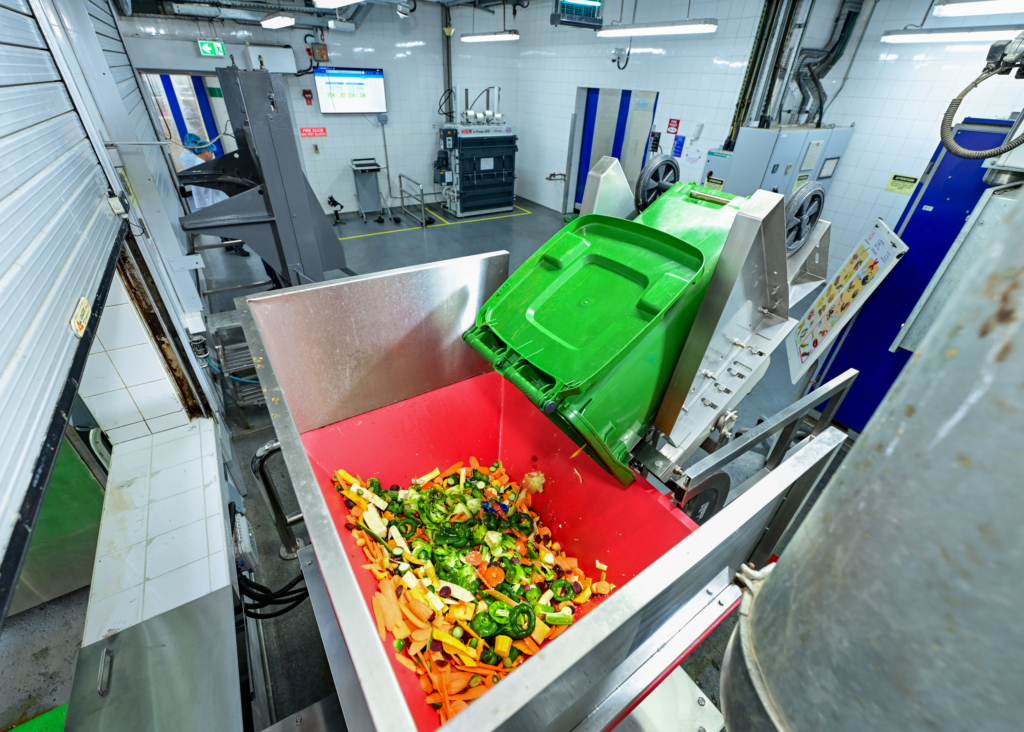
Additionally, Emirates is tackling food waste with the help of a biodigester that can process over a ton of organic matter into grey water each day, which can then be safely discharged.
Featured image: Virgin Atlantic