John Travolta’s Boeing 707 begins its final epic journey from the US to Australia

6 min read
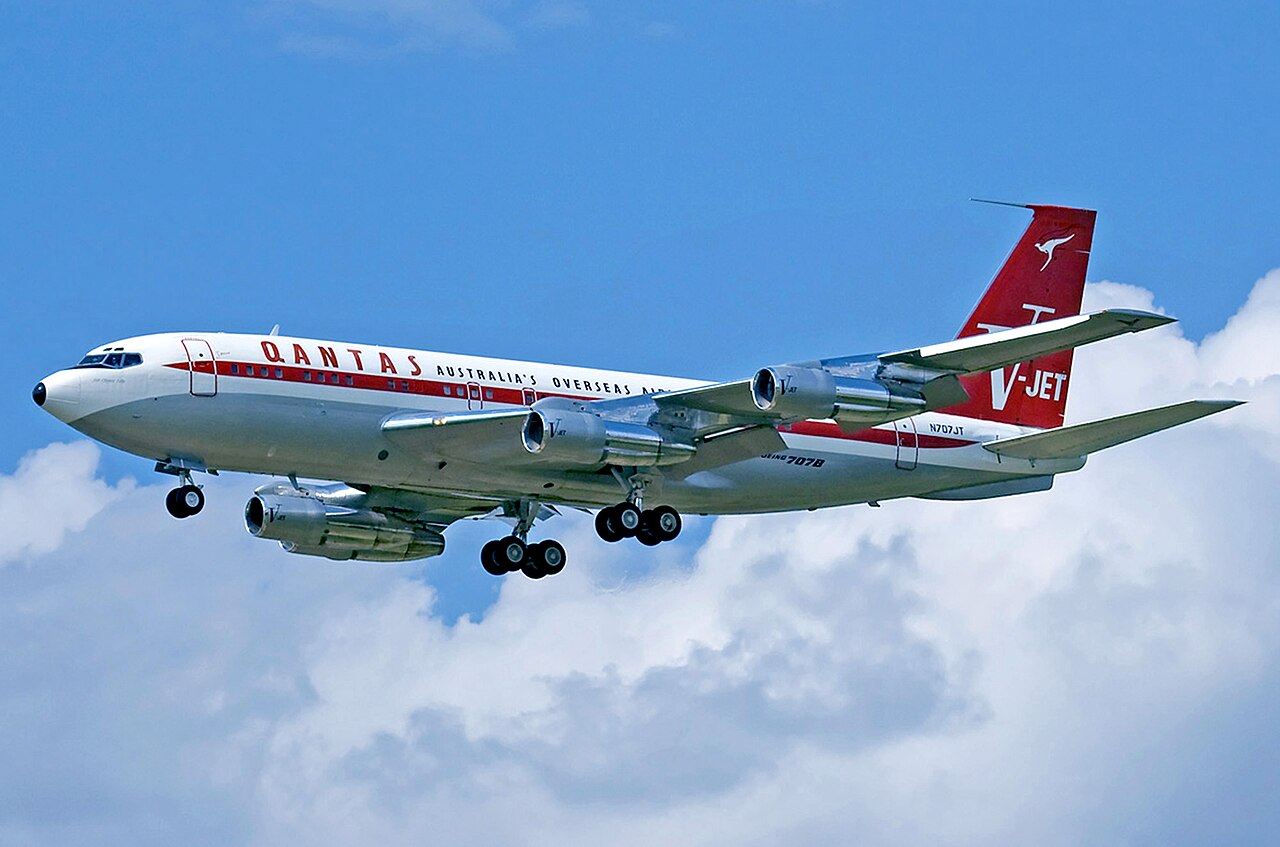
The Boeing 707 that was formerly owned by the actor John Travolta has begun its final journey. Having been professionally dismantled in the US, the aircraft is being shipped in several parts to Australia, where a New South Wales aviation museum will reconstruct the plane.
Not only will they rebuild the aircraft for display, but there are plans to restore it to such a condition that it can conduct taxi runs around its new home airfield.
John Travolta’s former Qantas Boeing 707 heads home to Australia
The Boeing 707-138B that was originally owned by Qantas and later by the US actor John Travolta has begun an epic journey by land and sea that will see it take up its retirement at an Australian aviation museum.
Having been originally delivered to Australian carrier Qantas in 1964, the aircraft will be reassembled and take up residence at the HARS (Historical Aviation Restoration Society) Aviation Museum, located some 65 miles (100km) south of Sydney on the country’s east coast.
In recent days, the aircraft fuselage and other key components have been loaded onto specially designed transporter vehicles to begin a 10,000-mile (16,000km) journey from Georgia in the US to Sydney, Australia. The aircraft is being shipped in parts to its new home, where HARS engineers will restore the aircraft to its former glory.
N707JT begins its final journey from the US to Australia
Since the start of 2016, the aircraft (with the appropriate registration of N707JT) has been stored at Brunswick Golden Isles Airport (BQK) located five miles (8km) north of the city of Brunswick in Georgia, United States. It flew there from Travolta’s home in Florida for a routine maintenance inspection.
However, Boeing engineers determined that the aircraft could no longer be certified as airworthy due to corrosion and other issues, meaning it had effectively flown for the last time.
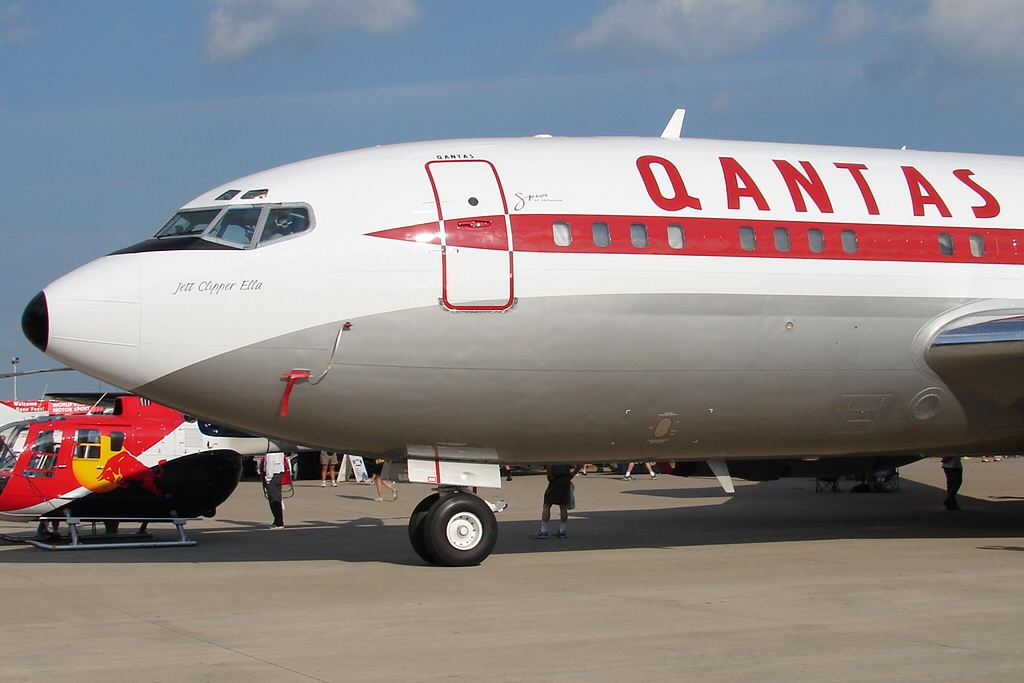
Although Travolta had owned the aircraft as part of his own private aircraft collection since 1998 and named it ‘Jett Clipper Ella’ after two of his children (Jett and Ella), the plane started its career flying for Qantas.
As such, Travolta decided to donate the aircraft to the HARS Museum in Abion Park-Shellharbour/Wollongong Airport (WOL) in New South Wales, where it will join a restored Qantas Boeing 747-400 (VH-OJA) that has been on display since 2015.
The HARS Museum has close links with the Australian national carrier, with several key members of its engineering staff being former Qantas employees.
How to dismantle, ship and rebuild a historic Boeing 707
The dismantling, shipping, and restoration of N707JT is being overseen by the US company Worldwide Aircraft Recovery, which specialises in the transportation of aircraft from one point in the world to another.
The dismantling of N707JT began in mid-2025 when the tail, horizontal stabilisers and engine were detached from the aircraft. Since September, at least one of the engines from the aircraft has been put on display at the HARS Museum. HARS staff have been making regular trips to Brunswick throughout the dismantling process.
Then, in early 2026, the rest of the dismantling process got underway. The landing gear was removed, and the aircraft was placed on a special trailer to allow the removal of the wings. By early March, the wing detachment was underway, a process that is as meticulous as it sounds, with thousands of bolts and rivets having to be removed and catalogued.
With the wing removal completed last week, the aircraft fuselage has begun the relatively short road trip to the port of Brunswick, where it will be loaded onto a transport ship for its journey across the Atlantic and Pacific Oceans via the Panama Canal to Australia. The journey is scheduled to take several weeks.
Once on Australian shores, the aircraft will be taken by road from Sydney to Albion Park, where its much-anticipated arrival at HARS will be marked by a s[special event before the process of reassembling and restoring the aircraft commences.
Once completed, the aircraft will be put on display alongside the Qantas Boeing 747-400 for visitors to tour and take a glimpse of what flying must have been like back at the dawn of the jet age.
Why N707JT is much more than just a celebrity aircraft
While N707JT is not just one of a few surviving Boeing 707s worldwide, its heritage goes much further back than simply being owned by a famous celebrity.
The aircraft, originally registered as VH-EBM with Qantas, was a special model of the Boeing 707 built only for Qantas right at the start of the jet age. In 1958, Qantas became the first foreign customer to order the 707, with its customer number ‘38’ meaning that the aircraft would be designated as a 707-138.
However, Qantas requirements dictated that the standard Boeing 707 had to be shortened by around three metres (10ft) to lower its empty weight to improve airfield performance and enable greater range. Boeing happened to already have a design that fitted the bill in the form of the KC-135 military tanker aircraft.
Now designated the 707-138B, the Qantas 707s had a standard take-off weight of 247,000 lb with Pratt and Whitney JT3C turbofan engines producing 13,000 lb of thrust. Becoming known as the ‘Hot Rod’, the 707-138Bs became an important subfleet within the Qantas International operation.
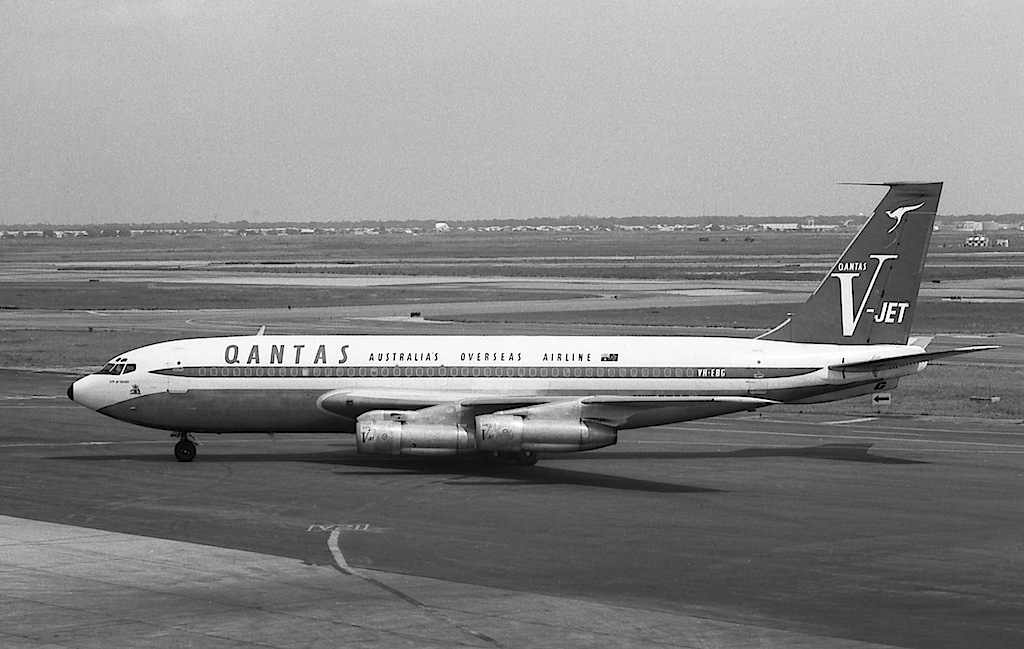
Boeing built 13 of these unique aircraft for Qantas’ special requirements. These included operating out of shorter airfields such as Nadi in Fiji and being able to carry a maximum payload on longer sectors such as those between Australia and Hawaii, while still being suitable to operate in the hotter months of the Australian summer.
There were several key differences between Qantas’ standard Boeing 707s and the -138B variant. The shorter version had different engines and introduced the V-Jet nomenclature and livery. Additionally, a ventral fin under the rear fuselage rudder was introduced to increase stability for hot-and-high take-offs, giving the shorter fuselage and more powerful engines.
Jett Clipper Ella to begin its new life in Australia
With N707JT finally underway on its journey to its final resting place in Australia, another icon of aviation heritage and an important piece of Australian aerospace history will be preserved and will be “stayin’ alive” for generations to come.
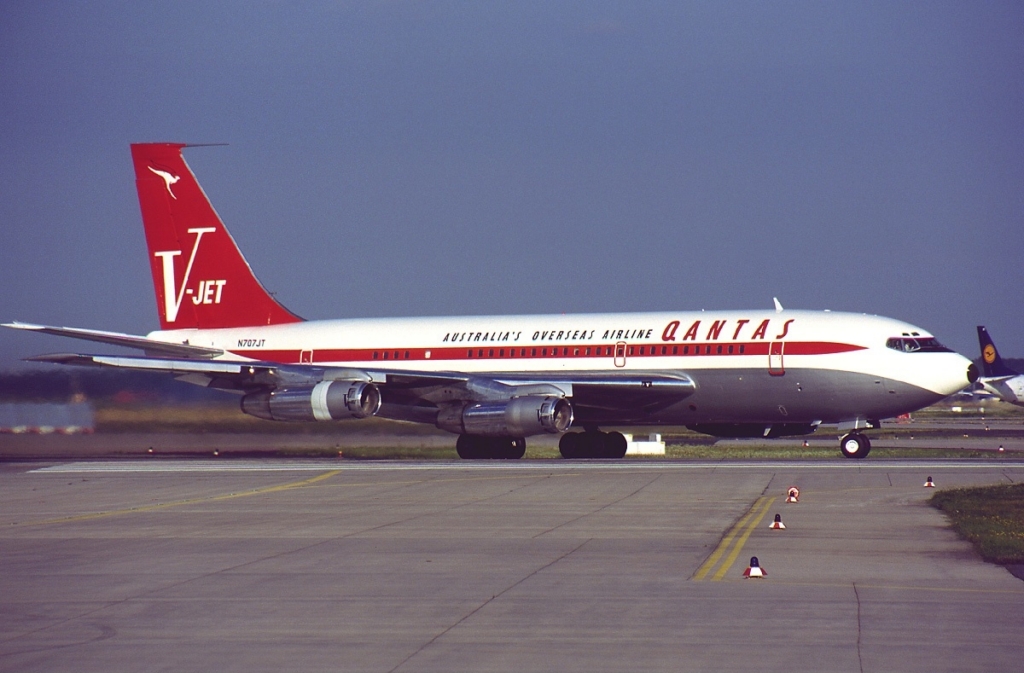
Incidentally, a second Hot Rod aircraft (VH-XBA) also remains and is on display at the Qantas Founders’ Museum in Longreach, Queensland, Australia. This aircraft, like N707JT, will be seeing out its retirement in the company of two other Qantas aircraft – a Boeing 747-200 as well as a Lockheed Constellation.
Featured image: Altair78 / Wikimedia Commons
Sign up for our newsletter and get our latest content in your inbox.


More from


October 17, 20264 min read