The evolution of aerial war in Ukraine: From Russian air superiority bid to drone deadlock

7 min read
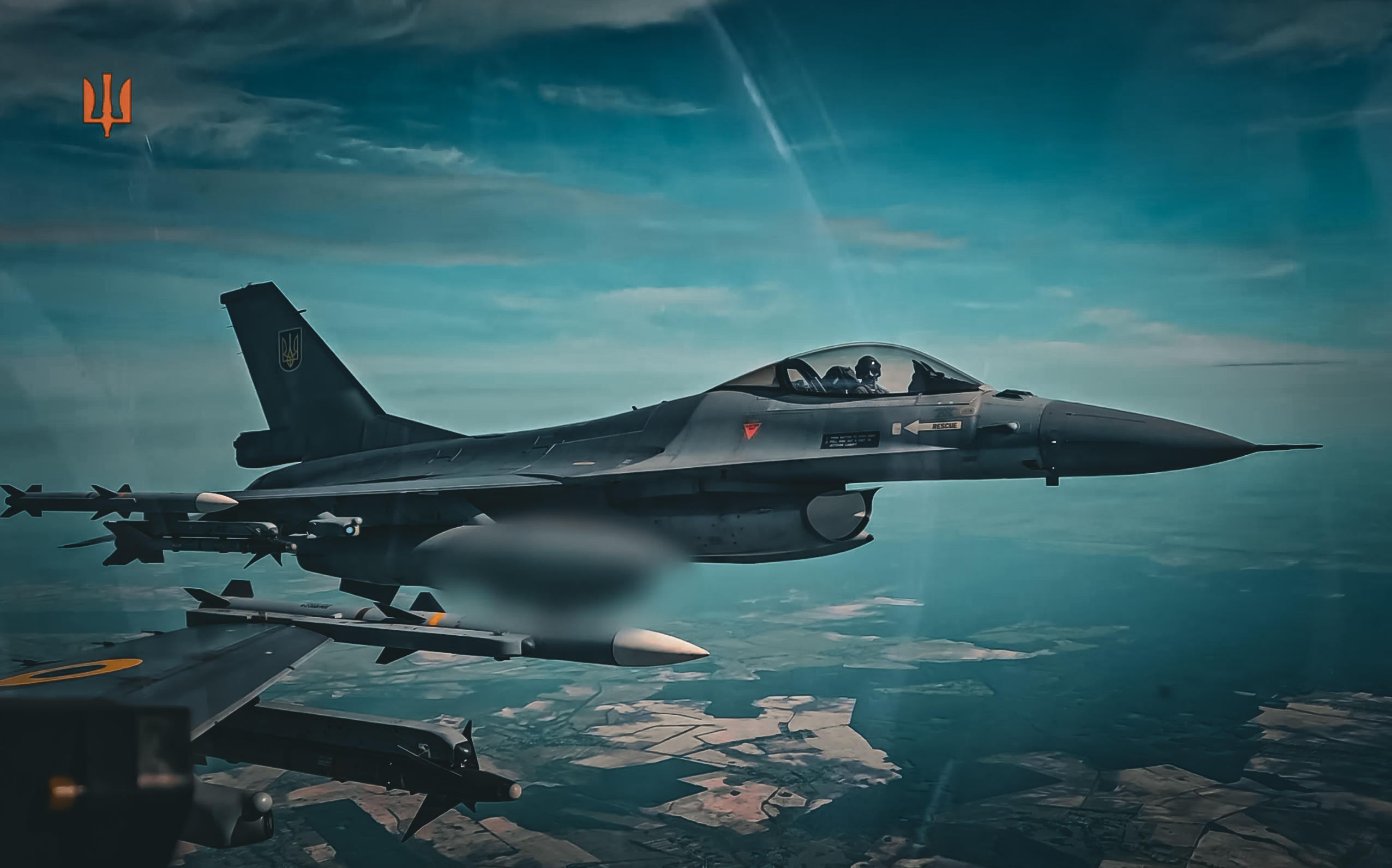
Four years on, and the air war in Ukraine is dominated by drones. This can be traced back to the early days of the war when Ukraine successfully defended its airspace, forcing the Russian Air Force to pull back with sustainable losses.
Why the Russian Air Force failed to establish air superiority in Ukraine
The Russian invasion of Ukraine has now dragged on for more than four years, or around 12 years if one counts from Russia’s 2014 invasion of Crimea and hybrid invasion of the Donbas.

After four years of full-scale invasion, Russia has failed to capture all of the Donbas or even destroy the Ukrainian Air Force as a fighting force.
The last four years have seen a dramatic evolution of war. In the opening stages of the war, the Russian Air Force sought to achieve air superiority by destroying Ukraine’s ground-based air defences and destroying its limited fleet of around 130 dated Soviet-era fighter jets.
The Russian Air Force did succeed in destroying many of Ukraine’s air defences and attriting much of the Ukrainian Air Force, but it also suffered unstainable losses and failed. In some respects, this opening stage recalls the Battle of Britain of 1940.
Russia’s core fighter jet fleet
- Sukhoi Su-35S: 135-140
- Sukhoi Su-30M2/SM/SM2: 140-145
- Sukhoi Su-57: 20
- Sukhoi Su-34M: 125
- Mig-31BM/BSM/K: 125-130
Russia’s air force boasts large numbers on paper and impressive aerobatics at airshows. But it lacked key enablers and force multipliers, a deep, highly trained pilot pool, and dedicated electronic warfare aircraft.

Air forces like that of the United States are built for projecting power and conducting SEAD (Suppression of Enemy Air Defense) and DEAD (Destruction of Enemy Air Defense), Russia’s air force is not. It is built for numbers and the defence of its own airspace.
Put another way, when tasked with establishing air superiority over Ukraine, the Russian Air Force was being asked to do something it was not designed to do.
Russia’s lack of air superiority has reshaped the war in Ukraine
The defeat of the Russian Air Force in its attempt to control the skies shaped the air war and almost everything that came after. Unable to dominate the skies, this allowed the Ukrainian Air Force to survive, albeit heavily attrited.

It allowed Ukrainian logistics to operate deep behind the lines. It enabled Ukraine to more easily train new forces, set up production sites, move HIMARS rocket launchers around, repair broken equipment, keep its trains running, and much more.
While Russia has continuously launched cruise and ballistic missiles from outside of contested airspace, this is far less impactful as controling the skies and conducting continuous patrols over the territory.
Russia’s failed air superiority bid meant its ability to gain real-time intelligence and respond in real-time was sharply curtailed. Critically, it also means that Russia was unable to dominate the electromagnetic spectrum.
The electromagnetic spectrum is a vital domain of war and remains contested. Should one side dominate it, they dominate the drone war.
While Ukraine was able to deny Russia control of the airspace, it was unable to contest and dominate it. This effectively resulted in a deadlock that set the stage for the drone war.
It is generally agreed by the intelligence community (e.g., CSIS, RAND, and ISW) that this would not have been possible had the Russian Air Force secured air superiority.
The Ukraine war becomes a drone war
At the start of the war, FPV drones were used by Ukrainian hobbiests, sometimes sharing real-time intelligence via WhatsApp. As the weaker country, Ukraine quickly turned to FPV drones as a “poor man’s air force.”
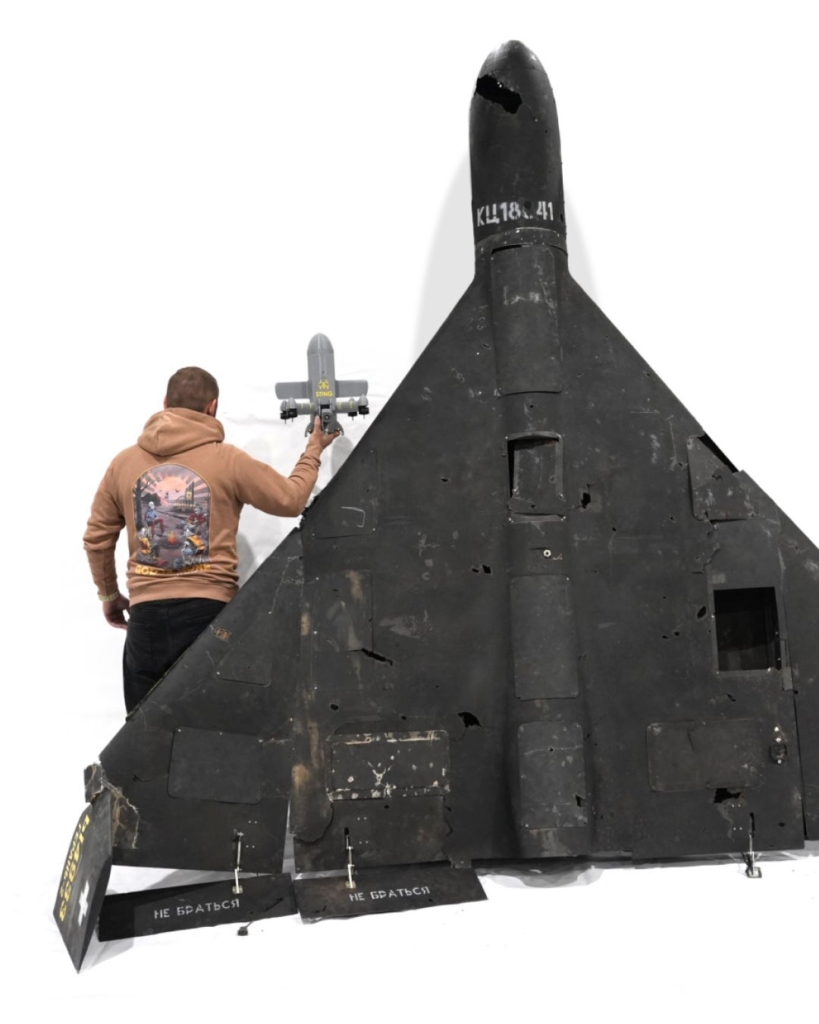
This started with reconnaissance drones that soon evolved into FPV drones dropping munitions. As Ukraine’s 2023 Summer Offensive was defeated, Ukraine doubled down on drones.
Drones seemingly became the answer for everything. Artillery shell shortages were compensated with drones, the lack of long-range missiles was compensated with drones, and the lack of an air force able to dominate the skies was compensated with drones.
As the war wore on, Russia swelled its ranks with new soldiers, and Ukraine struggled to replace its own manpower losses. Ukraine again turned to drones as the solution for its manpower gap.
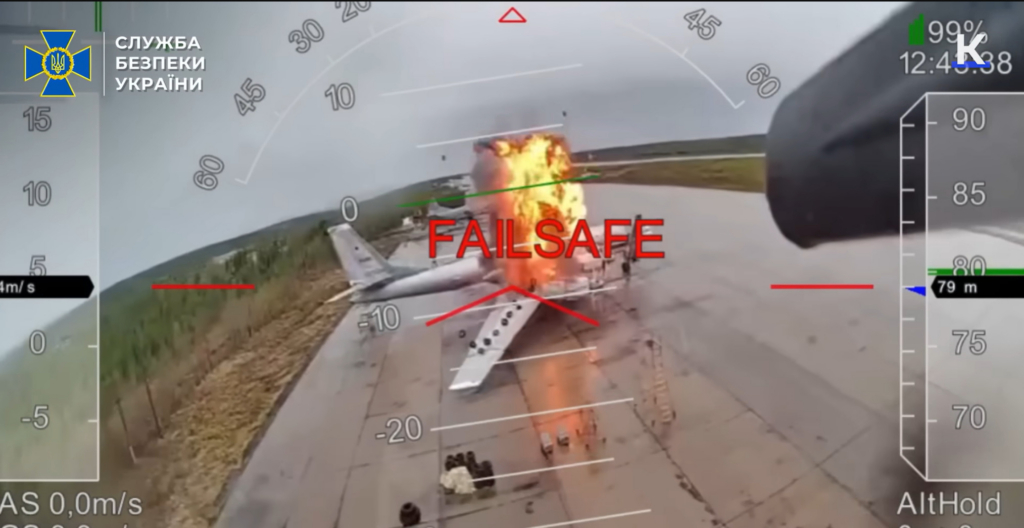
💥 Russia: Ukrainian SBU Alfa drone operation destroyed an estimated $1 billion in Russian aircraft, munitions arsenals, and fuel depots across 5 air bases.
— Igor Sushko (@igorsushko) January 28, 2026
▪️ 11 jets: Su-30, Su-34, Su-27, Su-24, MiG-31
▪️ 3 helicopters: Mi-28, Mi-26, Mi-8
▪️ 1 transport aircraft: An-26 pic.twitter.com/gmEp2XNpNC
As Russia has increasingly developed its own drone force, Ukraine responded by developing interceptor drones to take out Russian drones.
Sea-based drones not only sank and bottled up the Russian Black Sea Fleet, but they even managed to shoot down Russian helicopters and fighter jets with air-to-air missiles. Ukrainian FPV drones have scored lucky hits taken out Russian helicopters in flight.
Ukraine blends drones and missiles to strike deep inside Russia
As the war enters its fifth year, the Russian Air Force’s primary role is that of missile trucks launching glide bombs and missiles from outside contested airspace.

The Ukrainian Air Force is slowly regenerating from a very low point and is mostly tasked with air defence, taking out Russian one-way attack drones and cruise missiles. It also conducts some strikes of its own.
At the same time, Ukraine is starting to narrow one of Russia’s remaining advantages, that of long-range ballistic and cruise missiles. It is not possible do justice to the many developments, but select highlights include the Neptune, FP-5, and FP-2.
Ukraine has developed new ground-attack variants of its R-360 Neptune, a truck-launched subsonic cruise missile originally designed as an anti-ship missile. It was the Neptune that’s credited for sinking the Russian Moskva cruiser flagship early in the war.
In 2025, Ukraine announced it had developed the large FP-5 Flamingo heavy cruise missile. Reportedly, this missile has a range of 3,000 km and carries a payload of more than a ton. After a slow start, it seems Ukraine has used Flamingos successfully in at least two strikes in February.
This 220mm Uragan MLRS was destroyed in a similar manner to the 300mm Tornado MLRS a few days ago.
— Special Kherson Cat 🐈🇺🇦 (@bayraktar_1love) February 24, 2026
FP-2 drone spots a missile salvo in the distance, heads to the launch point, hits the target, and a second FP-2 behind it monitors the damage. https://t.co/9JBa3j2LT6 pic.twitter.com/D3oZSaSeB1
Meanwhile, Ukraine’s FP-2 one-way attack drone seems to have transitioned from a simple drone-like cruise missile to an effective hunter. In February 2026, Ukraine released footage of FP-2 drones working together to hunt down Russian air defence systems and rocket launchers and destroy them.
Get the latest aerospace defence news here on AGN.
Russian and Ukrainian fighter jet fleets after four years of war
As the war progresses, Russia’s fighter jet production has averaged around 24-36 jets annually. This is enough to replace its direct high-end losses, althouth its unclear if it’s enough to keep up with Su-34s and Su-35s using up their flight hours.
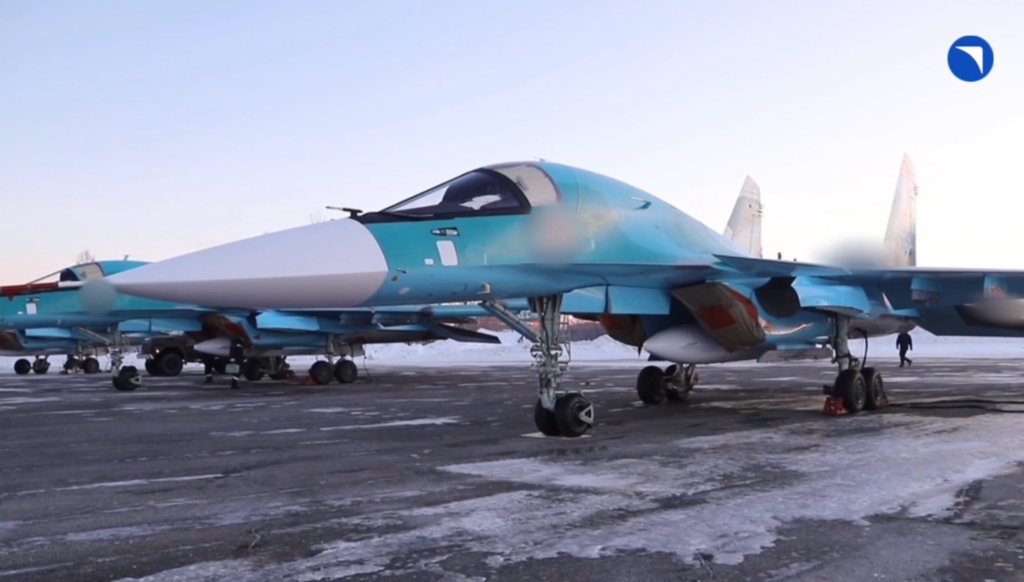
Production is woefully insufficient to replace its vast numbers of MiG-29s, Su-27s, Su-25s, and Su-24s aging out of service. On paper, Russia is reported to have a fighter fleet of around 1,400 jets. In practice, it has an effective core fleet of around 550 aircraft made up of Su-34/30/35s, MiG-31s, and Su-57s.
Russia’s Su-57 Felons have been used in the conflict, but they have not had a large impact. They are available in low numbers, and the aircraft is immature, while Russia wants to avoid embarrassing losses of its prestige jet.
Ukraine’s replacement aircraft fleet (current and planned)
- Sukhoi Su-25: 4+
- Mig-29: 24+
- F-16: Approx. 87 pledged, deliveries ongoing
- Mirage 2000-5: 6+ deliveries ongoing
- Saab Gripen: 120-150 (planned)
- Dassault Rafale: Up to 100 (planned)
The older fighters have increasingly been grounded and relegated to rear echelon duties like patrols. These older Russian jets have largely disappeared from the front.
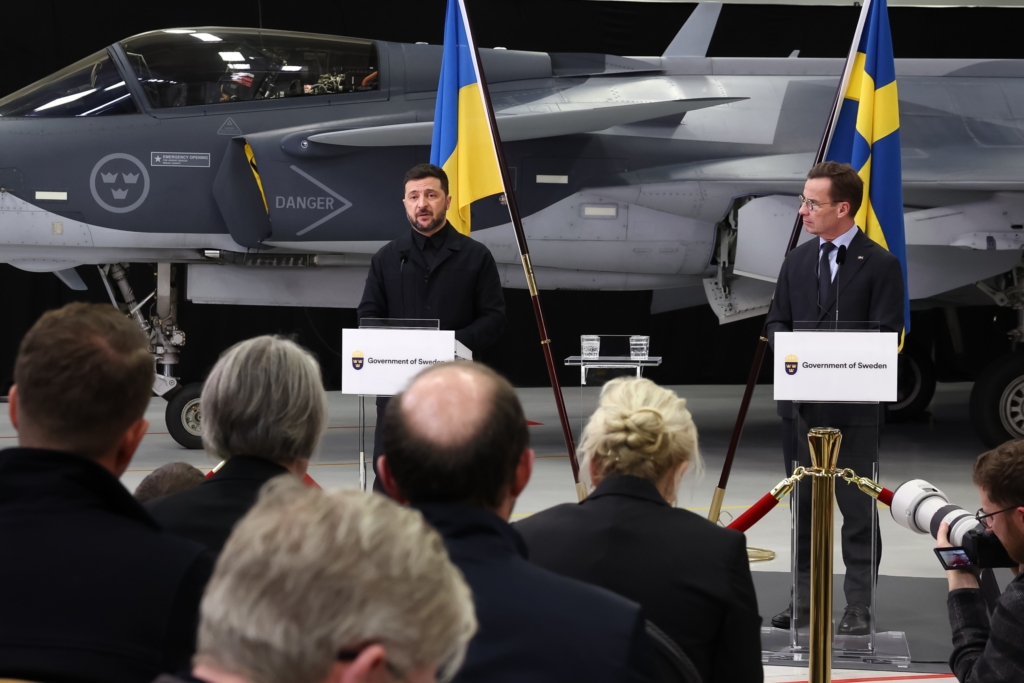
Ukraine continues to fight with what it has, including a few dozen operational fighter jets. Ukraine’s biggest issue is the shortage of trained pilots to fly its Western F-16s. Reportedly, there is a Ukrainian F-16 squadron defending Kyiv with ex-US and ex-Dutch air force pilots.
Post-war Ukraine has an aspiration for 250-300 fighter jets made up of F-16s, Saab Gripens, and Dassault Rafales. It is unclear how it would manage such a large and expensive fleet.
Featured Image: Ukraine Air Force