Airbus turns to humanoid robots in early-stage manufacturing trials

3 min read
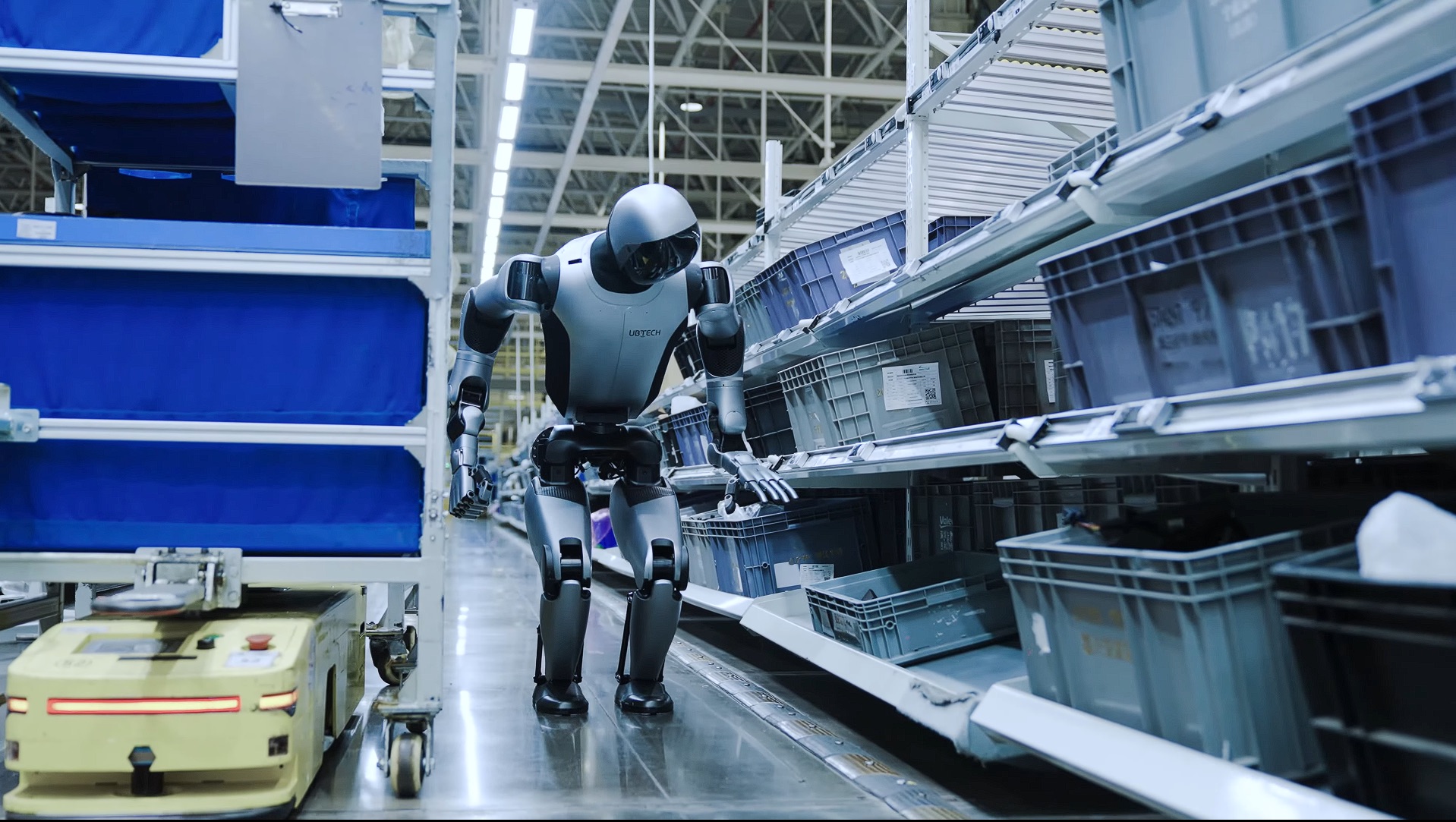
Airbus has entered an agreement with Chinese robotics specialist UBTech to explore the use of humanoid robots in aircraft manufacturing, marking a potential new step in the airframer’s drive to automate and digitise its production systems.
The agreement covers the supply of UBTech’s latest industrial humanoid robot and a joint effort to examine how the machines could be deployed in aerospace manufacturing.
Airbus said the cooperation is currently limited to early-stage concept testing, with no indication yet of wider industrial deployment.
UBTech said Airbus has already purchased its Walker S2 humanoid robot, which is designed to replicate human movement and perform complex physical tasks in industrial settings.
Airbus deploys early concept humanoid testing
Airbus has invested heavily in robotics and automation over the past decade. Still, humanoid robots represent a new frontier compared with established fixed and mobile robotic systems already used for drilling, fastening, inspection and material handling.
According to Airbus, such initiatives aim to improve industrial efficiency and quality while enhancing flexibility on increasingly complex final assembly lines.
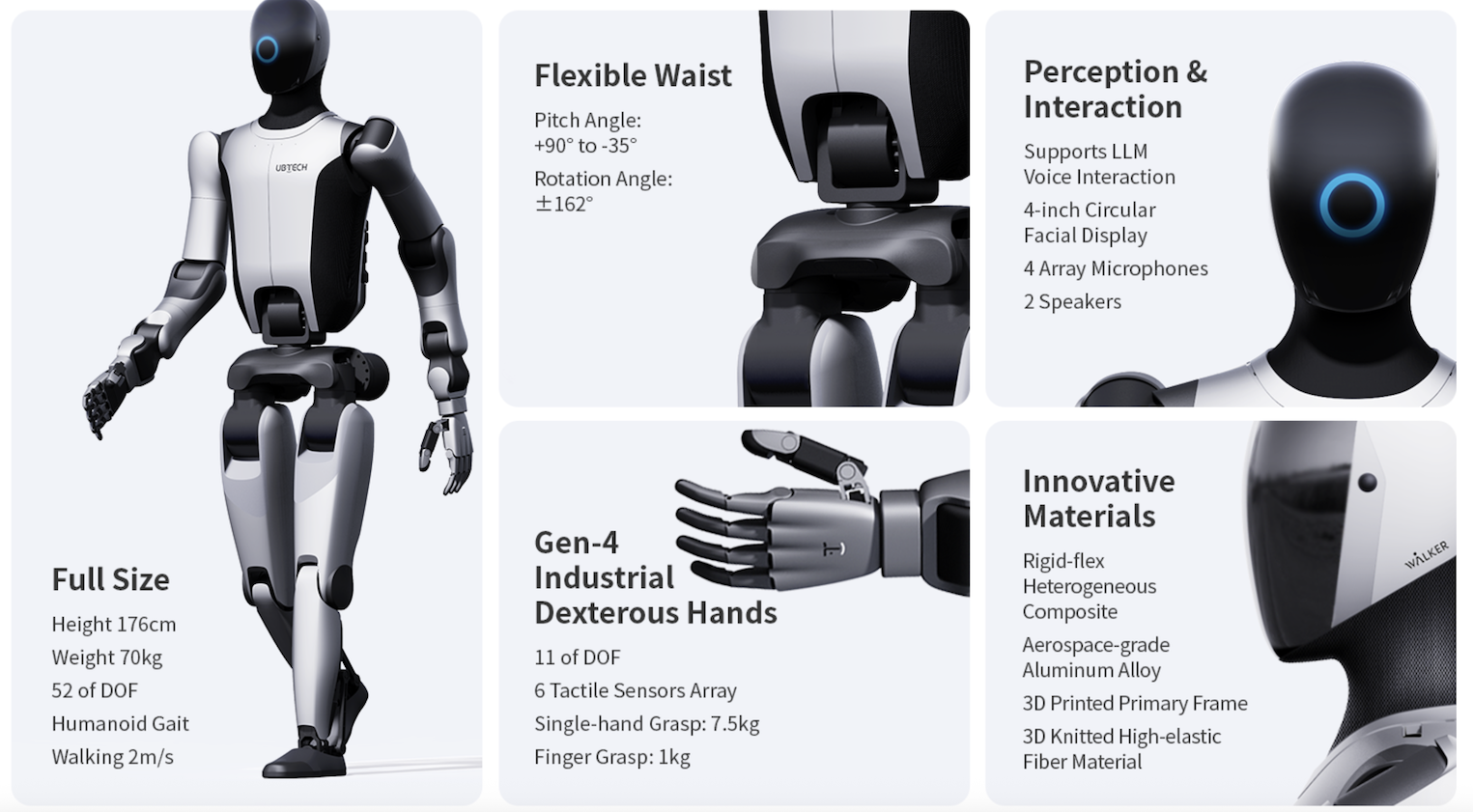
Humanoid robots are seen as complementary to existing automation, particularly in environments originally designed for human workers.
UBTech said the two companies intend to jointly expand the potential applications of humanoid robots across aerospace manufacturing, though specific use cases have not been disclosed.
Robotics central to Airbus digital factory strategy
Airbus has made robotics a core element of its broader “Industry 4.0” transformation, deploying automated systems across multiple programmes to support rising production rates and address labour and skills shortages.
Current applications include collaborative robots working alongside humans, autonomous mobile robots moving components across factory floors, and digitally integrated inspection tools.
Humanoid robots could, in theory, offer greater adaptability than task-specific machines, allowing manufacturers to automate processes that have until now been difficult to remove from human intervention.
However, Airbus has previously stressed that automation is intended to support, rather than replace, human workers, with robotics helping to reduce physically demanding tasks and improve consistency.
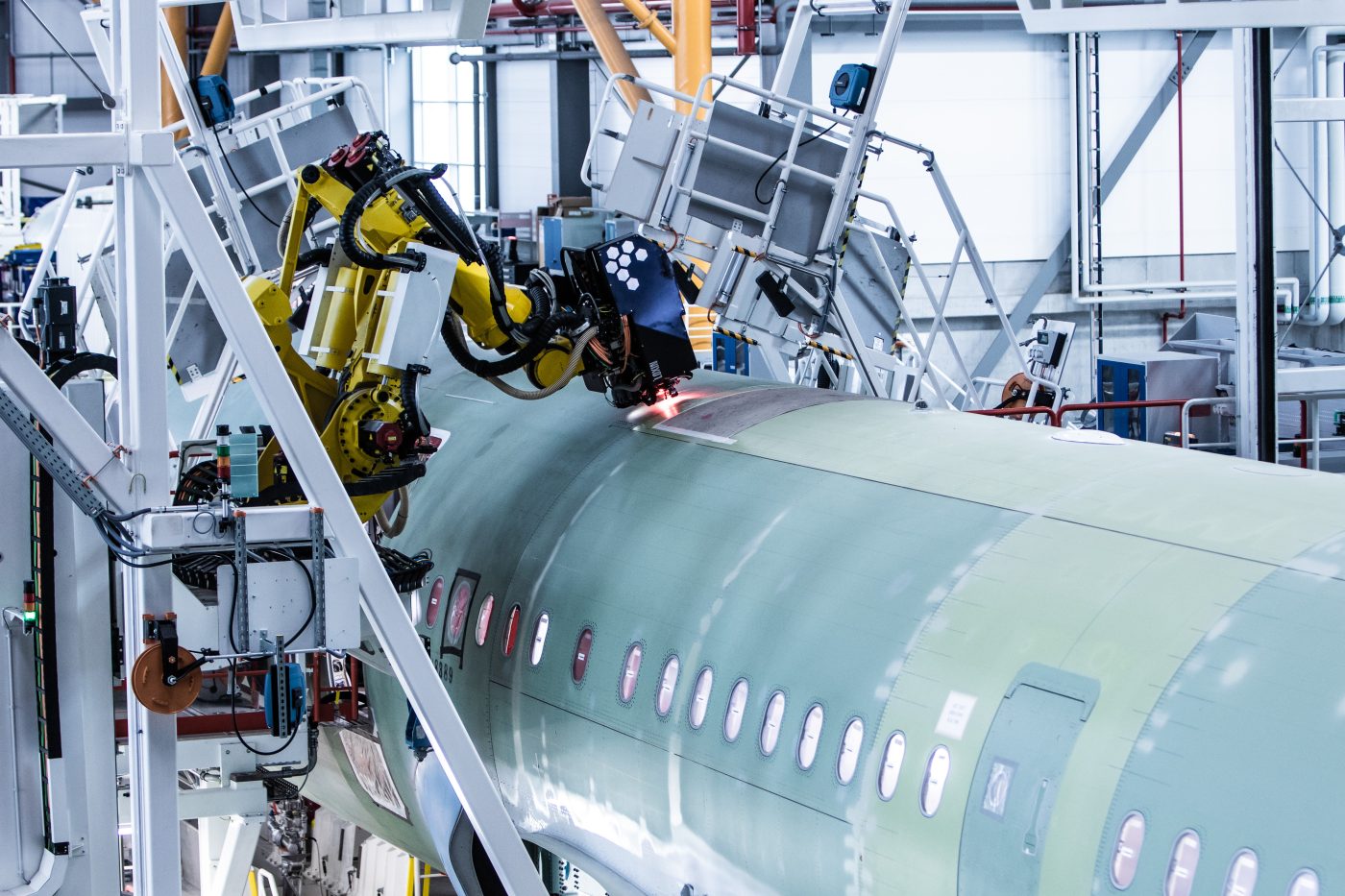
Airbus’ Medium-Sized Drilling Robot (MSDR) is the company’s first robot developed completely in-house.
It was designed to be three times smaller than the industry standard in order to permit its integration into existing pre-assembly lines, and Airbus says it is more accurate and more agile than non-customised robots available on the market.
The robot covers 87% of all pre-assembly-line drilling needs and is intended for use on fuselages, horizontal and vertical tail planes, and centre wing boxes.
Growing profile of humanoid robotics in China
Humanoid robots have become an area of interest in east Asia, including South Korea and China, with the technology seen as a response to long-term economic and demographic pressures, including an ageing population and slower growth.
Chinese companies have made rapid progress in recent years, and UBTech is just one of the country’s developers in the sector.
The company said that in 2026 its production capacity for industrial humanoid robots is expected to surpass 10,000 units.
Featured image: UBTech screengrab