Boeing warned of MD-11 engine bearing risk years before UPS crash, NTSB findings show

4 min read
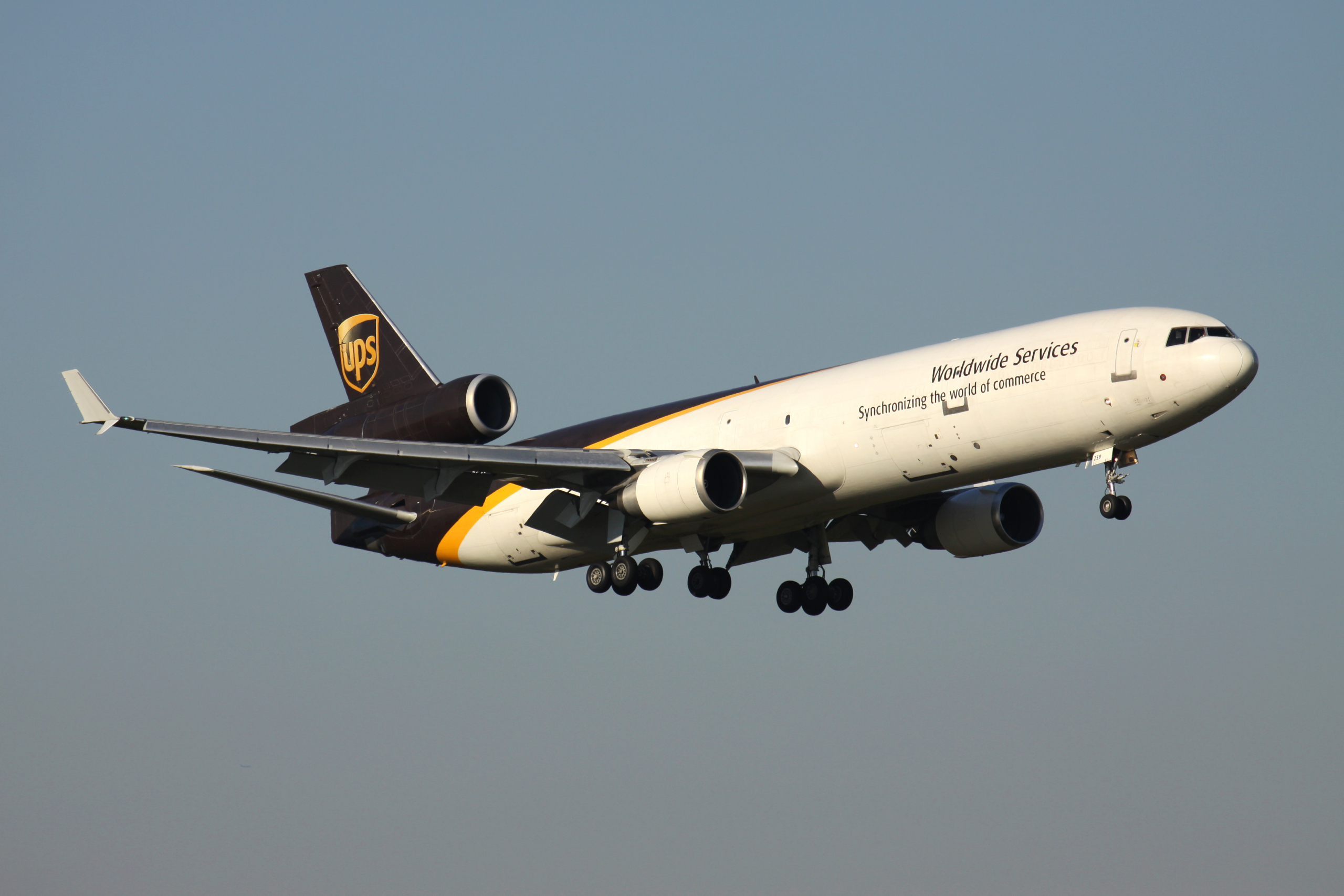
The US National Transportation Safety Board has identified a long-developing fatigue failure in a critical engine pylon bearing on the UPS-operated McDonnell Douglas MD-11 that crashed last year, raising fresh questions about whether inspection regimes, manufacturer guidance, and regulatory oversight were sufficient to prevent a catastrophic engine separation during take-off.
According to the NTSB’s latest investigative update, laboratory examination of wreckage recovered from the aircraft revealed fatigue cracking in the left engine pylon’s aft mount spherical bearing. Investigators say the component failed moments after rotation, allowing the engine to separate from the wing.
Crucially, the failure appears to have developed progressively over time rather than occurring as a sudden or unforeseeable break.
The UPS cargo aircraft crashed during take-off from Louisville’s Muhammad Ali International Airport on 4 November, killing at least 12 people.
Boeing warned about MD-11 engine bearing risk years ago
Boeing had previously identified issues with the MD-11 engine pylon spherical bearing years before the fatal UPS crash, issuing service guidance that now sits at the centre of the NTSB’s investigation.
In a service letter circulated in the early 2010s, Boeing highlighted instances of bearing wear and damage, recommending inspections and maintenance actions but stopping short of classifying the component as safety-of-flight critical.

The guidance focused on lubrication and visual checks rather than intrusive inspection or redesign. Investigators are now examining whether that risk assessment, and the inspection regime it informed, adequately reflected the bearing’s role in a primary structural load path.
MD-11 engine mount design long considered low risk
What makes the finding particularly significant is that the bearing design involved has been in service for decades and was not previously classified as a safety-of-flight critical item.
While wear and corrosion in pylon bearings are recognised maintenance considerations on ageing widebody aircraft, the specific failure mode identified by the NTSB had not been regarded as one that could directly lead to an uncontained engine separation.
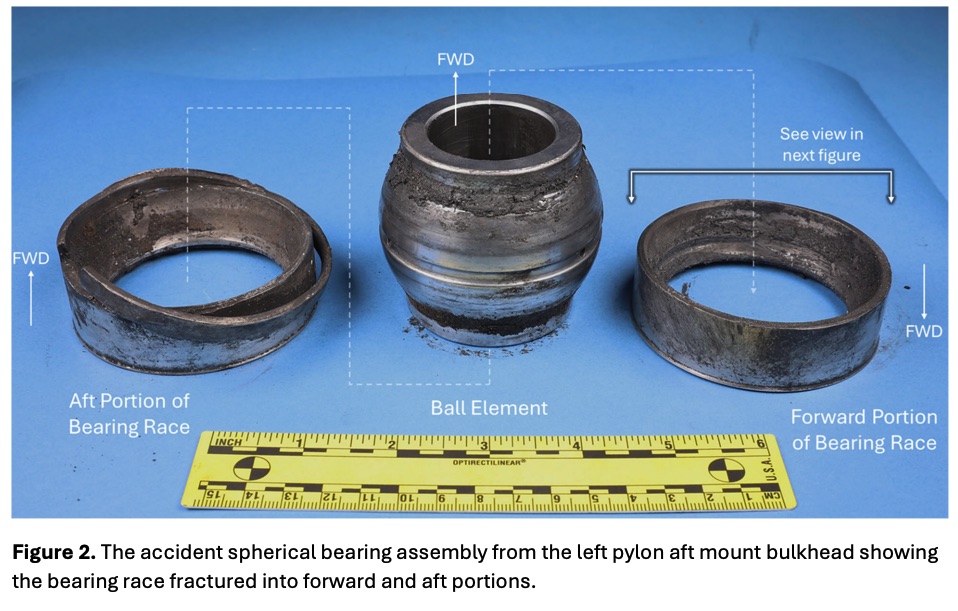
Investigators found clear evidence of progressive fatigue, including beach marks and crack propagation features, indicating the bearing had been deteriorating over an extended period before final failure.
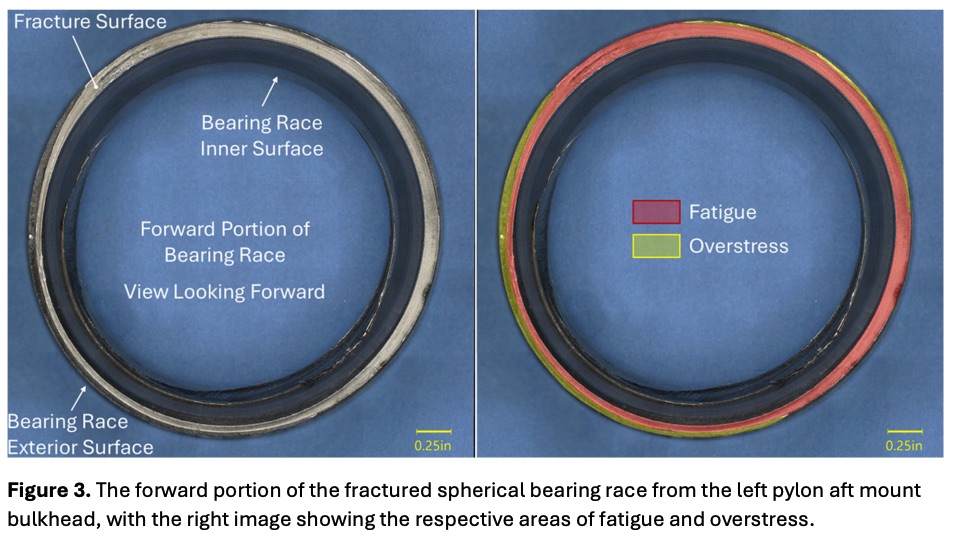
This has shifted the focus of the investigation away from a one-off mechanical anomaly and towards the adequacy of long-term inspection and monitoring practices.
MD-11 engine mount inspection limits under NTSB scrutiny
The MD-11’s maintenance programme relied primarily on visual inspections of the pylon bearing assembly at defined intervals.
According to the NTSB, these inspections were compliant with manufacturer recommendations and regulatory requirements in force at the time. However, the fatigue cracking originated internally, in areas not easily visible without disassembly or specialised non-destructive testing.
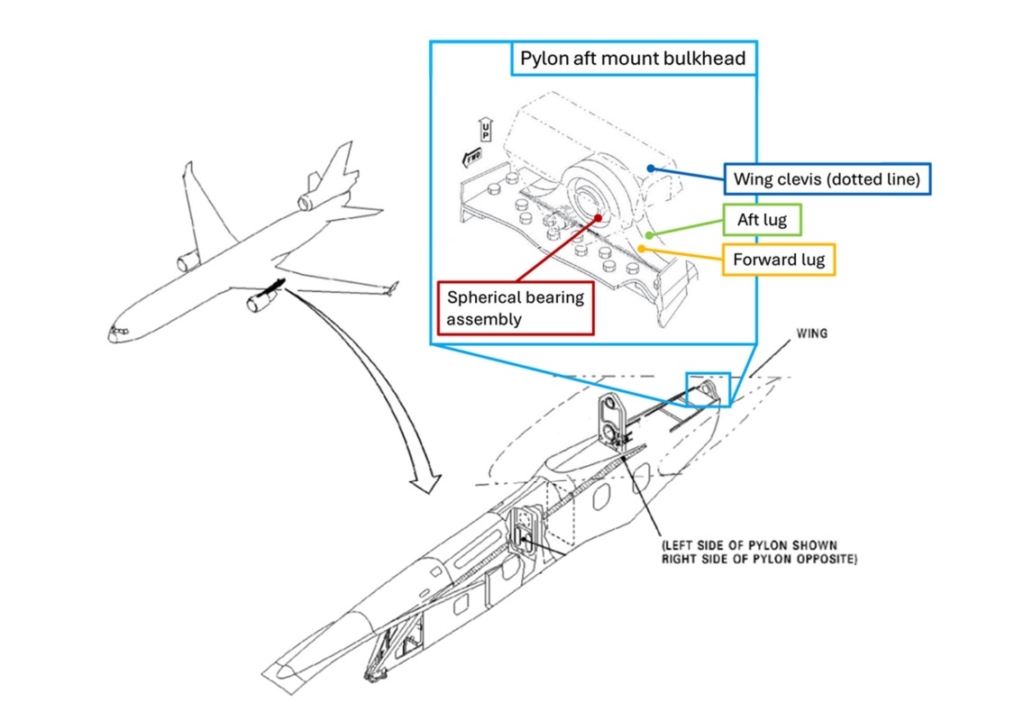
Investigators are now examining whether the inspection methods prescribed by the aircraft manufacturer, and accepted by regulators, were capable of detecting such degradation before it reached a critical stage.
Service letters and maintenance advisories issued over the years addressed lubrication, corrosion prevention, and general wear, but none explicitly warned of a long-term fatigue failure mechanism with the potential for complete load-path failure of the engine mount.
Engine separation sequence during MD-11 take-off
The crash occurred during the take-off phase, when engine and airframe loads are at their highest. The NTSB believes the compromised bearing failed under these peak loads, allowing the engine to separate from the wing and triggering an unrecoverable loss of control.
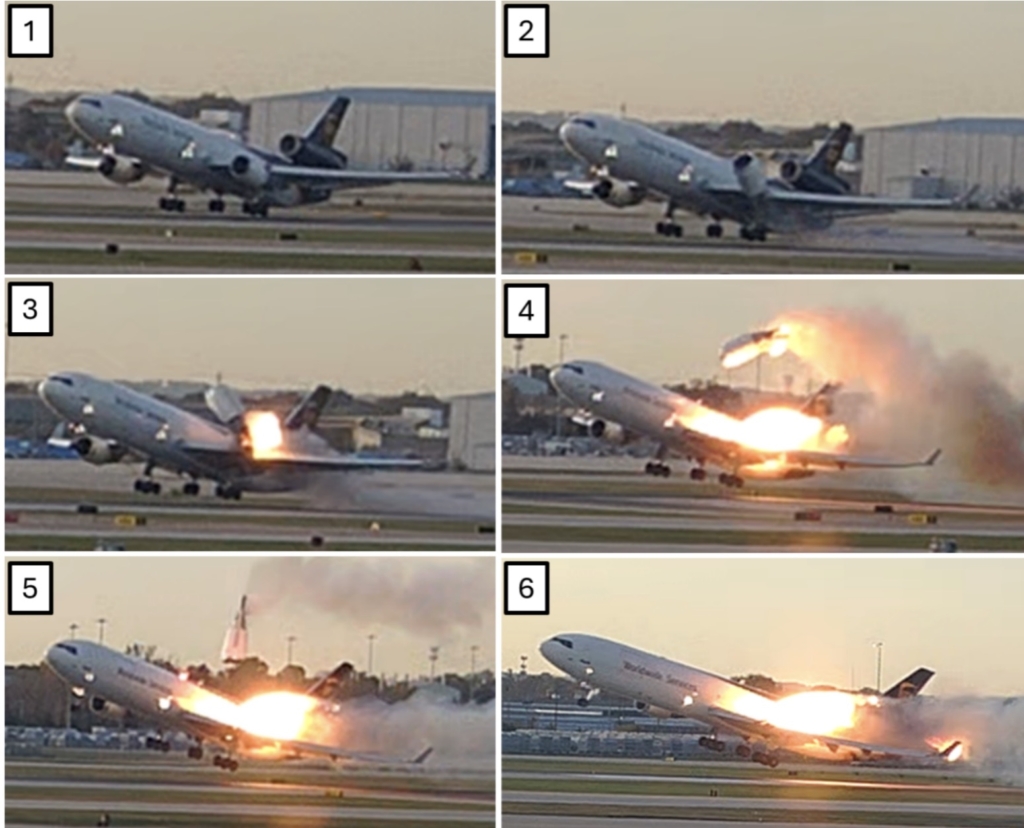
Data from the flight recorders and wreckage distribution patterns support the conclusion that the structural failure occurred almost immediately after rotation, leaving the crew with no meaningful opportunity to respond.
Implications for ageing MD-11 and DC-10 cargo fleets
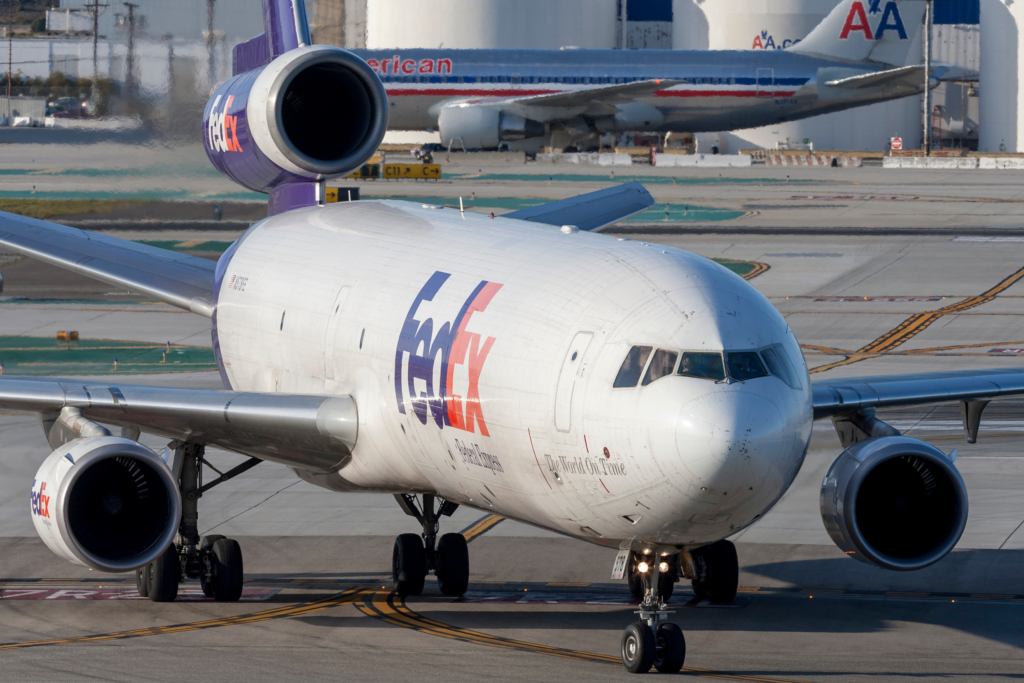
Although the MD-11 is no longer in production, it remains in active service as a freighter, particularly in express and cargo operations.
The NTSB is therefore assessing whether similar bearings across the remaining fleet could be susceptible to the same failure mechanism. Since 8 November 2025, the MD-11, along with several MD-10s and DC-10s, has been grounded pending further inspections.
The investigation is also expected to examine whether regulators and manufacturers were too slow to reassess ageing-aircraft assumptions as operational lifetimes extended well beyond original design expectations.
In parallel, the NTSB is reviewing how information on component wear and failure trends is collected and shared across operators, and whether earlier warning signs may have been missed.
Regulatory accountability and inspection standards under review
While the investigation remains ongoing and no final conclusions have yet been drawn, the findings increasingly point towards a systemic issue rather than an isolated defect.
At stake is whether long-standing maintenance philosophies, particularly for legacy widebody aircraft, remain fit for purpose in an era of extended service lives and high-cycle cargo operations.
The final accident report is expected to address whether changes to inspection standards, non-destructive testing requirements, or regulatory guidance are warranted to prevent a recurrence.
Featured image: Björn Wylezich / stock.adobe.com
Sign up for our newsletter and get our latest content in your inbox.


More from


October 17, 20264 min read