Shaking off the ice: How vibration technology could transform aircraft safety and efficiency

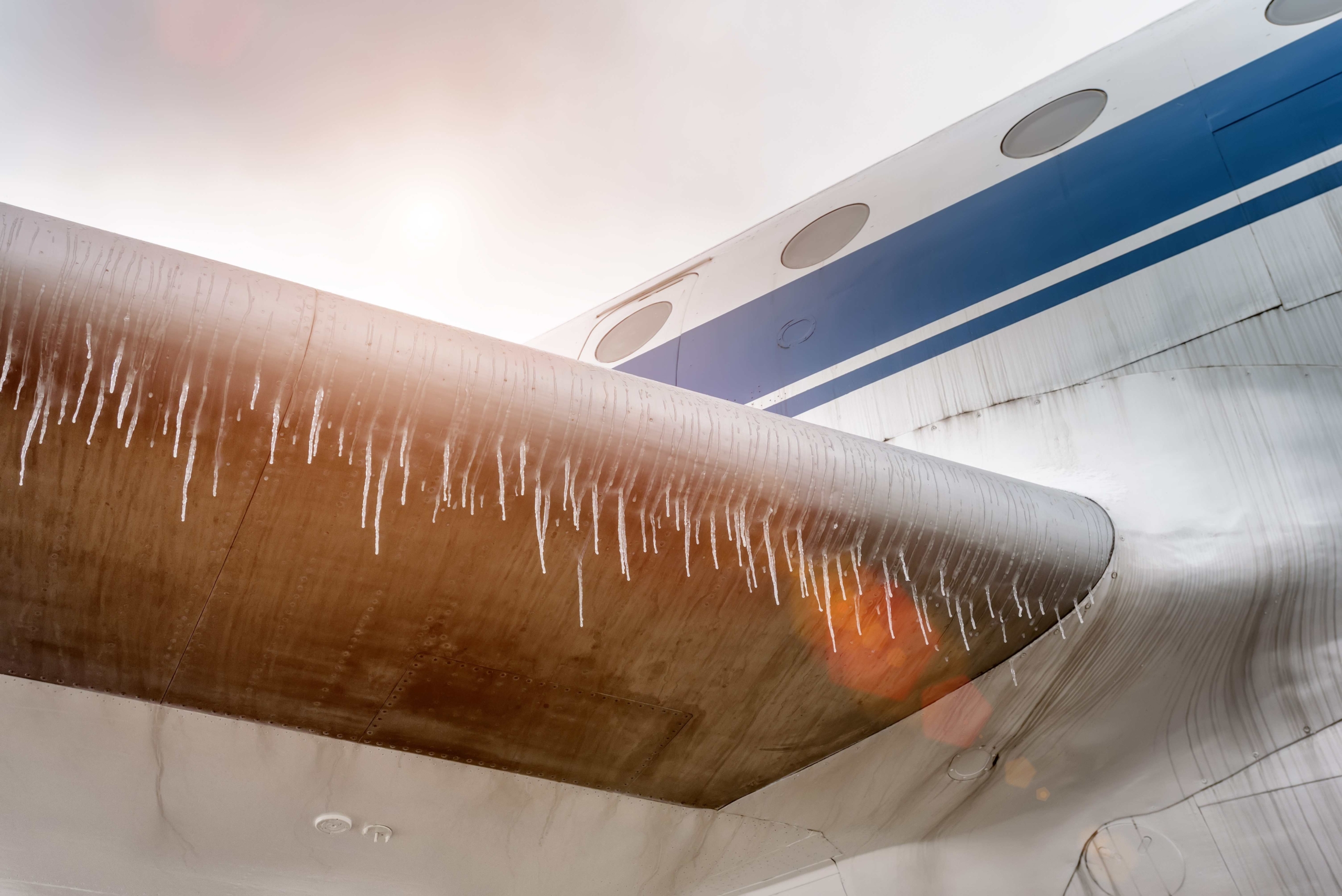
High above the clouds, as a jet slices through frigid air thick with supercooled droplets, an invisible danger starts to take shape.
Ice builds silently along the wings and control surfaces, changing the way the aircraft flies and threatening lift, balance, and safety.
To fight this, most airliners bleed hot air from their engines to keep the wings clear, an energy-hungry process that will be unsustainable in the low-emission propulsion systems of the future.
Now, a team of German engineers believes they’ve found a cleaner, smarter alternative. Instead of heating the ice until it melts, they’ve taught the wing to shake it off.
Researchers at the Fraunhofer Institute for Structural Durability and System Reliability (LBF), working under the European Union’s Clean Aviation programme, have created an onboard system that uses controlled vibrations to dislodge ice from aircraft surfaces in flight. The approach could reduce de-icing energy use by as much as 80 per cent, while keeping aircraft lighter and more efficient.
“The vibrations are in the range of just a few kilohertz. They are invisible to the naked eye but very effective. The ice clinging to the wing breaks up and falls off,” explains Denis Becker, a researcher at Fraunhofer LBF.
A low-energy breakthrough in aircraft de-icing technology
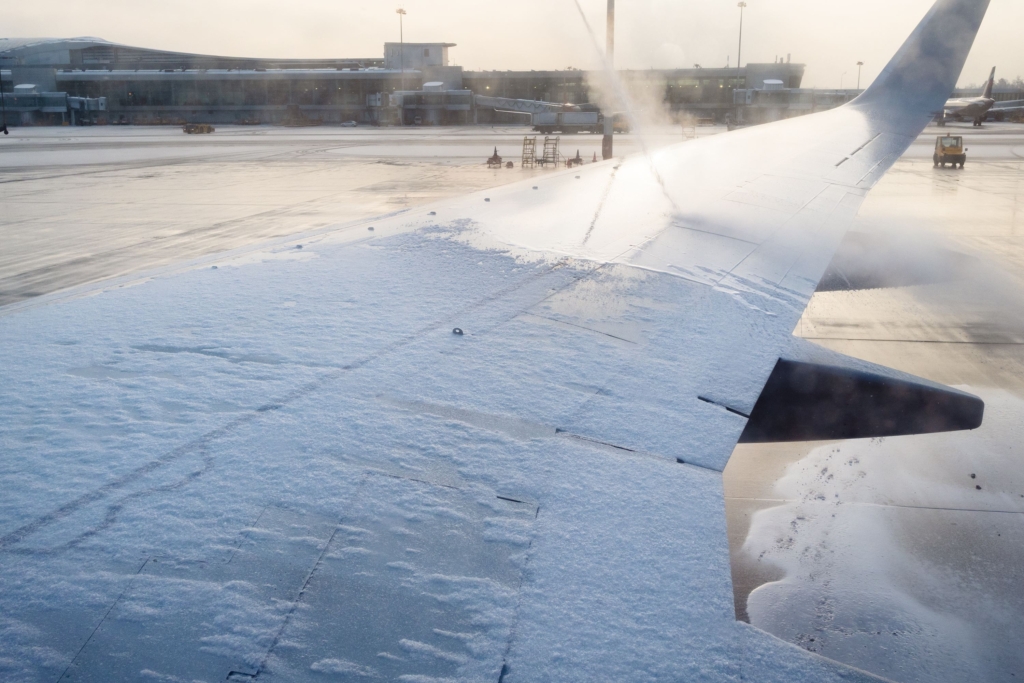
Ice accumulation in flight is one of aviation’s oldest challenges. When aircraft fly through clouds filled with supercooled droplets, those droplets freeze instantly upon contact with wings or stabilisers, altering the aerodynamic shape.
Conventional systems use hot air tapped from jet engines to prevent or melt ice, but that method consumes significant fuel. In electric, hydrogen or hybrid aircraft — which have limited onboard power and no spare engine heat — that approach simply won’t work.
Fraunhofer’s innovation bypasses heat altogether. It uses piezoelectric actuators embedded in the wing to send out precise, low-frequency vibrations when sensors detect ice formation. The vibrations cause the frozen layer to crack and detach before it can build up, keeping the surface clean without consuming much power.
How vibration keeps aircraft wings ice-free
“The challenge is that every wing behaves differently depending on its structure, load, and speed,” explained Becker, lead researcher at Fraunhofer LBF. “So our system constantly measures the wing’s natural frequency and adjusts the vibration pattern accordingly.”
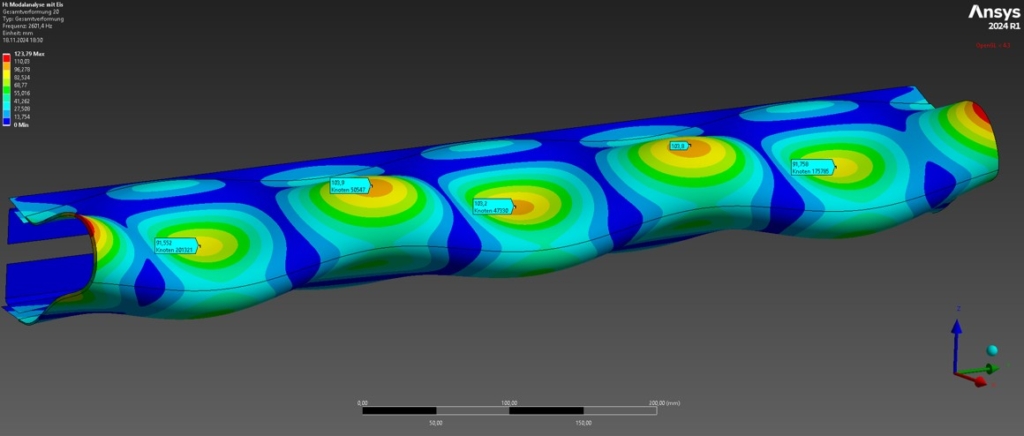
The actuators, which sit within the structure of the wing or tailplane, operate at frequencies of just a few kilohertz — imperceptible to passengers but powerful enough to fracture the ice layer. The system reacts instantly when sensors detect a change in mass or surface temperature that signals icing.
From wind tunnel tests to real flight trials
To prove the concept, Fraunhofer engineers built a scaled wing section equipped with the new de-icing network and tested it inside an icing wind tunnel. The results were striking: once the actuators were activated, the ice loosened and slid off in sheets.
“Our experiments clearly showed that electromechanical de-icing is both efficient and fast,” said Becker. “The next step is to validate it in real flight conditions.”

Because it needs only a small electrical input, the technology could be particularly valuable for future low-emission aircraft that have limited onboard energy reserves and no excess heat to spare.
Airbus and Parker-Meggitt explore integration under Clean Aviation
The new system fits squarely into the EU’s Clean Aviation roadmap, which aims to halve aviation’s environmental footprint by 2050. Airbus and Parker-Meggitt are among the industrial partners now exploring its integration into next-generation airframes.
By removing the need for complex thermal systems, vibration-based de-icing could reduce aircraft weight, energy use and maintenance costs, while maintaining the highest safety margins.
“Our goal is to make ice protection both smarter and greener,” Becker said. “This technology does exactly that — it uses the physics of vibration instead of the waste heat of combustion.”
Shaking off the old ways of aircraft ice protection
For decades, pilots and engineers have relied on brute-force solutions to a delicate problem: heat the wing, melt the ice, and move on.
Fraunhofer’s approach turns that logic on its head. By letting the aircraft sense and shake off ice on its own, it bridges the gap between safety and sustainability — and points the way to a cleaner kind of flight.
As Becker puts it: “Sometimes, the best solution isn’t to fight nature with more energy — it’s to work with the laws of physics that are already there.”