


ZEISS brings holographic cockpit and cabin display concepts to Farnborough 2026

5 min read

Aviation is entering a period of systemic redefinition. Across the industry, OEMs and suppliers are pushing the boundaries of propulsion efficiency, materials science, autonomy, and digital avionics. Aircraft are becoming more sophisticated, more connected, and more intelligent than ever before.
Yet one aspect of the flying experience has remained surprisingly unchanged: how humans actually interact with the aircraft.
In both cockpit and cabin environments, information is still largely mediated through screens and additive hardware systems. Even as aircraft become more advanced, the way information is presented to pilots and passengers remains rooted in architectural assumptions that predate today’s digital and computational capabilities.
This is beginning to show strain. Aircraft systems are generating more information than ever before, yet the interface between data and decision-making is increasingly fragmented. We’re due for a change in how that ever-increasing amount of information is structured, presented, and embedded into the operational environment.
This is where optical technologies come in.
When light becomes infrastructure
At ZEISS, we have long worked at the intersection of precision optics and system integration, from microscopy through to industrial and medical applications.
For more than a century, optics has been associated with observation, making the invisible visible, and extending human perception into new domains. Microscopy, in particular, transformed entire fields of science by allowing us to understand structures that were previously beyond reach. But the underlying principle has now evolved. Modern optical systems are no longer limited to observing or projecting information. They are increasingly being designed to structure, guide, and embed light as a functional component of the system itself.
This marks the transition from optics as simply an observational tool to optics as an integration platform.
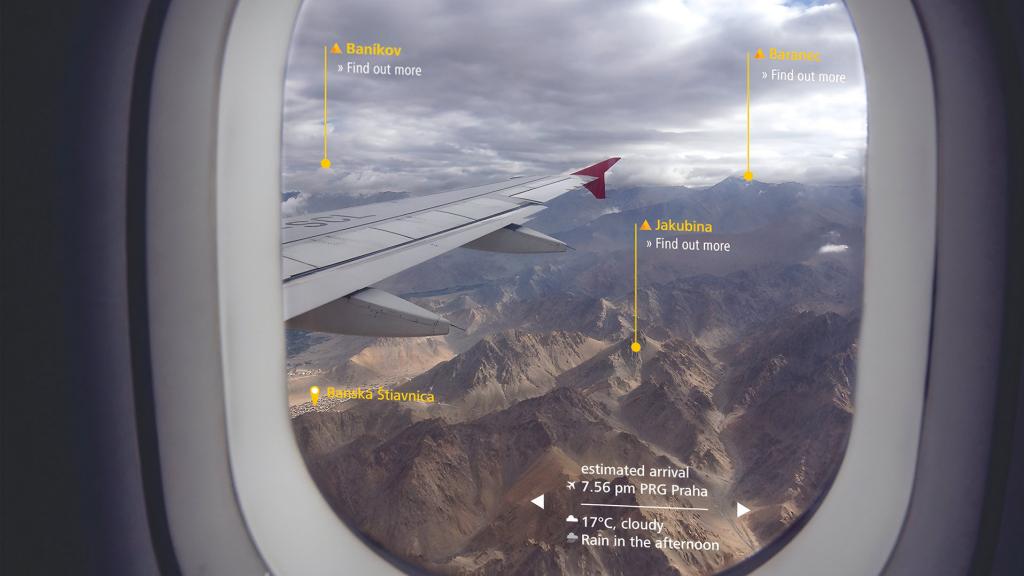
At the centre of this transition is holography and microoptical engineering. Rather than relying on traditional optical assemblies, holographic structures manipulate light at the micro- and nano-scale, enabling it to be shaped and directed with precision sufficient to integrate information directly into physical surfaces.
What was once confined to labs or highly specialised instrumentation is now becoming industrially scalable. This is the result of decades of advances in replication technologies, laser-writing lithography, and high-precision optical mastering, all of which now enable the embedding of optical functions in glass, polymers, and complex surfaces at scale.
The implications for aerospace are significant because they align directly with the industry’s need for better, more intelligent information display, and its most persistent constraints: weight, space, reliability, and integration complexity.
Rethinking the cockpit and cabin
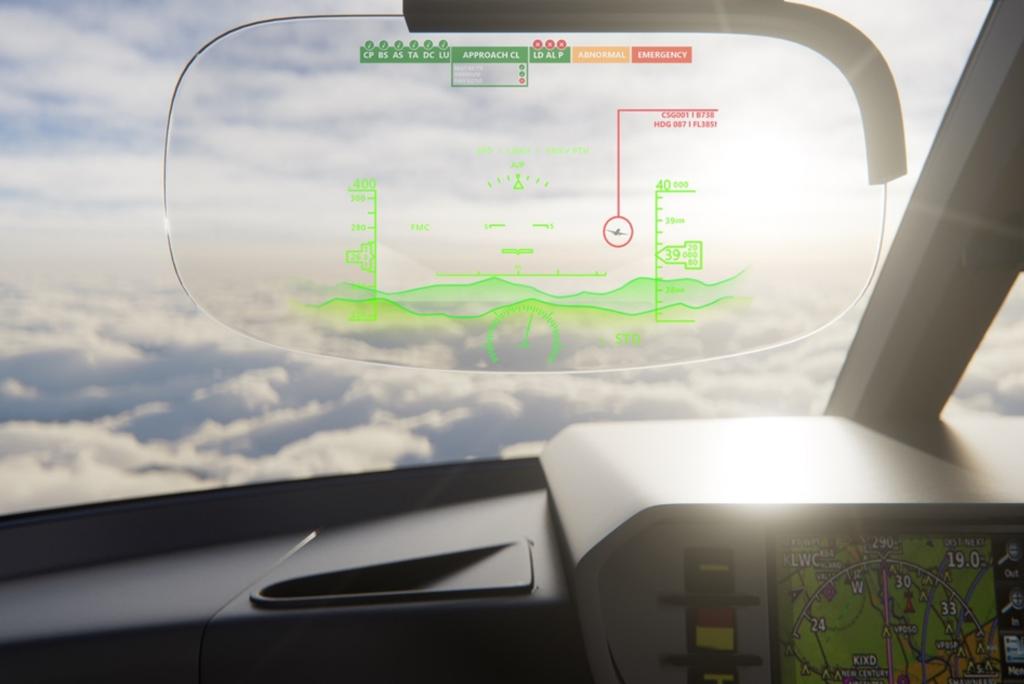
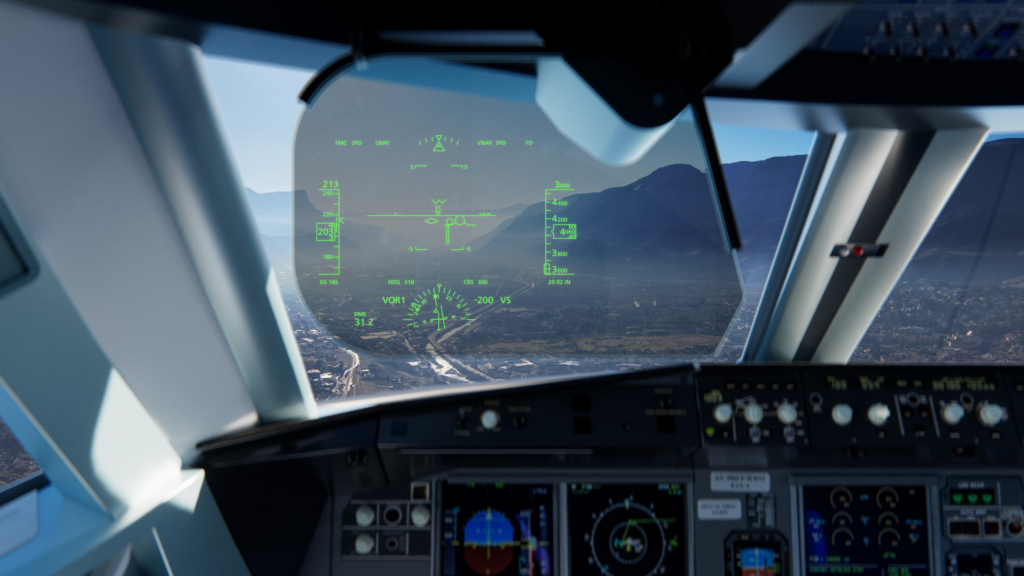
In cockpit environments, for example, Head-Up Display systems have long represented an attempt to reduce cognitive load by bringing information into the pilot’s forward field of view. However, conventional systems remain limited by optical architecture, requiring bulky projection systems, constrained fields of view, and complex integration pathways.
Holographic waveguide-based approaches change this fundamentally. By encoding optical behaviour into thin, structured layers, it becomes possible to deliver wide-field, high-brightness display functionality without the traditional hardware burden. The result is not just a more compact display, but a different relationship between pilot and information. Data is no longer something that must be actively consulted. Instead, it becomes part of the forward visual environment, supporting continuous situational awareness and reducing cognitive switching.
This might seem a subtle change, but it’s important. It moves the role of the display from an object of attention to a layer of perception.
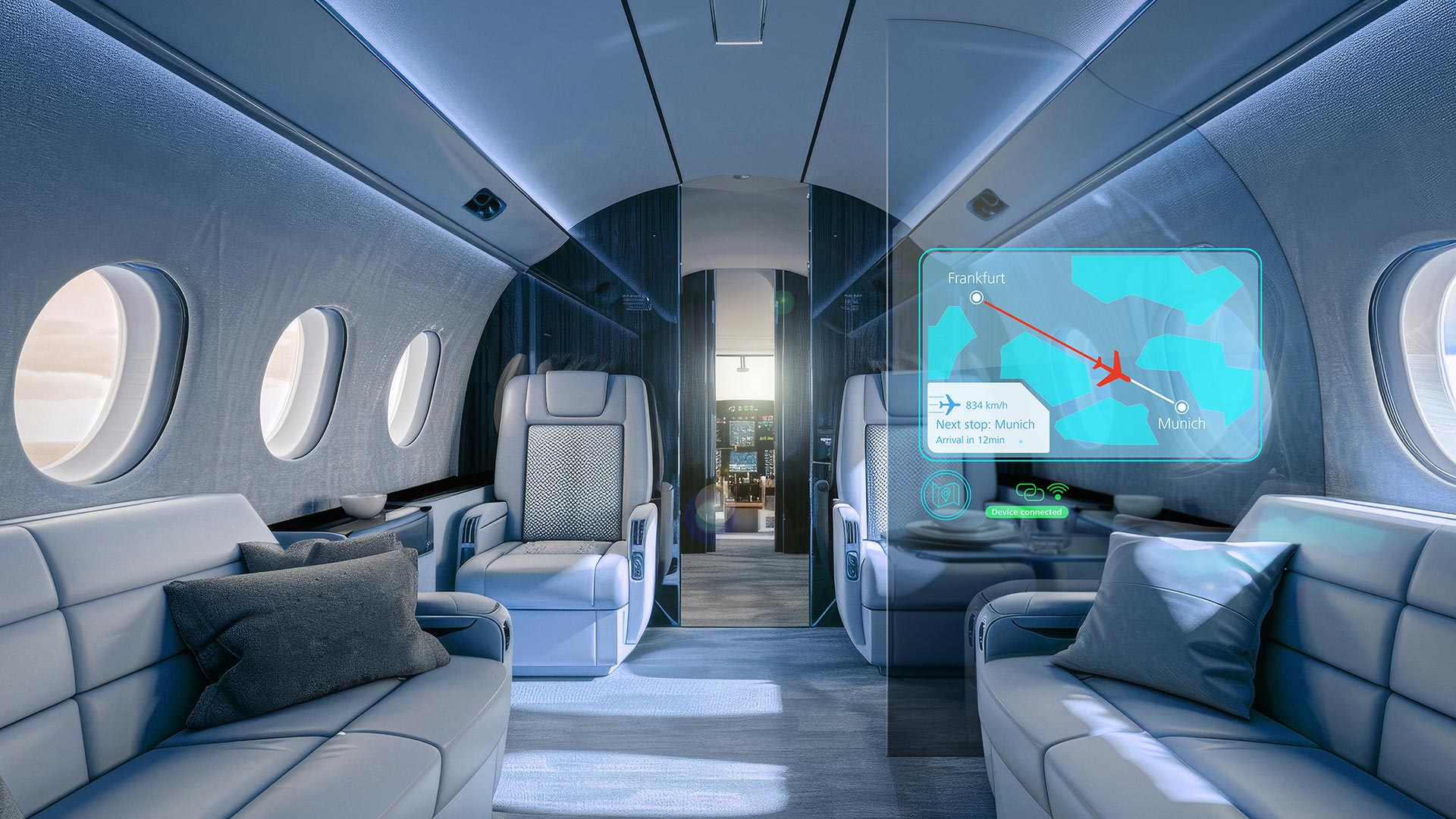
A similar transformation is happening in the cabin, albeit with a different emphasis. Aircraft interiors are increasingly expected to balance passenger experience, weight efficiency, and system integration complexity. Traditional cabin architectures rely heavily on discrete hardware elements such as screens, panels and embedded systems, each adding physical and design constraints.
Transparent display technologies introduce a different approach. By integrating optical functionality directly into transparent surfaces within the cabin, information, entertainment, and even environmental data can be embedded into the cabin architecture itself. Surfaces become active elements rather than passive structures, and the cabin begins to behave less like a collection of installed systems and more like a coherent optical environment.
This has implications beyond pure aesthetics or passenger engagement. It fundamentally changes design freedom, system weight distribution, and the way aircraft interiors are conceived by OEMs.
From lab to large-scale manufacture
What makes this transition particularly significant today is that it is no longer constrained by manufacturing scalability. One of the long-standing barriers to advanced optical systems has been the gap between laboratory precision and industrial production. That gap is now closing, and fast. It’s something that is already happening in other sectors, like the automotive industry, where this technology is becoming a reality.
The ability to replicate nano-structured optical components reliably, and to integrate them into scalable manufacturing chains, means that holographic and microoptical systems are moving from specialist applications into high-volume aerospace and mobility programmes. ZEISS Microoptics operates across this full value chain, from optical design and mastering through to replication, integration, and system-level deployment, enabling technologies that were once experimental to become industrially viable.
Experiencing what’s next
As these technologies move closer to real-world aerospace applications, the opportunity to experience them firsthand is increasingly important. At Farnborough International Airshow 2026, ZEISS will showcase its aerospace concepts for the first time through an immersive “Passenger to Pilot” experience. Featuring transparent displays, holographic interfaces and advanced Head-Up Display concepts, the showcase will demonstrate how optical technologies could transform both cockpit and cabin environments.
Visitors can meet the ZEISS Aerospace team at Chalet 404 via Gate B to explore the concepts firsthand and discuss the role these technologies could play in future aircraft programmes.
Ultimately, one of the most profound shifts in aviation may not come from propulsion or automation, but from perception itself. The ability to structure light, to embed information into the physical environment of flight, represents a major change in how aircraft are experienced and operated. Aviation has always advanced by mastering physical constraints. The next frontier may be less about overcoming physics and more about rethinking how we perceive it. And in that sense, we are now beginning to see aerospace through a new lens.
Featured Image: ZEISS
Sign up for our newsletter and get our latest content in your inbox.





More from


September 21, 20263 min read


