UK’s first F-35As bought for training, not NATO nuclear role

3 min read

The UK’s first 12 F-35A fighters are being acquired to train pilots rather than deliver Britain’s planned return to NATO’s airborne nuclear mission, the Royal Air Force has clarified.
This means the RAF has yet to determine how many operational F-35As it will need for the nuclear role, despite the government presenting the aircraft purchase and Britain’s return to NATO nuclear sharing together when the plans were announced.
Air Vice-Marshal Jim Beck, the RAF’s Director Capability and Programmes, said the initial aircraft would be assigned to conversion training units.
“For any clarification, or to avoid any doubt, we did not buy those 12 aircraft for dual-capable aircraft capability,” Beck told the Global Air & Space Chiefs’ Conference in London. “We bought them for our conversion units. At the same time, we stated we would get back into the dual-capable aircraft role supporting NATO. The two are separate.”
The remarks provide important clarification of the UK’s plans for the conventional take-off and landing F-35 variant, which is capable of carrying the US B61-12 nuclear gravity bomb.
RAF still assessing its nuclear F-35 force
The government announced in June 2025 that the UK would purchase 12 F-35As alongside its commitment to rejoin NATO’s dual-capable aircraft mission.
That announcement was widely interpreted to mean that the 12 aircraft would form the heart of Britain’s restored airborne nuclear force. Beck’s comments indicate that the RAF instead regards them primarily as a training fleet.
Aviation Week reports that the service is still assessing the number of aircraft, personnel and supporting infrastructure required to deliver the nuclear mission.
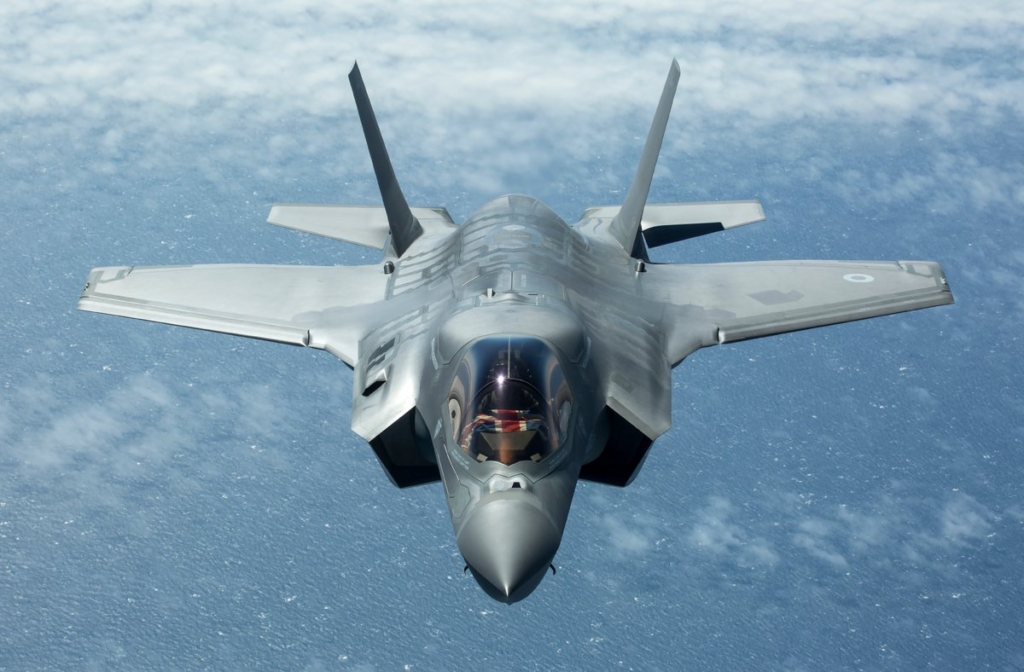
The UK retired its previous air-delivered nuclear weapon, the WE.177, in 1998. Its nuclear deterrent has since been delivered exclusively through Trident ballistic missiles carried aboard Royal Navy submarines.
Rejoining NATO’s nuclear-sharing arrangements would add an air-delivered capability assigned to the Alliance, although the weapons would remain under US custody.
The F-35A is already certified to carry the B61-12, unlike the short take-off and vertical landing F-35B operated by the RAF and Royal Navy.
Why use F-35As for pilot training?
Britain currently operates the F-35B because it can fly from the Royal Navy’s Queen Elizabeth-class aircraft carriers. However, the additional complexity required for short take-offs and vertical landings makes the variant more expensive and maintenance-intensive than the F-35A.
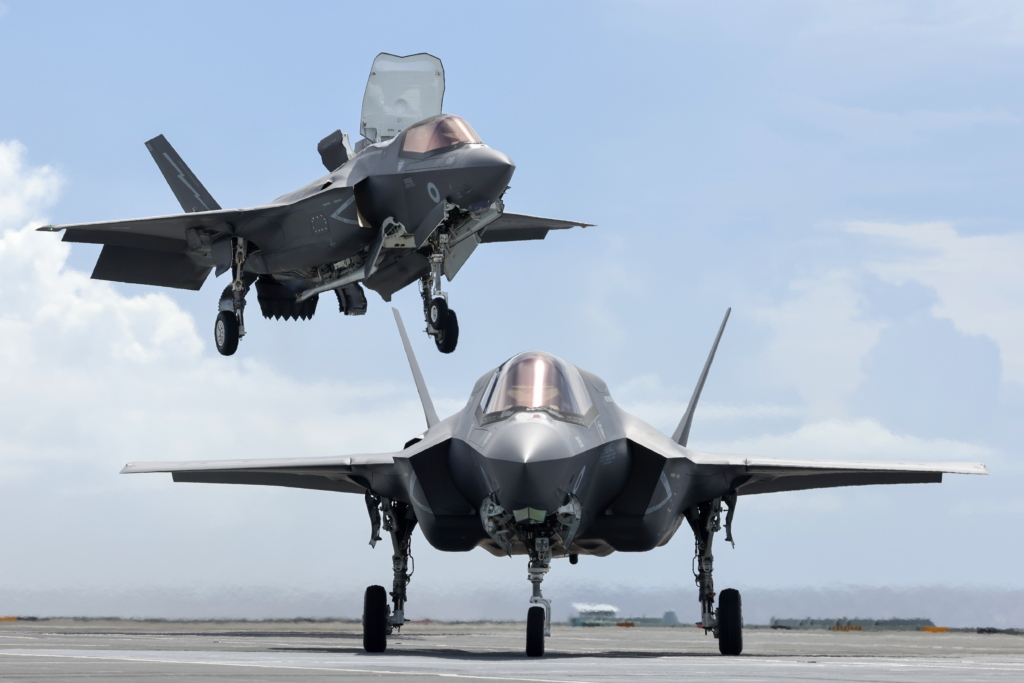
The conventional variant also carries more internal fuel and has a longer range, making it a more economical option for land-based pilot training.
Using F-35As within the Operational Conversion Unit would allow the RAF to preserve flying hours on its F-35Bs for frontline and carrier operations.
The UK currently has 48 F-35Bs and has committed to purchasing another 15 alongside the 12 F-35As. It retains a long-term ambition to acquire as many as 138 F-35s, although no firm plan has been announced for later orders.
Additional F-35As will almost certainly be needed if Britain is to maintain a permanently available operational nuclear force without disrupting pilot training.
F-35A adds pressure to RAF tanker plans
The F-35A also presents another challenge for the RAF: unlike Britain’s F-35Bs, it cannot receive fuel from the hose-and-drogue systems fitted to the existing Voyager fleet.
The F-35A receives fuel through a rigid refuelling boom, while RAF Voyagers are fitted exclusively with hose-and-drogue equipment designed to support aircraft, including the F-35B and Eurofighter Typhoon.
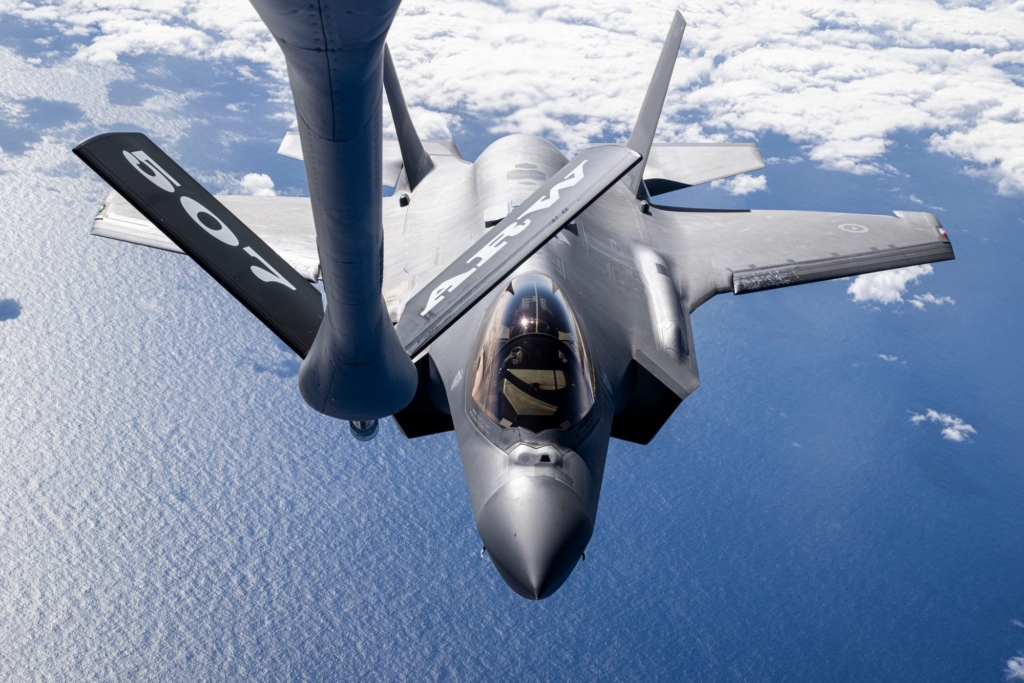
Britain already depends on allied tankers to refuel boom-equipped aircraft such as the P-8A Poseidon, RC-135W Rivet Joint and C-17 Globemaster III.
The RAF is now examining options with AirTanker to introduce a sovereign boom capability, a requirement that has also become more urgent following confirmation that the future Global Combat Air Programme fighter will use boom refuelling.
While the first F-35As will help solve the RAF’s pilot-training challenge, the aircraft needed to restore Britain’s airborne nuclear role, and the tankers required to support them, remain to be decided.