Trump’s Air Force One swap raises questions over the ‘bridge’ Boeing 747-8

7 min read
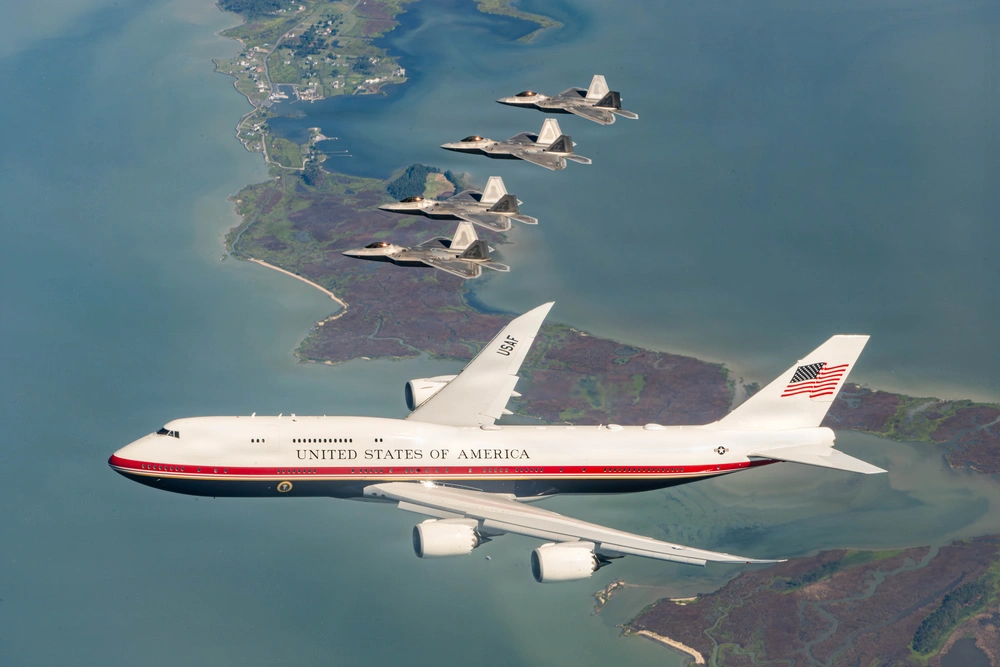

President Donald Trump’s decision to leave America’s newest Air Force One behind in Ankara, travel to England aboard the older presidential aircraft and then return to the new jet for the flight back to Washington has drawn attention to the operational and security complexities surrounding the introduction of the US President’s latest aircraft.
The newly introduced aircraft, a Boeing 747-8 gifted by Qatar and rapidly converted into an interim Air Force One while Boeing’s delayed VC-25B programme remains under development, made its first long-haul mission carrying the President to the Turkish capital, where he attended the NATO summit.
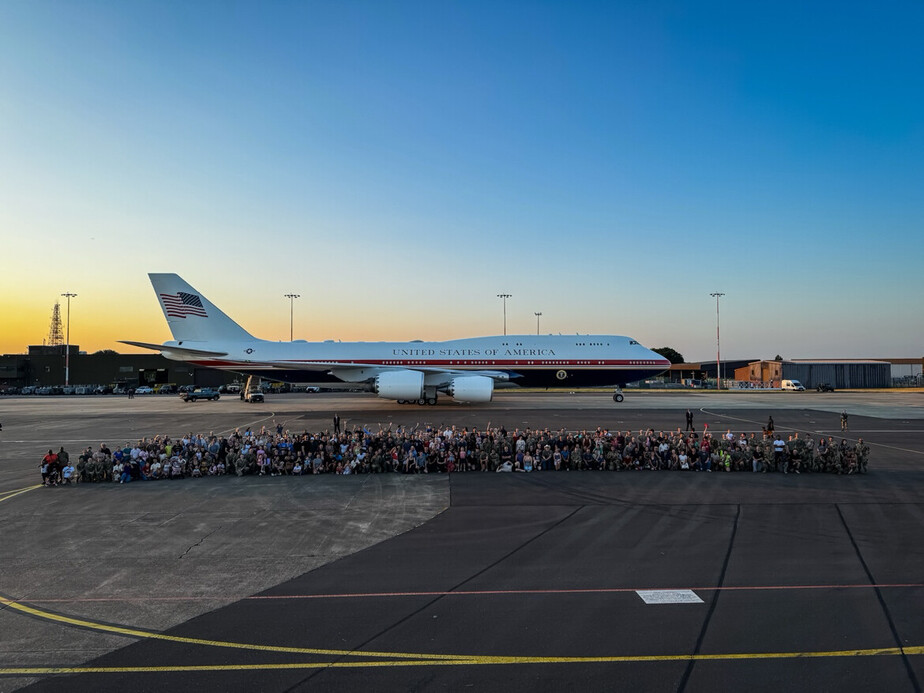
Trump on 8 July said it was flown ahead to RAF Mildenhall, in eastern England, so that American service personnel stationed there could tour the aircraft before it returned to the United States, adding that he chose to fly the older Air Force One to England “for old time’s sake.”
Did regional tensions lead to Air Force One swap?
The unusual aircraft swap nevertheless prompted wider discussion because it came against the backdrop of renewed tensions with Iran and the aircraft’s recent introduction into presidential service.
While Trump denied security concerns influenced the decision, some US media reports, including one by The New York Times, said the Secret Service had recommended the older VC-25A for the departure from Ankara as a precaution.
The White House has maintained that the interim Air Force One is equipped with advanced security features and meets the requirements of the presidential mission.
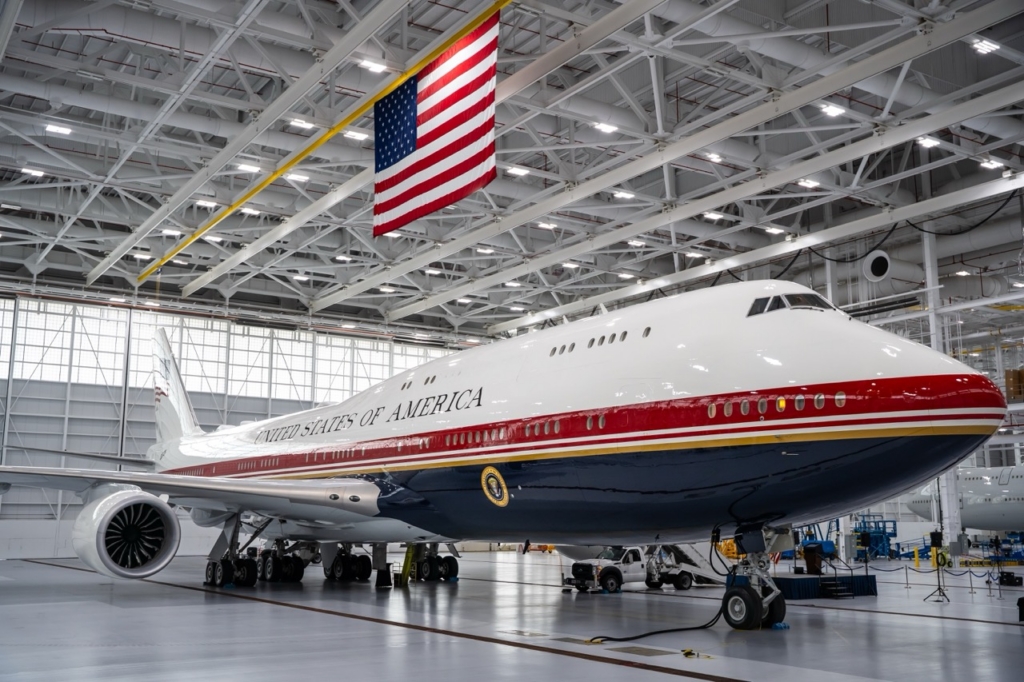
Whatever the reason behind the change, the episode offered an unusually public glimpse into one of the world’s most closely protected aviation operations and highlighted the challenges of introducing a new presidential aircraft while maintaining the survivability, secure communications and command-and-control capabilities expected of Air Force One.
Before leaving the UK Air Force Base, Trump said on social media, “We just landed and met up with our new Air Force One, which was sent earlier to RAF Mildenhall, so we could show the wonderful Servicemembers, as per the entire Base’s request. They were very excited, picture enclosed. It was on our way back to the States from Turkey, with virtually no deviation of flightpath.”
Video and photographs late on 8 July showed Trump boarding the new Air Force One at the British base as it prepared to fly to Washington.
Boeing 747 ‘bridge’ Air Force One takes its first long-haul trip
Trump arrived in Ankara aboard the interim Air Force One for the NATO summit, marking the aircraft’s first long-haul presidential mission since entering service.
Ordinarily, a presidential aircraft would remain with the Commander-in-Chief throughout an overseas visit. Instead, before leaving Türkiye, Trump boarded one of the ageing VC-25A aircraft for the onward flight to England while the Boeing 747-8 repositioned independently to RAF Mildenhall, one of the US Air Force’s principal operating bases in Europe.
Trump rejected suggestions that the aircraft had been withdrawn from service, saying it had been flown to RAF Mildenhall at the request of personnel stationed there so they could tour it before it returned to the United States.
His explanation accounted for why the aircraft was repositioned to Britain. It did not, however, explain why he travelled separately aboard the older VC-25A for that leg before returning to the newer aircraft for the journey home.
The separate movement fuelled several hours of speculation over whether the expedited introduction of the aircraft into presidential service allowed for the addition of an advanced missile defence system and other modifications used to protect the president, and also whether the US President has decided not to continue using the new aircraft amid a heightened security environment following renewed tensions with Iran.
The White House has not publicly discussed the operational planning behind the aircraft change.
Trump also acknowledged before leaving Türkiye that he remained a potential target for Iran but insisted security concerns did not prompt the aircraft swap.
The uncertainty ended only when Trump boarded the Boeing 747-8 at RAF Mildenhall for the transatlantic flight back to Washington, confirming that the aircraft remained central to the presidential mission rather than being sidelined.
Security features of the Air Force One ‘bridge’ aircraft remain classified
Like every Air Force One before it, the interim aircraft’s most sensitive systems have never been publicly disclosed.
The White House has described the aircraft as possessing advanced security features.
At the same time, some US media reports have suggested that the accelerated conversion programme may not have incorporated every defensive capability found aboard the mature VC-25A fleet, although neither the Air Force nor the White House has publicly discussed the aircraft’s classified defensive systems.
That makes any direct comparison between the two aircraft difficult.
The VC-25As have benefited from more than three decades of continuous upgrades to their communications, electronic warfare and self-protection systems.

Those aircraft have transported every US president since George H. W. Bush while evolving to meet changing threat environments.
Whether the interim Boeing 747-8 offers an identical level of capability has never been publicly detailed.
The bridge Air Force One
Unlike the purpose-built VC-25B aircraft still under development by Boeing, the aircraft used by Trump is an interim Air Force One based on a Boeing 747-8 Intercontinental that underwent an accelerated conversion programme.
Its introduction follows years of delays to Boeing’s VC-25B programme, forcing the US Air Force to continue relying on the ageing VC-25A fleet longer than originally planned.
Compared with the Boeing 747-200-based VC-25A, the newer 747-8 offers greater range, improved fuel efficiency, increased reliability, a modern flight deck and significantly more internal volume.
Those characteristics make it a more capable platform for the sophisticated communications and mission systems required for presidential transport.
Converting a commercial airliner into Air Force One, however, involves far more than installing a presidential interior.
The aircraft must accommodate secure global communications, hardened electrical systems, classified command-and-control equipment, redundant power generation and defensive technologies intended to protect the President under virtually any circumstances.
Exactly which capabilities have been installed remain classified.
More than simply a presidential aircraft
Air Force One is far more than executive transport. It functions as a flying White House, enabling the Commander-in-Chief to communicate securely with military commanders, intelligence agencies and government departments anywhere in the world while maintaining uninterrupted command-and-control capability during crises.
Its communications architecture, defensive systems and mission equipment are among the most sophisticated ever installed aboard a government aircraft.
For that reason, introducing a new presidential aircraft ranks among the US Air Force’s most demanding aviation programmes. Every modification must satisfy stringent operational and security standards before the aircraft can assume the responsibilities carried by its predecessor.
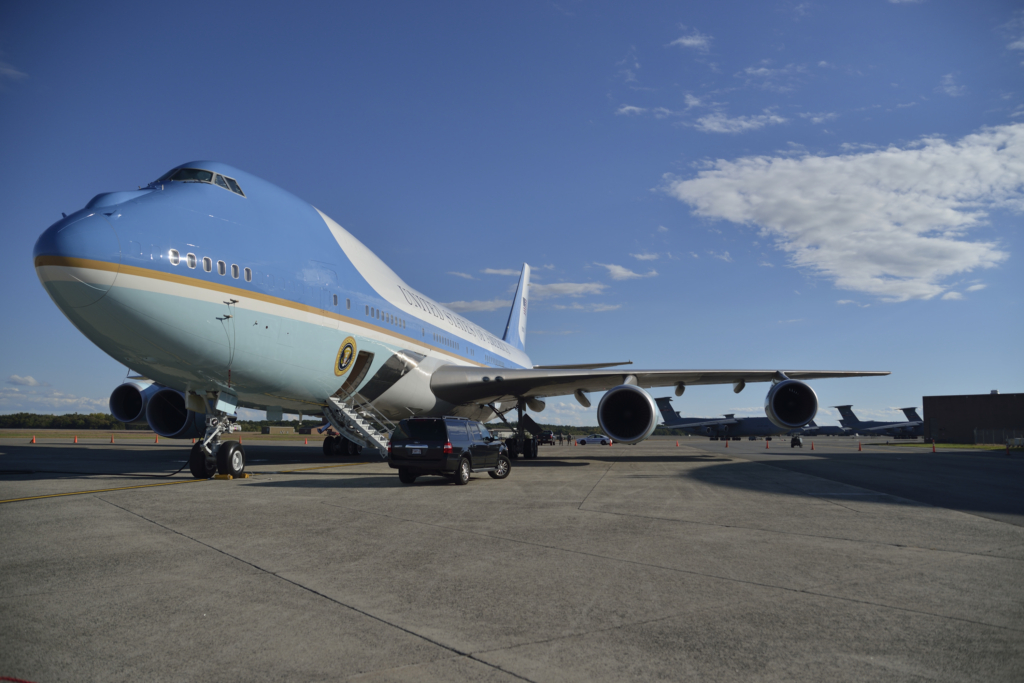
Although the Boeing 747-8 has now entered presidential service, the VC-25A fleet continues to play an essential role.
Operating both aircraft provides operational flexibility, redundancy and continuity while crews gain experience with the interim platform and Boeing continues work on the next-generation VC-25B fleet.
Trump’s decision to return to the Boeing 747-8 from RAF Mildenhall effectively completed the aircraft’s first long-haul presidential deployment.
More importantly, the episode provided a rare public glimpse into the complexity of presidential aviation.
Beneath the familiar Air Force One callsign lies an intricate combination of logistics, contingency planning, classified technology and security that is seldom visible outside government circles.
Whether the aircraft change reflected logistics, operational caution or simply an opportunity to showcase the new Air Force One to US personnel, it underscored that introducing a new presidential aircraft is about far more than replacing one Boeing 747 with another.
It is about ensuring the President retains uninterrupted command-and-control capability, global reach and survivability while the United States transitions from one of the world’s most capable government aircraft to its successor.
Featured image: USAF