Iranian military helicopter crashes into market: 4 killed, including 2 civilians

February 24, 2026
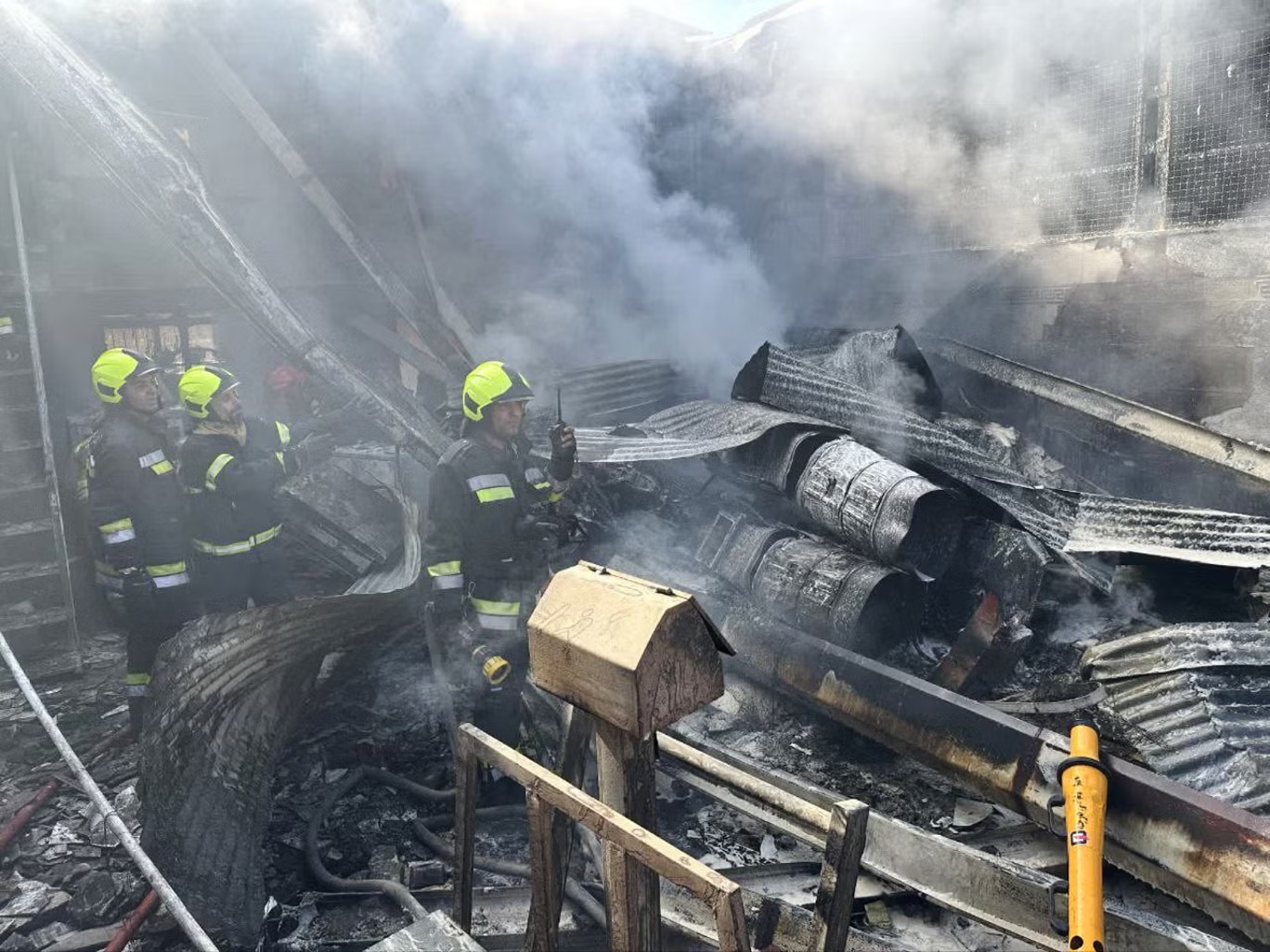
A military helicopter has crashed into a busy fruit market in central Iran, killing both personnel on board and reportedly two people on the ground.
The crash occurred in Dorcheh in the Isfahan province, a town some 200 miles south of Tehran. The aircraft came down on a bustling local market, reducing stalls and products to ashes.
The pilot and co-pilot were killed in the crash, and two people on the ground also perished. The civilians were reportedly stallholders working on the market.
IRAN: On Thursday, an Iranian jet fell from the sky. This morning, an Iranian helicopter fell straight into a fruit market in Isfahan.
— Open Source Intel (@Osint613) February 24, 2026
And this is before anything even started. pic.twitter.com/U1165vZyPb
According to local media, the helicopter was on a training sortie when the incident occurred. An official investigation into the cause of the accident has been launched.
Scant details on the type of military helicopter involved in Iran crash
Very little has been shared regarding the type of helicopter involved in the accident, apart from one or two images of the crash site.
According to the World Air Forces Directory, at the start of 2026, Iran had more than 100 helicopters across its military departments, including:
| Helicopter type | Iran Army | Iran Navy | Iran Air Force | Revolutionary Guard | Total operated |
|---|---|---|---|---|---|
| Bell AH-1 SuperCobra | 13 | 0 | 0 | 0 | 13 |
| Bell 206 | 3 | 0 | 3 | 0 | 6 |
| Bell 212 | 0 | 8 | 1 | 0 | 9 |
| Bell 214 | 25 | 0 | 0 | 0 | 25 |
| CH-47 Chinook | 38 | 0 | 2 | 0 | 40 |
| Mil Mi-171 | 0 | 5 | 0 | 17 | 22 |
| Sikorsky S-61 | 0 | 8 | 0 | 0 | 8 |
| Sikorsky S-65 | 0 | 6 | 0 | 0 | 6 |
A key tell from the crash site is the image of a double exhaust visible amongst the rubble. Not all of the helicopters on the above list sport twin exhausts, although several do.
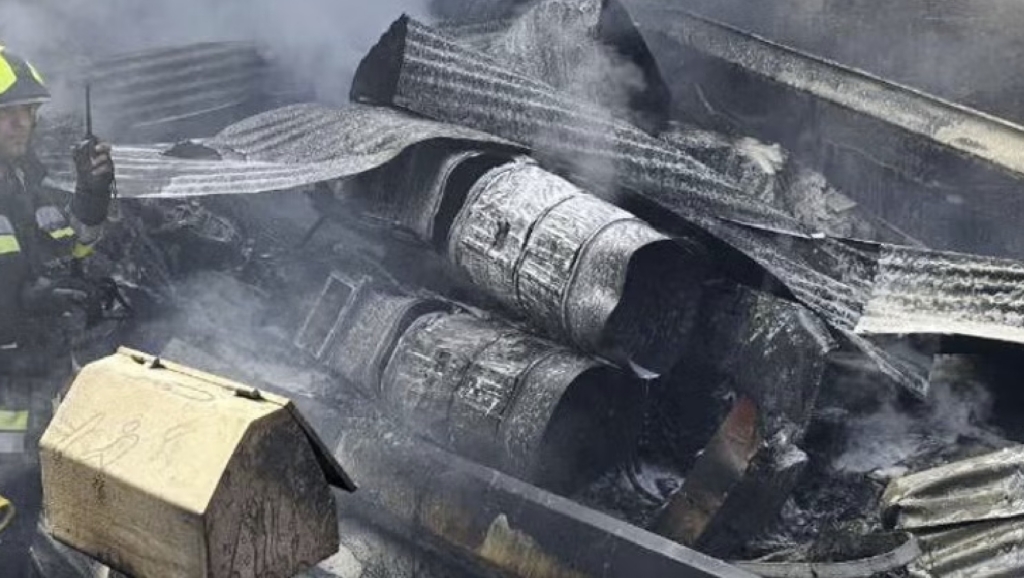
The twin exhaust configuration immediately discounts this being a Bell 206 or a Bell 214, as these have only a single engine. Most of the other helicopter models do have double exhausts, but the configuration in the image doesn’t match many types.
Iran’s most prolific twin exhaust helicopter is the CH-47 Chinook, but these aircraft have their exhausts spaced far apart, one on each of the rear pylons. The two Sikorsky choppers similarly have spaced exhausts, although not quite as far apart as the Chinook. The AH-1J has twin engines side by side, but the exhausts are noticably seperated.
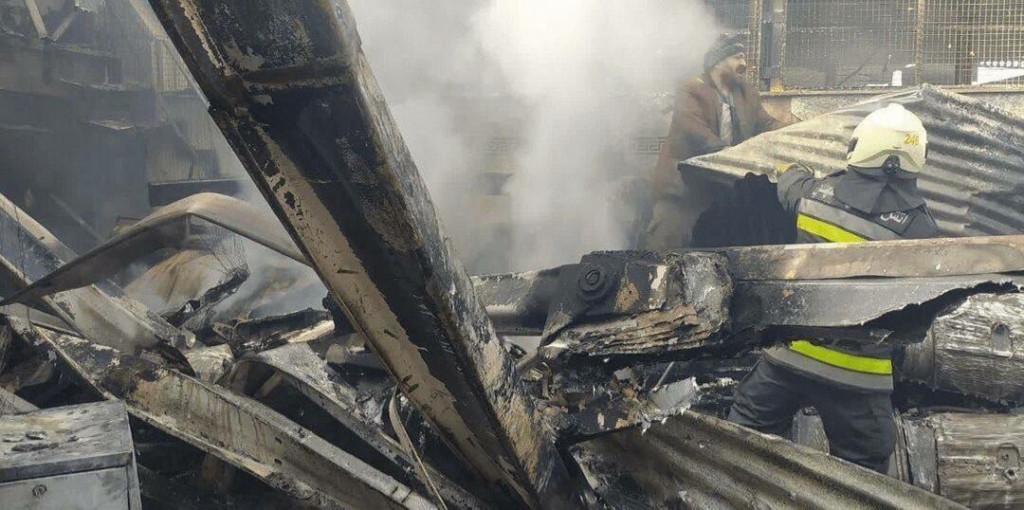
That leaves either the Bell 212, known as the ‘Twin Huey’, or one of the Mil helicopters, either the Mi-171 or the Mi-17. Both Mil helicopters have twin exhausts mounted atop the fuselage, but the outlets are very different to those seen in crash site images.
While the Bell 212 is a prime contender for the accident, there’s also the potential that the aircraft structure was damaged on impact, and that those exhausts were never together in the first place. Official reports will no doubt clarify the type of helicopter lost today.
Second air accident in one week for the Iranian military
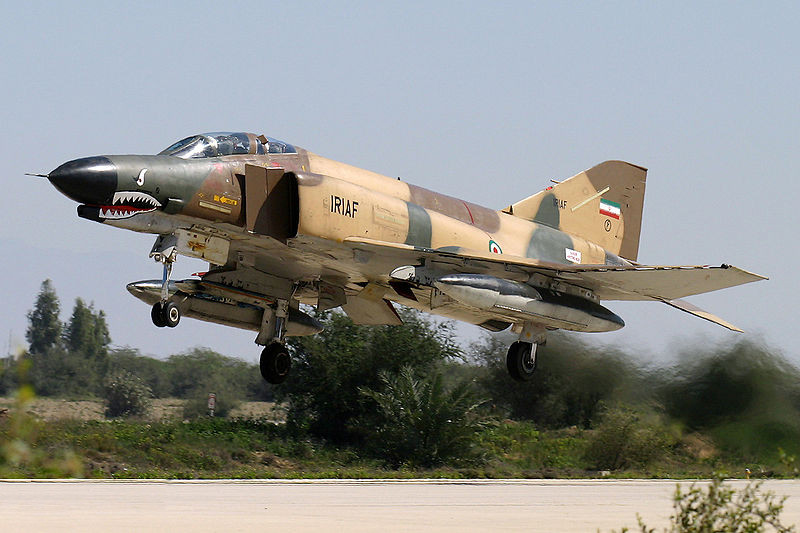
The crash of the military helicopter today comes just five days after a McDonnell Douglas F-4 Phantom II fighter jet operated by the Islamic Republic of Iran Air Force (IRIAF) crashed on 19 February.
The aircraft was undertaking a night-time training flight in Hamdan province in the west of Iran when it went down. One pilot was killed, while the other crew member survived and was rescued.
Iranian authorities have stated that an investigation is underway, but no precise cause has been publicly disclosed yet.
Two military aviation accidents in less than a week inevitably raise questions about operational tempo, maintenance resilience and training safety. While the incidents appear unrelated, such a compressed timeframe is unlikely to go unnoticed within Iran’s defence establishment, particularly given the age of parts of its fleet.
Featured image: Mehr News Agency