Global air power rankings: The countries with the most fifth-generation fighter jets

8 min read

The Lockheed Martin F-35 Lightning II has become the defining symbol of modern air power, flown by more than 20 nations and tested in combat across several theatres. But it’s not the only fifth-generation fighter jet in the world.
Overall, there are around 1,300 fifth-generation fighters in service globally, ranging from rare Russian examples produced in single digits each year to China’s growing stealth fleet numbering in the hundreds. Together, they represent the sharp edge of 21st-century combat aviation.
Aircraft qualifying as ‘fifth-generation’
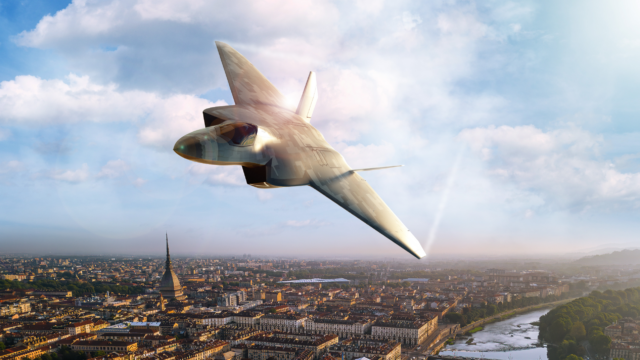
The question about which countries possess fifth-generation fighter jets hinges on which aircraft one considers to be fifth-generation. This article will consider the category to include the F-22 Raptor, the F-35 Lightning II, the Chengdu J-20, the Shenyang J-35, and, somewhat reluctantly, the Russian Su-57 Felon. Stealthy-looking fighter jets in development, like Turkey’s KAAN and South Korea’s KF-21 Boramae, are not counted.

Compared with the other fifth-generation jets, the Su-57 has a large radar cross section, exists in very small numbers, and has failed to make any impact in penetrating and dismantling Ukrainian air defence.
Additionally, some of its advertised systems are not operational due to Russia’s inability to source needed Western components. In some ways, it is better to think of the Su-57 as a capability leap over the Flanker family rather than a direct competitor with the F-35.
It should be noted that upgraded 4.5th-generation variants of the F-15, Rafale, Eurofighter, and other families are also extremely capable jets with reduced radar cross sections. Designating the Su-57 as a fifth-generation fighter jet doesn’t necessarily imply it is more capable than platforms like the F-15EX or Eurofighter Tranche 4 or Tranche 5.
Missing Targeting Pods, Inflated Bills: An Exclusive Investigation into the Su-57 Procurement Problems by Frontelligence Insight. 🧵Thread:
— Tatarigami_UA (@Tatarigami_UA) August 16, 2025
1/ Newly obtained classified documents, show that Russia purchased its 5-generation Su-57 fighters for more than 3 billion rubles each; pic.twitter.com/Ik9gzEcjZ2
The concept of fighter jet generations was first developed in the 1990s as a way to highlight the massive leap in capabilities that the future F-22 Raptor represented. Since then, it has become a marketing term and is popular in clickbait headlines.
There is no universally accepted criterion for what does and does not count as a fifth-generation fighter, and manufacturers use these terms for marketing. Pakistan claims the latest versions of its low-end, lightweight JF-17 Thunder fighter jets are 4.5++, while Northrop Grumman claims its new B-21 Raider is the world’s first sixth-generation combat aircraft.
At a glance: The countries with the most fifth generation fighter jets
Combining information from the World Air Forces Directory, the World Directory of Modern Military Aircraft (WDMMA) and publicly available data from national MoDs, the nations with the most fifth generation fighter jets are:
- United States: 620+, including F-22 (183) and F-35A/B/C (400+)
- China: 300+, mostly the J-20, plus a handful of early J-35 naval variants
- Australia: 72, all F-35A
- Norway: 52, all F-35A
- Netherlands: 49, all F-35A
- Israel: 46, all F-35I “Adir” (a customised F-35A)
- Japan: 46, including F-35A (43) and F-35B (3)
- South Korea: 40, all F-35A
- United Kingdom: 38, all F-35B (joint RAF/Royal Navy Lightning Force)
- Italy: 38, including F-35A (32) and F-35B (6)
- Russia: ~20, all Su-57 Felon (limited production; Algeria first export customer pending)
Countries with Russia’s Su-57
Currently, only Russia possesses the Sukhoi Su-57 Felon, although this is soon to change with pending exports to Algeria. Algeria is one of the few very loyal Russian customers that continues to purchase Russian jets despite US sanctions under the CAASTA act.

Recently published Russian documents by the hacking group, Black Mirror, appear to reveal Algeria has ordered 12 Su-57s. Algeria is in an arms race with Morocco. According to Military Africa, Morocco may be the next country approved by the United States to purchase the F-35 to counter Algeria.
The Su-57 was initially developed in partnership with India; however, India dropped out of the program, saying the aircraft didn’t meet its requirements.
Confirmation on what I was the first to report on Aug 2022 about the contract between Iran and Russia for the purchase of Su-35 fighters.
— Mehdi H. (@mhmiranusa) October 3, 2025
The contract includes 48 Su-35 fighters for 2026-2028.
H/t: @GeorgeN28581 https://t.co/t7COaylsX7 pic.twitter.com/AubCzgGzNX
By the end of 2024, Russia was estimated to have 19 Su-57s in service, with around six serial production examples thought to be delivered in 2024. This means the Netherlands has more fifth-generation fighter jets in service than Russia. It is unclear how many have been produced in 2025, although Russia is working to ramp up production.
Countries with Chinese J-20s and J-35s
China has not exported either of its Chengdu J-20 and Shenyang J-35 fifth-generation fighter jets. China has an export ban on the J-20 Mighty Dragon, similar to the US ban on exporting the F-22 Raptor.

China is now believed to have produced at least 300 J-20s due to a serial number being spotted on an aircraft at a recent Chinese airshow.
The J-35 superficially resembles the F-35 and has recently entered serial production. The aircraft is coming with a naval variant, and it has been seen operating on China’s new Type 003 Fujian aircraft carrier.
Three types of carrier-based aircraft, including J-15T, J-35 and KJ-600, completed catapult launch and landing training on board the PLANS Fujian for the first time this year, demonstrating the Fujian’s capability of electromagnetic catapult and recovery operations. pic.twitter.com/XATTs1yCtu
— ChinaNavy (@China_Navy) September 22, 2025
It is believed China is open to exporting the J-35. There were rumours that Pakistan would be the first export customer, but those reports were quickly denied by Pakistan. Egypt is also considered a potential export customer for the jet.
Countries with F-35As
With more than 1,200 F-35 family fighters delivered, there are two to three times more F-35s in the world than all other fifth-generation fighters combined. The Lockheed Martin F-35A conventional variant is by far the most common and popular fifth-generation fighter jet on the market. It is also the cheapest of the three F-35 variants.

The United States is very selective about which countries it exports its F-35s to and generally imposes ‘onerous’ conditions on those countries. The US does not tolerate it being operated by countries that have systems like China’s Huawei 5G network or Russia’s S-400 SAMs. It even forbids Israeli pilots with foreign passports from flying it.
As a rule of thumb, the US only approves sales to NATO allies and Major non-NATO US Allies. The only NATO ally the US has refused to sell it to is Turkey, which it kicked out of the F-35 program in 2019 after Turkey purchased Russia’s S-400s.
The US has also refused to sell it to Major non-NATO allies Egypt, Taiwan, Thailand, and Qatar. It has turned down requests by Saudi Arabia, Indonesia, and the UAE, even after an initial agreement for 50 F-35As for the latter.
Very based.
— WarMonitor🇺🇦🇬🇧 (@WarMonitor3) October 1, 2025
Dutch F-35 with its first kill mark a drone shot down over Poland on September 9th. pic.twitter.com/AS8xC7U0Ub
The F-35A has been ordered by Australia, Belgium, Canada, the Czech Republic, Denmark, Finland, Germany, Greece, Israel, Italy, Japan, the Netherlands, Norway, Poland, Romania, South Korea, Switzerland, and the United Kingdom. In the United States, the F-35A is only operated by the Air Force.
The Netherlands and Norway are the only countries to have fully transitioned to the F-35, with Denmark soon to follow. Australia operates F-35As alongside Super Hornets and Growlers.
Countries with F-35Bs or F-35Cs
The F-35B is the naval STOVL variant of the F-35 family, and the F-35C is the carrier-based variant. Only the US Marine Corps and the US Navy operate the F-35C.

The United Kingdom considered configuring its Queen Elizabeth class aircraft carriers to operate the F-35C, but scrapped the idea because of the expense. The Royal Navy exclusively operates the F-35B from its aircraft carriers, sharing the jets with the Royal Air Force.
The F-35B’s other operators are Italy and Japan, which operate them from their smaller aircraft carriers (technically designed destroyers or cruisers by Japan).
Spain is considered a potential future operator of the F-35B. Like the Marine Corps and Italian Navy, it operates a fleet of McDonnell Douglas AV-8B Harrier IIs. While Spain stated it has rejected the possibility of purchasing the F-35, it remains to be seen if it will at least purchase the F-35B, as there is no other direct replacement for the Harrier.
Countries with F-22s
The Lockheed Martin F-22 Raptor was the world’s first fifth-generation fighter jet when it entered service in 2005. It remained the only fighter jet in the class until it was joined by the F-35 in 2015.

While the F-35 is designed as a multi-role platform, the F-22 is a dedicated air dominance fighter jet and is still considered the world’s most capable air-to-air fighter jet. As time has gone on, the F-22 has been upgraded with additional roles and has some ground attack capabilities.
The Air Force had planned to purchase 750 F-22s, but this was eventually reduced to just 187 examples, of which 183 airframes exist today after crashes. As stated, the US has an export ban on the F-22 Raptor, and the United States Air Force remains the only operator.
As General Wilsbach takes over as the US Air Force Chief of Staff, hoping this 👇comes up in confirmation hearings.
— AirPower 2.0 (MIL_STD) (@AirPowerNEW1) October 5, 2025
Why did he, as the ACC boss, not think that the service had a F-22 replacement? Perhaps he was just pissed that Frank Kendall put #NGAD on ice and wrote RAND a… https://t.co/OVMvGox9bu pic.twitter.com/q1piKjnCTQ
The Air Force is currently working to significantly upgrade its combat-coded Raptors to ensure they remain at the cutting edge into the 2030s. They will also be the first aircraft to receive CCA or loyal wingman drones at the end of the decade.
Sign up for our newsletter and get our latest content in your inbox.


More from


October 17, 20264 min read