


China-Russia bomber patrol triggers fighter jet scrambles from Japan and South Korea

4 min read
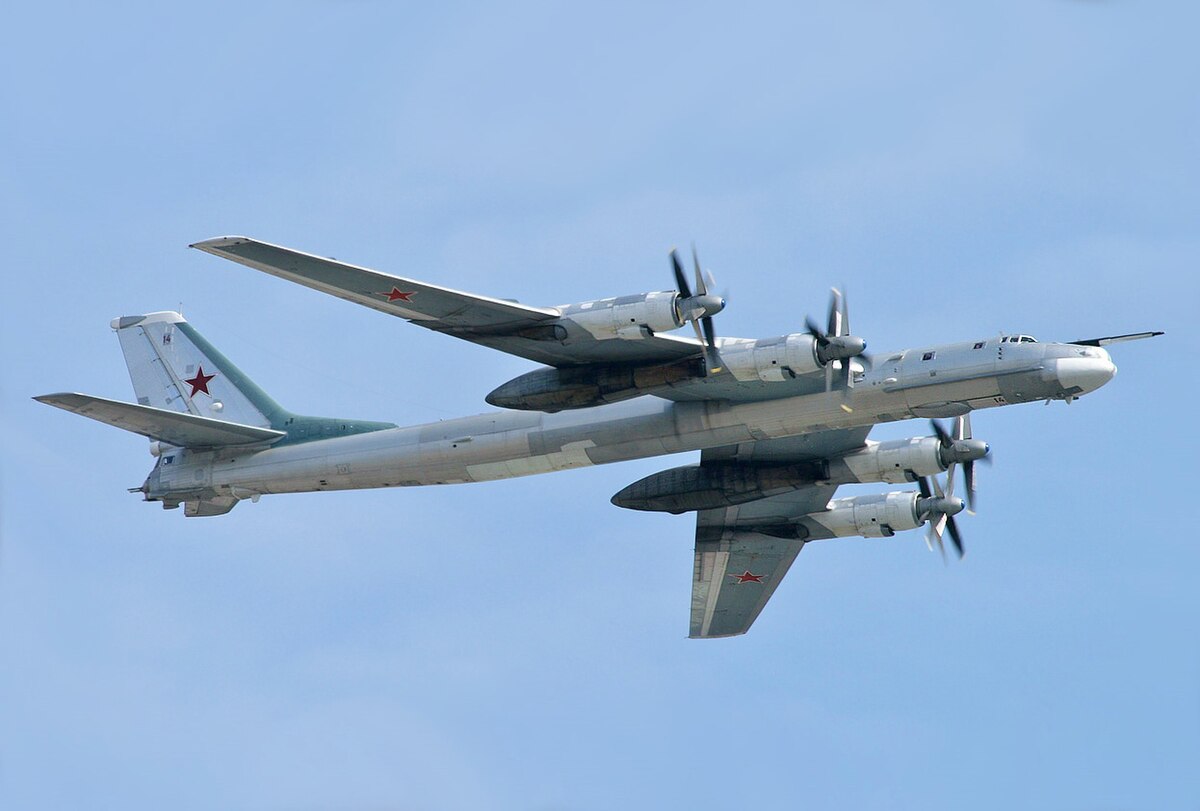
Perhaps more than 20 Chinese and Russian military aircraft, including bombers and fighters, took part in the 11th China-Russia joint air patrol near South Korea and Japan. The aircraft did not violate national airspace.
Japanese Defense Minister Shinjiro Koizumi said that he was in contact with South Korea and, according to The Japan Times, he said: “We cannot help but view them as a strong show of force against our country.”
China and Russia hold air drills near South Korea and Japan
China and Russia have held joint air drills that crossed into South Korea’s Air Defense Identification Zone (KADIZ) and Japan’s Air Defense Identification Zone (JADIZ). The drills saw fighter jets from South Korea and Japan scrambled.
China, Russia Conduct 11th Joint Strategic Air Patrol
— Global Defense Insight (@Defense_Talks) June 27, 2026
China and Russia conducted their 11th joint strategic air patrol on June 27, with military aircraft operating over the Sea of Japan, East China Sea, and the western Pacific Ocean. According to Chinese authorities, the patrol… pic.twitter.com/R4WQNfJozz
The Chinese Ministry of National Defense (MND) stated that the joint patrol with Russia was “demonstrating their resolve and capability to jointly safeguard regional peace and stability.”
South Korea responded by scrambling its F-15K “Slam Eagle” fighter jets. Japan responded by scrambling its Air Self-Defense Force F-35A fighter jets.
These intercepts can sometimes result in incidents. In December 2025, AGN reported Japan scrambled its F-15s in response to a Chinese exercise. A Chinese fighter jet locked onto a Japanese fighter, forcing it to take evasive manoeuvres, triggering a diplomatic incident.
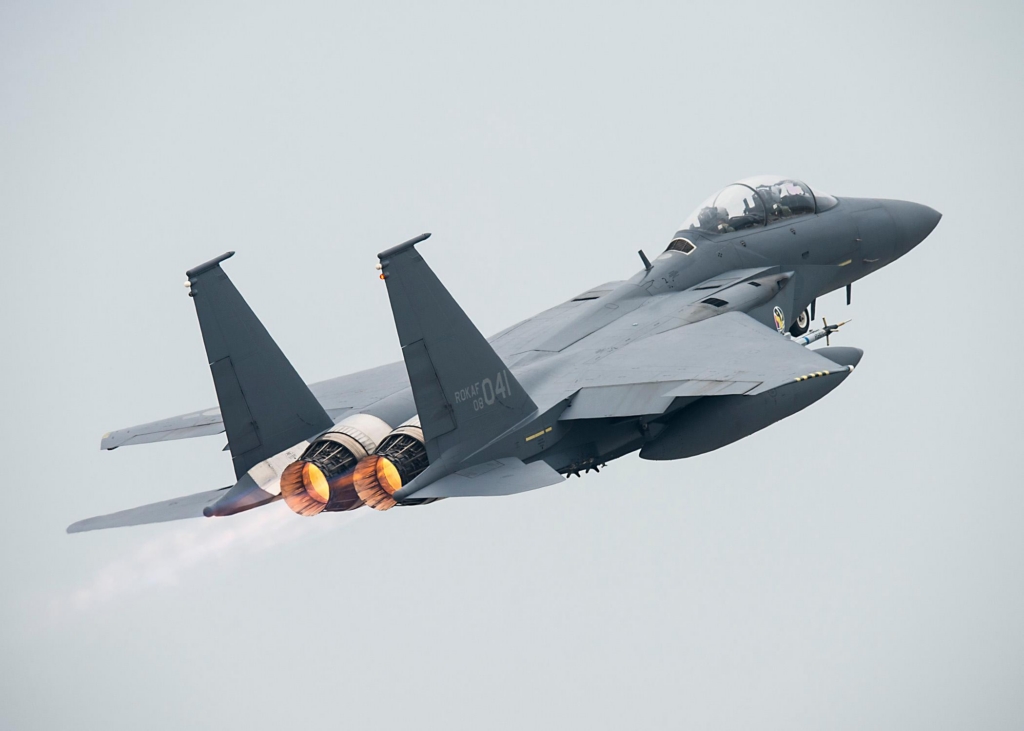
South Korea’s Joint Chiefs of Staff (JCS) stated on the 27th of June, “Over 10 Chinese and Russian military aircraft sequentially entered and exited the KADIZ in the East Sea and South Sea from the morning, with no violation of territorial airspace.” Over 20 Chinese and Russian aircraft are thought to have participated in the exercise.
Military aircraft flown by China
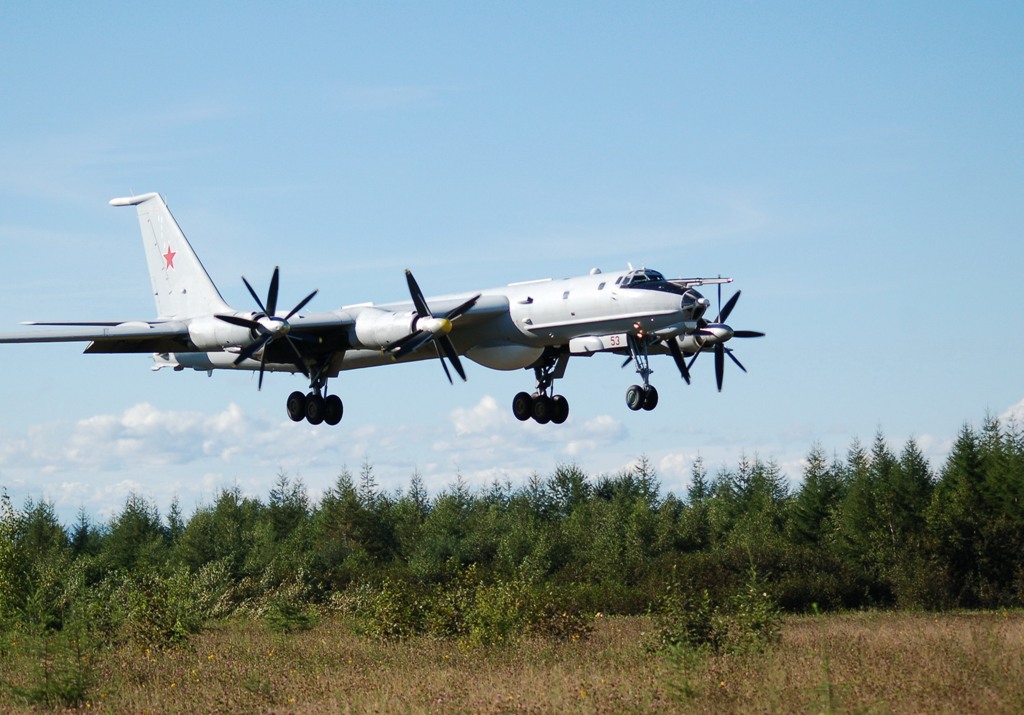
China’s state-run Global Times reported, “the Chinese side deployed H-6K bombers and J-16, J-10C and J-11B fighter jets during the joint patrol. According to Japan’s Defense Ministry, Russia sent Tu-95 bombers and Tu-142 patrol aircraft to form a joint formation with the Chinese aircraft.”
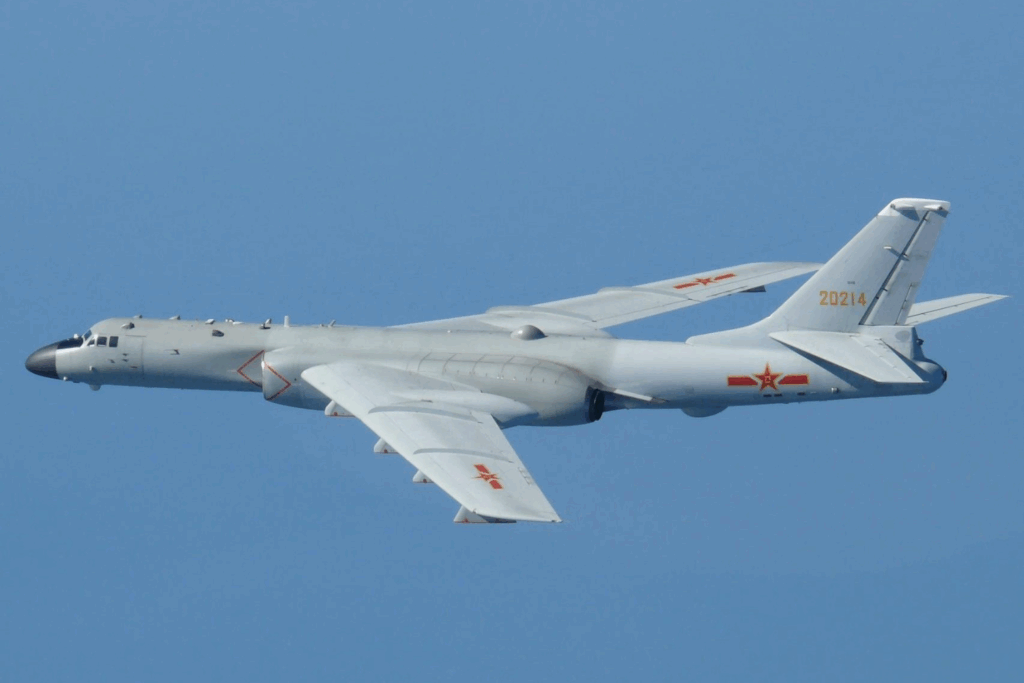
The Xi’an H-6 is China’s only strategic bomber and is a heavily modified and modernised variant of the long-retired Soviet Tupolev Tu-16.
The H-6K variant entered service in 2009 and is known in China as the “God of War” (战神). The aircraft is designed to be able to strike carrier battle groups, targets in the eastern Pacific, and carry nuclear munitions.
The Shenyang J-16 is a Chinese land-based PLAAF variant of Su-30MKK, while the related Shenyang J-11B is a modernized Chinese derivative of the Soviet Sukhoi Su-27SK.

The Chengdu J-10C is China’s first fully domestically developed frontline fighter. It has been exported to Pakistan and is being ordered by Indonesia.
Get the latest aerospace defence news here on AGN.
Military aircraft flown by Russia
South Korea’s news outlet, The Chosun, reported that the Chinese and Russian bombers and fighters were supported by other enablers.
It wrote, “Russian A-50U early-warning aircraft served as airborne command posts, while Chinese KJ-500A early-warning aircraft monitored airspace. Russian Il-78M and Chinese YY-20 aerial refuelling tankers conducted mid-air refuelling for fighter jets.” Chinese Y-9 electronic reconnaissance aircraft also participated.
In addition to the Tu-95 strategic bombers and Tu-142 maritime patrol aircraft (developed from the Tu-95), Russian Su-30 and Su-35 fighters are also reported to have participated.
The Tu-95 is Russia’s large turboprop bomber and is the analogue of the USAF B-52. The ageing aircraft is long out of production and has faced significant attrition during the war in Ukraine, especially during Operation Spiderweb.
The Su-30 and Su-35 are the Russian Air Force’s primary multirole and air superiority fighter jets. Rusi reported in January that it estimated Russia had 135-140 Su-35s in service and 140-145 Su-30s in service.
Yesterday, June 27, the Russian Aerospace Forces and the People’s Liberation Army Air Force conducted their 11th joint exercise over the Sea of Japan, the East China Sea, and the western Pacific Ocean.
— AviVector (@avivector) June 28, 2026
Four Tu-95MS (one of which was RF-94186) between 03:15 and 05:15 UTC and two… pic.twitter.com/F0n50548ij
Separately, on the 28th of June, it was claimed that a Russian Su-35 shot down a Ukrainian MiG-29, and that another MiG-29 was destroyed on the ground.
The same day, it was also reported that Ukraine had destroyed one or two Su-35s, possibly on the ground. Some of these details remain unconfirmed as of the time of writing.
Featured Image: Sergey Kustov / Wikimedia


