All the special mission aircraft flown by the USAF and what they do

March 21, 2026
The United States Air Force (USAF) operates a range of military aircraft for various special missions, including intelligence, surveillance, reconnaissance, and electronic warfare. The 2026 Flight Global Report states that the USAF currently operates 167 special mission aircraft, accounting for over 27% of the active fleet operated by various US military divisions. This article explores the USAF special mission fleet and the roles these aircraft serve.
Electronic warfare (EW) and Airborne Early Warning and Control (AEW&C)
| Aircraft | Role | Active units |
|---|---|---|
| Lockheed EC-130H | Electronic Warfare | 3 |
| Gulfstream G550 (EC-37B) | Electronic Warfare | 5 |
| Boeing 707 (E-3B/C/G) | Airborne Early Warning and Control | 17 |
| Boeing 737 (E-7A) | Airborne Early Warning and Control | – |
The Lockheed EC-130H Compass Call is the USAF’s primary electronic warfare aircraft. It is a modified version of the Lockheed C-130 Hercules, designed for electronic offense and counterinformation missions. Powered by four turboprop engines, the midsize aircraft offers advanced EA mission equipment integrated into the cargo compartment.
With three active aircraft in the fleet, the USAF primarily uses the type, along with its combat jets, including Boeing EA-18Gs and F-16s, to suppress enemy air defenses. Moreover, to support the US tactical combat missions, the aircraft can be deployed worldwide for special operations.
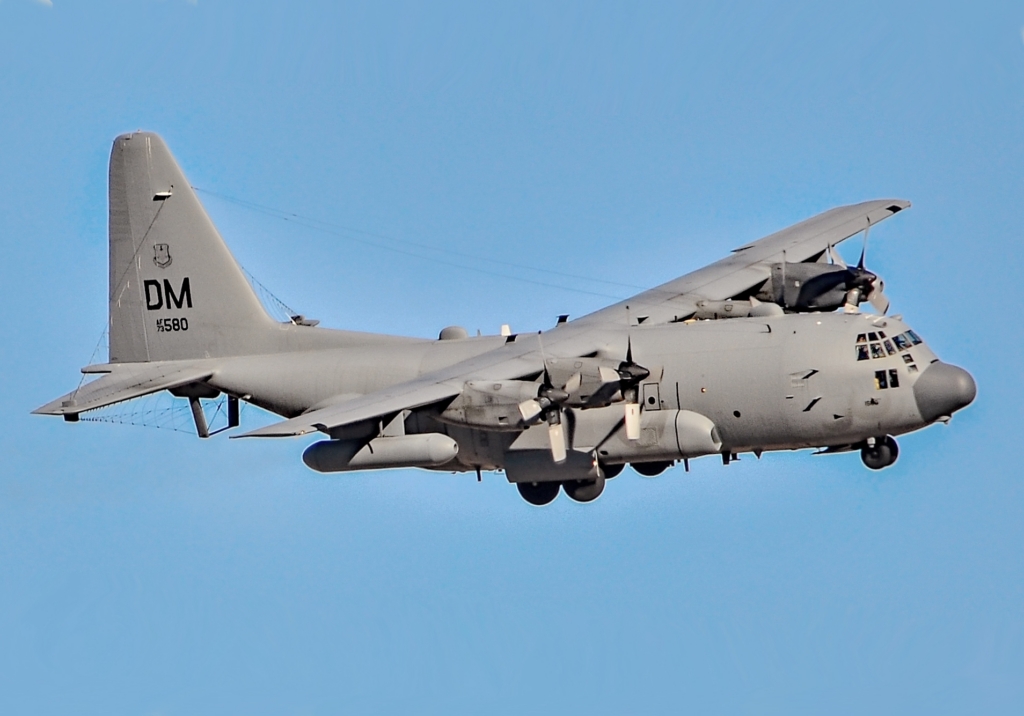
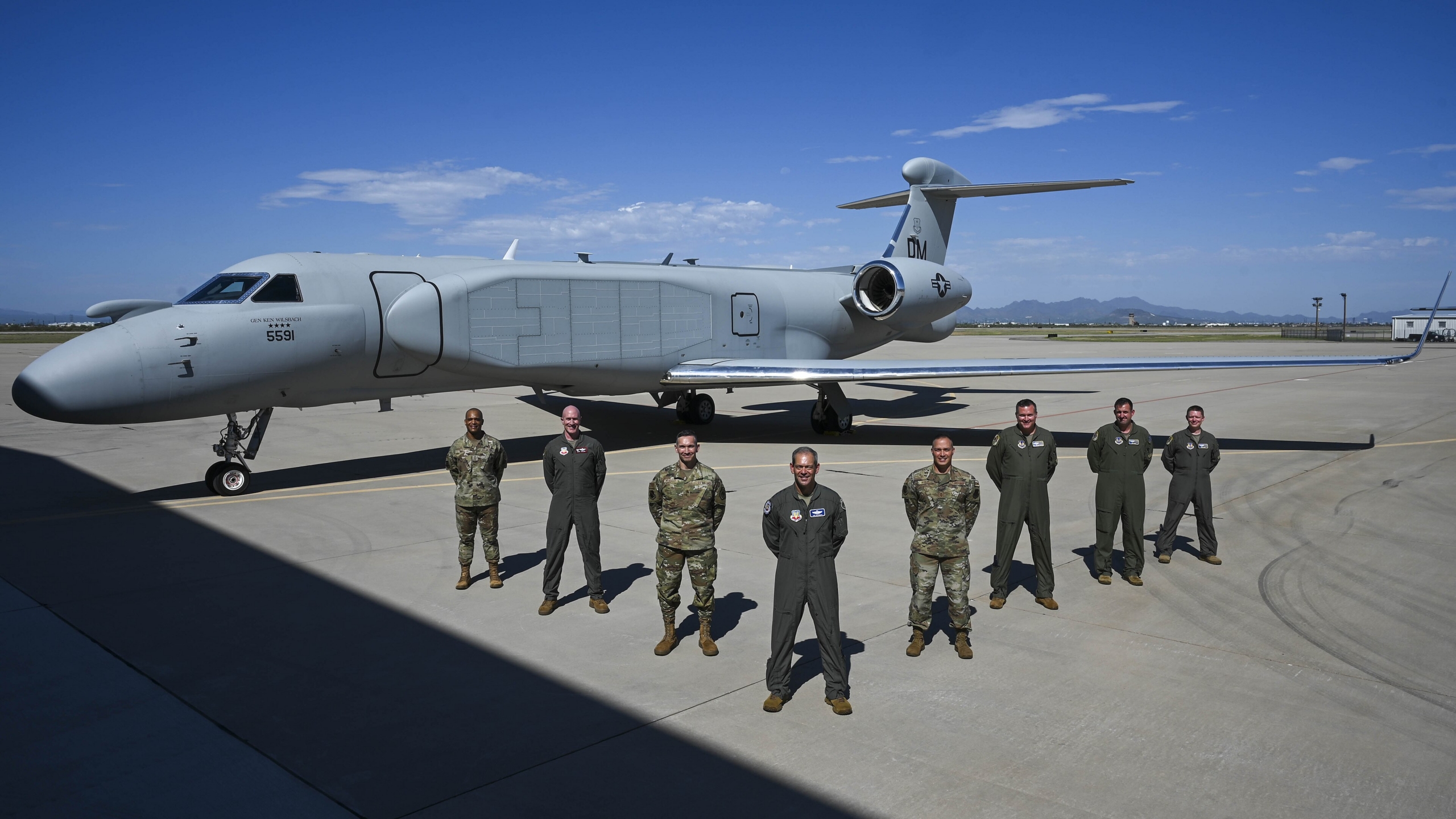
The EA-37B Compass Call is based on the Gulfstream G550 aircraft and is designed to replace the EC-130H for the USAF. The modern electronic warfare aircraft was first delivered to the USAF in August 2024. With five examples currently active, the aircraft offers superior communication, radar, and navigation systems to disrupt enemy command. The aircraft also has the capability to jam electronic systems, including radars and communications.
The Boeing E-3 Sentry is based on the 707 platform and designed for airborne early warning and control (AEW&C) systems. Having a distinctive rotating radome above its fuselage, the USAF operates it for all-weather surveillance, control, and communications missions. The USAF operated half of all E-3s produced by Boeing, with a current active fleet of 17 units.
In 2022, the USAF selected the Boeing 737-based E-7A Wedgetail to replace its aging E-3s and offer superior tactical battle management and control. The first two aircraft of the intended fleet of 26 aircraft were due to enter service in 2027. In June 2025, Breaking Defense reported that the USAF terminated the $2.6 billion E-7 program due to rising costs and concerns over aircraft survivability.
According to a senior military official,
“The Department is canceling the E-7 Wedgetail program due to significant delays with cost increases from $588 million to $724 million for aircraft and survivability concerns in this contested environment, while investing in alternate solutions, including space-based capabilities and adding additional E-2D aircraft.”
Despite its superior capabilities, the USAF and other military experts concluded that such systems and platforms are not survivable in the modern battlefield.
Intelligence, Surveillance, and Reconnaissance (ISR)
| Aircraft | Active units |
|---|---|
| Boeing 757 (C-32B) | 4 |
| CASA/IPTN CN235 | 5 |
| De Havilland Canada Dash 8 (E-9A) | 8 |
| Beechcraft King Air 350 (MC-12W) | 5 |
| Pilatus PC-12 (U-28) | 23 |
| Lockheed U-2S | 25 |
| Boeing RC-135S/U/V/W | 22 |
While many USAF aircraft offer reconnaissance capabilities, it primarily operates special mission aircraft, including U-25 Dragon Lady, U-28 Draco, and E-9A Widget. The USAF is the largest operator of the Lockheed U-2S, with 25 aircraft in its current fleet. The single-engine plane is a high-altitude aircraft that has served the USAF for over five decades.
The reconnaissance platform is designed for all-weather intelligence and information gathering at altitudes upwards of 70,000 feet (21,300 meters). The Cold War-era aircraft has taken part in many reconnaissance missions in the 1960s, as well as more recent conflicts in Iraq and Afghanistan.
The Air Force Special Operations Command (AFSOC) of the USAF is the only operator of the Pilatus U-28 Draco aircraft. The heavily-modified version of the Pilatus PC-12, the Draco, is designed for special missions, including intelligence, surveillance, and reconnaissance (ISR).
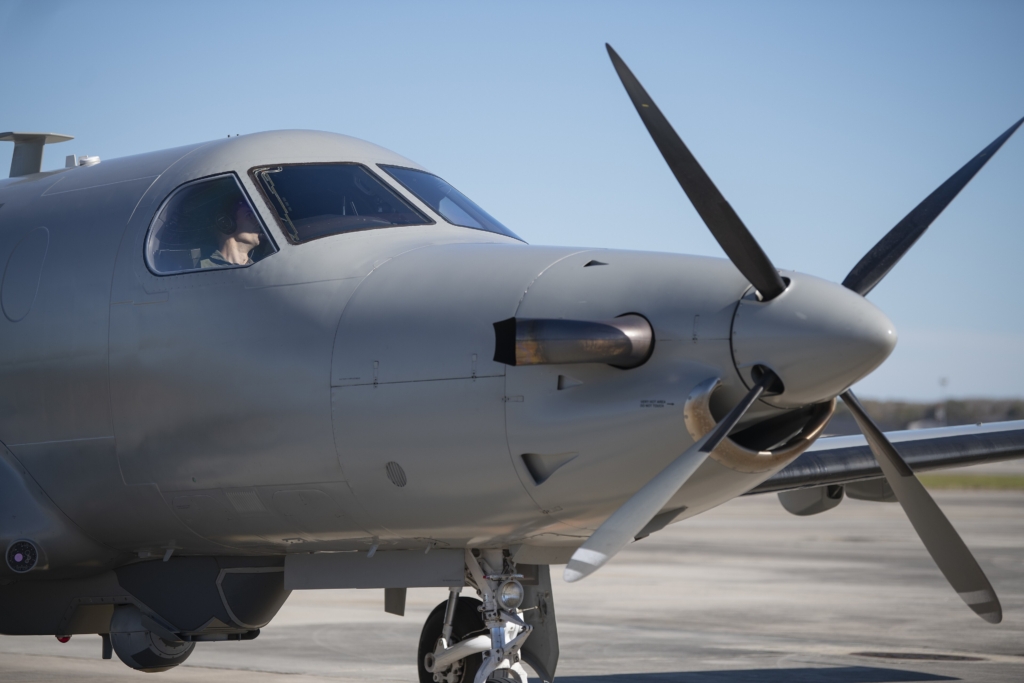
The single-engine turboprop platform features advanced sensors and communication equipment to provide a real-time view of ground forces. The aircraft supports various close air support (CAS) missions for the USAF, offering “eyes” to friendly forces.
The Boeing RC-135 is a highly-modified C-135 Stratolifter designed to support theatre and national level operators with near real-time on-scene intelligence collection, analysis, and dissemination. The aircraft features an advanced sensor suite that allows the crew to detect, identify, and geolocate signals within the electromagnetic spectrum. Powered by four CFM-56 engines, the aircraft can seat 30 people, including intelligence, warfare, and in-flight maintenance personnel.
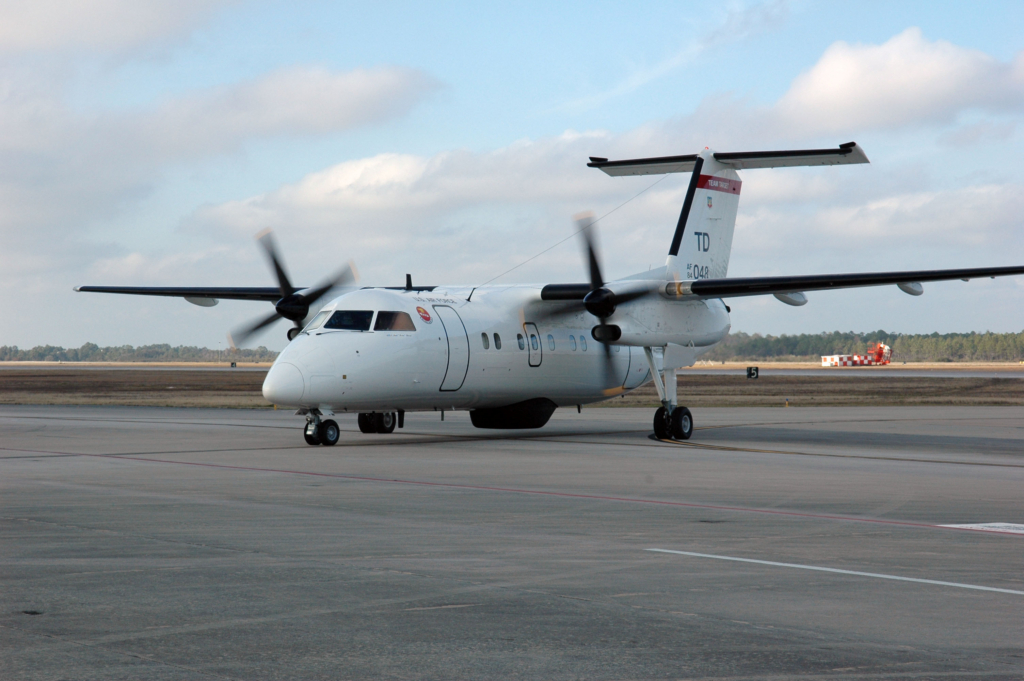
The E-9A Widget is based on De Havilland Canada Dash 8 and serves as a tactical IS aircraft for the USAF. With eight active examples in its fleet, the USAF primarily performs ocean surface surveillance in the Gulf of Mexico. It ensures the waters are clear of civilian boats and aircraft during military activities. The USAF states that the E-9A is equipped with the Airborne Sea Surveillance AN/APS-143(V) Radar to detect objects in the Gulf of Mexico, as far as 25 miles away.
Airborne Communications, Command, and Control (C3)
| Aircraft | Active units |
|---|---|
| Boeing 747 (E-4B) | 4 |
| Bombardier Global Express/6000 (E-11A) | 7 |
The E-4B Nightwatch is one of the most expensive military aircraft, designed to serve as the National Airborne Operations Center (NAOC). The heavily modified version of the Boeing 747-200 platform, the E-4B, can offer a highly survivable command, control, and communications centre in case of a national emergency.
Without the use of ground command and control centres, the aircraft can direct military forces, coordinate actions, and execute emergency war orders. The aircraft is protected against electromagnetic pulses while offering advanced electronic equipment for radio and satellite communications. The aircraft’s skin offers shielding against nuclear, thermal, and acoustic threats.
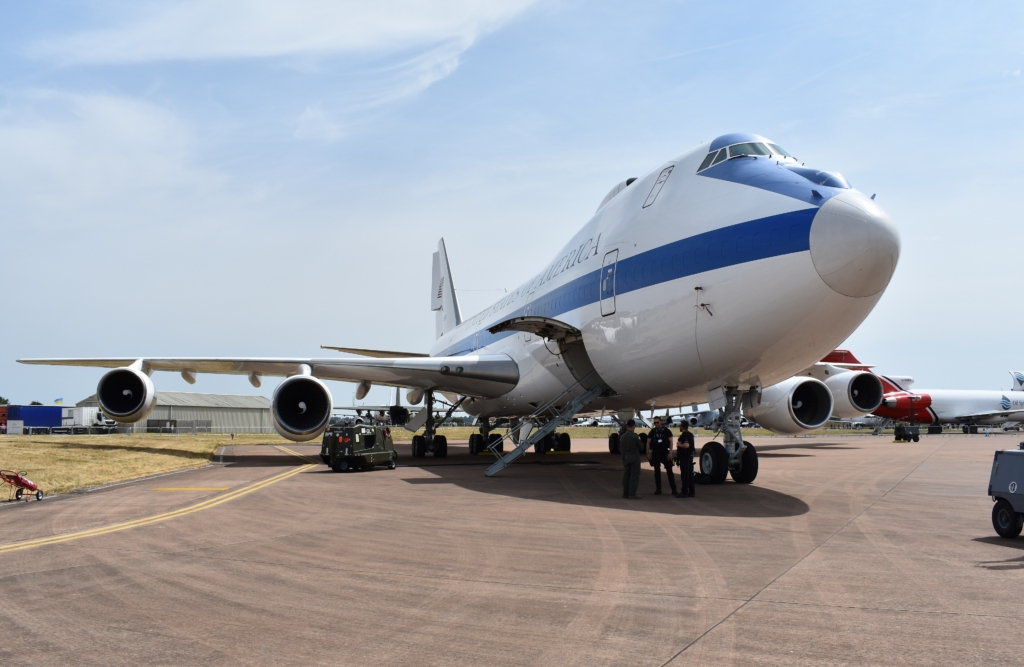
The Air Force states that “at least one E-4B is always generated as a NAOC and on alert 24 hours a day, 7 days a week” to support the President, the Secretary of Defense, and the Joint Chiefs of Staff.
The E-11A is based on the Bombardier Global Express platform and serves as the Battlefield Airborne Communications Node (BACN) for the USAF. The aircraft is used as the airborne communications relay and gateway system, offering real-time information flow in the battlespace.
In September 2025, Bombardier delivered its ninth aircraft to the BACN program, solidifying Bombardier Defense’s role as a partner of choice for the USAF. In addition to the advanced military capabilities onboard, the aircraft is known for its outstanding range, speed, reliability, and endurance.
Search and Rescue aircraft
| Aircraft | Active units |
|---|---|
| Lockheed Martin HC-130J (SAR) | 39 |
The Lockheed HC-130 is a military transport aircraft used in search and rescue (SAR) and combat search and rescue (CAR) for the USAF. Developed from the C-130 Hercules, the USAF uses two versions of the type: the HC-130P Combat King and the HC-130J Combat King II. It is the USAF’s only dedicated SAR aircraft used in airdrop and personnel recovery missions.
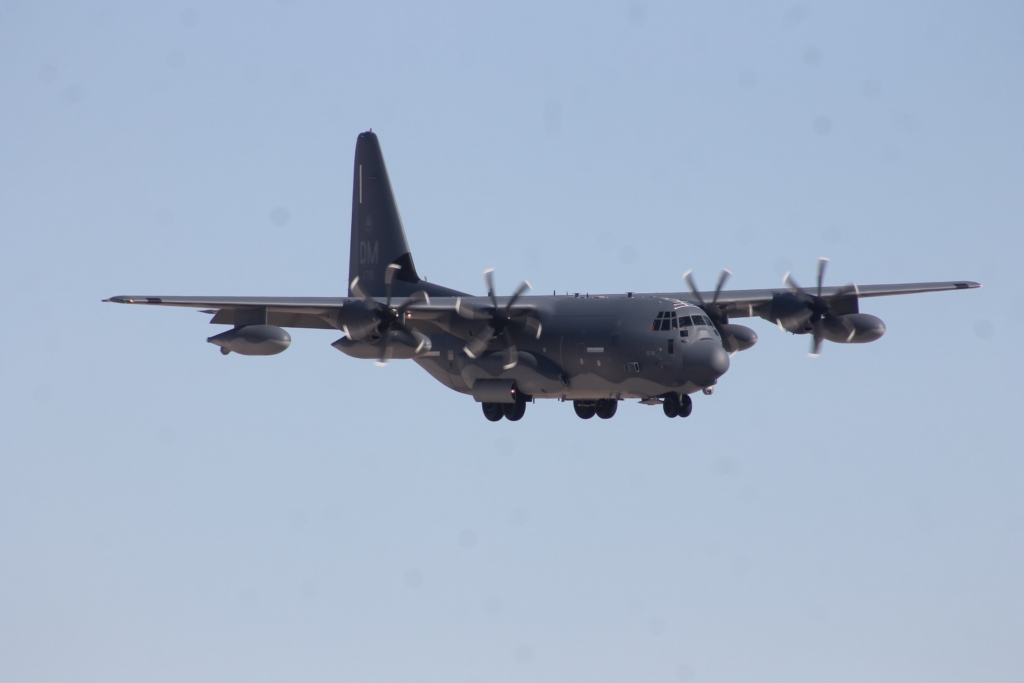
According to Lockheed Martin,
“The Lockheed Martin HC-130J Combat King II is the U.S. Air Force’s only dedicated fixed-wing personnel recovery platform and is flown by Air Combat Command (ACC). This C-130J variation specialises in tactical profiles and avoiding detection and recovery operations in austere environments. Air Education and Training Command also operates HC-130Js, training crews for operational missions.”
Featured Image: USAF