Airbus A320neo fuselage panel defect confirmed on in-service aircraft as EASA proposes inspections

December 18, 2025
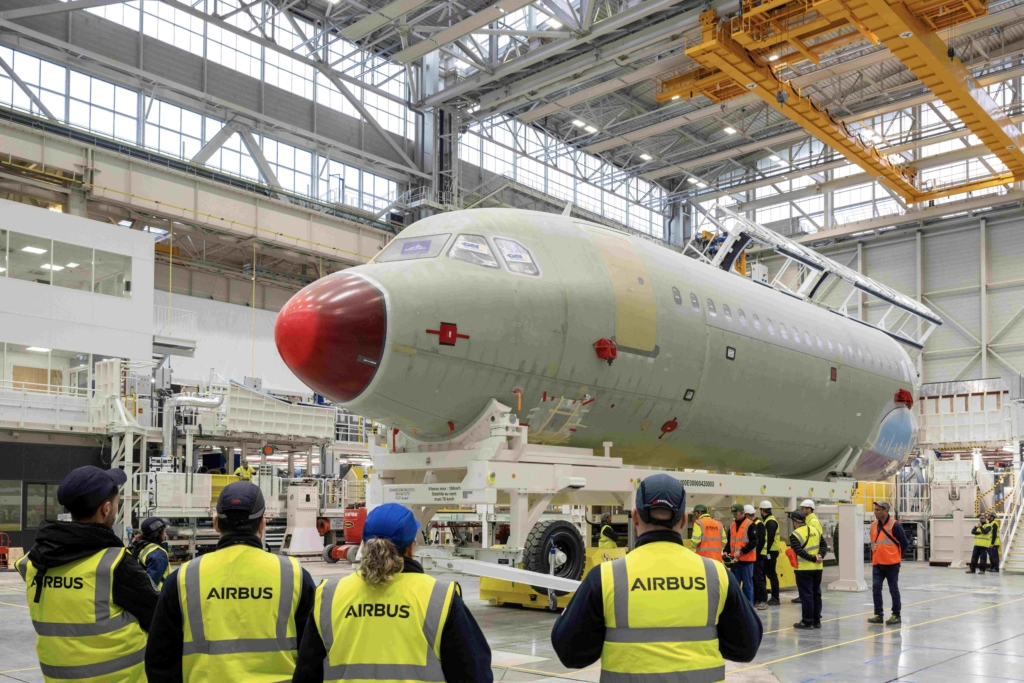
EASA has confirmed that a manufacturing defect in forward fuselage skin panels may be present on some in-service Airbus A320neo family aircraft, following earlier indications that Airbus was grappling with an issue affecting in-production jets.
Today, the European Union Aviation Safety Agency (EASA) published a Proposed Airworthiness Directive (PAD) that, if adopted, would require inspections on a defined subset of the Airbus A320neo fleet.
Just weeks ago, Airbus insiders disclosed that the manufacturer was working through an issue with the fuselages of some in-production A320neo family aircraft. However, at the time, sources told Reuters that “there are no immediate indications that the defect has reached aircraft in service.”
EASA calls for inspections of Airbus A320neo aircraft fuselage panels
Under the proposed directive, EASA would require thickness measurements and structural inspections of certain forward fuselage skin panels on affected A319neo, A320neo and A321neo aircraft.
Operators would be expected to complete thickness mapping within months of the AD becoming effective, with accelerated checks proposed for aircraft that already carry certain temporary structural repairs.
The proposal does not apply to the A320neo family as a single block, but instead adopts a highly targeted, traceability-based approach. Rather than defining applicability by aircraft type or production year, EASA limits the scope to individual aircraft built with specific forward fuselage skin panels supplied during the affected production window.

Those aircraft are identified by manufacturer serial number in Airbus documentation referenced by the directive, rather than in the PAD itself, meaning operators would need to confirm applicability aircraft by aircraft should the AD be finalised.
The inspections focus on skin panels installed in the forward fuselage, known as Section 12, an area of the airframe subject to repeated pressurisation cycles and therefore tightly controlled from a structural perspective. The underlying concern is that some panels may not meet the original thickness specification, potentially reducing the margin available to absorb fatigue loads over time.
How EASA splits the affected Airbus A320neo fleet
EASA further divides the affected aircraft into two groups based on their structural history.
Group 1 aircraft are those that already carry approved structural repairs in the same forward fuselage area. These repairs are typically classified as Category C tasks under the Structural Repair Manual, or repairs embodied under Airbus Repair Design Approval Forms.
Category C repairs are temporary but approved solutions, commonly used to address localised damage such as dents or minor skin defects, and are a routine part of airline maintenance.
On their own, such repairs are structurally sound. However, EASA’s concern is the combination of a repaired structure with a panel that may already be thinner than intended. In that scenario, load paths can be altered, and structural margins reduced more than originally accounted for in certification assumptions.
Because of this compounding effect, aircraft with existing repairs would be subject to shorter inspection timelines and early reporting requirements, allowing Airbus and the regulator to better understand the interaction between panel thickness and repaired structure.
Aircraft without any repairs in the affected area are placed in Group 2. These aircraft would still undergo thickness measurements and inspections, but on a longer proposed timeline, reflecting the assumption of higher remaining structural margin.
Until inspections are completed, the PAD also proposes restrictions on the use of certain additional repair tasks on the affected panels. This would prevent operators from stacking new repairs onto structure whose baseline thickness has not yet been verified.
Taken together, the approach reflects regulatory caution rather than evidence of an immediate safety issue. By gathering inspection data and controlling how repaired structure is managed in the interim, EASA is seeking to preserve structural margins while assessing whether further corrective actions, such as permanent repairs or part replacements, may be required.
EASA explicitly describes the proposal as an interim action, signalling that additional inspections or wider corrective measures could follow once sufficient data has been collected.
How many Airbus A320neos are affected by the fuselage defect?
According to Reuters reporting summarising the PAD’s proposed scope, 177 in-service A320neo family aircraft would fall under the inspection requirement, alongside a further 451 aircraft still in production that would need checks before delivery.
Earlier industry presentations seen by media suggested that around 628 airframes in total may need verification, including roughly 168 already delivered and the remainder at various stages of assembly.
As of late 2025, Airbus has delivered more than 4,200 A320neo family aircraft worldwide, making the type a central pillar of global narrowbody fleets.
Even allowing for uncertainty around active service status, the 177 in-service aircraft identified represent around 4% of delivered A320neo family jets, underlining that this is a targeted issue affecting a small subset of the fleet, rather than a type-wide structural defect.
EASA is also concerned about Airbus A320neo pressurisation
The PAD also proposes operational restrictions linked to pressurisation system redundancy. In practical terms, EASA would discourage dispatch of affected aircraft if the automatic cabin pressure control system’s primary channel is inoperative, until panel inspections are completed.
This reflects standard risk-mitigation practice rather than evidence of imminent structural failure. Pressurisation cycles impose loads on fuselage skin structures, and maintaining full redundancy reduces the range of load scenarios experienced while structural integrity is being verified.

Neither Airbus nor EASA has linked the panel issue to any in-service accidents or loss of structural integrity resulting in injury. The proposed directive reflects a precautionary approach typically taken when production deviations are discovered post-delivery and require confirmation through inspection.
Airbus A320neo production rate increase is challenged again
The panel issue and the associated inspection activity have contributed to production disruption and Airbus’s decision to lower its 2025 delivery target from around 820 aircraft to approximately 790.
Initial disclosure of the A320neo panel defect came just days after Airbus had to rapidly roll back a software update after it caused a JetBlue aircraft to suffer an unexpected plunge. The aircraft model continues to suffer from supply chain issues linked to Pratt & Whitney’s major GTF engine recall. The engine type has also had cold weather restrictions placed on it in recent months.

The A320 family nonetheless remains central to Airbus’s long-term ramp-up strategy, with the manufacturer targeting a production rate of 75 aircraft per month by 2027, supported by multiple global final assembly lines.
While inspections introduce additional work ahead of delivery and affect flow through final assembly, Airbus has described its response as conservative but controlled, and has stated that fuselage panels now leaving suppliers meet all required specifications.
Featured image: Markus Mainka / stock.adobe.com