Air India Airbus A350 ingests baggage container in Delhi after Iranian airspace closure causes turn-back

January 15, 2026
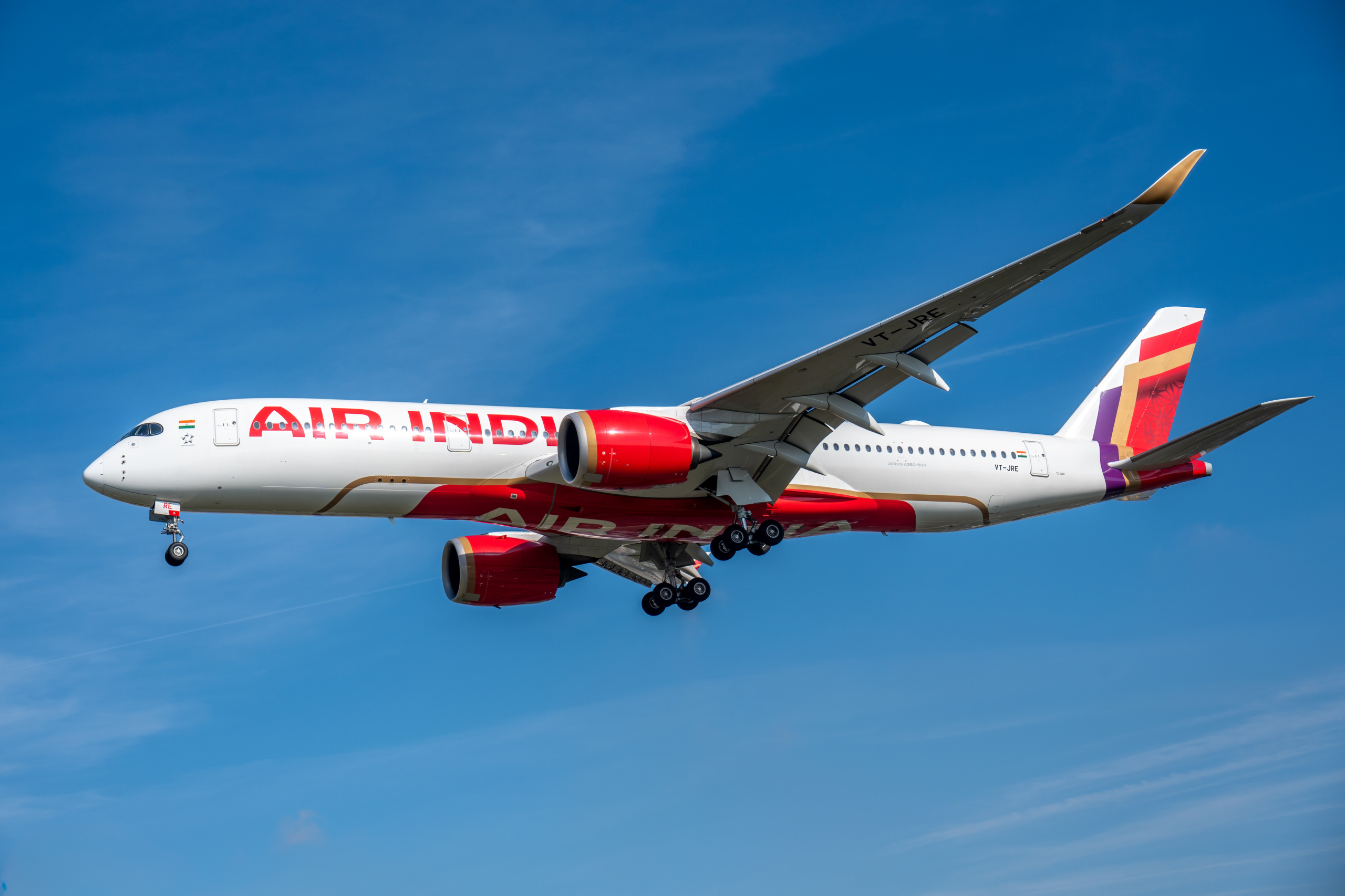
An Air India Airbus A350 has suffered damage to one of its engines after a baggage container was ingested on the ground at Delhi Airport. The incident, which occurred in heavy fog, caused the affected aircraft to be grounded, resulting in some disruption to the carrier’s long-haul route network.
Air India Airbus A350 ingests baggage container
The incident unfolded as the Air India Airbus A350-900 set off on the airline’s daily flight between Delhi Indira Gandhi International Airport (DEL) and New York’s JFK Airport (JFK). The flight was being operated by the carrier’s A350-900 registered as VT-JRB and was operating flight AIC101 to New York JFK on 15 January.
According to data obtained from Flightradar24, flight AIC101 initially left the gate at Delhi at 03:13 local time for the 17-hour flight to New York, becoming airborne at 03:41.
The flight had progressed as far as Mount Abu in Gujarat Province before the crew were alerted to a temporary closure of Iranian airspace, which lay directly on the aircraft’s flight path. By this point, the aircraft had reached its initial cruising altitude of 34,000ft.
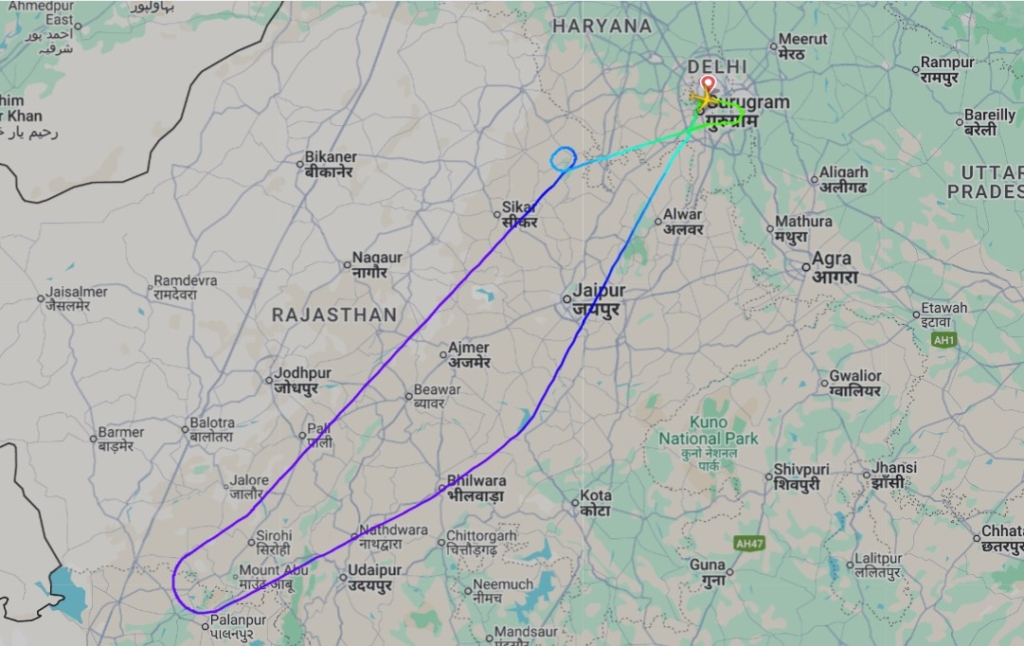
The crew elected to return to Delhi and set about turning the aircraft around. The plane eventually touched down back at Delhi at 04:46 local time, an hour and five minutes after its departure.
The aircraft touched down on Delhi’s runway 29R in heavy fog conditions and with limited visibility, taxied to its allocated parking stand so passengers could disembark.
The ingestion of the baggage container areportedly took place as the aircraft was heading towards its designated parking stand. Speculation states that a baggage container had fallen from a passing vehicle, leading to it lying in the path of the A350 on the taxiway.
Videos posted on social media indicate that the starboard engine on the A350 suffered significant damage as a result of the impact with the baggage container.
An Air India A350 (VT-JRB) suffered major damage to its right engine after ingesting a cargo ULD while taxiing in Delhi. The aircraft had returned shortly after departure on Flight AI101 to JFK and remains grounded for maintenance.#AviationNews #AirIndia #A350 #AvGeek ✈️⚠️ pic.twitter.com/rJ5S7hTJaX
— Aviator Alley (@AviatorsAlley) January 15, 2026
According to a statement issued by the carrier regarding the incident, the aircraft was damaged by a “foreign object,” and passengers who were due to travel on Air India’s long-haul network may face disruption to their flights as a result.
“The aircraft was safely positioned at the designated parking stand after ingesting a foreign object, and the crew ensured the safety of all passengers and crew on board.”
#AirIndia A350 aircraft VT-JRB while operating flight AI101 (Delhi-New York, JFK) was involved in Air turn back due to Iranian Airspace closure. Aircraft landed safely at Runway 28, Delhi. During taxi to apron, at taxiway N/N4 junction No.2 engine ingested a cargo container… pic.twitter.com/hIAyZ05QAE
— Gulistan News (@GulistanNewsTV) January 15, 2026
“The aircraft is currently grounded for a thorough investigation and necessary repairs, which may cause potential disruptions on select A350 routes. Air India regrets the inconvenience caused to our passengers and is proactively assisting them with alternative travel arrangements and refunds, as preferred.”
“Safety remains the paramount priority for Air India, and the airline is committed to providing support during this time.”
Air India and its Airbus A350 fleet
Air India currently operates six Airbus A350-900s on its most lucrative routes, including between India’s capital, New Delhi, and London Heathrow (LHR), New York (JFK), Newark Liberty International Airport (EWR), and Dubai International Airport (DXB).
With the first aircraft having been delivered to the carrier in December 2023, the average age of the fleet is 2.3 years. VT-JRB was the second aircraft delivered to the carrier in February 2024 and is listed by Planespotters.net as being two years old.
However, operating such a small fleet on longer intercontinental routes makes the airline vulnerable to incidents, with the schedules finely tuned to aircraft serviceability.
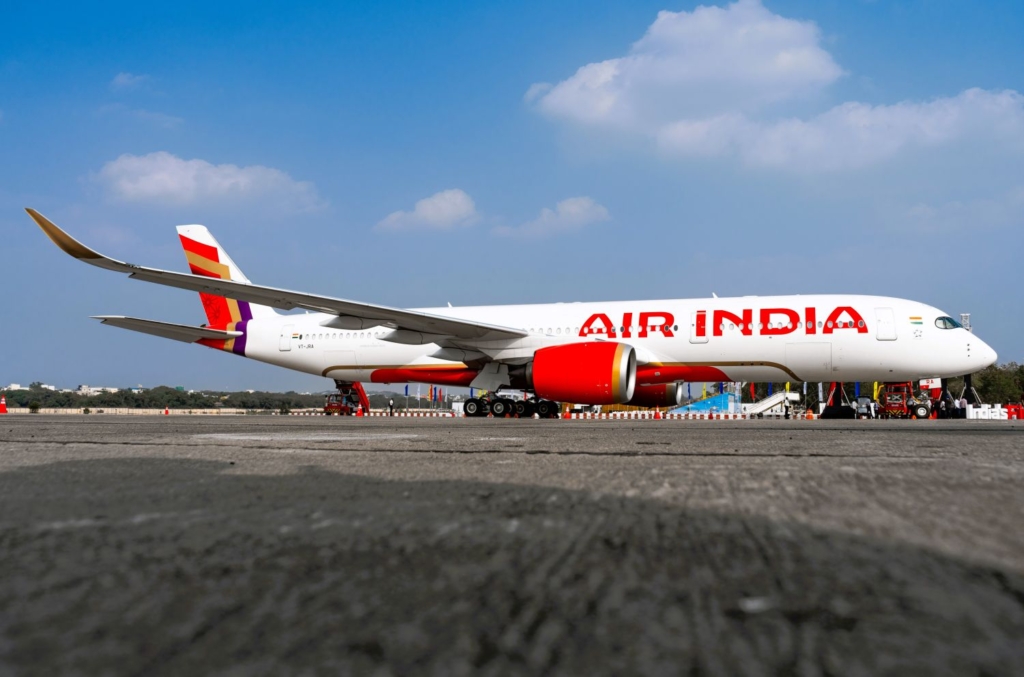
Given that to be the case, Air India has quickly acknowledged that there could be some service disruption while the damaged engine on VT-JRB is replaced – a process that can be achieved in as little as a few hours, assuming manpower and, of course, a spare engine and hangarage are all available at short notice.
Once the engine is changed, the aircraft is also likely to require at least some ground running tests and possibly an air test to ensure that the replacement is serviceable and ready to fly.
At the time of writing, VT-JRB has no further flights listed by Flightradar24 while the Air India engineering department gets to work on replacing the damaged powerplant. Other Air India A350 routes are likely to be delayed, cancelled or switched to other aircraft types while the work continues.
Featured image: russell102 / stock.adobe.com