


Africa’s connectivity gap is widening, but so is the opportunity for airlines across the continent


Africa’s connectivity gap is widening, according to airframe manufacturer Embraer. Rather, the number of unserved origin and destination (O&D) pairs has increased compared with a year ago, while underlying demand remains strong.

The São Paulo-headquartered manufacturer has released its 2026 update on its Africa Connectivity Report. The updated report reveals that multiple markets are growing by more than 50% year-on-year. At the same time, new routes are being launched, while others are being adjusted and, in some cases, discontinued in short cycles.
Collectively, these trends indicate that the main constraint is not a lack of demand. Instead, a key enabler for unlocking intra-African connectivity is the need for appropriate aircraft and network strategies.
Untapped growth opportunities
Embraer’s report highlights that while Africa accounts for roughly 18% of the global population, in accounts for only around 2% of global air traffic. This disparity is driven primarily by limited point-to-point connectivity and over-reliance on indirect routing via external hubs.
The analysis shows that the number of high-potential city pairs without direct service has increased from around 45 to 55 over the last year. This signals that connectivity gaps are widening despite demand continuing to grow rapidly.
This imbalance is particularly evident in secondary and tertiary pairs, where demand is often strong enough to support regular services, but remains commercially underserved due to restricted aircraft availability, regulatory fragmentation, and limited liberalisation under existing air service agreements. In some cases, passengers have to connect through airports outside of the continent, in the Middle East or in Europe.
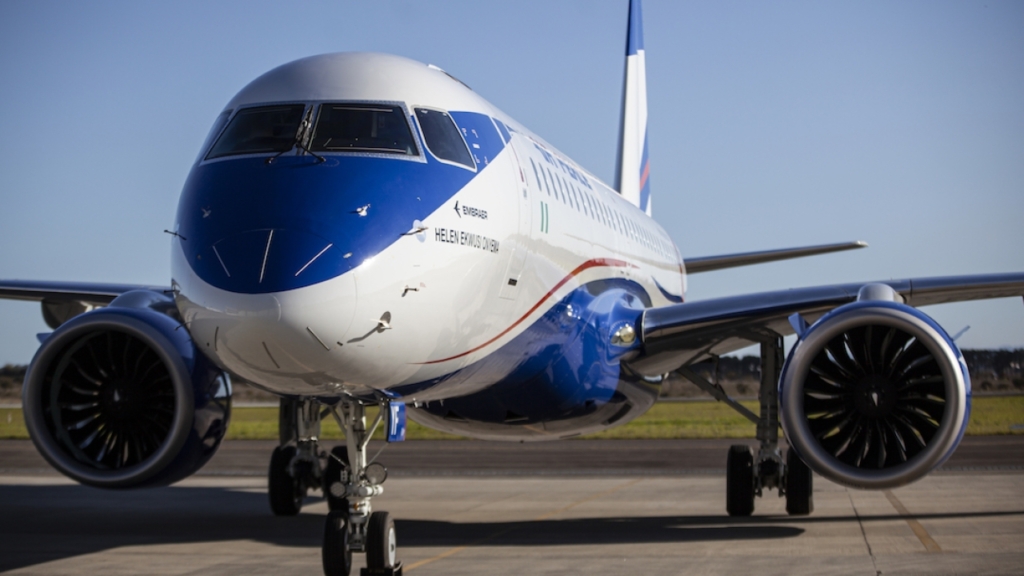
Several major air corridors connecting East, West, and Southern Africa also show a persistent lack of direct connectivity. This includes links between Cape Town in South Africa and Lagos in Nigeria, as well as Cape Town and Lusaka in Zambia, and Dakar in Senegal and Libreville in Gabon. Despite significant business and leisure demand, these routes are among the largest unserved by direct air links on the continent.
Africa’s key O&D markets shift
New route openings have seen a shift in the O&Ds exiting Embraer’s ranking since the previous report.
The route from Abidjan in Côte d’Ivoire to Douala in Cameroon, previously operated by Air Côte d’Ivoire with a stop in either N’djamena in Chad or Abuja in Nigeria, transitioned to a non-stop service operated by Kenya Airways in May 2025 under fifth-freedom rights. The new operation, which runs three times weekly using a mix of Embraer E190-E1 and Boeing 737-800 aircraft.

Meanwhile, the route between Dakar in Senegal and Cotonou in Benin, previously operated by Air Senegal with a stop in Abidjan, is due to be replaced by a direct service from July 2026. Elsewhere, Air Tanzania launched a non-stop link between Dar es Salaam and Cape Town in December 2025.
New routes in Embraer’s O&D ranking
Routes that have entered Embraer’s top 10 ranking include the route from Bamako, Mali, to Libreville, Gabon, which, until February 2025, was operated by Mauritania Airlines. Currently, passengers fly with Air Côte d’Ivoire via two stops in Abidjan and Cotonou. Based on forecasted Passengers per Day Each Way (PDEW) data, this market, dominated by Visiting Friends and Relatives (VFR) traffic, could sustain six weekly flights on a 100-seat aircraft.
The route connecting Durban, South Africa, and Mauritius moved from 13th to sixth place in the rankings, reflecting an increase in PDEW from 18 to 27. Passengers typically connect via Johannesburg with South African Airways, FlySafair, or domestic feeders connecting onto Air Mauritius. PDEW data suggests this market could sustain three weekly flights on a 120-seater aircraft.

The Accra-Ghana link with Dakar, Senegal, operated by Kenya Airways until March 2025, is now operated by ASKY via Lome, Togo, or by Air Côte d’Ivoire with a stop in Abidjan. Based on the forecasted PDEW, this market could sustain three weekly flights on an 80-seater aircraft.
Similarly, an Air Peace link between Lagos, Nigeria, and Dakar operated until May 2025 but is now operated with a stop in Abidjan five times a week. Alternatively, ASKY serves the route via Lome in Togo, Air Côte d’Ivoire via Abidjan, or Air Peace via a two-stop connection. PDEW data also suggests this direct route could sustain three weekly flights on an 80-seater.
Finally, a link between Maputo in Mozambique and Nairobi in Kenya, operated until August 2025 by Kenya Airways, now sees passengers typically routed through Johannesburg with Airlink, Kenya Airways, South African, or LAM, or through Addis Ababa with Ethiopian Airlines. PDEW forecasts also suggest this market could sustain three weekly flights on an 80-seater.
O&Ds that have exited the ranking due to lower demand include Douala in Cameroon to Dakar and Brazzaville in Congo.
What is PDEW, and why does it matter?
Most unserved routes fall within the 10-70 PDEW range, sitting below traditional narrowbody thresholds.
For airlines and manufacturers like Embraer, the implications of PDEW data are vital as it helps assess whether a route could support service. Embraer suggests that Africa’s aviation market is primed for fleet diversification, particularly in the sub-150-seat segment, where next-generation regional jets can unlock thinner routes while maintaining profitability.
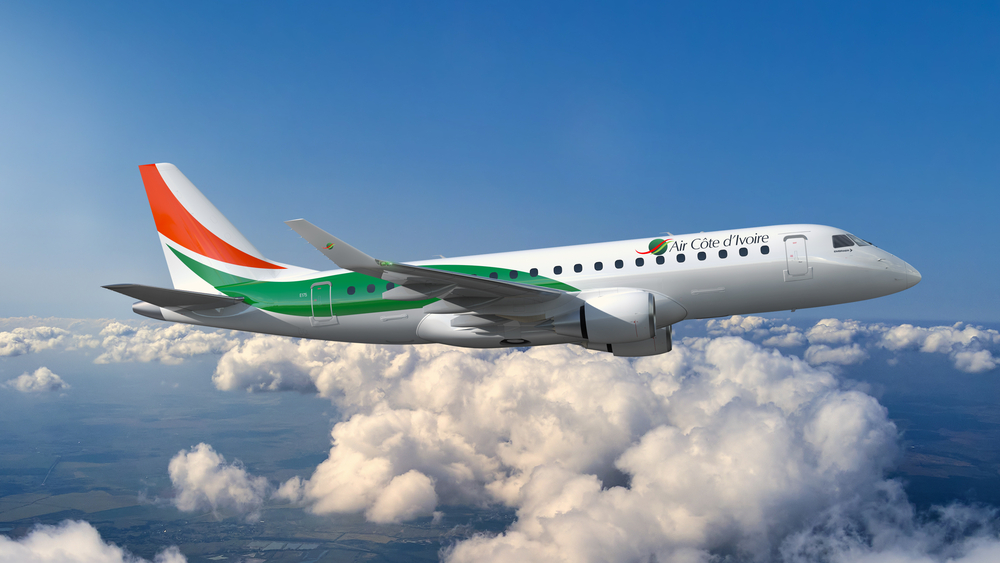
While many African markets sit below narrowbody thresholds according to Embraer, they are well-suited to regional or small narrowbody aircraft. Deploying aircraft such as its E2, or the E175+ – which Embraer describes as the most efficient small narrowbody in the market – allows airlines to match capacity to demand, increase flight frequency, and build sustainable networks profitably.
Other constraints impacting route development
Broader structural constraints, including fragmented bilateral agreements, infrastructure bottlenecks, and protectionist policies, also continue to limit cross-border airline expansion. However, ongoing liberalisation efforts, combined with rising middle-class travel demand and rapid urbanisation, are gradually improving the investment case for new route development.
From a strategic perspective, Embraer maintains that Africa represents one of the most significant untapped growth markets in global aviation. Rising demand, underdeveloped networks, and a mismatch in aircraft capacity suggest substantial potential for both fleet expansion and network redesign in the coming years.
Featured image: Airlink


