


Which fighter jet has the fastest top speed?

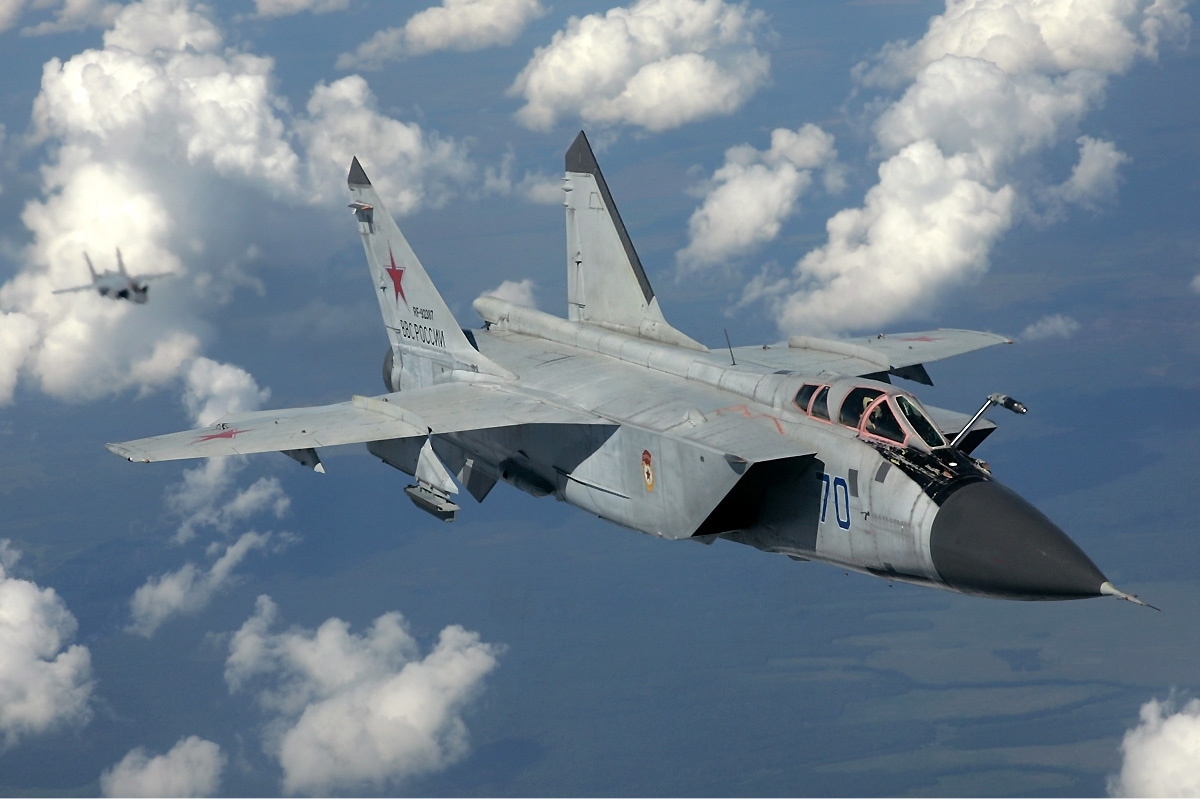
The MiG-31 is widely regarded as the fastest fighter jet in service today, while the F-22 Raptor is the fastest supercruiser. Ever since lessons learned from Vietnam, the US has not prioritised raw speed after finding no pilots flew at Mach 1.6 or more in combat, even once.
Mikoyan MiG-31 “Foxhound”
The Soviet/Russian Mikoyan MiG-31 “Foxhound” is widely regarded as the fastest fighter jet in service today. The aircraft was developed from the earlier MiG-25 “Foxbat,” which was considered the fastest fighter of its era.

The MiG-31 has a top speed of Mach 2.83, although it is reported to be capable of Mach 3.2 at altitude in short bursts. Still, those claims are controversial.
The aircraft was designed by the Soviets in the 1970s as an interceptor capable of engaging targets over the country’s vast territory.
The production ended soon after the collapse of the USSR, with the aircraft being inherited by Russia and, to a lesser extent, Kazakhstan. Kazakhstan retired the last of its MiG-31s in 2023, leaving Russia as the only operator of the type.
Select fighter jets with max Mach and supercruise speeds
| Select fighter jets | Max Mach at altitude | Supercruise speed |
| MiG-25 Foxbat | Mach 2.83 | n/a |
| MiG-31 Foxhound | Mach 2.83 | n/a |
| F-15 Eagle | Mach 2.5 | n/a |
| F-22 Raptor | Mach 2.25 | Mach 1.7-1.8 |
| Eurofighter Typhoon | Mach 2.0 | Mach 1.2-1.5 |
No new MiG-31s have been produced in the last 30 years. Even so, in January 2026, thinktank Rusi estimated the Russian Air Force had received 20-25 “new deliveries” between late 2020 and late 2025.
These are older airframes being upgraded to the more modern MiG-31BM/BSM/K standard. By late 2025, Rusi estimated that Russia had around 125-130 of these upgraded aircraft in inventory.
⚡️❗️Security service of Ukraine conducted long-range drone strikes on five Russian military airfields deep in the rear.
— Special Kherson Cat 🐈🇺🇦 (@bayraktar_1love) January 28, 2026
🎯Targeting 15 aircraft: 11 fighters and bombers (Su-30SM, Su-34, Su-27, Su-24, MiG-31), three helicopters (Mi-28, Mi-26, Mi-8), and one transport aircraft… pic.twitter.com/UbV1kfylar
One reason why the Russian MiG-31 continues to be relevant is that it has found a new role as a delivery truck for the Kh-47M2 Kinzhal air-launched ballistic missile.
Get the latest aerospace defence news here on AGN.
Mikoyan MiG-25 “Foxbat”
The MiG-25 “Foxbat” had a similar top speed to the later MiG-31. The MiG-25 can now be considered retired, although it’s possible some air forces could have some in storage and in various states of readiness.
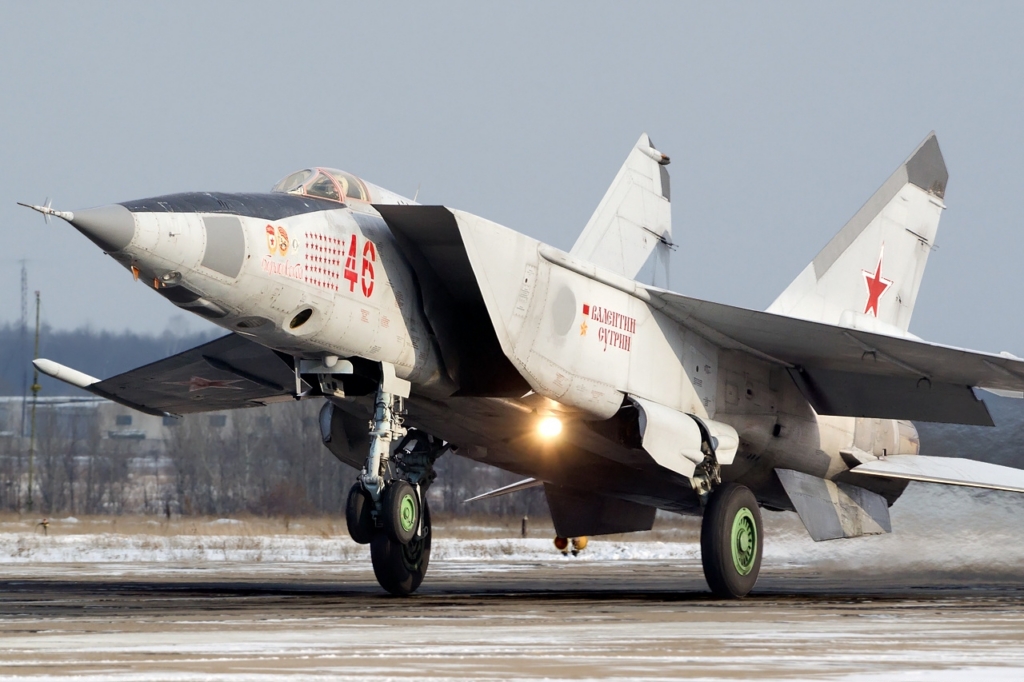
Algeria, Armenia, Bulgaria, Belarus, India, Iraq, Kazakhstan, Libya, Russia, the Soviet Union, Syria, Turkmenistan, and Ukraine operated the Foxbat.
Syria’s ageing MiG-25s were used early in the civil war between 2012 and 2014, but after 2014, they had been largely withdrawn. Any remaining operational airframes appear to have been destroyed by Israel in its wave of strikes targeting Syrian hardware at the end of 2024 following the fall of Assad.
In Algeria, the main fleet was retired in July 2022, although Algeria surprised observers by flying two MiG-25s in a military parade in 2023. Some sources say they made another appearance in November 2024. Algeria may have been the final operator.
F-22 Raptor is the fastest supercruiser
The F-22 Raptor is famous for being the fastest supercruising fighter in the world. Supercruise is the ability of an aircraft to sustain supersonic flight (faster than the speed of sound, or Mach 1) without using fuel-hungry afterburners.
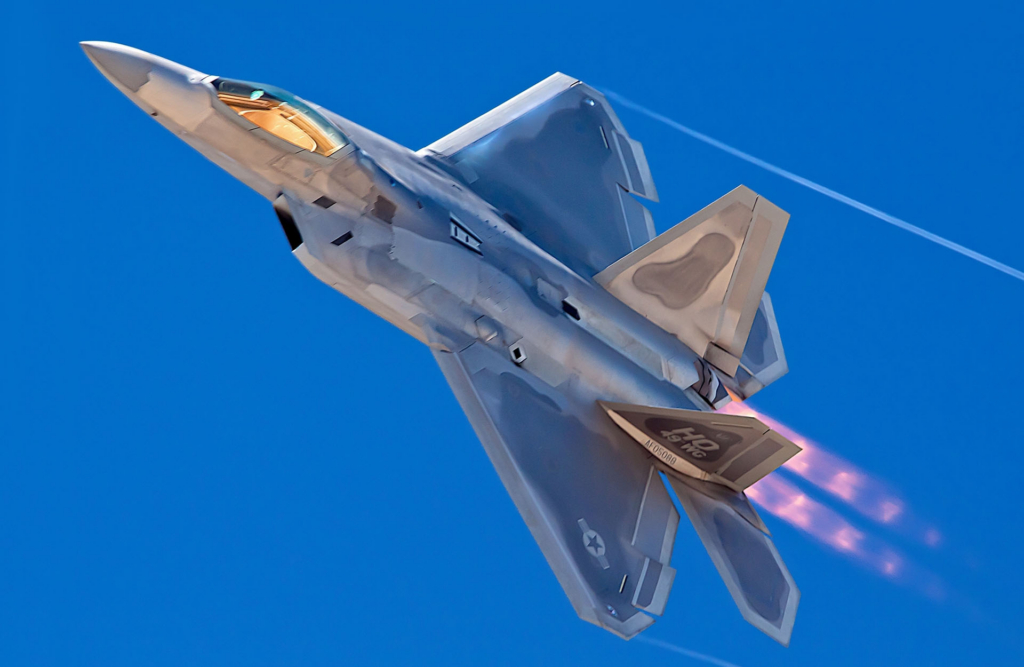
The Raptor’s top speed is around Mach 2.25 at altitude (around Mach 2.5 for the F-15), and it has a maximum supercruise of around Mach 1.7-1.8 at altitude (exact number is classified).
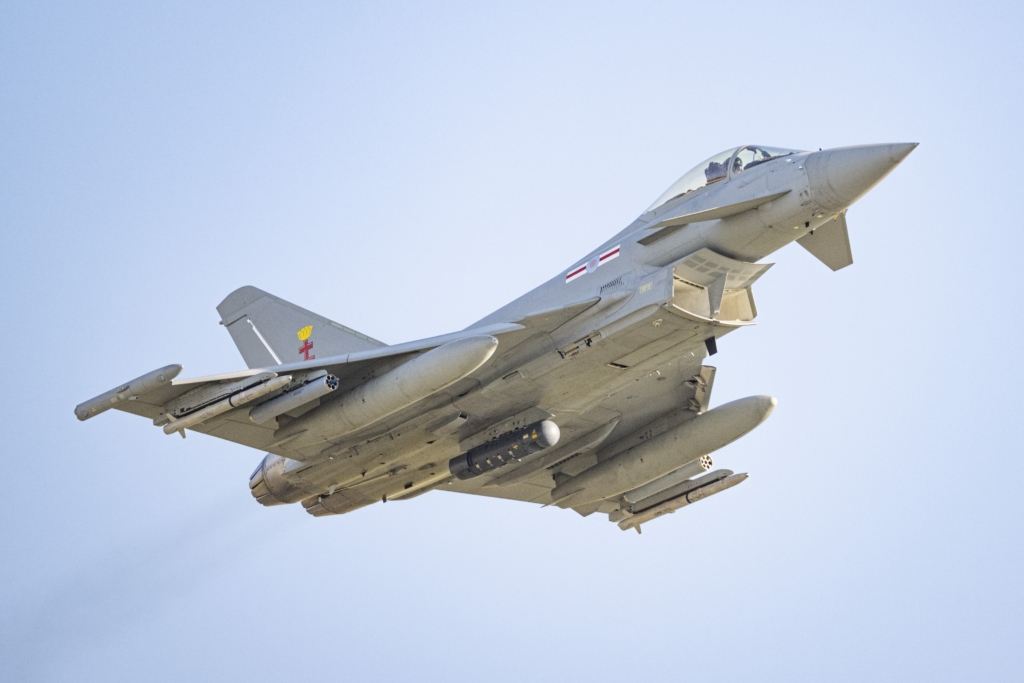
While the Raptor is the best supercruiser, it is not the only one, with the runner-up arguably being the Eurofighter Typhoon. The Rafale is also known to supercruise, and the Chinese Chengdu J-20 is thought to have that ability, but little is publicly known.
Russia plans for its Su-57 Felon to supercruise at Mach 1.5+ with later upgrades. For now, operational examples are fitted with the older Saturn AL-41F-1 engines, and not the intended Saturn AL-51F1 engines, and it is unclear what its current supercruise performance is.
A difference in philosophy
Western fighter jets have often not prioritised raw speed in the same way that the Soviets did. Western fighter designs have generally sought a balance between speed, range, manoeuvrability, sensors, and, in more recent generations, stealth and supercruise, rather than pursuing maximum speed above all else.
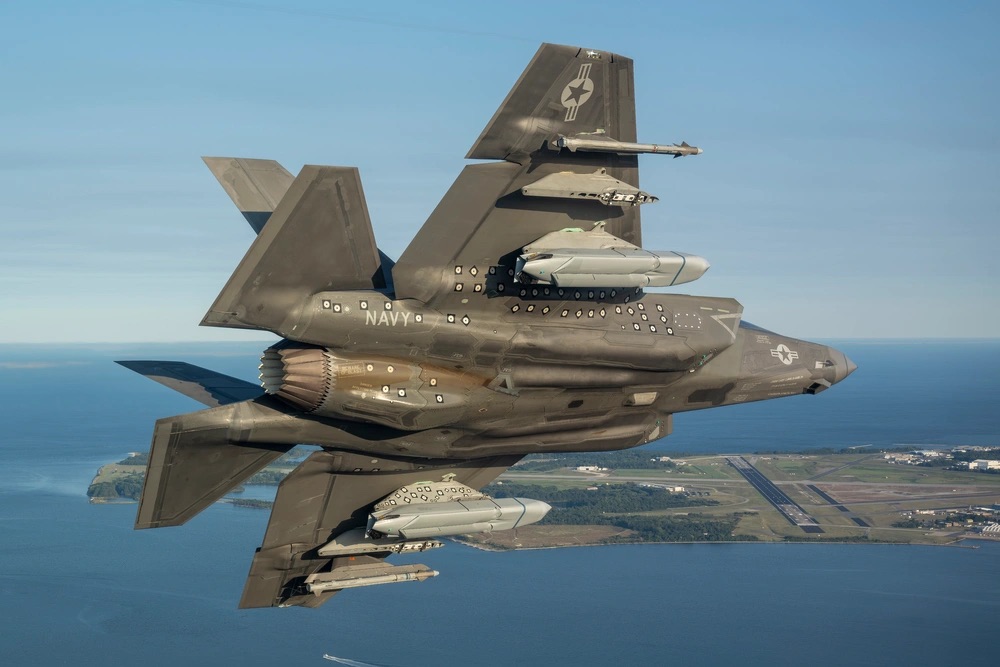
A great example is the F-35 that was originally planned to be designed for a top speed of Mach 1.8, but was revised down to Mach 1.6, making it much slower than the 1960s-era F-4 Phantom II’s Mach 2.2.
The F-35 relies on stealth (and sensors, networking, and situational awareness), not speed. Its core philosophy is “you can’t run, but you can hide.”
Some Western pilots have been dismissive of legacy Soviet jets like the MiG-23. These gained notoriety in their time for speed.
The US secretly acquired some MiG-23s as part of Operation Constant Peg for training US pilots to counter Soviet aircraft. US aggressor pilot John Mann said they were fast but flew like a brick with little manoeuvrability.

Mann said, “This aircraft is fast, really fast. We were expecting it to turn very well, also because initial intel reports said it would turn on a dime. It does not. It is a very, very poorly turning airplane.” He said bluntly that at speed, the aircraft “would not turn.”
He said it only took a weekend of training for US pilots to learn to reliably defeat the aircraft.
Featured Image: Wikimedia Commons


