GAO warns US F-35 readiness is falling as only a quarter of jets are fully mission capable

7 min read
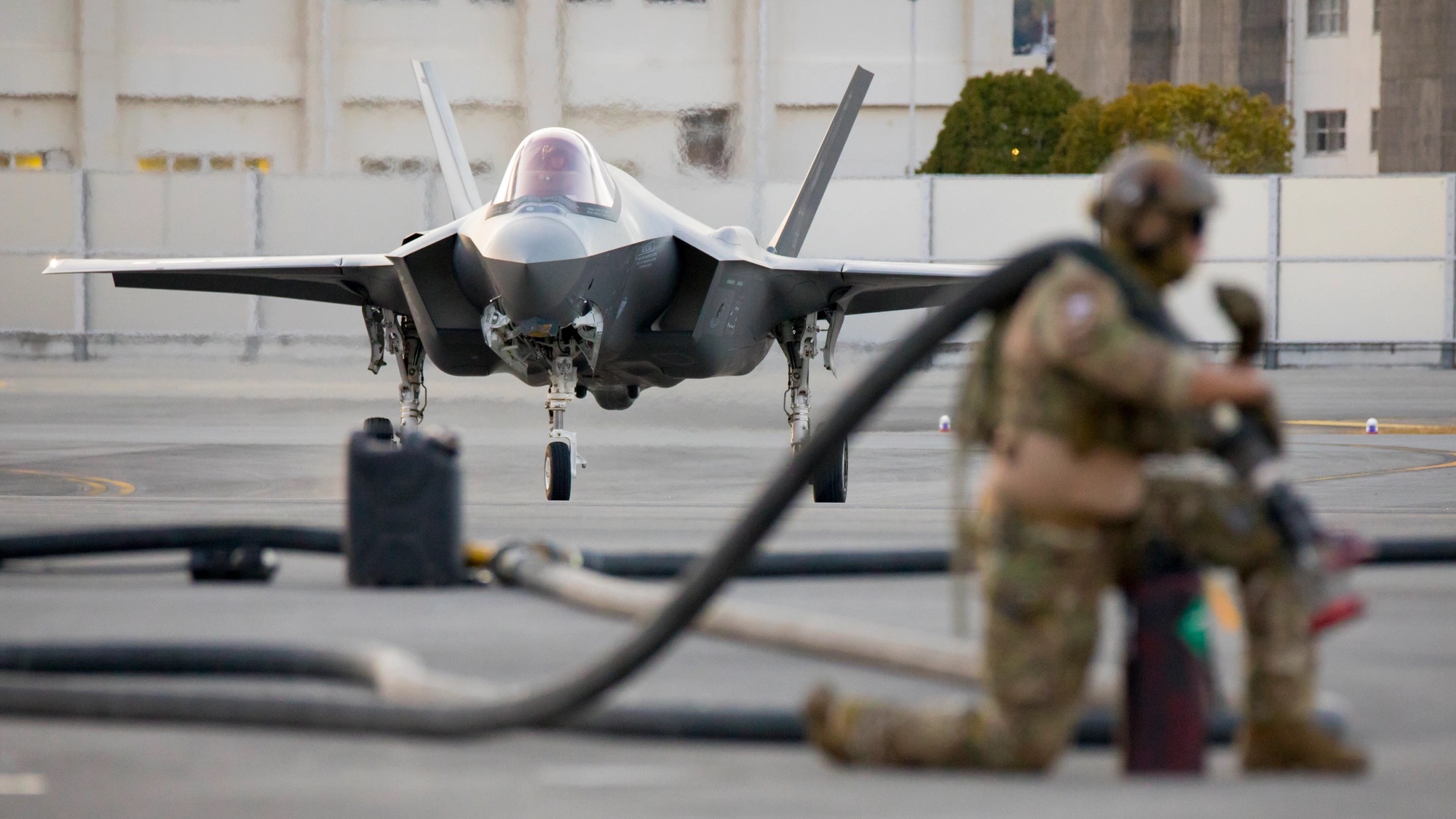
The F-35 was designed to give the United States and its allies an unmatched air combat advantage for decades. Instead, a new government watchdog report warns that one of the world’s largest combat aircraft programmes is struggling with a more immediate challenge: keeping enough aircraft ready to fly.
A report released by the US Government Accountability Office (GAO) found that key readiness indicators across the F-35 fleet have continued to decline despite years of sustainment reforms. At the same time, operating costs remain on track to exceed affordability targets by billions of dollars in the years ahead.
“The F-35 has not met performance goals, and performance has trended down,” the GAO report pointed out.
Released on 11 June, the report paints a concerning picture of the Pentagon’s most expensive weapon system. While the Department of Defense has launched a new sustainment strategy intended to improve aircraft availability, the independent watchdog concluded that significant risks remain and could undermine efforts to restore readiness across the growing F-35 fleet.
The findings come at a critical time for the programme. The United States operates and sustains more than 800 F-35s and plans to acquire about 1,700 additional aircraft by the mid-2040s. The aircraft is expected to remain the backbone of American air power for decades and is also operated by an increasing number of allied nations worldwide.
GAO warns F-35 readiness is continuing to decline
The report found that key readiness indicators have deteriorated since 2021.
According to the GAO, the fleet-wide mission-capable rate fell from 67 per cent in fiscal year 2021 to 44 per cent in fiscal year 2025. Mission-capable status refers to an aircraft’s ability to perform at least one assigned mission.
The full mission capable rate, which measures whether an aircraft can perform all of its assigned missions, declined from 38 per cent to 25 per cent over the same period.
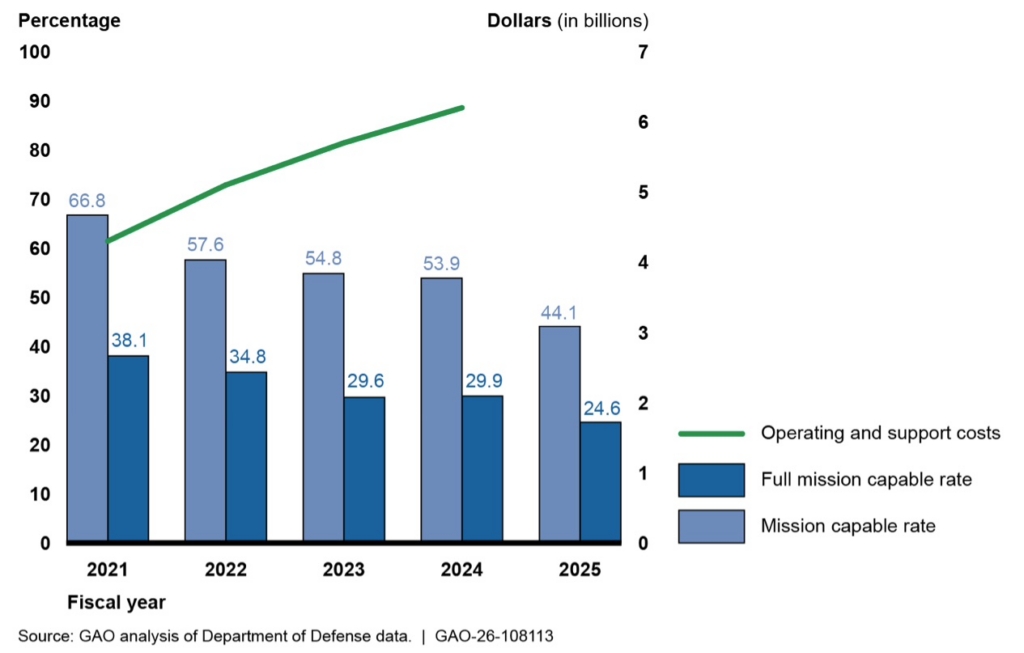
These figures remain well below the performance levels sought by the US Air Force, Navy and Marine Corps, raising continuing concerns about the fleet’s operational availability.
The decline is particularly notable because improving readiness has been a central focus of Pentagon sustainment efforts for several years.
Pentagon launches new F-35 sustainment strategy
In response to these challenges, the F-35 Joint Program Office has introduced a revised sustainment framework known as the Global Support Solution Reset, or GSS Reset.
The strategy is intended to address many of the issues that have repeatedly appeared in previous reviews of the programme, including shortages of spare parts, maintenance bottlenecks and heavy dependence on contractor support.
However, the effort comes with a substantial price tag.
GAO found that meeting the GSS Reset readiness goals will require about $13.7 billion more than previously planned through fiscal year 2031, although only part of that amount is formally categorised by the Joint Program Office as GSS Reset spending.
The Joint Program Office believes the investment can help reverse current readiness trends and improve support across the global fleet.
Yet the watchdog warned that the strategy’s success is far from guaranteed.
F-35 spare parts shortages remain a major obstacle
A recurring theme throughout the report is the challenge of sustaining a rapidly growing fleet.
The GAO noted that the new sustainment strategy depends heavily on industry delivering additional spare parts and support equipment.
According to the report, the Joint Program Office (JPO) will rely on the private sector to provide more than $7 billion worth of additional parts and materials under the revised sustainment approach.
The problem, however, is that production capacity constraints continue to affect several key components.
The watchdog noted that without effective risk mitigation plans, these industrial limitations could undermine the programme’s ability to achieve its readiness objectives.
“GSS Reset is a positive step toward addressing sustainment challenges, but risk mitigation plans would better position JPO to attain GSS Reset goals,” the report stated.
The finding reflects a broader concern that simply allocating additional funding may not be enough if suppliers cannot produce parts quickly enough to meet demand.
F-35 sustainment costs face growing affordability gap
Beyond readiness concerns, the report also highlighted mounting financial pressures.
The F-35 remains the Department of Defense’s most expensive weapon system. Lifetime sustainment costs for the US fleet alone are estimated at approximately $1.6 trillion.
GAO warned that sustainment costs continue to rise and could increasingly strain military budgets.
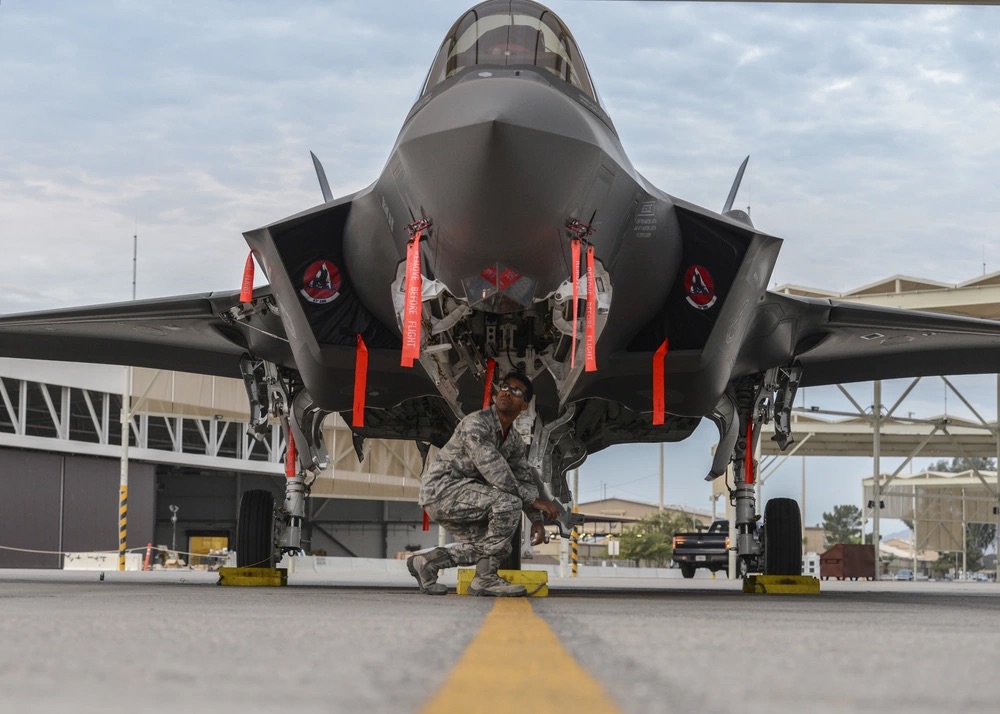
According to the report, the military services are projected to face an annual gap of more than $1 billion between the expected cost of sustaining their F-35 fleets and their affordability targets by the mid-2030s.
That finding suggests that even if readiness improves, affordability may emerge as an equally significant challenge as fleet numbers continue to grow.
The issue is particularly important because the F-35 programme remains in production, with hundreds of additional aircraft scheduled for delivery over the coming decades.
GAO questions F-35 contractor incentive payments
One of the more pointed findings in the report is the concerns over the effectiveness of contractor incentive structures.
Since 2020, the Pentagon has paid hundreds of millions of dollars in incentive fees intended to encourage improvements in aircraft readiness.
However, GAO found that these incentives did not achieve their intended effect.
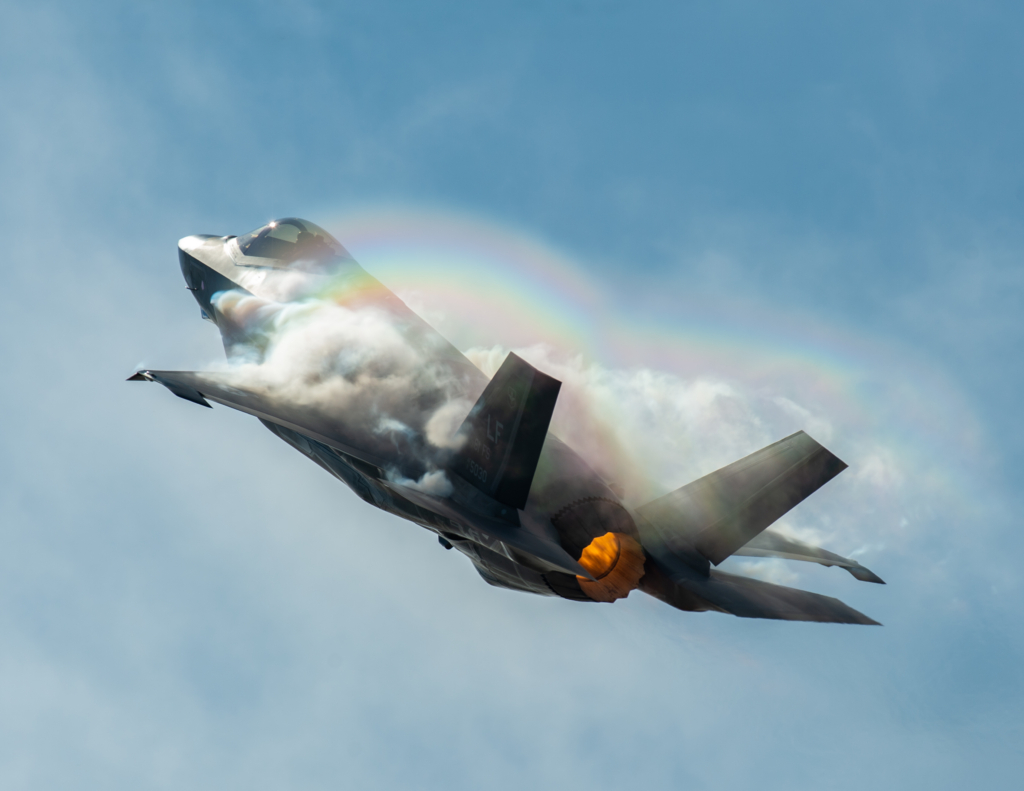
The watchdog found that contractor performance thresholds often did not align with the readiness requirements established by the military services. As a result, contractors were able to qualify for incentive payments even when aircraft availability remained below desired levels.
The report warned that continuing such practices risks rewarding performance that does not contribute to achieving programme goals.
To address the issue, GAO recommended that the Department of Defense reassess future incentive structures. Options outlined in the report include imposing penalties for poor performance, adjusting performance thresholds or eliminating certain incentives altogether.
Three recommendations for F-35 sustainment
GAO issued three recommendations aimed at tightening oversight of the F-35 sustainment system and improving the chances of the GSS Reset delivering measurable readiness gains.
The watchdog called on the Department of Defense to:
- Develop proactive risk mitigation plans covering industrial capacity, affordability, access to technical data and alignment with military service requirements.
- Revise future contractor incentive structures so that payments are more closely tied to readiness outcomes, rather than thresholds that may fall short of service needs.
- Improve sustainment performance data systems and quality-control processes used to collect, manage and document performance metrics and incentive payments.
The recommendations stem from GAO’s annual review of F-35 sustainment, required under the National Defense Authorization Act for Fiscal Year 2022, as amended.
For the latest report, GAO analysed performance metrics, cost information and contractor incentive fee data, including full mission capable-related goals from 2020 to 2023. It also reviewed programme documents and interviewed Department of Defense officials, Joint Program Office representatives and contractor officials.
The Department of Defense did not provide formal comments for inclusion in the report, but GAO said the department indicated during the draft review process that it concurred with all three recommendations.
F-35 readiness problems have global implications
Although the report focuses on the US programme, its findings extend well beyond American military aviation.
The F-35 has become the fighter of choice for a growing number of allied nations across Europe, the Indo-Pacific and North America. Many of those countries rely on the same sustainment network, spare parts system and industrial base that support US aircraft.
As a result, efforts to improve readiness and control costs are likely to have implications across the wider international F-35 enterprise.
The GAO’s latest assessment does not question the aircraft’s operational importance. Instead, it highlights the growing challenge of maintaining and sustaining a fleet that continues to expand in size and complexity.
Two decades after the first F-35 entered testing, the programme’s greatest challenge may no longer be developing advanced combat capabilities. According to the report, ensuring that aircraft remain available, affordable and ready for operations is becoming an equally important mission.
Featured image: DVIDS
Sign up for our newsletter and get our latest content in your inbox.


More from


October 17, 20265 min read


October 17, 20264 min read