


JetStar boosts Boeing 787 accessibility with Airchair II onboard

3 min read
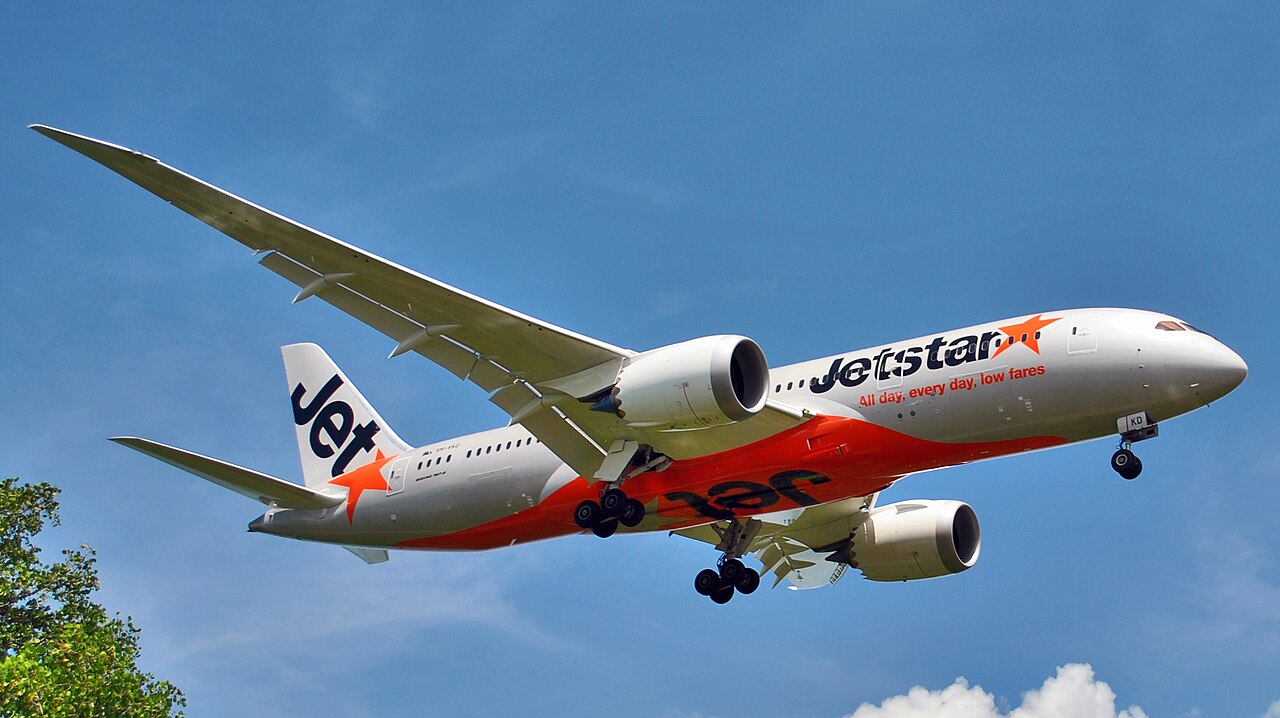
JetStar has purchased 48 Airchair II aircraft aisle chairs to equip its Boeing 787-8 Dreamliner fleet, improving accessibility on its long-haul flights.
The airline says the Airchair II will ensure its customers can travel with confidence and dignity in keeping with Jetstar’s accessibility roadmap, which includes investments in ground services, customer communication, and onboard equipment.
What is the Airchair, and why is it different?
UK-based onboard wheelchair manufacturer Airchair launched the new Airchair II model in 2025. It is designed to comply with US DOT Regulation 14 CFR Part 382.65, which requires airlines to provide and maintain accessible on-board wheelchairs for passengers with mobility disabilities, ensuring travelers can safely transfer from their seats to the lavatory.
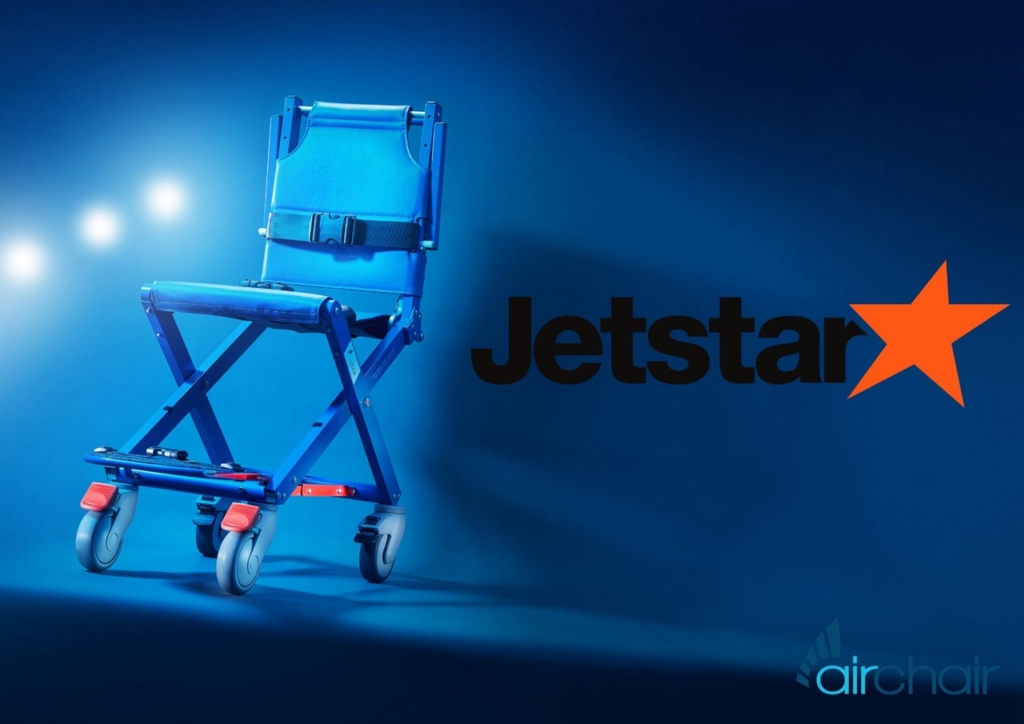
The Airchair II’s key differentiation is its lightweight (6.8kg/15lb) design, which makes it easy for cabin crew to stow the chair in overhead bins. The Airchair’s functionality is also intuitive, ensuring cabin crew can readily deploy and use the chairs to assist passengers with minimal instructions.
While it is lightweight, the Airchair II is strong and reliable, with a carrying capacity of up to 250kg/550lb, and rated to withstand a Suddenly Applied Load (SAP), which can be double the passenger’s body weight.
“Airchair II demonstrates not just our design and manufacturing capability but also our understanding of the issues affecting both reduced mobility passengers and the airlines. In a really challenging commercial environment, airlines need to ensure that any solution meets their space and weight requirements, and the Airchair II does just that,” said Sarah McOnie of Airchair.
Airchair II is available in two widths adaptable to aircraft aisles: 14”/360mm and 15”/380mm. Its four castors provide 360º rotation, with two directional rear castors which can be fixed in a forward or backward position. Brakes secure the aisle chair in place, and the back rest can be retracted with a ‘push bar,’ enabling safe passenger transfer.
Airchair II also features a non-slip footplate with a strap to keep the passenger’s feet secure and a safety stay that locks the chair’s ‘X’ frame in place during use.
The seat and back covers of Airchair II are padded and made from reclaimed ELeather. The chair’s framework is finished with an anti-microbial coating.
Jetstar improves accessibility on long-haul flights with lightweight Airchair II
JetStar operates a fleet of 11 Boeing 787-8 Dreamliners, serving long-haul routes between Australia and Asia, with some flights as long as eight and a half hours. Ensuring all passengers can access the lavatories safely is a priority. Jetstar selected the UK-made Airchair II following a comprehensive comparison of competing aisle chairs to the model it was using.
“We are thrilled that another high-profile airline has chosen to use the Airchair II,” McOnie said. “Our belief is that all passenger aircraft should have an aisle chair onboard that truly meets their needs, and Jetstar’s initiative in this area will mean that for passengers flying out of Australia, that is becoming closer to reality.”
Aviation industry designers have been exploring ways to allow passengers to fly while seated in their own wheelchairs. Airbus recently unveiled its U-Suite dedicated cabin space that would secure wheelchairs in place to serve as seats during flights.
Crystal Cabin Award 2026 entries focused on mobility improvements included the AeroSlide Transfer System, Mobility Assist, which eases the transfer of passengers from a wheelchair to a seat, using a horizontal, extendable slide board, and Toyota Boshoku’s Well-Voyage Seat—a fully removable seat module that doubles as a mobility device.

However, these designs are not yet deployed and won’t be suited to all aircraft types. Safe passenger transfer through the cabin with an aircraft aisle chair remains an essential airline accessibility service for passengers who rely on wheelchairs for mobility.
Featured Image: Sabung.hamster | Wikimedia Commons


