NASA’s new ‘Vomit Comet’: Boeing 737-700 to test Artemis hardware in lunar gravity

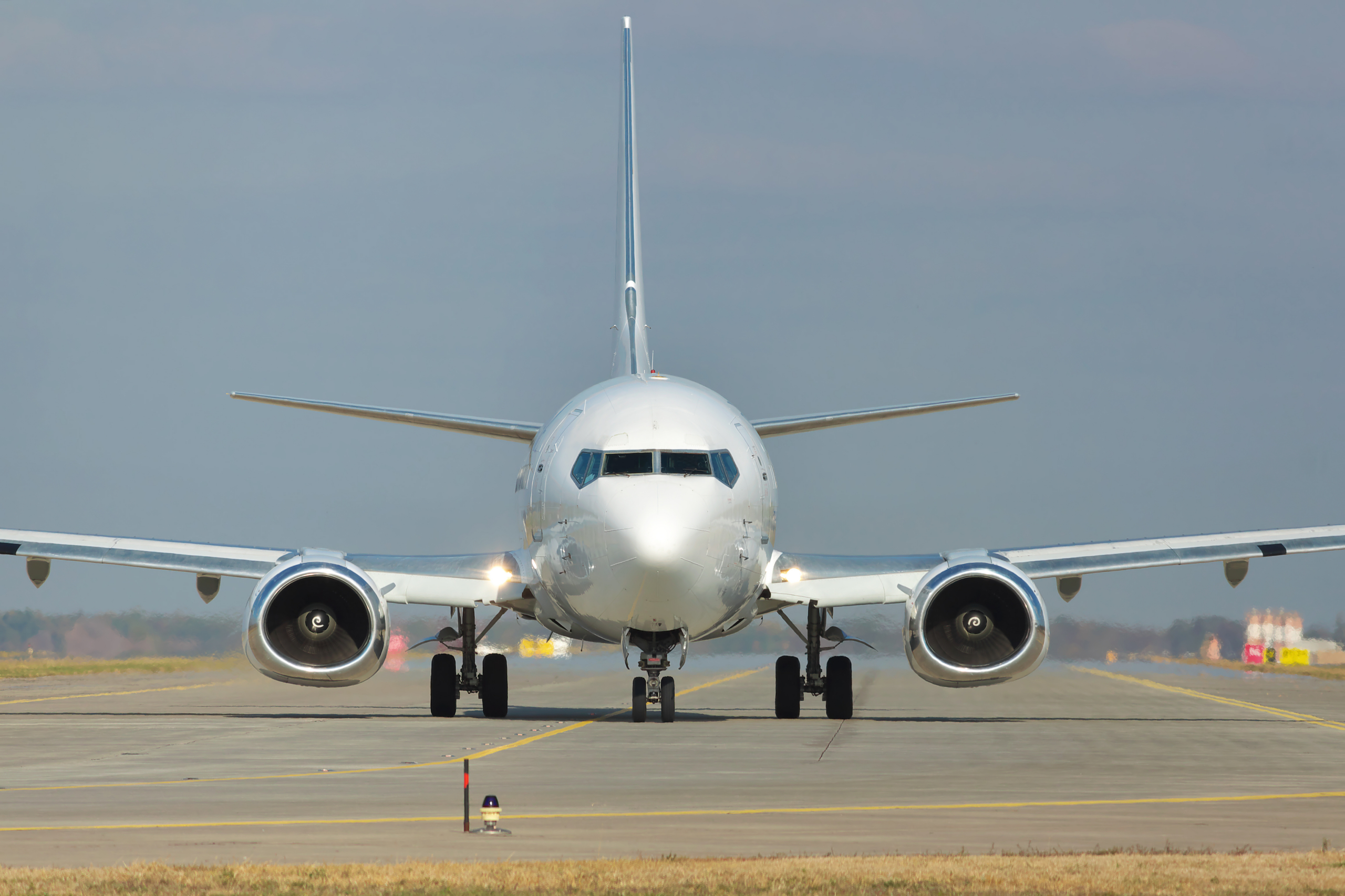
NASA has selected a Boeing 737-700 to become its newest flying Moon-gravity testbed, giving the agency a dedicated aircraft for evaluating Artemis spacesuits, crew systems and exploration hardware before astronauts return to the lunar surface.
The aircraft will be modified by Denmar Technical Services under a contract awarded through NASA’s Armstrong Flight Research Center in California and Johnson Space Center in Texas. The contract has a maximum value of $8.4 million and runs through February 2027.
Once the modifications are complete, NASA Armstrong will take ownership of the aircraft, while operational oversight will be conducted through Johnson Space Center.
Its role will be unusual but important: flying a series of carefully controlled parabolic manoeuvres to reproduce lunar gravity inside the cabin. That will allow astronauts and engineers to test equipment in a dynamic environment that approximates the one-sixth gravity found on the Moon, without leaving Earth.
NASA said the modified aircraft will be used to validate astronaut lunar suits and associated crew systems before they are deployed on future Artemis missions.
The decision reflects the growing importance of ground-based and flight-based testing as NASA prepares for a return to the lunar surface under Artemis and advances plans for a sustained human presence around and on the Moon.
How parabolic flights create zero gravity
A parabolic flight does not make gravity disappear. Instead, it briefly places the aircraft, everyone inside it and any test equipment on board into the same controlled fall.
The manoeuvre begins from steady, level flight. The aircraft then pulls up sharply, climbing at an angle of around 45 to 50 degrees. During this phase, occupants feel significantly heavier than normal, with forces typically rising to around 1.8g.
As the aircraft reaches the top of the arc, the pilots reduce engine thrust and allow the aircraft to follow a free-fall trajectory. For a brief period, the aircraft and everything inside it are falling at the same rate.
That is where the reduced-gravity environment is created.
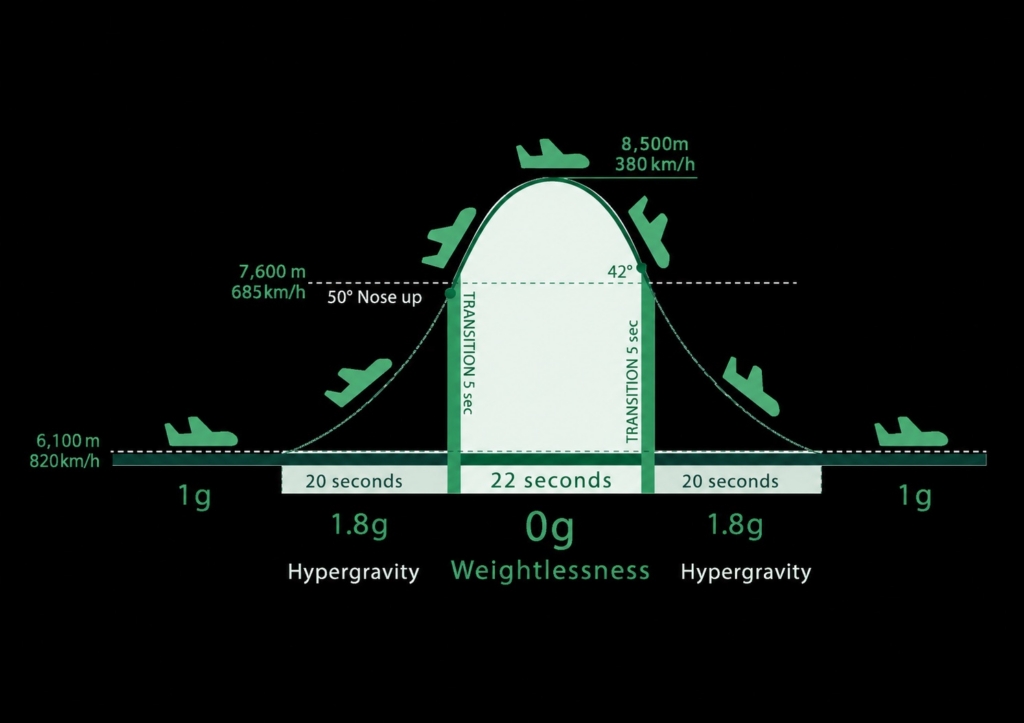
For full weightlessness, the free-fall phase typically lasts around 20 seconds. During that time, astronauts, engineers, experiments and equipment float inside the cabin much as they would in orbit.
For lunar or Martian gravity, the aircraft does not need to create full weightlessness. Instead, the pilots adjust the parabola so the remaining vertical acceleration in the cabin matches the desired partial-gravity environment. ESA says reduced-gravity parabolas can generate approximately 0.16g, close to lunar gravity, for around 23 seconds, or about 0.38g, close to Martian gravity, for around 30 seconds.
At the end of the arc, the aircraft pulls out of the manoeuvre, creating another short period of higher g before returning to level flight. The process is then repeated.
A typical parabolic flight campaign can include dozens of these manoeuvres, giving researchers repeated short windows in which to observe how hardware, people and procedures behave when gravity is no longer doing what it does on Earth.
That makes parabolic flight a useful bridge between laboratory testing and spaceflight. It cannot reproduce the Moon for hours at a time, but it can reveal how a suit joint moves, how a tool handles, how an astronaut’s body responds, or how a system behaves when gravity is reduced.
For Artemis, that matters. Future lunar crews will not simply step onto the surface, plant a flag and leave. They are expected to work for longer periods, move more extensively, operate vehicles, handle scientific equipment and eventually support more permanent lunar infrastructure.
Testing those systems in one-sixth gravity before they are sent to the Moon is therefore a key part of reducing risk.
The Boeing 737-700: what we know about NASA’s new lunar gravity aircraft
NASA’s choice of aircraft is interesting in its own right.
The agency says the contractor will modify a Boeing 737-700 to perform lunar-gravity parabolic flights. Public airframe records identify the aircraft as Boeing 737-700 N712JM, manufacturer serial number 40116 and line number 4465.
The aircraft was built at Boeing’s Renton site and is around 13 years old. It’s powered by CFM International engines and carries Mode-S hex code A9844F. Its history is not that of a straightforward former airline passenger jet.
Available airframe records associate N712JM with Capital Airlines, Bluewings International, Denmar Technical Services and, from 2020, the United States Air Force. Those records also show long periods of storage, including time at Georgetown, Delaware, and Colorado Springs, before the aircraft was ferried from Colorado Springs to Santa Maria, California, in June 2020.
The 'mysterious' USAF Boeing 737-700 N712JM is just back to Santa Maria, Ca. after another 3+ hour flight as 'Sting 38'. https://t.co/3sxMyligwM
— Airport Webcams (@AirportWebcams) June 15, 2020
Seven years old yet still in 'greenie' primer, lots of sensors in odd places… Article: https://t.co/erZf3MMSwi @thewarzonewire pic.twitter.com/ivs2WQFkt4
That year, the aircraft attracted attention after appearing at Santa Maria in a highly unusual condition. The War Zone reported that N712JM carried a civilian registration despite being owned by the US Air Force, and had visible external modifications, including wiring and sensor-like installations running along parts of the fuselage.
At the time, the aircraft was still wearing green protective coating rather than a conventional airline or military paint scheme. The War Zone also reported that it had been linked to flight-test activity and may have been connected to low-observable or radar-signature measurement work, although the exact nature of its role was never officially confirmed.
@jonostrower any idea on this 737-7? It belongs to USAF but has civilian reg. N712JM. I spotted it in Santa Maria last week and again today. Callsign STING38 pic.twitter.com/7XJ6f4WHZY
— Gerardo Nava (@NavaGerardo) June 23, 2020
NASA’s requirement includes aircraft modifications, maintenance and testing services. Earlier procurement material also referred to evaluating the aircraft’s suitability for reduced-gravity missions, modifying the cabin, applying NASA markings, completing overdue scheduled maintenance and addressing permanent modifications made during a previous programme.
What NASA’s Boeing 737 will test in zero gravity
The aircraft’s most immediate task will be supporting the development of systems required for Artemis missions.
NASA said the modified 737-700 will be used to validate astronaut lunar suits and associated crew systems required to support Artemis mission objectives. That points to a practical, hands-on role rather than a purely scientific one.
Unlike the Apollo era, future lunar astronauts are expected to spend extended periods working on the Moon’s surface, conducting scientific investigations, operating vehicles and maintaining infrastructure. That places greater demands on spacesuits, mobility systems, life-support equipment and the tools astronauts use outside their landers or habitats.
Testing such hardware on Earth presents a challenge because lunar gravity cannot be reproduced in laboratories for extended periods.
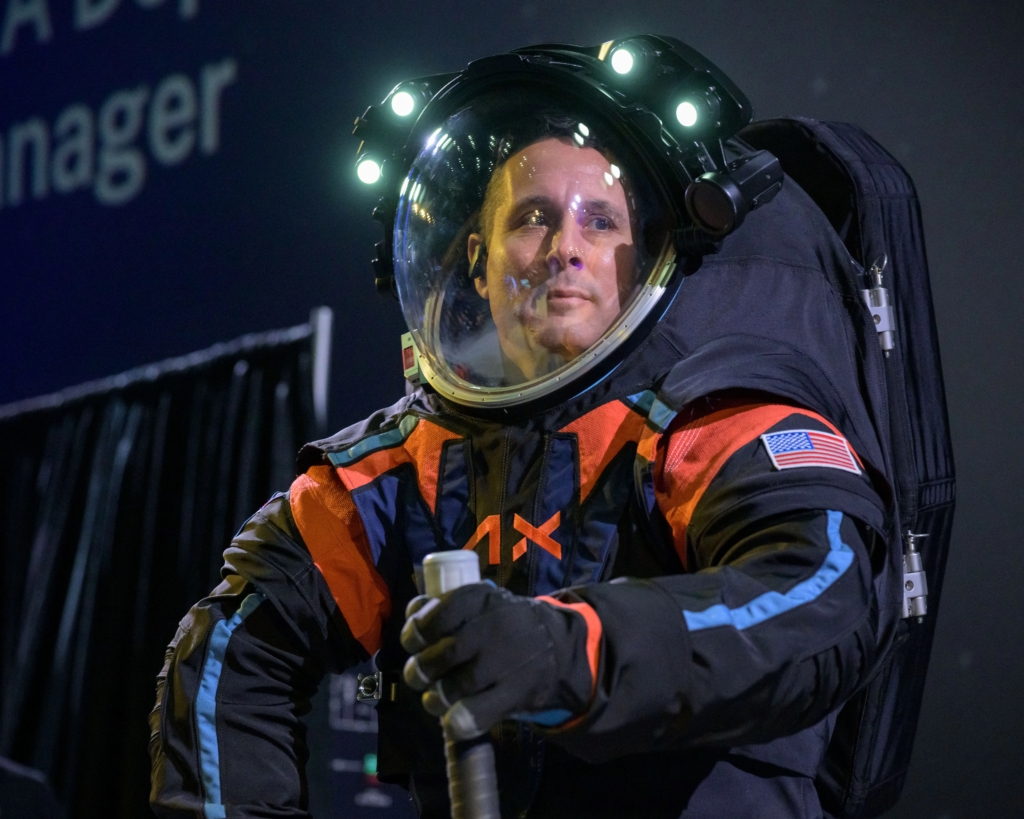
Parabolic flights provide one of the few ways to observe how astronauts move, work and interact with equipment in an environment that approximates lunar conditions.
NASA’s next-generation lunar suits are being developed to support longer excursions, greater mobility and a wider range of scientific activities than those undertaken during Apollo. Before astronauts can rely on those systems on the lunar surface, they must undergo extensive evaluation under realistic operating conditions.
A reduced-gravity aircraft can help answer questions that are difficult to resolve on the ground.
Can an astronaut bend, kneel, reach and recover balance in a lunar suit? Can tools be handled easily when the body is only partly loaded by gravity? Do restraints, backpacks, displays and life-support connections behave as expected? How does crew workload change when equipment is used in partial gravity rather than in a laboratory, pool or simulator?
The modified 737-700 will not replace other test environments, such as neutral buoyancy facilities, desert analogue sites, vacuum chambers or digital simulation. But it will add a short-duration, repeatable and operationally relevant test environment for equipment that must eventually work on the Moon.
Parabolic flights: A niche role for unusual aircraft
The Boeing 737-700 is joining a small and unusual club. Parabolic flight has long relied on aircraft that are large enough to provide usable cabin space, robust enough to withstand repeated high-g and low-g cycles, and available enough to be adapted for a niche mission.
NASA’s most famous reduced-gravity aircraft were the KC-135s nicknamed the ‘Vomit Comet’. These modified Boeing 707-derived aircraft supported astronaut training, research and hardware testing for decades. NASA later used a McDonnell Douglas C-9B, the military version of the DC-9, for reduced-gravity research before ending its in-house Reduced Gravity Program.
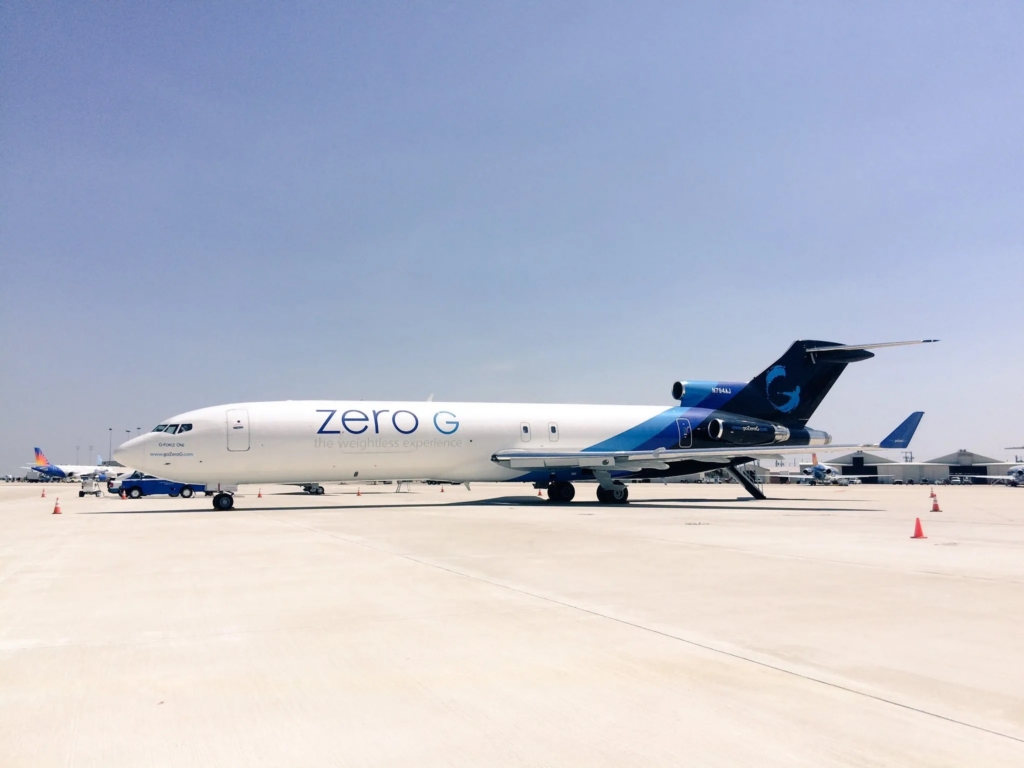
In the commercial world, Zero Gravity Corporation operates G-Force One, a modified Boeing 727-200. The aircraft has become one of the best-known parabolic flight platforms in the United States, flying research, training, media and public weightlessness missions.
Europe’s most prominent aircraft is the Airbus A310 Zero-G operated by Novespace, branded as AirZeroG, from Bordeaux. The aircraft left the Airbus production line in 1989, served with the East German airline Interflug, and was later used by the German government to transport senior officials, including Chancellor Angela Merkel, under the name Konrad Adenauer.
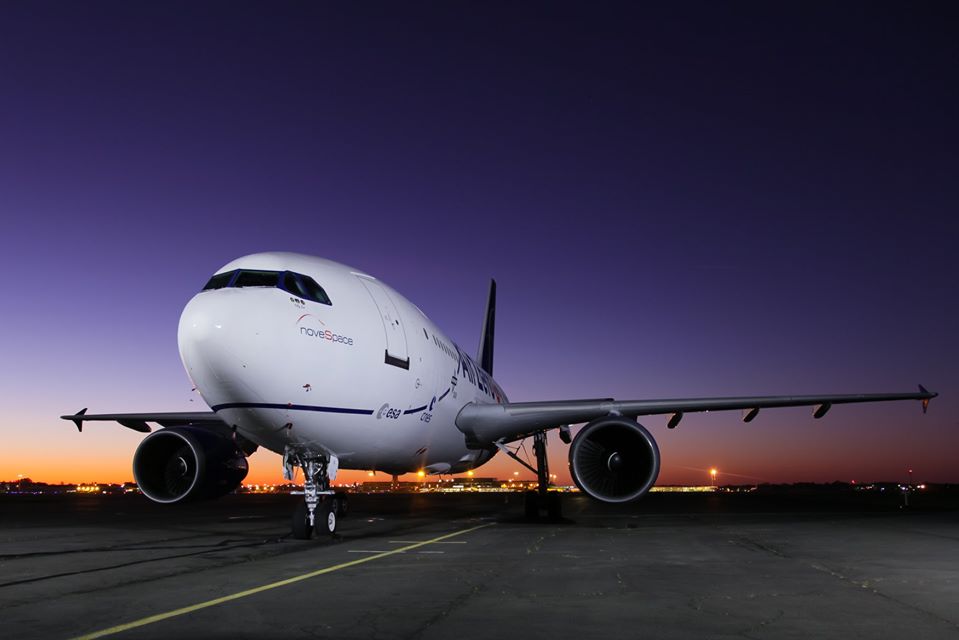
Novespace acquired it in 2014 to replace the earlier Airbus A300 Zero-G, with the A310 entering scientific parabolic service in 2015.
The A310 generally flies 31 parabolic manoeuvres during a mission and has a large padded experiment area inside the cabin, allowing scientists and astronauts to work in repeated short bursts of weightlessness or partial gravity.
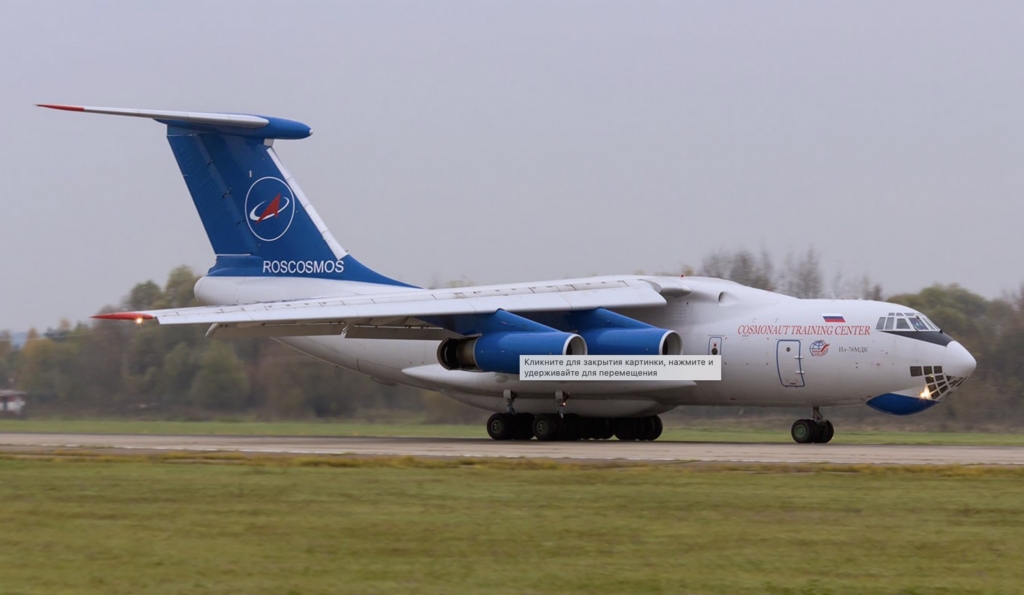
Russia has also used dedicated Ilyushin Il-76MDK aircraft for cosmonaut training and research. The type is especially notable as it is based on a large military transport aircraft rather than a converted airliner. Rostec has said the Il-76MDK first flew in 1988 and that three aircraft of the type remain in the Roscosmos fleet for cosmonaut preparation.
Boeing 737s have been used by NASA and other operators for research, surveillance, transport and test work, but the 737-700 is not one of the best-known aircraft in the history of parabolic flight. In fact, there are no records of a 737 being used for such missions in the past.
From Boeing 737s to Artemis and the moon base
The modified 737-700 will feed into a much wider Artemis roadmap.
NASA’s goal is not only to return astronauts to the Moon but to build the systems needed for a more sustained human presence there. That includes new spacesuits, surface mobility systems, power generation, communications, habitats, logistics networks and eventually infrastructure that could support longer and more frequent lunar missions.
Every one of those systems needs testing before it is trusted on the Moon.
The new Boeing 737-700 will not be the most glamorous part of Artemis. It will not launch on top of a rocket or land beside the lunar south pole. But by giving NASA a dedicated aircraft for lunar-gravity testing, it will help close the gap between Earth-based engineering and actual Moon operations.
For a program built around returning humans to deep space, that makes a modified 13-year-old Boeing narrowbody an unexpectedly important step on the road back to the lunar surface.
Featured image: stock.adobe.com
Sign up for our newsletter and get our latest content in your inbox.