


Air Astana benefits from airspace disruption, but nonstop 787 US flights are blocked

7 min read
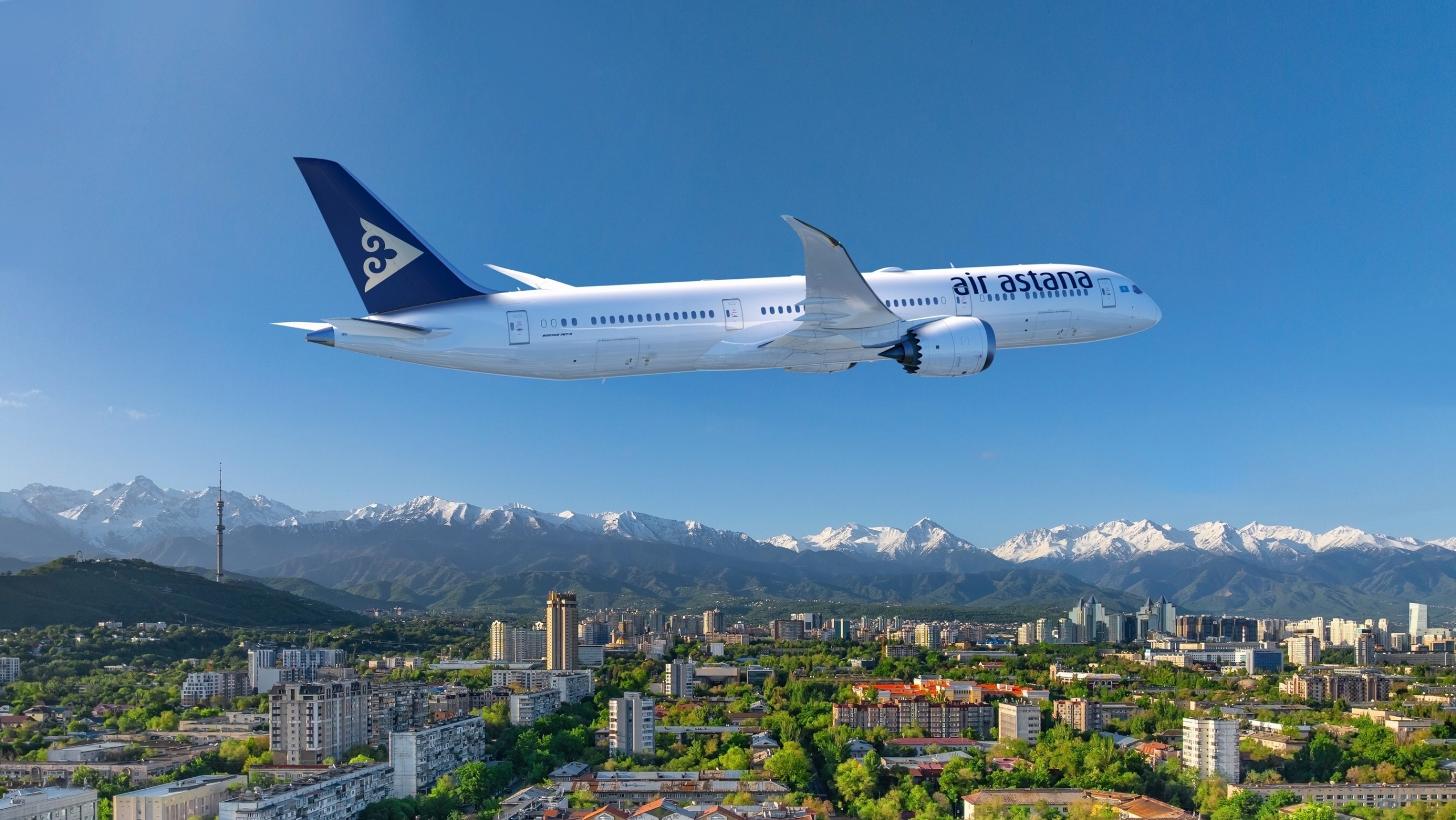
Air Astana is reaping the benefits of disrupted airspace as more passengers choose to connect through Kazakhstan. But that same disruption is also complicating one of its most ambitious targets to date: direct flights to the USA.
Hosting his first earnings call, new CEO Ibrahim Canliel said the airline was “monetising the new normal” created by disruption to the east and west of Kazakhstan, with Air Astana reallocating capacity to higher-yielding international routes.
But airspace closures and sanctions weigh heavily on the airline’s US ambitions. Even with the first Boeing 787 arriving soon, nonstop flights are out of the question for the time being.
Transit traffic pushes Air Astana to revenue gains
The Kazakh flag carrier reported a 13.2% rise in first-quarter revenue to $331 million, despite capacity growing by just 0.7%, while unit revenue rose 12.4% and load factor increased by almost two percentage points to 83.3%.
Canliel said international transit traffic rose 65% in the first quarter, driven largely by a 158% increase in March, as traffic between Asia, Europe, Central Asia and the Caucasus shifted northwards via Kazakhstan.
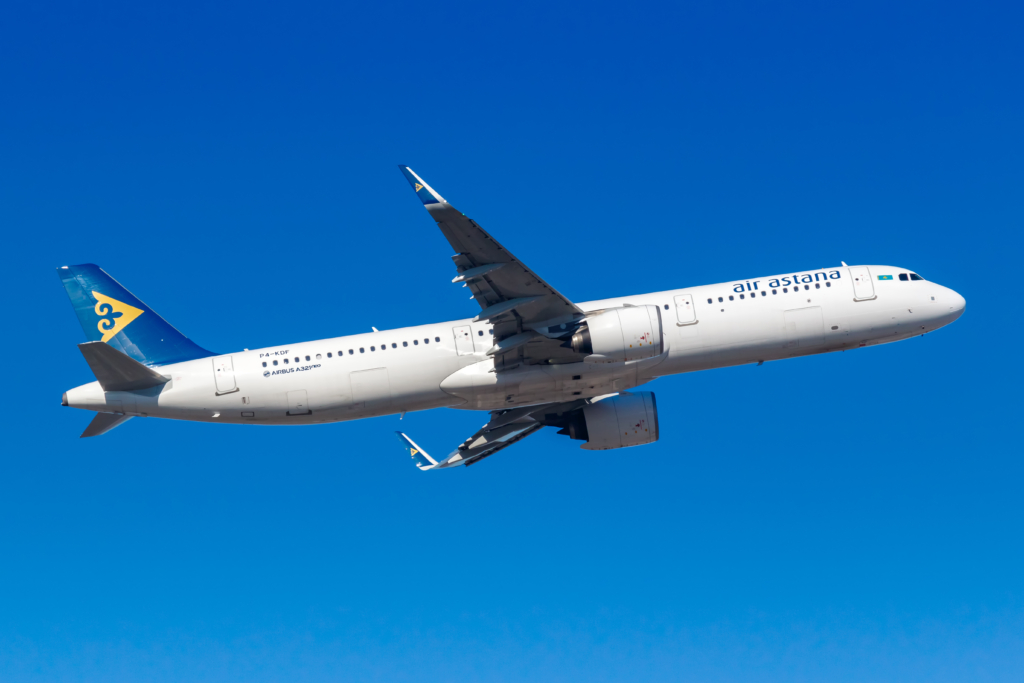
The CEO added that Air Astana was “very well positioned to grow because of the market developments, and not just in spite of them”, pointing to the airline’s experience dealing with external shocks from COVID-19 to the Russia-Ukraine war.
In March, the airline saw international transit traffic rise 158% as passengers connected east and west without the assistance of the big Gulf airlines. Even as Gulf traffic begins to normalise, Caneli believes a ‘new equilibrium point’ has arrived, and that things will not entirely return to the status quo.
Air Astana’s Boeing 787s to arrive in September
While Air Astana has seen some benefits from geopolitical instability, the current operating environment is putting something of a dampener on its long-haul ambitions.
The airline confirmed it expects delivery of its first Boeing 787-9 in September this year, with a second aircraft following before the end of 2026. Initial operations will focus on flying shorter sectors as the crew becomes familiar with the new aircraft type.
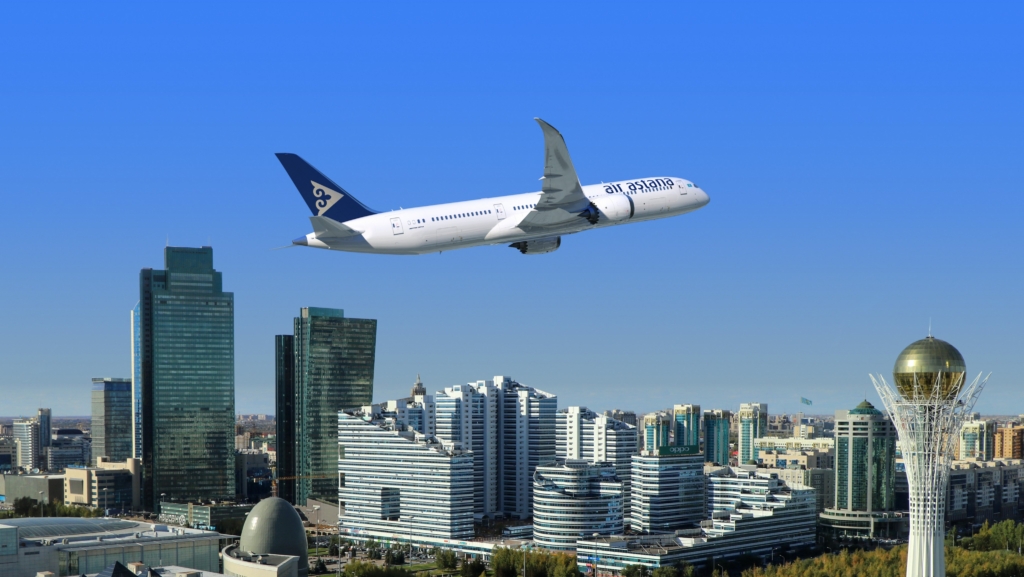
Inducting the Dreamliner is a step-change for the airline, replacing the Boeing 767s it currently uses on longer routes. Air Astana has previously said some of its Dreamliners will add capacity on existing routes, but has long maintained a goal of opening direct flights from Kazakhstan to the United States with these aircraft.
Responding to a question from industry publication Simple Flying, Caneli praised the additional flexibility and range the Boeing 787 would give the airline compared to the current Boeing 767 fleet, but added that, “It’s not only the range that will identify our operations and the network.”
“The 787 will need to be able to fly via a routing that we currently are not able to operate because of sanctions,” Canliel added. “That is another matter that will need to be resolved before we can start considering a direct operation into the United States.”
Russian airspace leaves nonstop US flights out of reach for Air Astana
On paper, the Boeing 787 has the range to transform Air Astana’s long-haul operations. Flying over 7,500 nmi, it puts almost all of North America within reach of Almaty and Astana. But while the aircraft can make the trip, airspace closures and Russian sanctions mean it is unable to take a direct route.
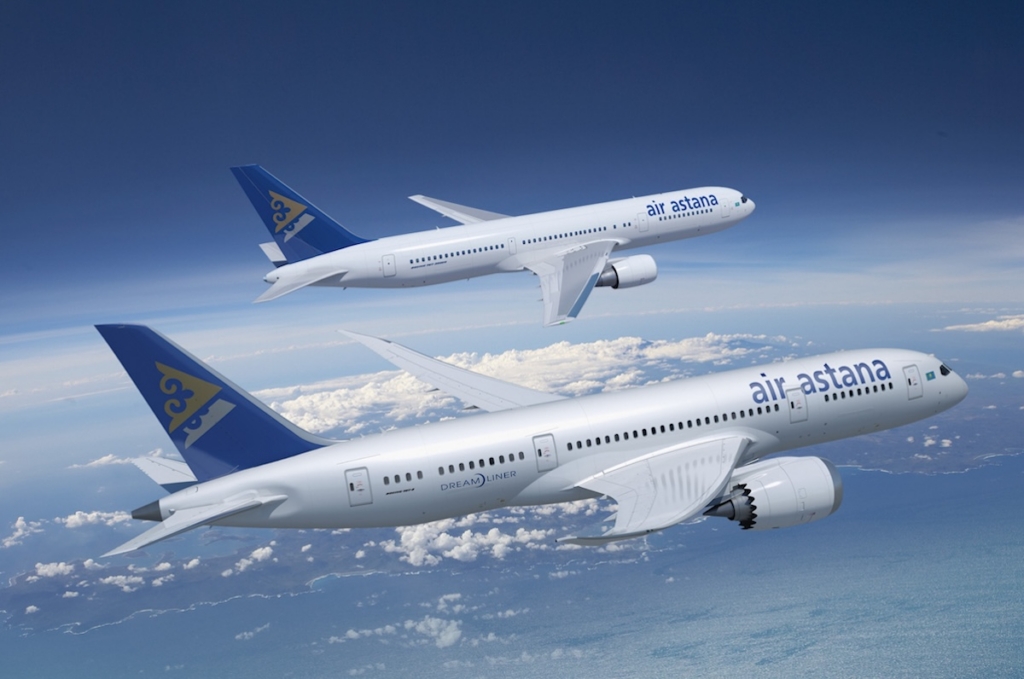
Former CEO Peter Foster discussed the issue during a media event last year. Although Kazakhstan, which connects to Russia with the longest unbroken land border in the world, has not sanctioned the country, Air Astana decided to stop flying to and over Russia at the outbreak of the war in Ukraine.
“Since the 11th of March of 2022, we don’t fly to Russia. We don’t fly over Russia. We have no commercial presence in the Russian Federation at all,” Foster said. Other Kazakh airlines still fly into Russian airports daily, but for Air Astana, it was an unnecessary complication.
Foster explained that insurers were becoming reluctant to cover Russian operations. Adding to this, overflying Russia means paying to use the airspace, which could mean doing business with sanctioned companies. As an airline that, until recently, had a UK company as majority shareholder, this was not something Air Astana wanted to get into.
“Even if we overflew Russia and did not actually land in Russia, there would still be the risk of an AOG, a diversion,” Foster added. “That would have meant we would have had to work through Russian service providers.”
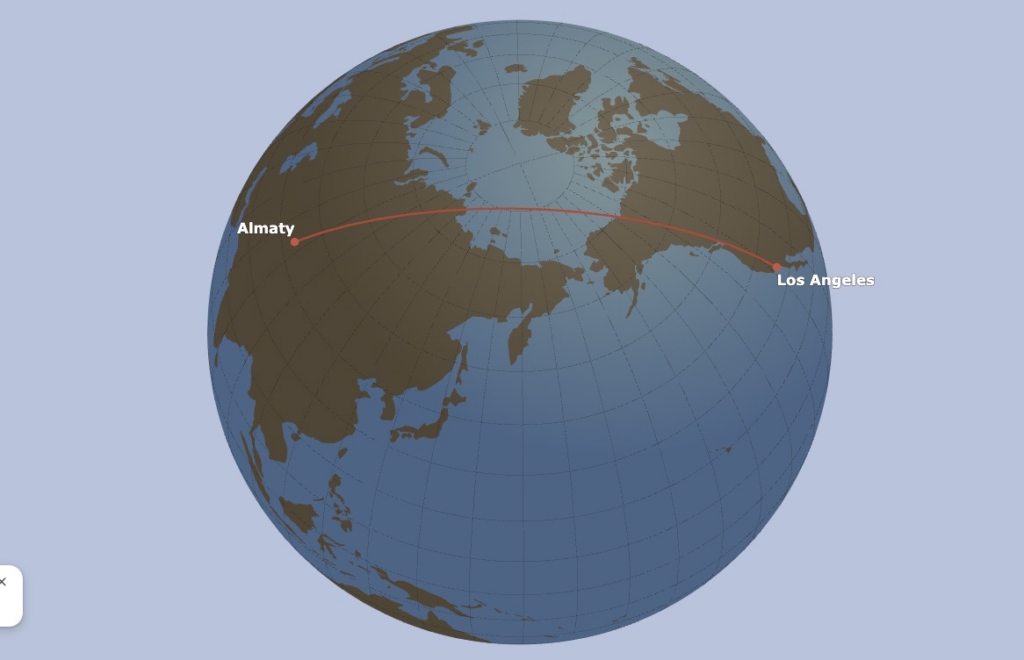
Reaching the US nonstop would mean taking a circuitous routing. Flights from Almaty or Astana to the USA would normally take a great circle routing over the pole and across Russian airspace. While the aircraft may be able to reach some near US cities, the proposition becomes far less attractive with the added fuel costs and limited options.
Does that mean Air Astana won’t launch Boeing 787 services to the US anytime soon?
Air Astana’s leadership has made it clear that nonstop 787 services to the States are out of the question as long as Russian airspace remains closed. However, that doesn’t necessarily mean the airline won’t fly there at all.
“With Russian airspace closed, nonstop is not an option for us,” Foster told journalists last summer. “We’d have to make an intermediate stop unless Russian airspace opens again.”
“If we were to do the US before the airspace issue is resolved,” he added, “we would have to make a technical or commercial stop somewhere in Europe, which is obviously not ideal.”
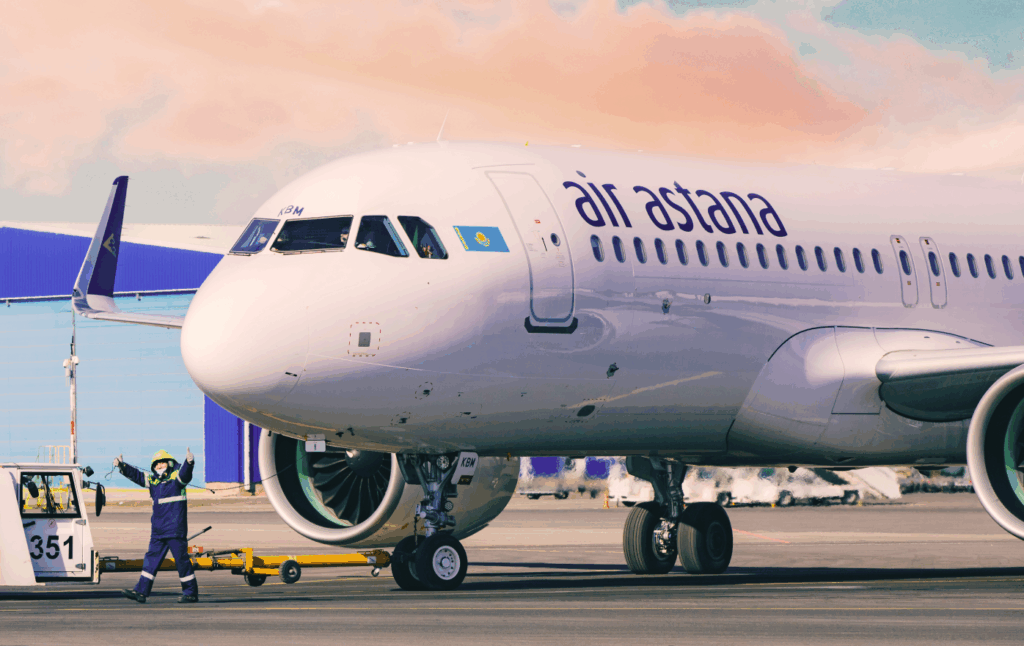
While the former CEO did not mention any airports for such a stop, the airline already has a strong presence at both London Heathrow and Frankfurt. Of the two, the German airport would be the most logical choice, given its codeshare relationship with Lufthansa.
But if the US doesn’t come off, the 787s will be busy anyway. Foster previously said they’d fly it where the 767 flies today – Korea and Japan, for example.
“At some point in the future, it will go to Thailand. It will do various routes to Southeast Asia. It will fly to Frankfurt in the summer,” Foster added. “We’ve got a huge demand into Dubai, for example. So there’s plenty of work for the widebody for now.”
Air Astana sees a strategic advantage and no fuel concerns
Amid increased demand from transit traffic, Air Astana is pushing into lucrative markets to the east. China in particular is gaining attention, with the group’s capacity in China increasing 91% in the first quarter, and revenue growing by close to 140%.
Group frequencies to China are expected to reach up to 50 flights a week in the summer, up from just 23 in summer 2025. Both Air Astana and FlyArystan, its low-cost sister airline, fly to China, with FlyArystan described as going into growth mode in the country.

The Central Asia and Caucasus region is another pillar. Canliel said expanding Air Astana’s definition of its home market beyond Kazakhstan increases its target market fivefold, to around 100 million people. The airline is adding frequencies to Tashkent, Bishkek and Tbilisi, while FlyArystan is expanding into Samarkand and the Black Sea resort of Batumi.
Fuel is another strategic advantage. Canliel said around 70% of Air Astana’s total fuel burn is supplied in Kazakhstan, an oil-producing country with domestic refining capacity. That leaves the airline exposed to wider supply constraints in Asia or Europe, but gives it an advantage over operators that depend more heavily on international uplift.
“If there were to be a fuel shortage in Asia or in Europe, along with others, we would be impacted,” Canliel said. But he added that Air Astana can tanker fuel on a large number of routes from Kazakhstan, and that medium and long-haul flights are likely to be prioritised if shortages emerge.
Featured image: Boeing
Sign up for our newsletter and get our latest content in your inbox.


More from


September 6, 20264 min read


