


Dassault’s Falcon 10X features business aviation’s first all-composite wing: Here’s why that matters

3 min read
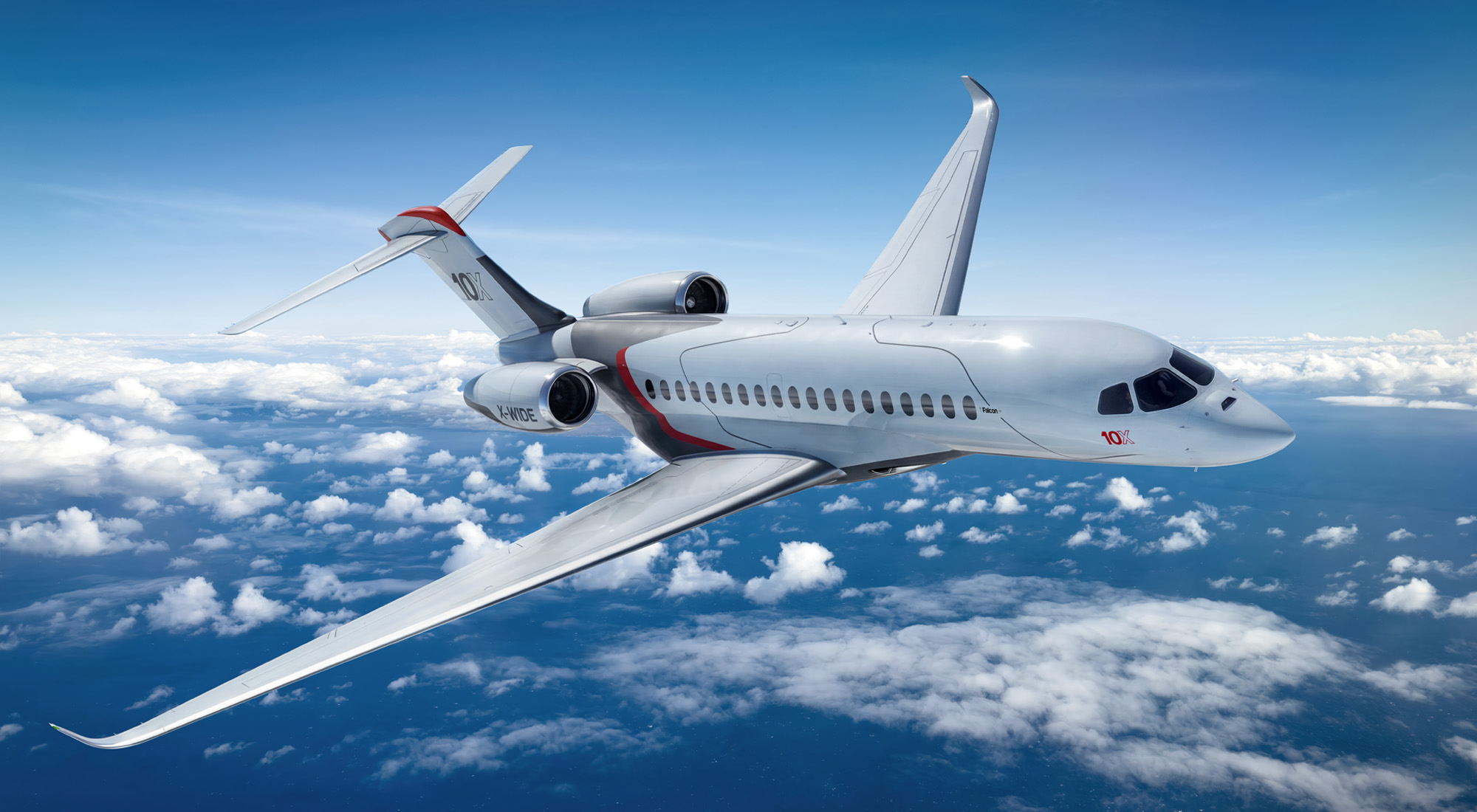
Last month, Dassault Aviation unveiled its Falcon 10X business jet, designed as the largest, fastest, and longest-range Falcon aircraft.
Supporting the largest and most comfortable cabin is an all-composite wing structure – first in business aviation. The next-generation composite architecture is designed to reduce aircraft weight, improve aerodynamic efficiency, and simplify maintenance.
Composite wings are typically constructed from Carbon Fibre Reinforced Polymers (CRP), a lightweight material with high tensile strength. To support the takeoff weight of the aircraft, composite wings offer a greater strength-to-weight ratio and improved aerodynamic shaping.
Moreover, the Falcon 10X wing is significantly lighter than traditional designs, including its predecessors, while offering great fuel efficiency.
Solving the aerodynamic drag problem
An aircraft experiences a combination of parasite and lift-induced drag in flight. Parasite drag is a combination of form drag (shape of the aircraft), skin-friction (surface roughness), and interference drag (interaction of components).
Composite materials offer smoother shapes and surface curves through moulding and casting methods, which are difficult to achieve with metals.
With the Falcon 10X’s rear-mounted engines, it features a cleaner wing with minimal component interference. The smooth, contoured shape of the fuselage, wings, and tail section optimised parasite drag during flight.
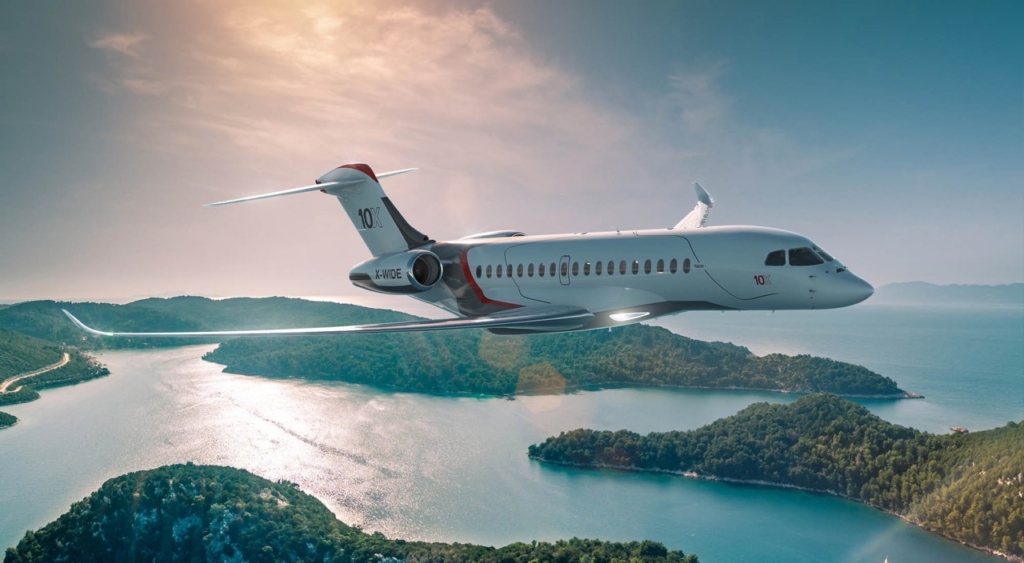
Lift-induced drag is generated as a byproduct of downwash from wingtip vortices. The pressure difference between the wing’s upper and lower surfaces causes vortices at the tips. Lift-induced drag increases at higher angles of attack, such as during takeoff and climb.
The design of the Falcon 10X wing, with lifted wingtips, counters aerodynamic drag due to lift and enhances fuel efficiency. Moreover, advanced slats and flaps installed on the wing optimise the lift-to-drag ratio at lower speeds, particularly during takeoff and approach.
Dassault Aviation states,
“The advanced structure combines traditional Dassault high-lift devices-slats and flaps with a next-generation composite architecture that improves aerodynamic efficiency while reducing weight. The result is a wing that supports the aircraft’s large cabin while maintaining the agility and runway flexibility that Falcon aircraft are known for.”
| Dassault Falcon 10X | |
|---|---|
| Length | 33.4 m (109 ft 7 in) |
| Height | 8.4 m (27 ft 7 in) |
| Wingspan | 33.6 m (110 ft 4 in) |
| Cabin Length | 16.4 m (53 ft 12 in) |
| Cabin Height | 2.03 m (80 in) |
| Cabin Width | 2.77 m (109 in) |
| Passenger capacity | 19 |
| Maximum Takeoff Weight | 52,163 kg |
| Range | 13,890 km |
| Maximum Operating Mach Number | 0.925 |
| Service Ceiling | 15,545 m |
| Engines | 2x Rolls-Royce Pearl 10X |
| Thrust | 40.1 kN each |
Structurally thinner wings reduce the strength of wingtip vortices, enhancing fuel efficiency by up to 10%. Moreover, high aspect ratio wings of the Falcon 10X minimise interference drag and optimise cruise performance.
Falcon 10X wing design contributes to its cleaner, leaner, and smarter performance
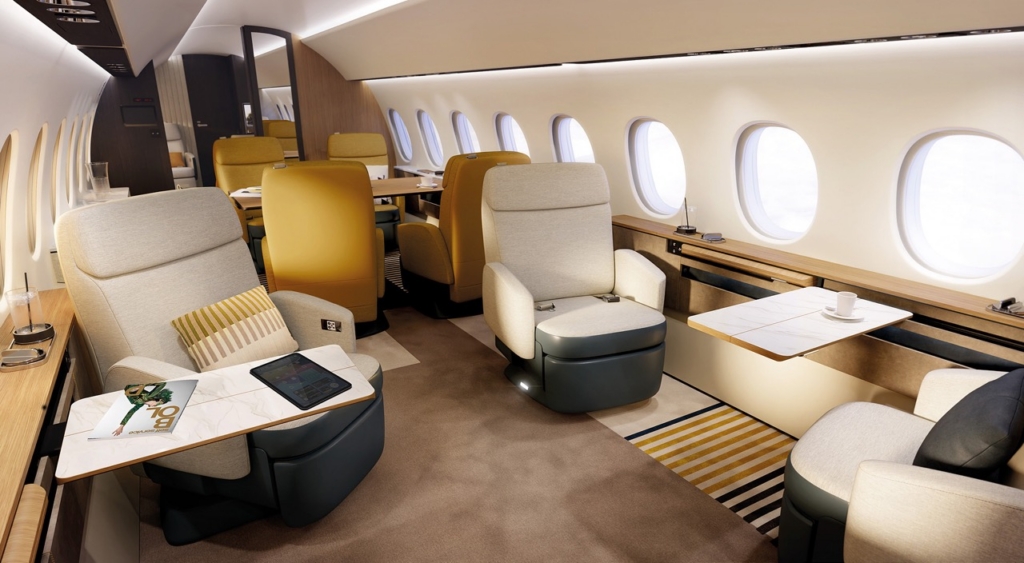
With the high-efficiency wing and business aviation’s most advanced Rolls-Royce Pearl 10X engines, the Falcon 10X cruises at 0.925 Mach. The aircraft’s entirely new fuselage houses the largest passenger cabin for any Falcon, offering passenger comfort and flexibility. Moreover, its robust design and efficiency allow for significantly lower cabin altitude during cruise.
According to Dassault Aviation,
“Passenger comfort was engineered with equal ambition. At a cruising altitude of 41,000 feet, cabin pressure will be maintained at an exceptionally low 3,000 feet, complemented by 100 % fresh air continuously renewed throughout the cabin and individually adjustable temperature zones.”
The aircraft has a maximum operating range of 7,500 nm, making it a perfect solution for connecting major long-haul routes like New York and Shanghai, Los Angeles and Sydney, or São Paulo and Dubai. The Falcon 10X wing is at the forefront of its design, enabling weight reduction and optimising efficiency.
Featured Image: Dassault Aviation
Sign up for our newsletter and get our latest content in your inbox.


More from

October 25, 20265 min read


