Austria signs €1.5bn agreement for 12 of Leonardo’s M-346FA to replace ageing trainers

5 min read

The Austrian Ministry of Defence (MOD) confirmed on 29 November that it has finalised its purchase of 12 M-346FA (Fighter Attack) aircraft from the Italian aerospace/defence manufacturer, Leonardo.
The finalisation of this acquisition – which has been inked as a government-to-government (G2G) agreement – comes almost a year after Vienna initially announced its decision to procure 12 M-346FAs to replace the Austrian Air Force’s now-retired fleet of Cold War-era Saab J105Ö twin-engine jet trainers.

Valued at approximately €1.5bn ($1.7bn), this deal covers the purchase of all 12 M-346FAs – with each aircraft costing around €80m ($93.2m) – along with an option for 12 more aircraft and the acquisition of relevant maintenance and training services/equipment (including simulators) and associated armaments.
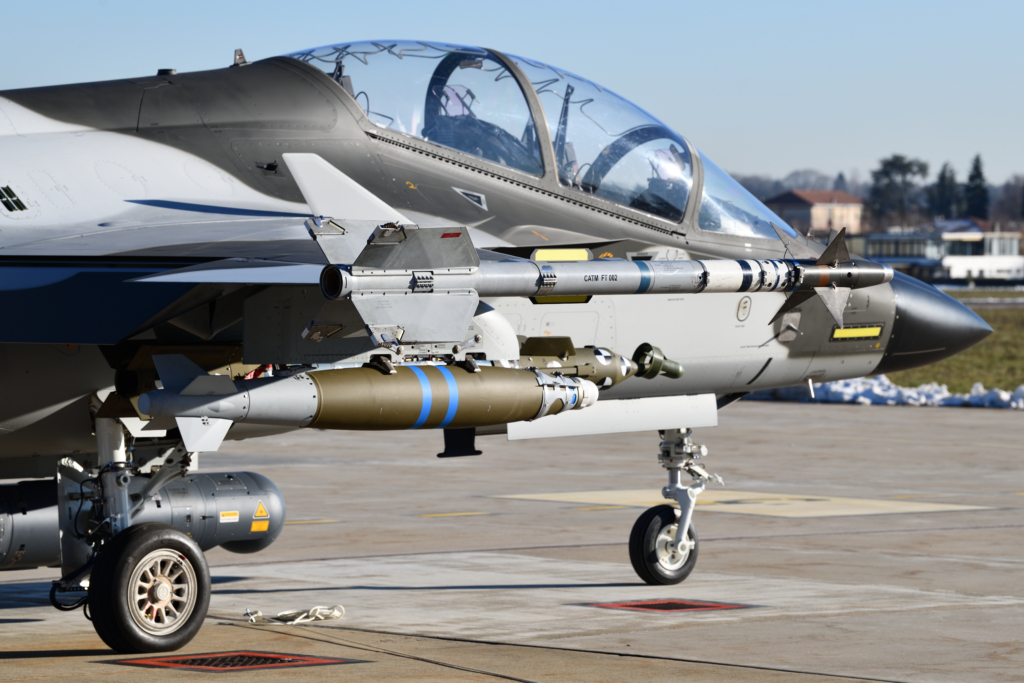
A document released by the Italian MOD on 5 May 2025, noted that the package requested by Austria also includes Elbit SPEAR AECM (Airborne Electronic Countermeasures) pods, Nexter NC621 20mm gun pods and LAU-32 seven-round rocket launchers, along with the integration of Link-16 tactical datalinks and IRIS-T short-range air-to-air missiles.
In addition to this contract, Vienna and Rome have signed a parallel industrial agreement that is expected to generate approximately €400m in technology, supply chain, digitisation and security-relevant research work for Austria.
In announcing the finalisation of this contract, Austria’s MOD also confirmed that its future M-346FA force will be based at Linz-Hörsching Air Base in Upper Austria (the previous home of its J105Ö fleet), with deliveries expected to begin in 2028.
Initial deliveries of the M-346FA will begin some eight years after Austria’s veteran J105Ö fleet was retired from use in 2020. This created a capability gap in the Austrian Air Force’s domestic jet training abilities, forcing the air arm to send its student pilots to Germany and Italy to fulfil their advanced jet training requirements.
Commenting on Vienna’s decision to acquire the M-346FA in December 2024, Austrian Defence Minister Klaudia Tanner said: “With the purchase of these jets, we are closing a significant capability gap in our air force. This not only brings 100% of our pilot training to Austria, but also significantly strengthens air defence.”
Inside Austria’s new ‘Two-Fleet Strategy’
This deal marks a key milestone in Austria’s ongoing effort to bolster its defence capabilities with a multi-role platform that allows the Austrian Air Force to reestablish an in-house advanced jet training capability, while also providing an operational light combat jet to supplement its existing 15-strong fleet of Tranche 1 Eurofighter Typhoons, which entered service between 2007 and 2009.
According to the MOD, the M-346FA acquisition enables Austria to fully implement its long-desired ‘two-fleet strategy’. This strategy is built around maintaining a clear distinction between high-performance air-defence fighters and a complementary fleet of light, multi-role combat aircraft for training and secondary missions.
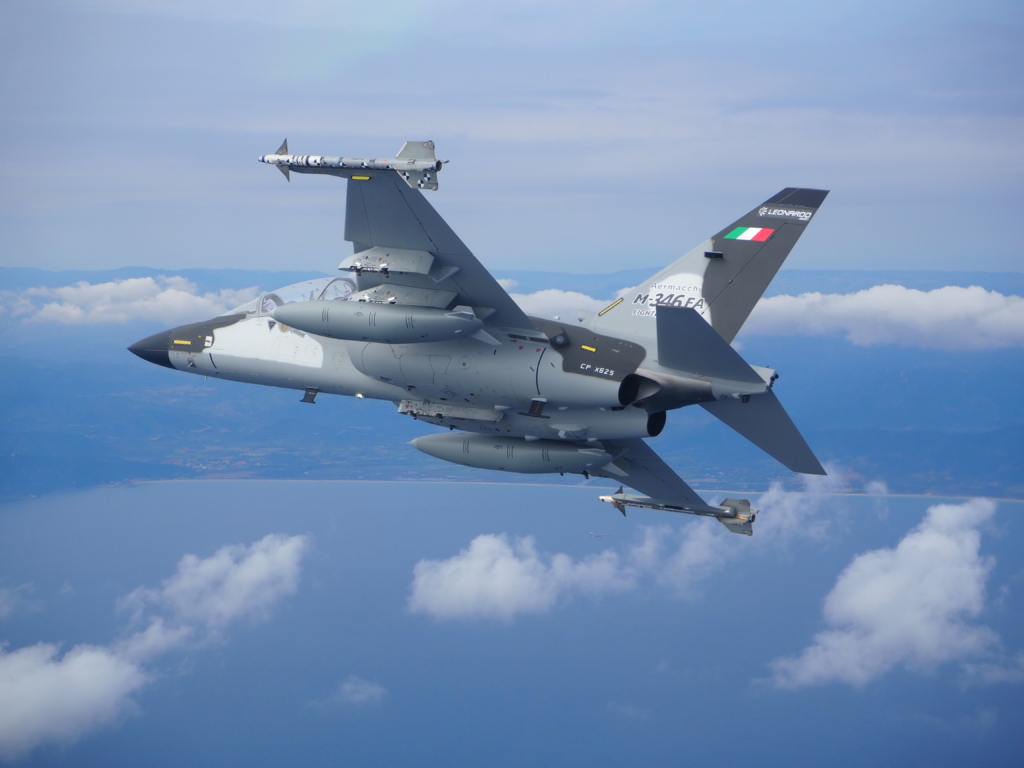
Under this approach, Austria’s Eurofighter fleet will serve as the nation’s primary air-defence platform, responsible for Quick Reaction Alert (QRA) duties and safeguarding the country’s airspace. Meanwhile, Austria’s future M-346FA fleet will be responsible for fulfilling advanced pilot training duties, while also being tasked with conducting lower-intensity operational tasks that do not require the full capabilities or cost of deploying Typhoons.
By dividing responsibilities across the two platforms, the Austrian Air Force aims to reduce operational expenses, extend the lifespan of its frontline fighters and ensure a more flexible and sustainable force structure.
Is Austria the first M-346F Block 20 customer?
With this deal having now been firmed up, Austria has become Leonardo’s third customer for the M-346FA after Turkmenistan and Nigeria.
While several European nations, including Greece, Italy and Poland, currently operate the baseline advanced jet training version of the Master, the Austrian Air Force will become the first European operator of the M-346FA variant.
The M-346FA has been designed to support a wide range of combat roles:
- tactical reconnaissance
- homeland security/air policing
- interdiction; battlefield air interdiction (BAI)
- close air support (CAS)
- counterinsurgency (COIN)
- combat search-and-rescue (CSAR)
- tactical air support for maritime operations (TASMO)
- slow mover interception
- forward air controller-airborne (FAC-A) operations
Its multi-role design allows it to quickly switch between training and operational configurations when needed.
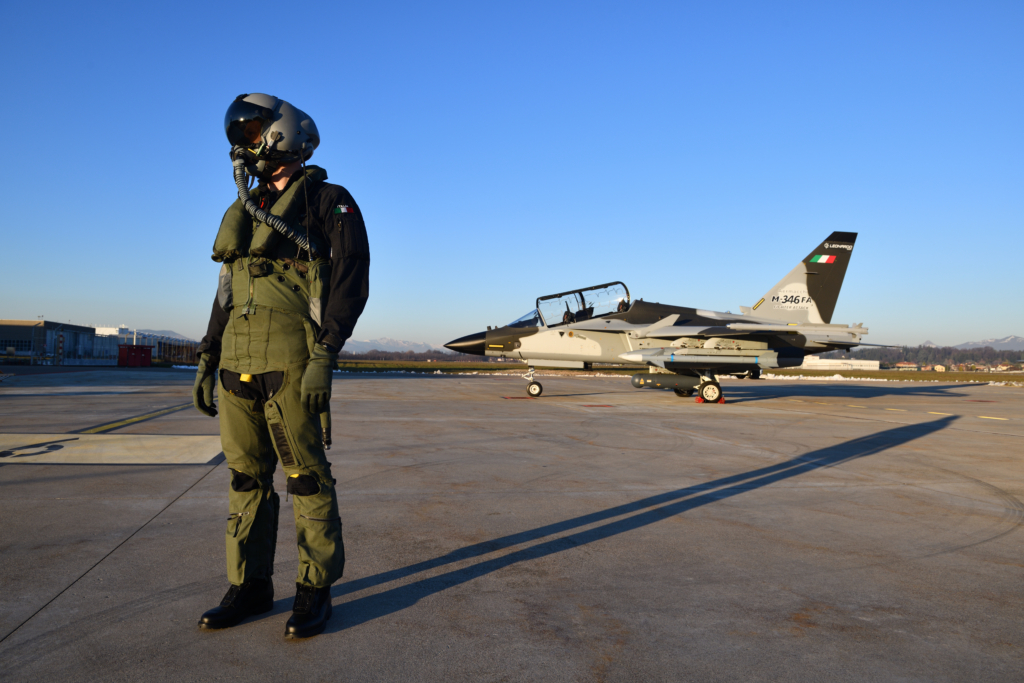
Some 20 years after the M-346 completed its first flight, Leonardo announced the launch of a new capability enhancement package for the Master at the Farnborough International Airshow 2024. The package can be applied to both the baseline M-346 advanced jet trainers, as well as the M-346FA, with Leonardo confirming that ‘M-346T Block 20’ and M-346F Block 20’ will be the designations for the upgraded aircraft, respectively.
The Block 20 configuration introduces a more modern cockpit and a set of system upgrades that expand the jet’s combat capabilities. The old setup of six Multifunctional Displays (MFDs) will be replaced by two Large Area Displays (LAD) and an updated, low-profile Head-Up Display (HUD), providing pilots with a cleaner, more flexible interface.
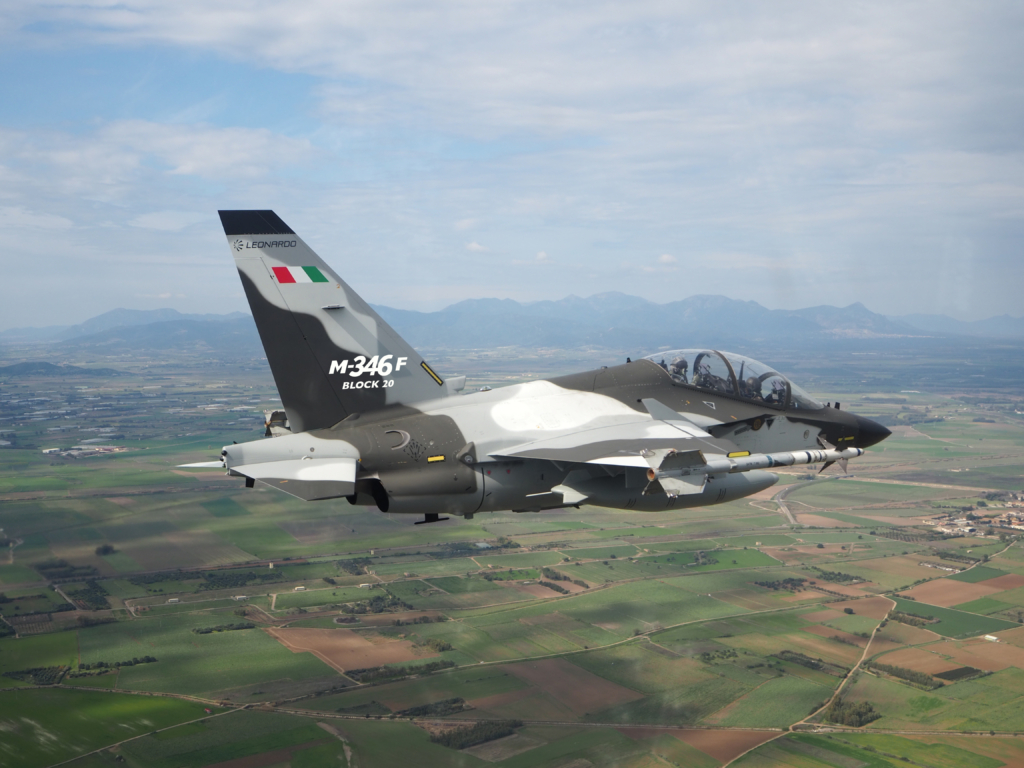
Internally, the aircraft’s avionics architecture will be refreshed, navigation and mission-management software will be improved, and Identification Friend-or-Foe (IFF) and other communication systems will be brought up to modern standards.
The Block 20 upgrade for the M-346FA also supports a new, advanced active electronically scanned array (AESA) radar and a broader mix of precision-guided weapons. Together, these changes provide the aircraft with better situational awareness, smoother workload management and a stronger multi-role combat package.
It has been reported that Austria may become the first customer for the Block 20-configured jets, but this has yet to be confirmed.