From seat covers to SAF: how Wizz Air is pursuing its sustainability goals in 2026

January 22, 2026
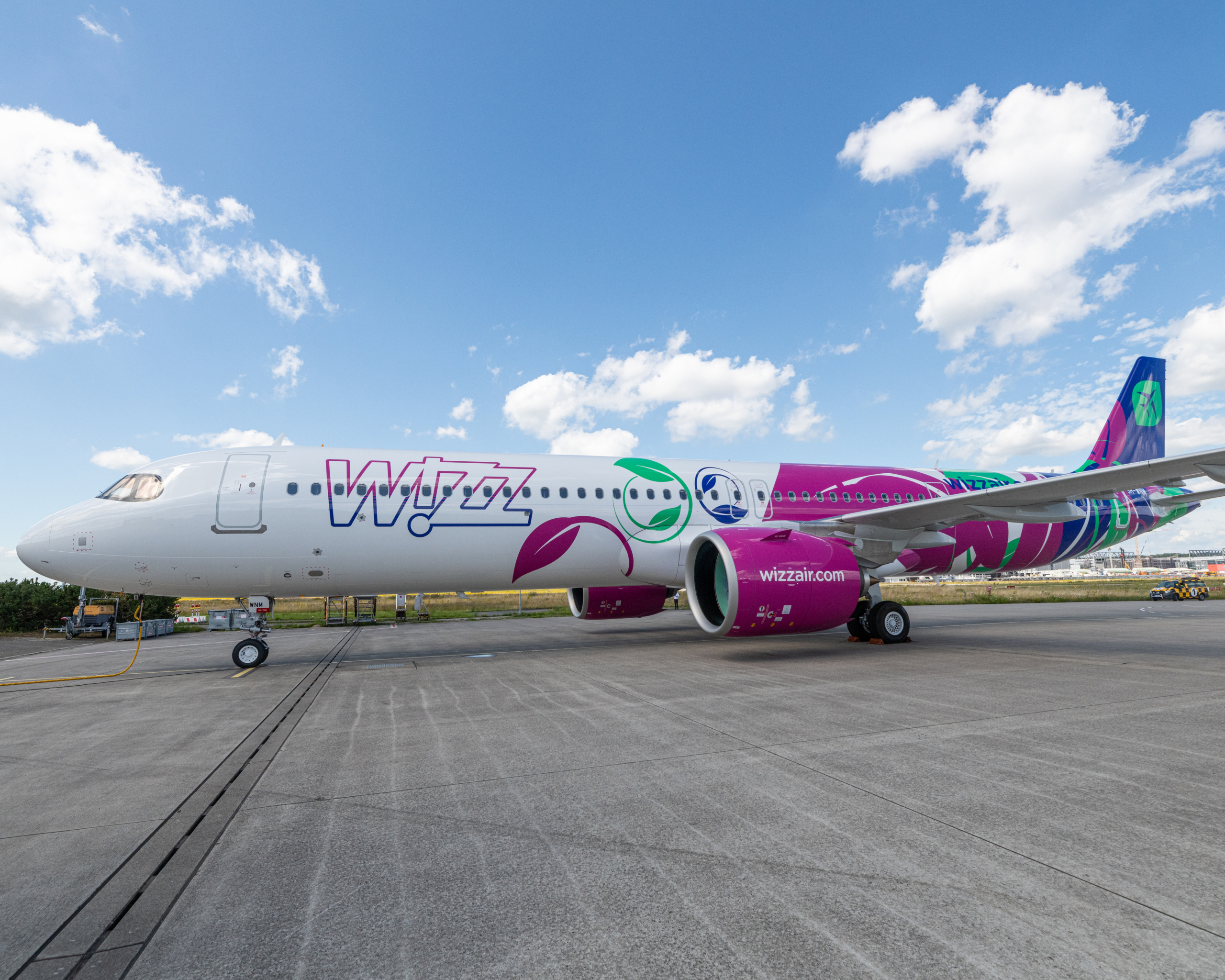
Wizz Air is one of Europe’s leading low-cost airlines, with over 250 aircraft in its fleet and flying to around 200 destinations across Europe and the Middle East. Having first flown in May 2004, the airline is now one of the fastest-growing carriers in Europe while operating a modern fleet of Airbus passenger aircraft.
Yet with size comes responsibility, and with the issue of sustainability continuing to be high on the aviation agenda in 2026, the company is no stranger to embracing initiatives in this arena.
On 20 January, Aerospace Global News was invited to spend the day with Wizz Air to learn more about the carrier’s plans for 2026 and understand more about its drive towards sustainability.
Wizz Air and its sustainability projects in 2026
With aviation responsible for generating between 2.5% and 4% of the world’s total carbon emissions, Wizz Air believes that it is down to each airline to do as much as it can to reduce this figure.
Decarbonisation is the key to the future, the airline believes, and it is working hard to reduce its own carbon footprint.
While aircraft technology will go some way to reducing this future, says Wizz Air, other initiatives and ideas must also be embraced to expedite the industry towards reaching its widely publicised goal of achieving net zero by 2050.
“Decarbonisation and reaching net zero by 2050 are the long-term goals,” explained Owain Jones, the Chief Corporate Officer of Wizz Air. “While the foundations are there, there lies a long road ahead of us,” he added.

To this end, Wizz Air is following several paths that will steer it towards reaching its own sustainability targets while also keeping a firm eye on 2050.
From operating modern aircraft to encouraging the use of Sustainable Aviation Fuel (SAF), and from using recycled leather to cover its aircraft seats to working alongside Airbus to reduce the fuel burn of its aircraft, Wizz Air is striving towards a position where its carbon footprint is as low as it can be, while continuing to operate efficiently and safely.
A pathway towards decarbonisation for Wizz Air
In April 2025, Wizz Air unveiled its ambitions for Net Zero 2050. The plan highlighted slow progress and called for radical change to shape the aviation industry’s future.
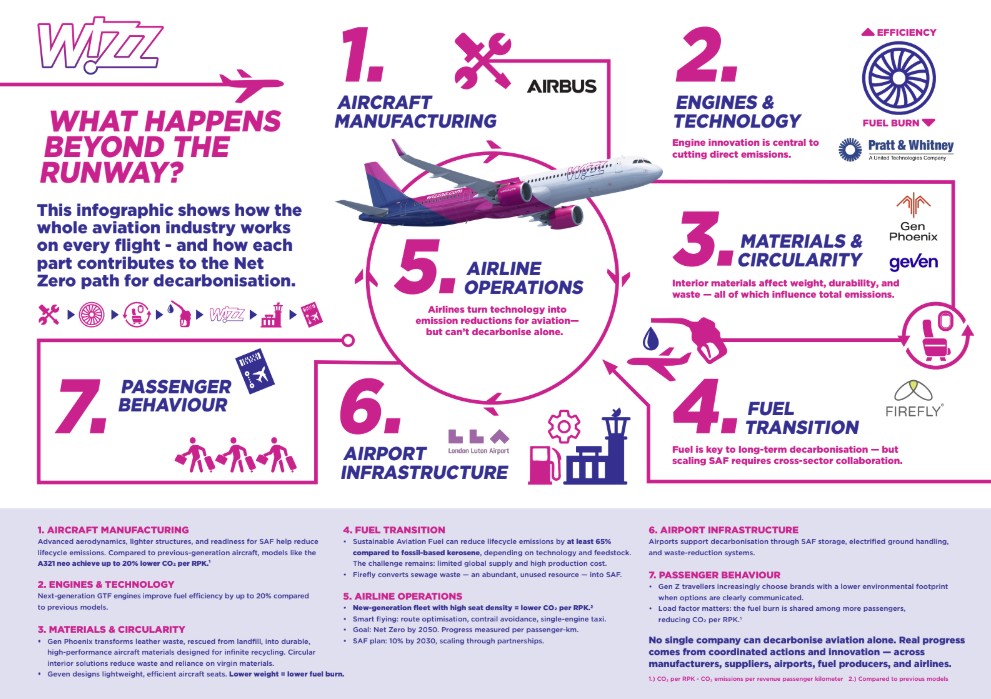
According to the company, the roadmap offered “a realistic path towards Net Zero 2050” by focusing on the ‘three Fs’ –
- Flights (30% emissions reduction from new aircraft technology and fleet renewal
- Fuel (53% in emissions reductions to be achieved by using SAF)
- Footprint (4% emissions reductions from air traffic management modernisation).
Modern aircraft means a more sustainable fleet
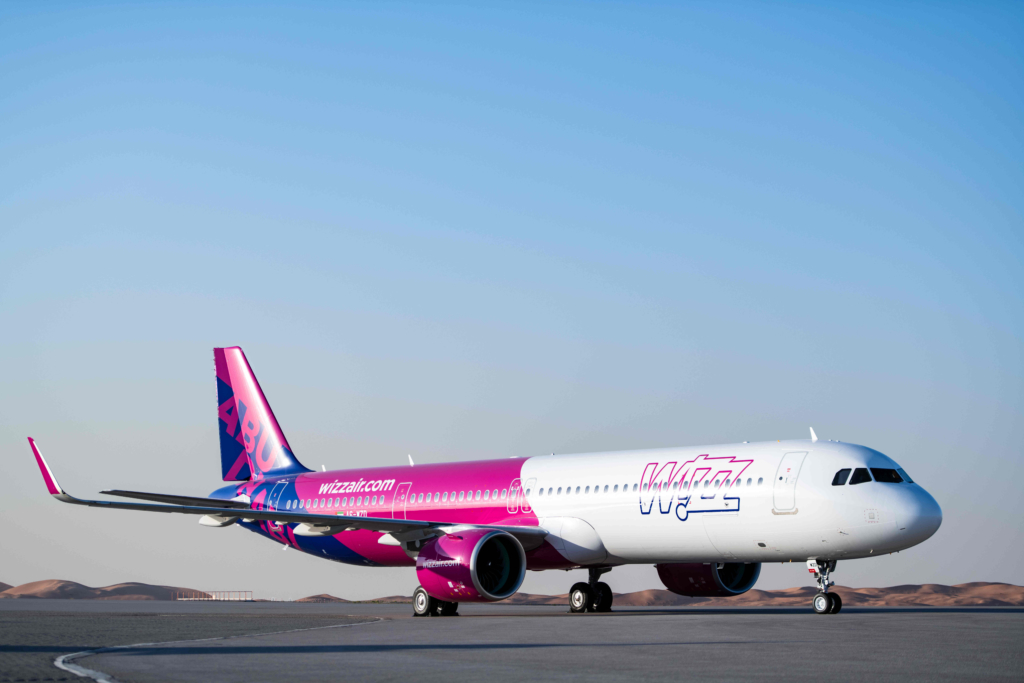
With around 250 aircraft within the Wizz Air group of airlines, the carrier has built up a fleet of modern and efficient aircraft. While older A320 and A321ceo aircraft still fly for the carrier, these are all due to have left the company by 2028, leaving the fleet dominated by the ultra-efficient sharklet-equipped Airbus A321neo, in which the airline believes it has found its ideal aircraft.
The average age of the current Wizz Air fleet is just 4.7 years, making it one of the youngest in Europe and “certainly one of the most efficient”, said Jones.

This figure is due to drop further over the next 12-24 months as even more new aircraft arrive to replace the older generation Airbus jets that remain within the carrier’s fleet, he added. By the end of the financial year 2025, the carrier’s fleet comprised of 72% of the updated neo technology aircraft.
Wizz Air is keen to promote the A321neos ‘green’ credentials. The type offers a nosier reduction of around 50% over its older counterparts – key when operating from airports close to residential areas as well as overflying built-up areas.
Additionally, the Airbus A321neo offers a 20% reduction in fuel consumption and a 50% reduction in nitrogen oxide emissions, all key factors when the company came to ordering new aircraft to replace its older fleet a few years ago.
In terms of emissions, Wizz Air says it wants to reduce emissions by 25% by 2030, a figure that it says should be achievable as more A321neos arrive. Wizz Air has one of the lowest carbon dioxide (CO2) emissions values of any airline in Europe, recording a figure of 52 grams per revenue passenger kilometre (g/RPK) in the fiscal year 2025.
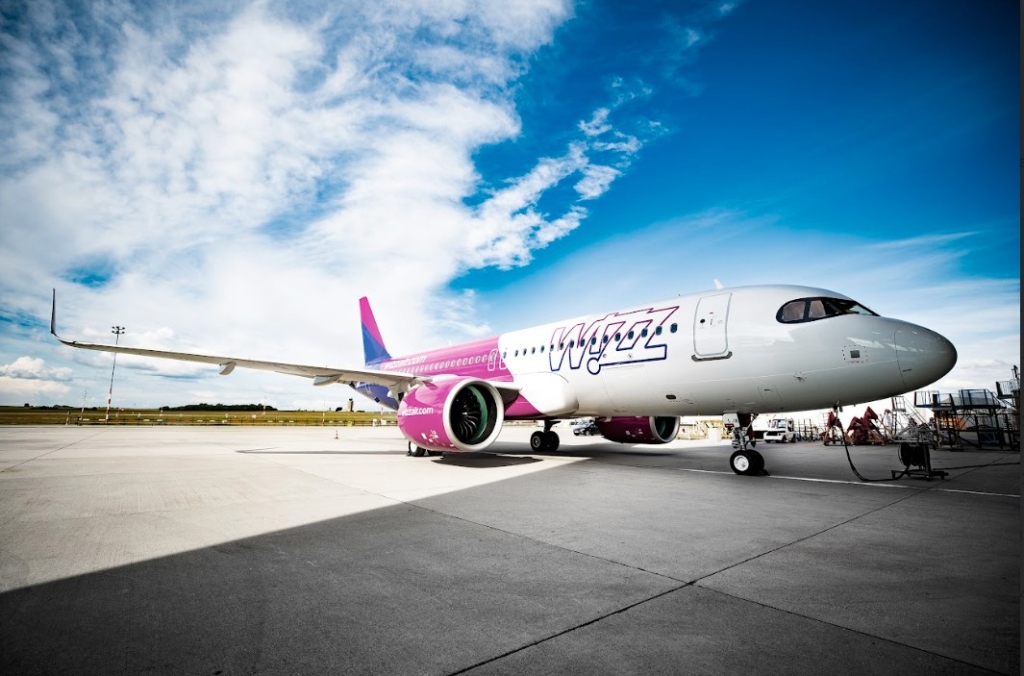
This figure was helped by the high-density seating layout of its A321neos (239 passengers in a single-class layout) while operating at higher-than-average load factors, meaning more flights depart with fewer empty seats. Wizz Air currently operates with a 94% load factor.
“Even empty seats have a cost in terms of environmental penalty,” explained Jones, as they still contribute to the overall weight of the aircraft. “Sharing the cost of the flight among more passengers brings that grams per PRK figure downwards,” he added.
Wizz Air adjusts operations to reduce carbon emissions
Working alongside Airbus, the airline is continuing to develop new ways to reduce its carbon footprint. In 2025, the carrier introduced new flight software that could create more direct routings for pilots.
This has resulted in shorter flying times, less holding and reduced fuel burn. With engines running for a shorter time on each flight, fewer emissions result and the airline’s carbon footprint is reduced.
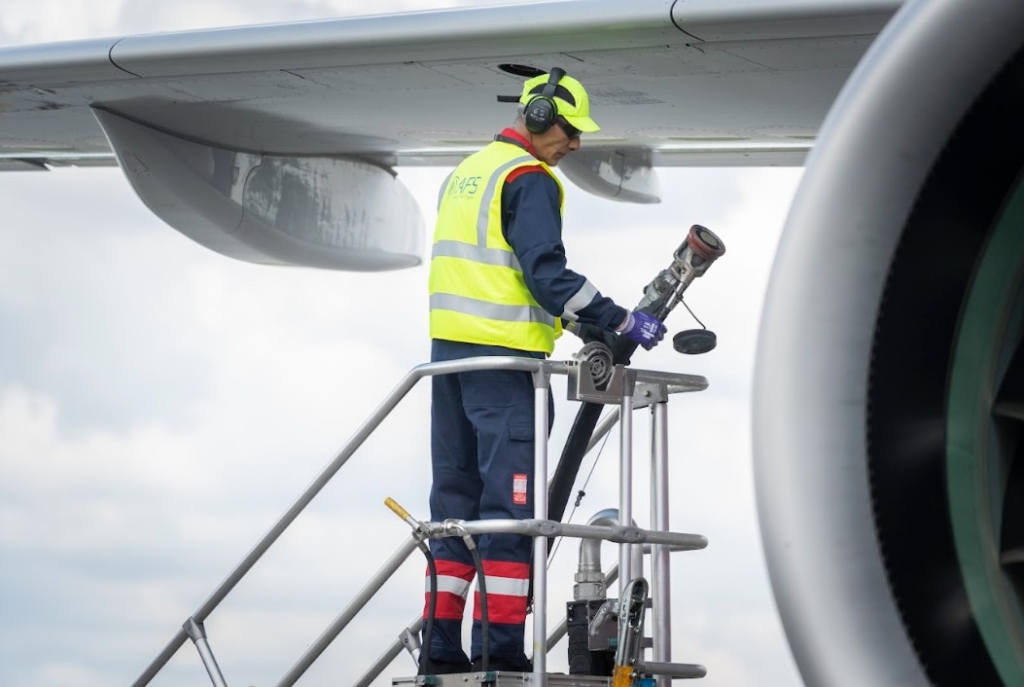
Similarly, the airline has been working hard on its flight planning function. While the carrier acknowledges that the take-off and landing phase of flight are the most inefficient in terms of fuel burn, Wizz Air said that it works to reduce the number of take-offs and landings aircraft perform each day.
Employing a point-to-point network policy rather than a hub-and-spoke model, which generally results in more cycles per aircraft, leading to increased emissions. With numerous airspace modernisation strategies proceeding around Europe, this will help airlines reduce time and the need for holding patterns at the busiest airports
It also employs a paperless cockpit policy, eradicating the need for heavy hard copy flight manuals and replacing them with tablet-based manuals for the flight crew. Not only does this cut down the weight of the aircraft, but it also reduces the amount of paper needed to be used to produce the manuals themselves.
Wizz Air is driving forward the use of Sustainable Aviation Fuel
While the widespread use of SAF has very much been stifled by a lack of supply in recent years, Wizz Air is working to change that. With its modern fleet already certified to operate using a 50% blend of SAF, the carrier is looking to the future when this number can be increased significantly, both through the easing of manufacturing and supply channels as well as through regulation. Wizz Air has set an aspirational target to power 10% of its flights with SAF by 2030.
“While the Pratt & Whitney engines on our A321neos are already capable of running perfectly safely on a 50% blend, we would like to use more”, explained Zsuzsanna Dimeny, Head of Sustainability at Wizz Air.
“We are adhering to the Refuel EU and UK SAF mandates; we are unable to commit beyond those presently due to the overriding cost and availability constraints,” she added.

That said, Wizz Air has started preparing for the upcoming EU mandates review by partnering with several SAF suppliers as well as making its first equity investments in SAF-related businesses.
Wizz Air has supported the UK-based biofuel company, Firefly, since 2023. The partnership allows the airline to supply up to 525,000 tonnes of SAF over a period of 15 years to Wizz Air’s UK operations from 2028.
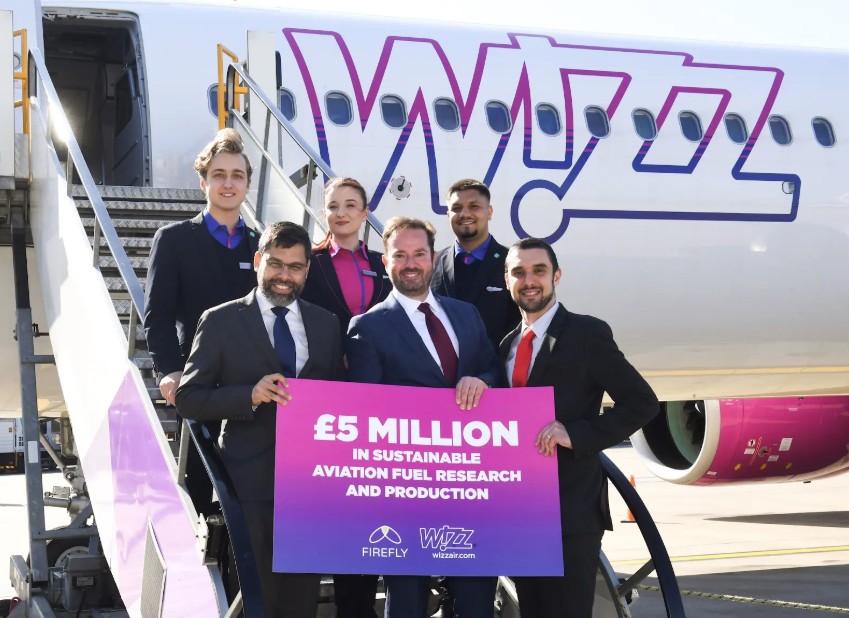
Similarly, in 2023, Wizz Air joined a $50 million investment round in CleanJoule, a US-based biofuel startup company aiming to significantly increase the amount of SAF currently being produced. However, as cited by Dimeny, the prohibitive factor to SAF usage is cost, with SAF currently equating to around four to five times the cost of normal kerosene jet fuel.
Unless this changes, she added, it is hard for low-cost carriers such as Wizz Air to swallow this cost, regardless of any good intentions that may exist.
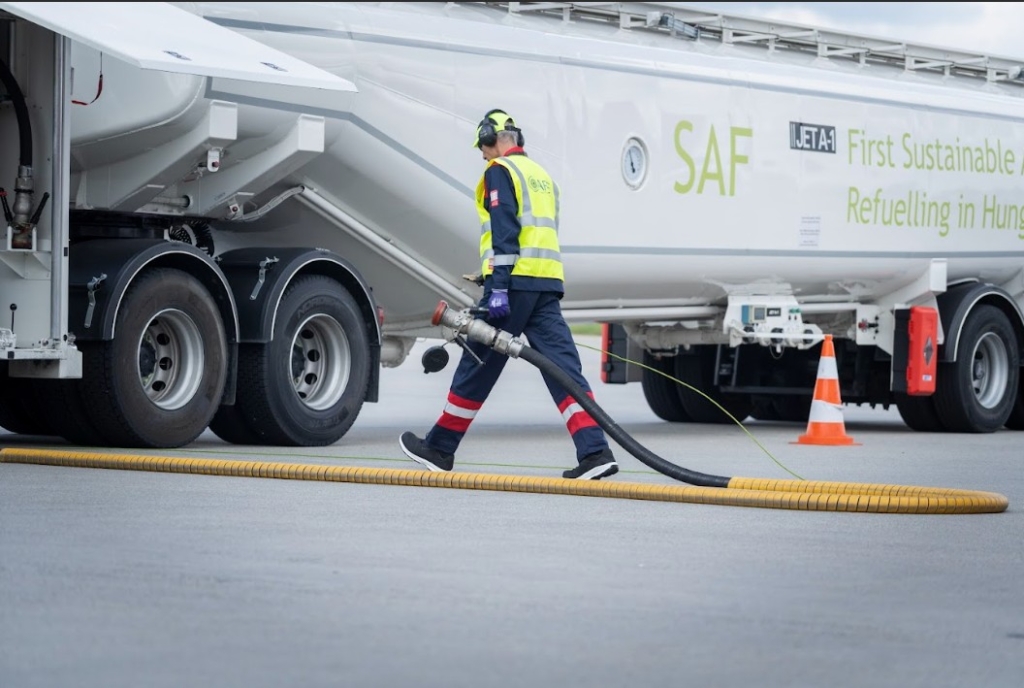
According to Naomi Henning, Chief Commercial Officer at Firefly, the key to unlocking the production of larger volumes of SAF is investment.
“It will take a large amount of investment from key stakeholders, including governments, to make this happen. But that is an investment that must be made if net-zero targets are to be achieved,” she added.
How using recycled leather for seat covers is reducing landfill
Even away from the activity of flying aircraft, Wizz Air has become something of a pioneer in terms of pursuing sustainable goals.
One such example of this is the company’s longstanding partnership with Gen Phoenix. This Peterborough-based firm utilises offcuts from the leather manufacturing industry and, rather than casting them to landfill, the company repurposes them for use as high-quality seat covers onboard Wizz Air planes.
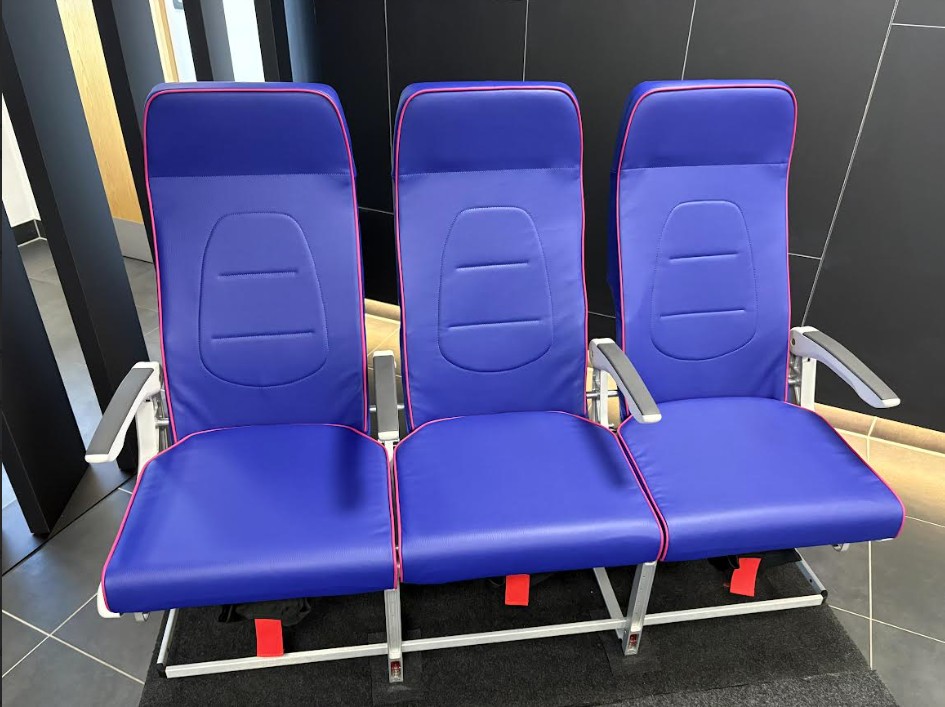
As explained by John Kennedy, the UK company’s CEO, “Gen Phoenix is delivering a new generation of materials for a new era of sustainability. Through our revolutionary circular process, we rescue leather offcuts destined for landfill and regenerate them into a premium alternative leather material coveted for its durability.”
Kennedy added that since the company’s founding in 2007, Gen Pheonix has diverted thousands of tons of material from landfill and has created thousands of new products, including aircraft and other transport seat covers, luggage items, and even covers for Amazon Kindle devices. In terms of manufacturing seat covers for Wizz Air, Gen Phoenix states :
- 78% less carbon emissions are produced if Wizz Air bought real leather seats
- Water consumption is a 87% reduction from traditional leather manufacruting with 95% being recycled water.
- Waste savings of 17 tonnes from the supplied quantity of 1,000,000 m2
- Carbon savings of 7,300 tonnes of carbon dioxide equivalent per year due to the weight reduction of the final product
- The entire Wizz fleet now uses Gen Phoenix seating materials
How the process works
The process to turn waste leather into a reusable leather product is multistage, but one that Wizz Air has supported since 2012. The end result sees Gen Pheonix produce the thick leather-like covers that are then dyed and used to cover the seats on all the carrier’s Airbus aircraft.

Initially, large bundles of leather waste are rescued from other leather goods manufacturers and is broken down by machines at Gen Phoenix into smaller flakes. These flakes (or ‘trimmings’) are then granulated into smaller pieces and milled into soft fibres. Heated and compressed, the lather is then rolled into sheets of uniform leather fibre web.
Once done, two layers of fibre web and textile core are woven together using highly pressurised water before being bathed in natural oils to replenish properties lost during the tanning process. Lastly, coatings are applied to the leather fibre based on the customers’ colour, feel and finish requirements.
Wizz Air is clearly proud of its association with Gen Pheonix, having relied on the company to produce the seat covers for all its A321neo aircraft. The seat covers are light, saving on aircraft weight, durable and can be easily cleaned rather than replaced – again, saving Wizz Air money in terms of cost and reducing waste into the environment.
Kennedy added that Gen Phoenix’s partnership with Wizz Air has been advantageous for the environment. “We have achieved economies of scale with Wizz Air, he said. “Sustainability ultimately relies on scale, and our customers all believe that they are doing the right thing for sustainability by using our product for their requirements, including Wizz Air.

Wizz Air partners with London Luton Airport to work towards sustainability goals
As Wizz Air’s largest UK base, as well as the home base for its UK-based airline Wizz Air UK, London Luton Airport (LTN) has played a massive role in the airline’s growth over the years. Indeed, its first flight departed from the airport in May 2004.
Not resting on its laurels, the airport is working hand-in-hand with its largest airline customer to ensure that together, the companies continue to work towards net-zero goals.
According to David Vazquez, the airport’s Head of Sustainability, the growth in sustainability at the airport relies on airlines such as Wizz Air continuing to use the airport’s facilities and bringing passengers through the airport’s terminals.
“We have employed various means by which Wizz Air has been able to benefit from pursuing sustainability goals and be ‘greener’. From converting five aircraft stands at the airport into electric-only stands and the increased use of electric vehicles, we are cutting down our carbon emissions on the airfield itself, which is good for the wider airport community in the Luton area.”
The electric stand conversion is currently in a trial period, with further rollout dependent on the outcomes.

Vazquez also explained that the airport is to complete a new solar farm on the south side of the airport by the end of 2026, which will provide around 50% of the energy required by the airport to serve its customers. He added that the facility seeks to be net zero by 2040, but can only do this with the support of its customer airlines.
Wizz Air – believing in sustainability for a better future
The airline has been investing heavily in sustainability initiatives in recent years, which it believes will serve its customers and the planet well in the coming decades.
While partnering with key stakeholders such as Gen Phoenix, London Luton Airport, Firefly and Airbus, the airline believes that it can meet its sustainability goals in the long term as long as it stays focused.
“Sustainability is not an issue that is going away, and there is a large amount of self-help that companies such as Wizz Air need to employ to meet their goals in this regard,” said Owain Jones. “The period of ‘play and-pay’ is long gone. Airlines such as Wizz Air need to tackle the problems at the source rather than reacting to them.”
“Throughout its existence, Wizz Air has always been supportive of sustainability issues, and we are actively doing something about them through these various initiatives, Jones added. “At the end of the day, it is all about earning the customer’s trust. We realise that passengers have a choice and believe that increasingly they will choose an airline that they know is being responsible in terms of sustainability issues.
Featured image: Wizz Air