US Navy spotted flying Air Force F-35A fighter jet in test role

January 29, 2026
In a surprise development, an ostensibly Air Force F-35A, the conventional take-off and landing variant of the F-35, has been spotted flying for the US Navy. It is likely the aircraft has been loaned to the Navy for testing.
US Navy F-35A model spotted
Aviation photographer @Task_Force23 has captured an image of a US Navy F-35A. He posted an image of the F-35A with US Navy markings with the statement, “First VX-9 marked A model I’ve seen.”
First VX-9 marked A model I've seen pic.twitter.com/d3dMTSpsRP
— TaskForce23 (@Task_Force23) January 23, 2026
The VX-9 “Vampires” are an elite US Navy test and evaluation squadron based at Naval Air Weapons Station China Lake in California.
The aircraft was spotted as it conducted a low approach at Mojave Air and Space Port on the 23rd of January.
That particular aircraft spotted is registered 17-5240. That aircraft has previously served as a test aircraft for the US Air Force’s 422nd Test and Evaluation Squadron at Nellis AFB.
In a previous life https://t.co/1sh6248cIO pic.twitter.com/NvNSFY2DWA
— TaskForce23 (@Task_Force23) January 24, 2026
It would appear the aircraft is around seven years old, as there is a photo of it on FlightAware that was uploaded seven years ago. The post reads, “A brand new US Air Force F-35A departing NAS JRB Fort Worth, formally Carswell Air Force Base, on its maiden test flight.”
Taking advantage of higher F-35A production numbers
It appears that the F-35A is just being used for test and evaluation duties and does not reflect any move for the Navy to actually acquire the variant for its carriers.
https://t.co/1sh6248cIO pic.twitter.com/E1FTckVp57
— TaskForce23 (@Task_Force23) January 24, 2026
The F-35 Joint Program Office (JPO) told The War Zone, “We have a service agreement whereby the Air Force can loan the Navy an aircraft, and they have done that before.”
The War Zone noted that it makes sense that the Navy can pull from the Air Force’s much larger “F-35A fleet for test and evaluation duties, the activities of which often benefit both services due to the joint nature of the F-35 program.”
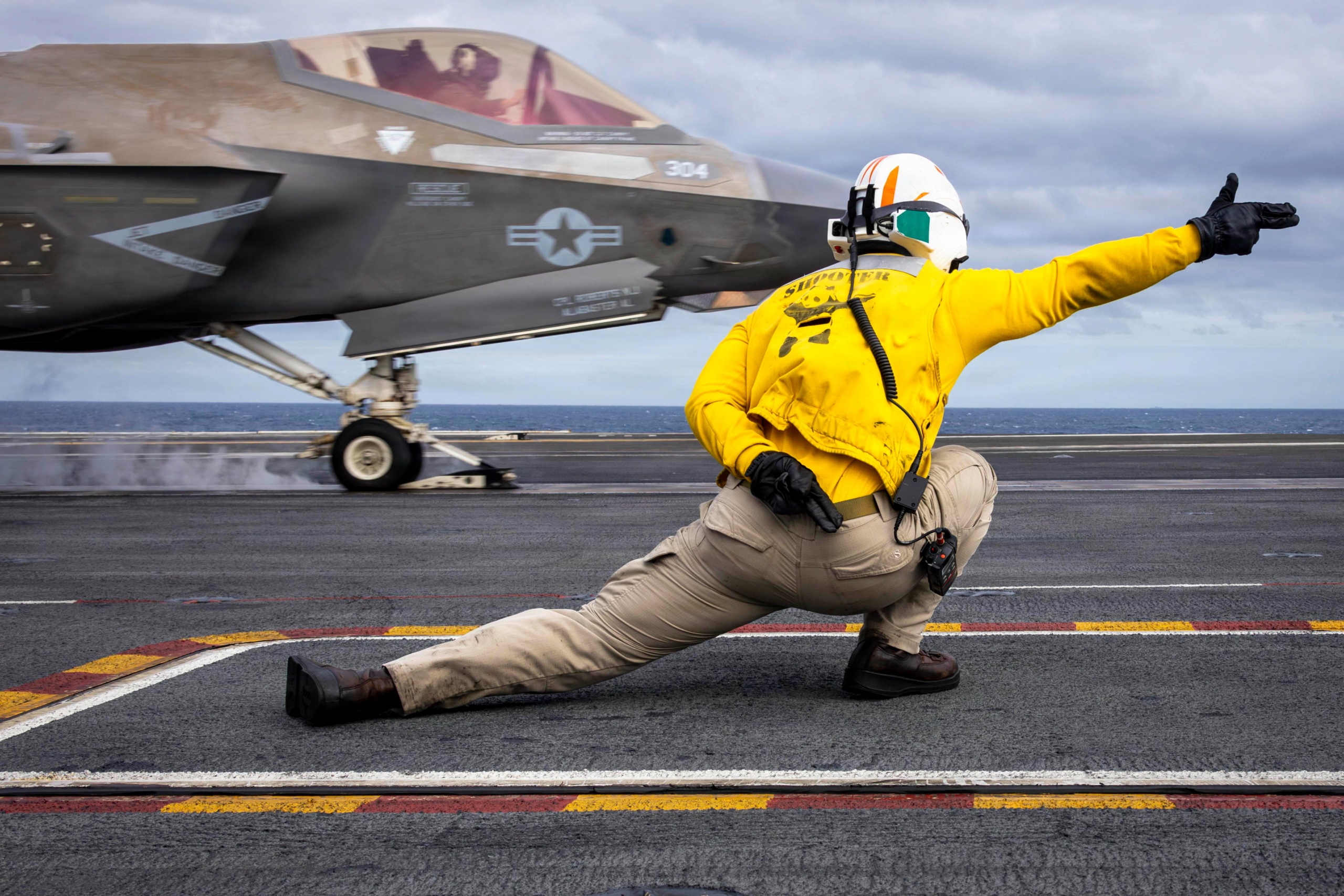
The F-35C is built for carrier operations and so has a more robust landing gear, a larger wing, a tailhook, and other structural adaptations for the rigours of carrier life.
Transitioning between the two variants is likely fairly seamless. The F-35A benefits from higher production numbers and a higher G rating.
Get the latest aerospace defence news here on AGN.
The three F-35 Lightning II variants
Lockheed Martin developed three variants of the F-35. The F-35A is intended for conventional takeoffs and landings and is the variant of choice by the US Air Force and export air forces around the world.

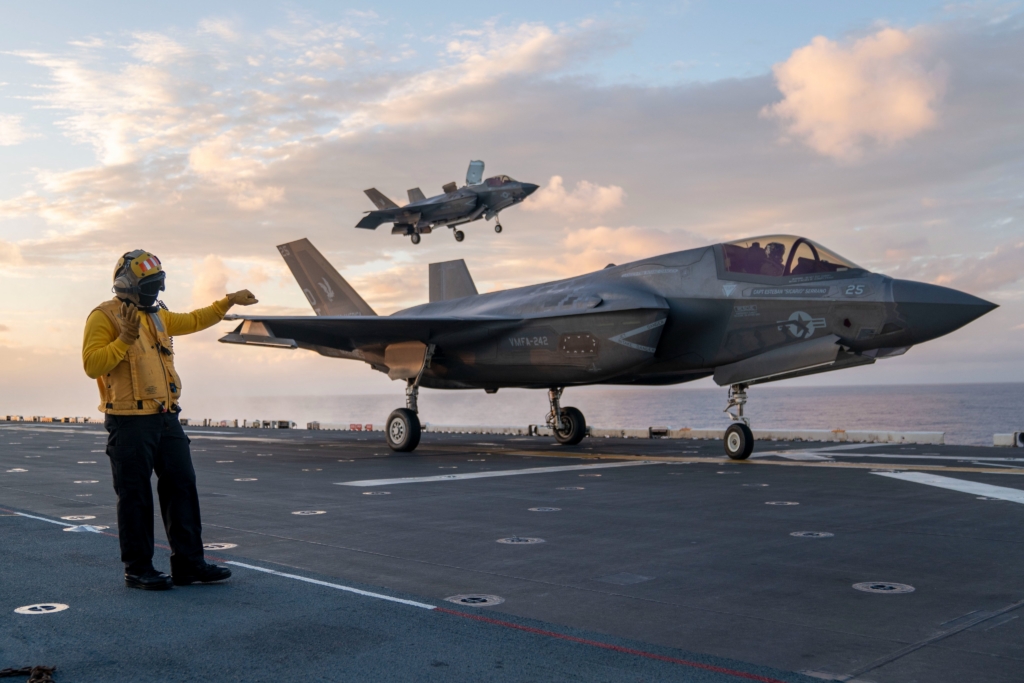
The two naval variants are the F-35B and F-35C. The F-35B is the STOVL (short-takeoff and vertical-landing) variant. It was designed for the US Marines and their amphibious assault ships, as well as export navies operating smaller aircraft carriers.
The F-35C was meant to be the only variant for the US Navy and is optimised for larger aircraft carriers. The Royal Navy considered purchasing the F-35C for its large Queen Elizabeth class carriers, but eventually opted for the F-35B as a cost-saving measure.
The only customers of the F-35C are the US Navy and US Marines; the Marines operate both the B and C.
Today, our nation’s newest aircraft carrier, John F. Kennedy (#CVN79), departed our #NewportNewsShipbuilding division to begin builder’s sea trials. These trials will test important ship systems and components at sea for the first time. @USNavy @COMNAV_AIRLANT @USNavyNNPP (1/2) pic.twitter.com/7ECK3YhPfw
— HII (@WeAreHII) January 28, 2026
It seems that there are exceptions to every rule. After all, the Royal Navy shares its naval F-35Bs with the Royal Air Force, meaning the RAF is the only air force operating the F-35B.
In other news, the newest carrier, the USS John F. Kennedy, just started its sea trials. This is the first US carrier to be built from the ground up to operate the F-35C. Other carriers need to be modified during their mid-life refits.
Featured Image: US Navy