US Navy seeks new anti-radiation missile to target enemy radar aircraft

February 20, 2026

The US Navy has issued a new requirement for an advanced anti-radiation missile, which it is calling the Advanced Emission Suppression Missile (AESM). Perhaps the most notable requirement of the new missile over existing programmes is an emphasis on targeting enemy radar aircraft.
US Navy issues request for new anti-radar missile
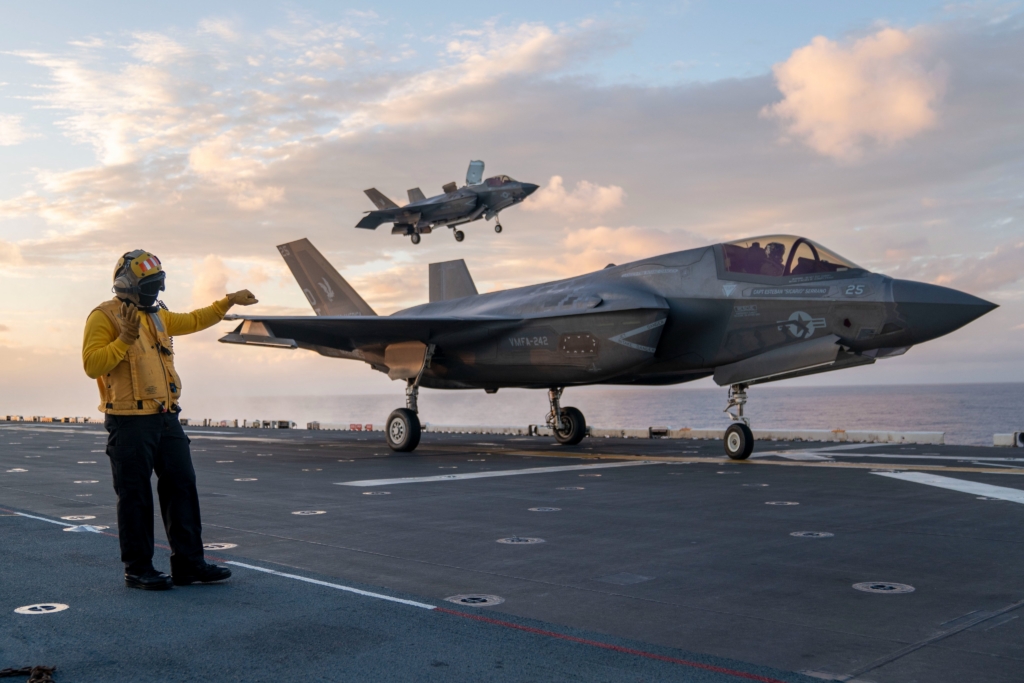
The US Navy has issued a new anti-radiation missile, called AESM, for its existing fighter jets, such as the F/A-18, EA-18G, and F-35. It is to “suppress and neutralize enemy air defenses in contested environments,” and needs to be ready within a two-year time frame.

The Naval Air Systems Command (NAVAIR) stated that it must be an “advanced, anti-radiation guided missile weapon system, or key subsystems thereof, with a longer range than existing in the Navy’s current inventory.”
It said the demand for the missile is expected to be on the order of up to 300 units annually.
The Navy didn’t name the McDonnell Douglas AV-8B Harrier II operated by the Marines; these jets are expected to retire in the coming months.
Get the latest aerospace defence news here on AGN.
Requirements for the new anti-radar missile
The new missile is to provide the Navy with increased capabilities to suppress and neutralize enemy air defences in contested environments.

In particular, the Navy wants AESM to have a longer range, more advanced targeting, better integration, and improved counter-countermeasures compared with its existing and future systems.
Requirements include “Robust ECCM capabilities to defeat enemy countermeasures, including chaff, flares, jamming, and anti-ARM techniques.”
The system should have an open system architecture, a high probability of kill against a wide range of targets, the ability to target modern and advanced radars, a significant standoff range, advanced anti-radiation seekers with a broad frequency coverage, and more.
Shooting down enemy AWACS aircraft
These requirements appear similar to the AGM-88G Advanced Anti-Radiation Guided Missile-Extended Range (AARGM-ER), which the Navy is already acquiring.

Perhaps the most significant new capability the AESM missile is to have is the “ability to engage air-to-air and air-to-ground targets.” Current missiles are optimized for ground-based radars.
The missile appears to be particularly relevant to a potential high-end fight with China, which is also working to develop its own long-range anti-radar missiles while also investing heavily in its fleet of AWACS aircraft.
According to reporting by The War Zone, this will allow the Navy to have a single missile able to attack “critical airborne early warning and control planes, as well as potentially other aerial targets,” in addition to ground targets.

The requirement comes after Ukraine has shotdown two rare and high-value Russian A-50U Mainstay AWACS aircraft during the Ukraine war with total loss of trained personnel, leaving a gaping hole in Russia’s capabilities.
It also comes after the Air Force decided to scrap replacing its E-3 Sentry AWACS aircraft with the next-generation E-7 Wedgetails, saying they are too vulnerable and expensive.
The Air Force now wants to acquire less-capable naval E-2D Hawkeyes as a stopgap as it works to move its capabilities into space. NATO has followed and canceled the planned purchase of Wedgetails.
This is not the first time the Navy has attempted to acquire advanced anti-radiation missiles able to target air and ground targets, with past examples including the Next Generation Missile canceled in 2013.
Going back further, one of the original roles envisioned for the F-117 Nighthawk was to hunt down Soviet A-50 AWACS aircraft.
Featured Image: US Navy