


US deploys F-22 Raptors to Japan as Pentagon expands Indo-Pacific airpower

4 min read
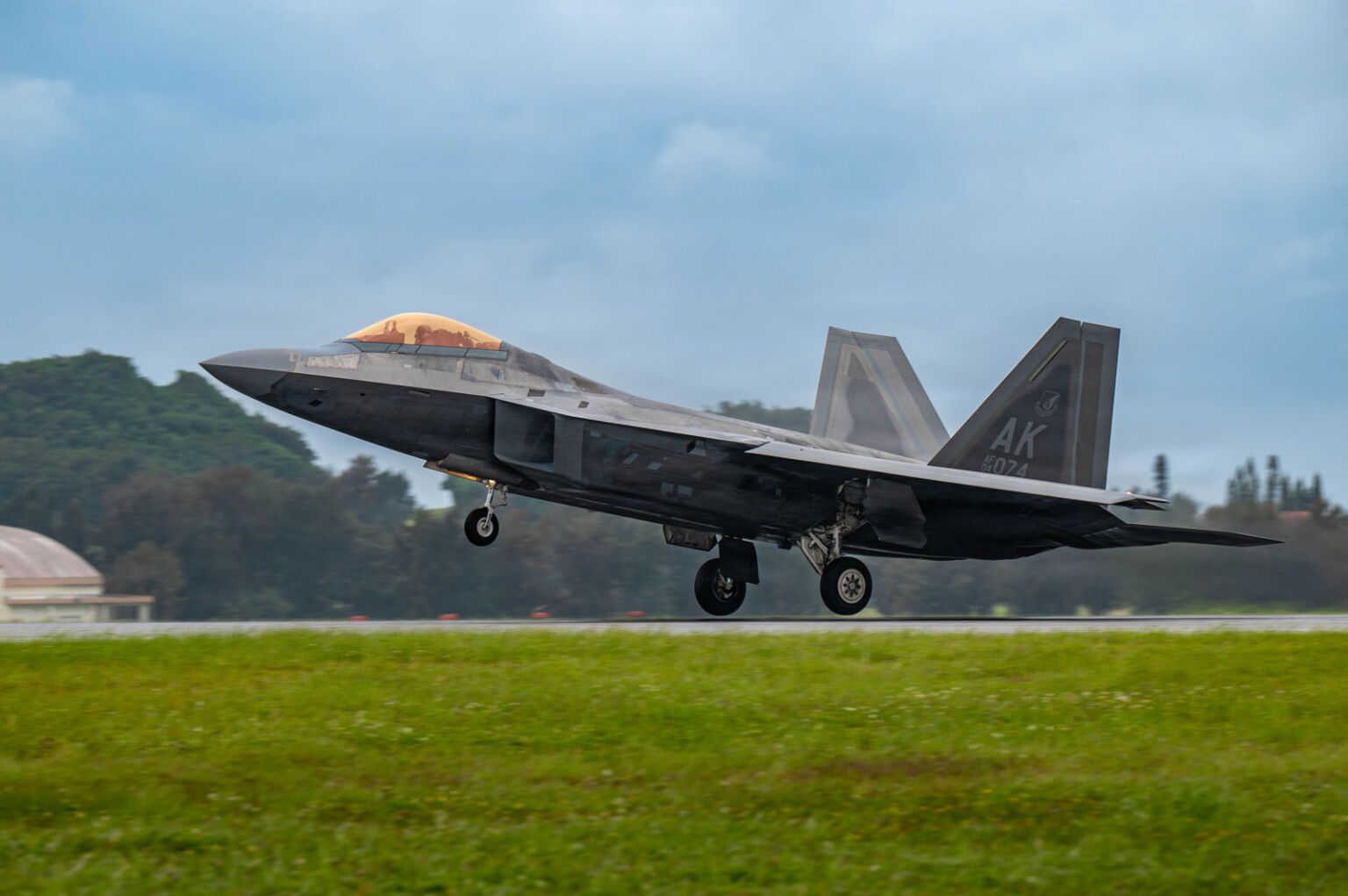
The US Air Force has deployed F-22 Raptor stealth fighters to Kadena Air Base in Japan, marking the latest phase of the Pentagon’s effort to modernise combat airpower across the Indo-Pacific while maintaining a continuous fighter presence in the region.
The aircraft are assigned to the 90th Fighter Squadron from Joint Base Elmendorf-Richardson in Alaska and the 27th Fighter Squadron from Joint Base Langley-Eustis in Virginia.
Their arrival at Kadena forms part of the Air Force’s rotational deployment model, now increasingly used across the Pacific theatre.
US officials said the deployment is intended to sustain operational readiness and reinforce the US-Japan security alliance at a time when the Indo-Pacific remains central to American defence planning.
The Pentagon described Kadena’s fighter rotations as essential to ensuring a “continuous, credible presence” in the region while preparing for the future arrival of the F-15EX Eagle II.
F-22 deployment keeps fifth-generation combat capability at Kadena Air Base
The F-22 remains the US Air Force’s primary air superiority fighter and continues to play a central role in forward deployments across the Pacific.
According to the Pentagon, the aircraft combines stealth, advanced sensors and high manoeuvrability to operate in heavily contested environments.
Its ability to detect, track and engage targets at extended ranges while remaining difficult to detect is regarded as a key advantage in maintaining air dominance.
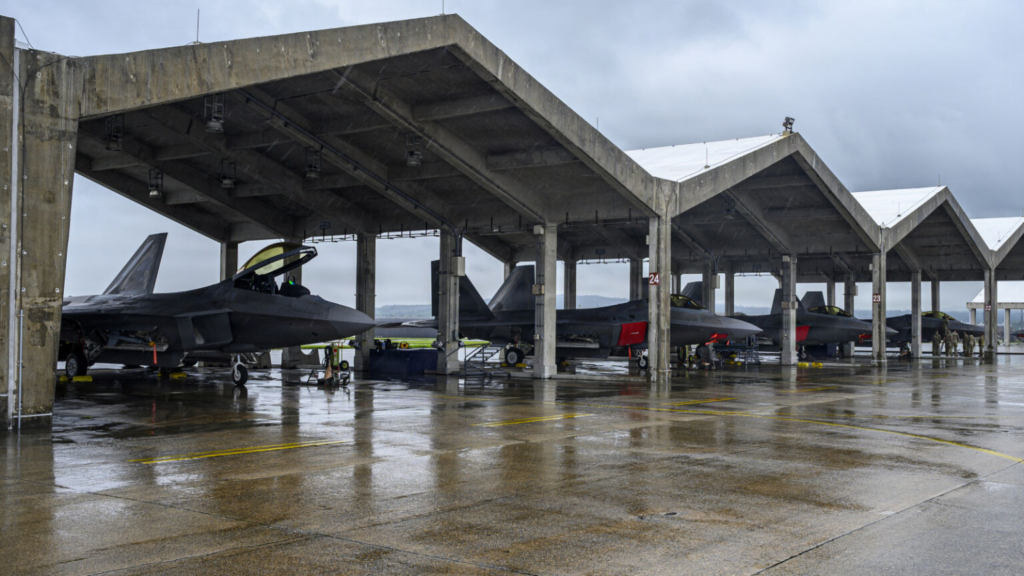
During the deployment, the F-22s will operate alongside reconnaissance aircraft, heavy assets and fourth- and fifth-generation fighters assigned to Kadena’s 18th Wing.
The Air Force said pilots and maintainers from the deployed squadrons will integrate with Kadena’s operations and maintenance groups, as well as joint and allied forces in the region.
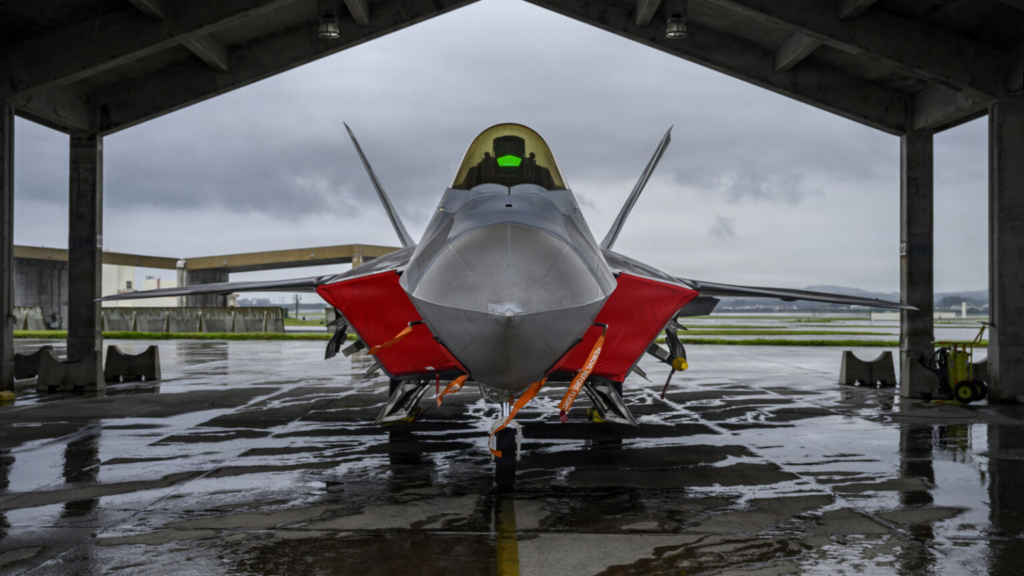
The deployment is also intended to refine tactics and strengthen interoperability with partner air forces.
Kadena has increasingly become a hub for rotational deployments involving advanced US combat aircraft. The base remains strategically positioned for rapid operations across the East China Sea, Korean Peninsula and wider Western Pacific.
The Pentagon has relied more heavily on rotational fighter deployments since the retirement of the permanent F-15C/D presence at Kadena began.
Rather than leaving capability gaps during the transition period, the Air Force has cycled advanced aircraft through Okinawa to sustain operational coverage.
F-35A deployment to Misawa signals wider US airpower shift in Japan
The F-22 deployment follows another major fighter movement into Japan earlier this year involving the F-35A Lightning II.
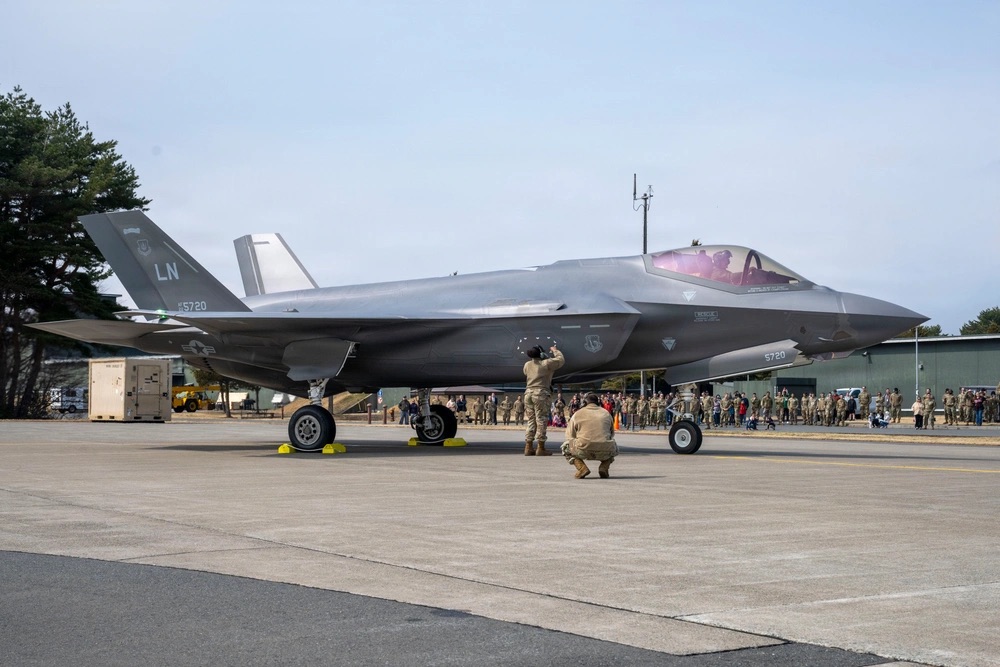
In March, aircraft assigned to the 13th Fighter Squadron arrived at Misawa Air Base in northern Japan, beginning the replacement of legacy F-16 fighters with fifth-generation aircraft.
The deployment forms part of a wider US-Japan force realignment under which 48 F-35As are expected to replace the ageing F-16 fleet at Misawa.
US officials described the transition as a major shift in how airpower will be projected and integrated across the Indo-Pacific.
Misawa already hosts Japan Air Self-Defense Force F-35A aircraft, which have operated from the base since 2018.
The co-location of US and Japanese F-35 fleets is expected to deepen operational integration between the two air forces at both tactical and operational levels.
Colonel Paul Davidson, commander of the 35th Fighter Wing, said the deployment underscored Washington’s long-term commitment to Japan and the wider region.
US officials have also highlighted the aircraft’s role in the suppression of enemy air defence missions.
Lieutenant Colonel John Widmer, commander of the 13th Fighter Squadron, described the F-35 as a platform designed from the outset around sensor fusion and battlespace management rather than relying on externally added systems.
The aircraft is designed to gather, process and distribute information across a networked battlespace linking air, land and maritime forces.
US planners increasingly view these capabilities as central to future Indo-Pacific operations involving allied forces.
Pentagon shifts Indo-Pacific strategy towards distributed air operations
The deployments to Kadena and Misawa reflect a broader shift in US airpower strategy across the Indo-Pacific.
Rather than concentrating combat aircraft at a limited number of permanent bases, the Pentagon has increasingly focused on distributed operations, rotational deployments and allied integration.
Exercises involving US, Japanese and Australian aircraft have expanded in recent years, particularly those centred on fifth-generation operations, data-sharing and combined command-and-control activities.

Many of these exercises are conducted over the East China Sea and the surrounding airspace. Their focus has increasingly moved towards interoperability between allied aircraft and networked operations across multiple domains.
Lockheed Martin has projected that more than 300 F-35 aircraft from the United States and allied nations could eventually operate across the Indo-Pacific by 2035.
The figure reflects a broader effort to build a distributed but interconnected force posture throughout the region.
US officials have repeatedly identified the Indo-Pacific as the central theatre for long-term American defence planning, shaped by regional military modernisation, tensions around Taiwan and continuing security concerns on the Korean Peninsula.
Japan remains central to US Indo-Pacific airpower strategy
Bases such as Kadena and Misawa allow rapid response capability while also strengthening operational coordination with Japanese forces.
The latest F-22 rotation represents more than a routine deployment.
It reflects the Pentagon’s wider transition towards a force structure built around advanced fighters, distributed operations and closer integration with allied militaries across the Pacific.
Featured image: USAF


