UPS retires MD-11 fleet after deadly Kentucky crash that killed 14

January 28, 2026
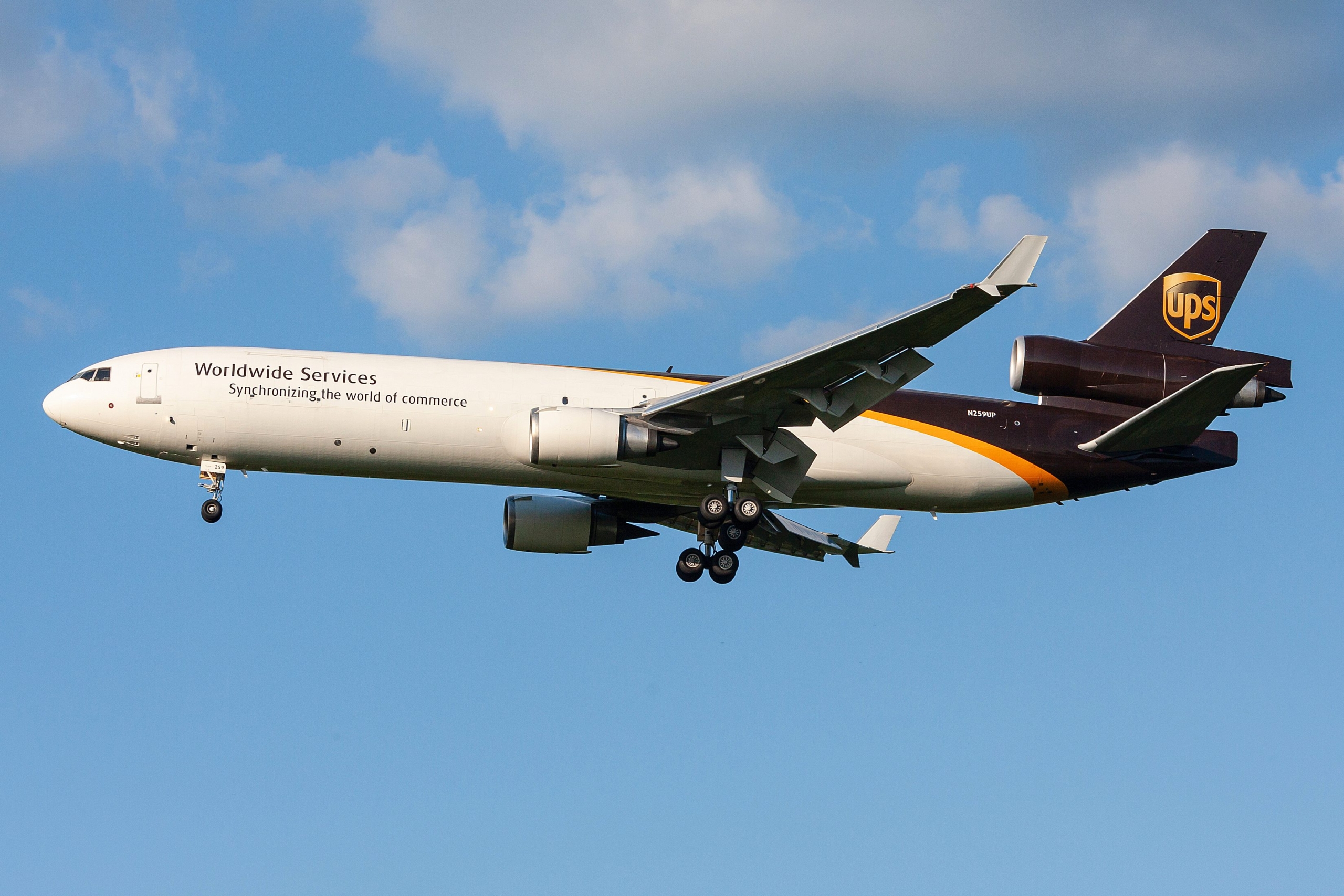
UPS has confirmed it has retired its entire fleet of McDonnell Douglas MD-11 cargo aircraft, closing the chapter on one of the most recognisable tri-jets in commercial freight aviation. The decision to retire the aircraft follows a fatal crash in Louisville, Kentucky, that triggered a major safety investigation and a temporary regulatory grounding.
During its Q4 Earnings update, the airline said it completed the MD-11 phaseout during the fourth quarter of 2025, accelerating modernisation plans, and took a $137 million after-tax non-cash write-off tied to the decision. UPS previously operated a fleet of 43 MD-11s.
UPS MD-11 crash in Louisville
The crash occurred in Louisville in November 2025, shortly after the aircraft registered as N259UP, operating domestic cargo Flight 2976 departed Louisville Muhammad Ali International Airport (SDF) destined for Daniel K. Inouye International Airport (HNL), Honolulu, Hawaii.
The MD-11’s left engine detached from the wing shortly after takeoff, and the jet came down near the airport in an area with industrial facilities. The accident killed 14 people — the aircraft’s three crew members plus 11 people on the ground. An additional 23 people on the ground were injured as a result of the crash.
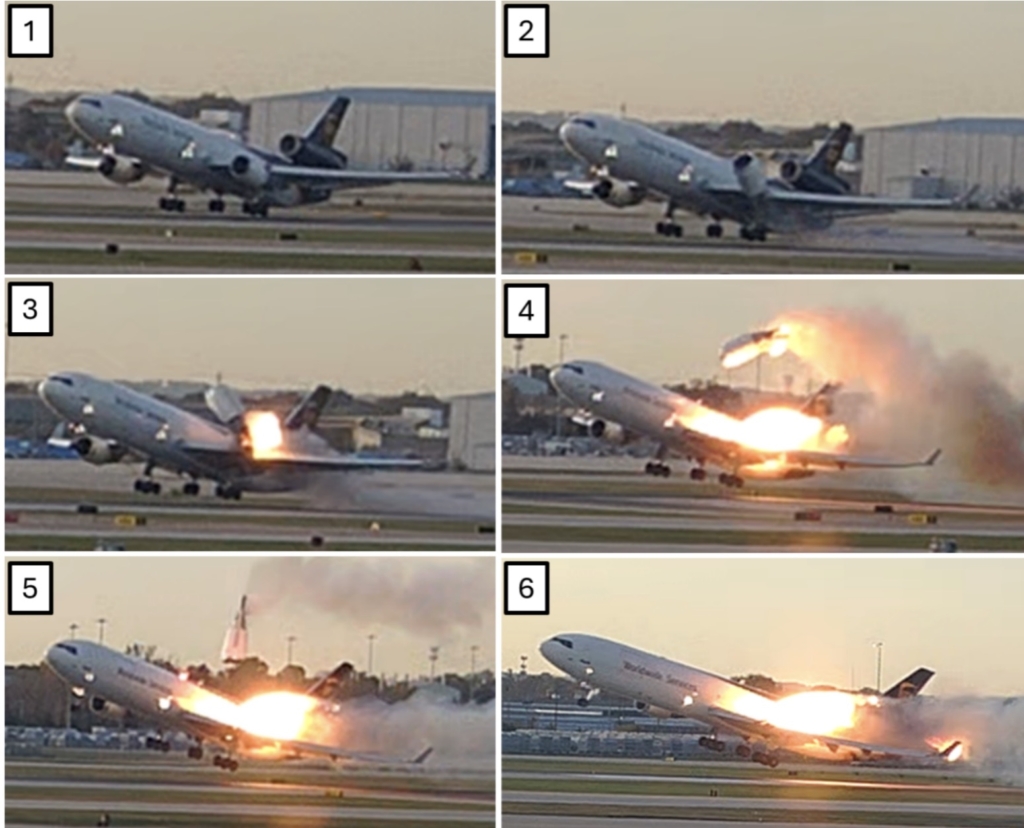
“The taxi and takeoff roll were uneventful until the aeroplane rotated for takeoff,” the NTSB stated in its preliminary report on the incident.
“Airport surveillance video of the aeroplane showed the left (No. 1) engine and pylon separating from the wing shortly after aeroplane rotation, with a fire igniting on the left engine while it traversed above the fuselage and subsequently impacted the ground. A fire ignited near the area of the left pylon attachment to the wing, which continued until ground impact.”
The aircraft only got 30 ft above ground level during its climb. It cleared the blast fence beyond the end of the runway, but the left main landing gear hit the roof of a UPS Supply Chain Solutions warehouse, a storage yard and two additional buildings, including a petroleum recycling facility. The aircraft was consumed by fire.
Following the accident, UPS CEO Carol Tomé sent a message to UPS employees honouring all those affected by the Flight 2976 tragedy and confirmed that the company would support the NTSB and local authorities’ investigations.
FAA response: MD-11s temporarily grounded
As a result of the crash, the Federal Aviation Administration (FAA) issued an Emergency Airworthiness Directive on November 14, grounding MD-11 operations while inspections and the NTSB investigation proceeded.
The grounding affected other cargo operators flying the type: FedEx, which operates a fleet of 29 MD-11s, and Western Global Airlines, with a fleet of 15 MD-11s.
UPS stated it had already grounded its MD-11s, which represented 9% of the carrier’s fleet, before the FAA issued its Emergency Airworthiness Directive “out of an abundance of caution.”
NTSB investigation finds cracks and engine-mount concerns
The NTSB deployed investigators to Louisville to document the site and gather data soon after the accident. The crash quickly raised questions about structural integrity around the engine pylon/mount area on the MD-11.
NTSB laboratories found cracks in engine mounts that had not been detected in the aircraft’s last inspection in 2021.
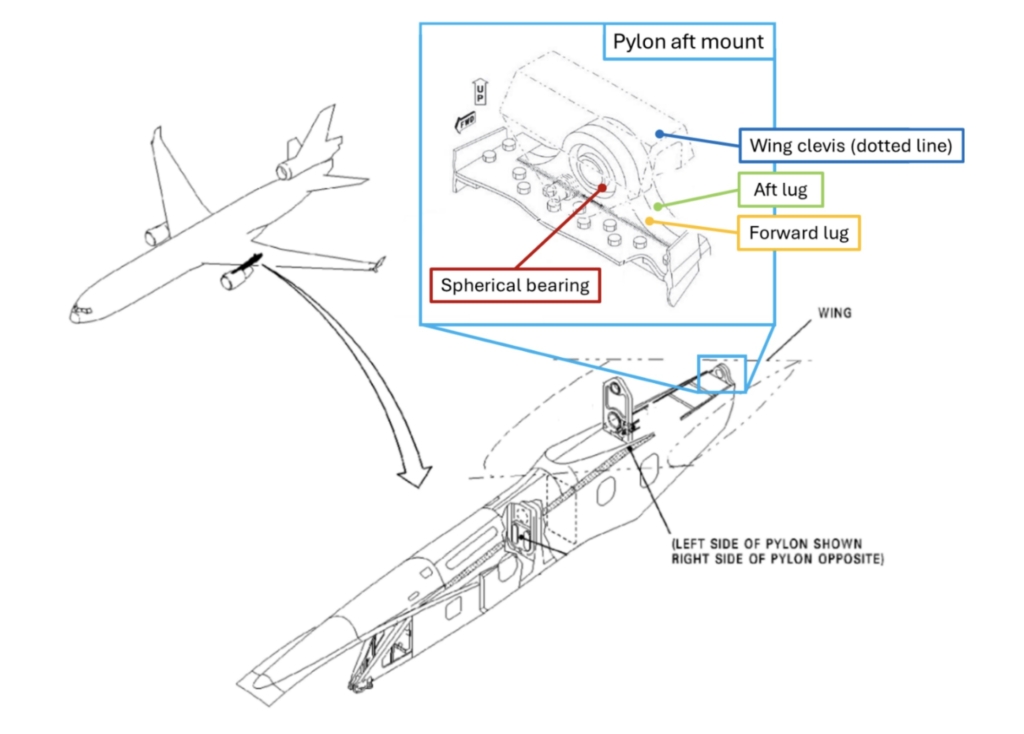
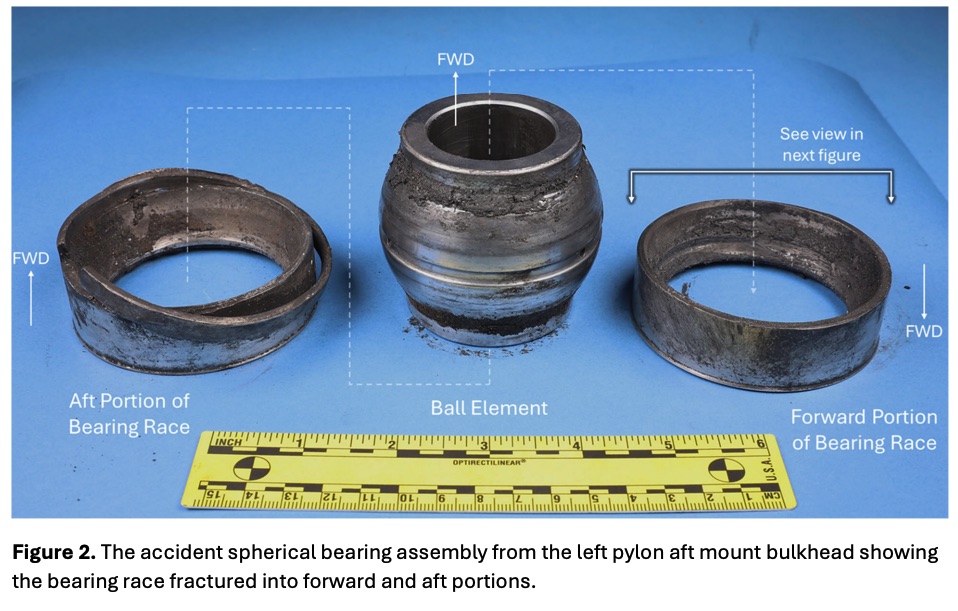
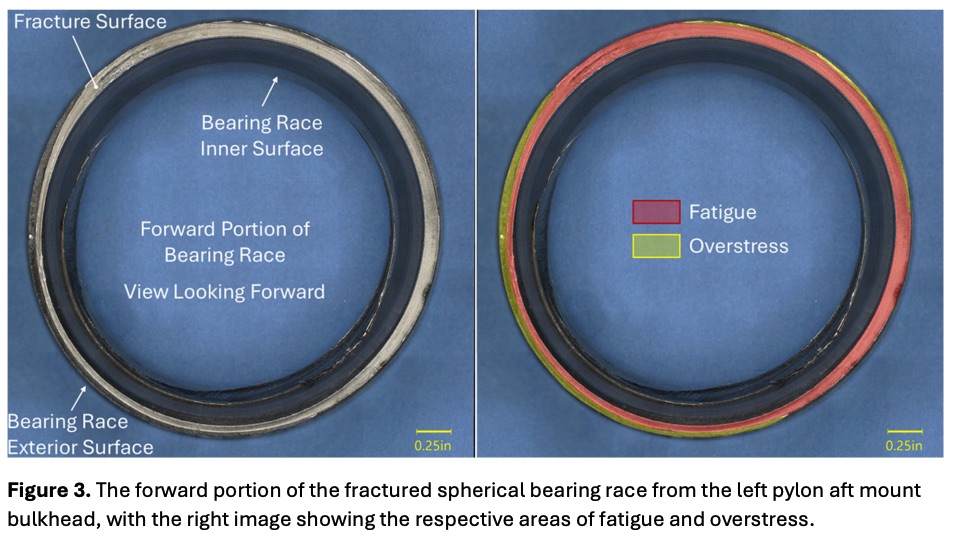
After investigators cleaned and examined the fractured components, the NTSB determined that both fatigue cracking and overload played a role in the failure of the left pylon’s aft mount lugs. On the aft lug, fatigue cracks were identified on both the inboard and outboard fracture surfaces, originating at the point where the lug bore meets the forward face of the lug.
The forward lug showed a more mixed picture, with fatigue cracking present along the bore on the inboard side, while the outboard fracture surface displayed signs of sudden overstress only, with no evidence of fatigue.
At the time of the accident, the aircraft had flown a total of 92,992 hours and 21,043 cycles. In keeping with UPS’s maintenance program, it had undergone a 72-month inspection on October 28, 2021. The aircraft also underwent a 24-month/4,800-hour lubrication task for the pylon thrust links and spherical bearings on October 18, 2025.
A special detailed inspection (SDI) of the left pylon aft mount lugs was due at 29,200 cycles, and of the left wing clevis support at 28,000 cycles, but the accident occurred before these inspections could be conducted.
What will replace the MD-11? UPS turns to Boeing 767 freighters
In its Q4 2025 earnings release and 2026 guidance, UPS confirmed it completed the retirement of its MD-11 fleet during Q4 2025 as it “accelerated its fleet modernisation plans.”
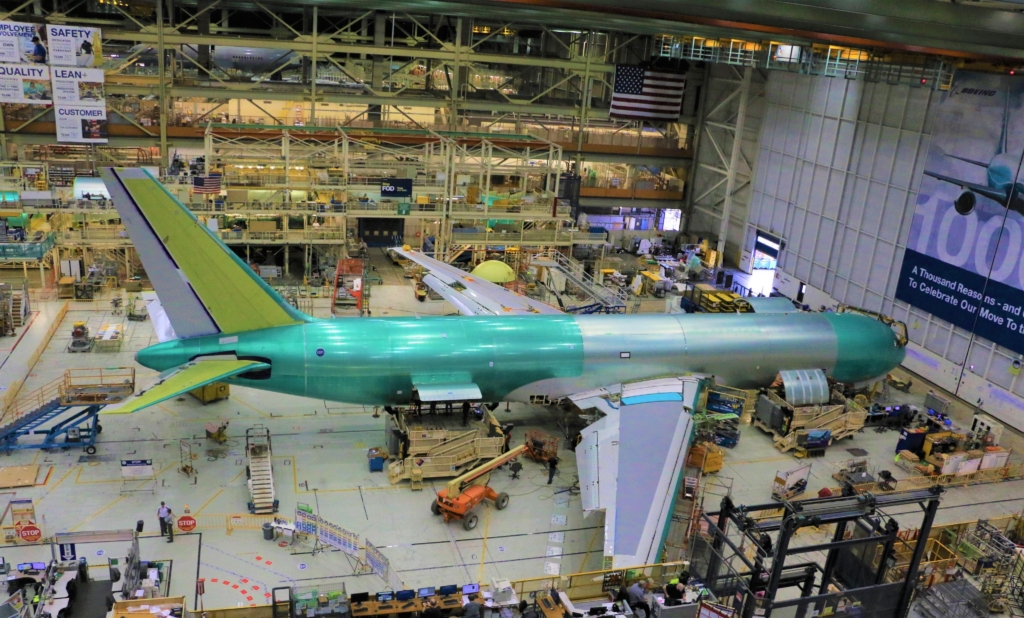
The MD-11 has been a high-capacity workhorse for the carrier, but UPS had previously placed an order for an additional 19 Boeing 767 freighters, which it expects to begin taking delivery of this year.
During the earnings call, Tome said, “Over the next year or so, we will replace much of that [MD-11] capacity with new, more efficient, Boeing 767 aircraft.”
The crash that could bring the MD-11 era to an end
The NTSB investigation is still ongoing, and key technical questions remain — particularly around the engine pylon-to-wing attachment structure.
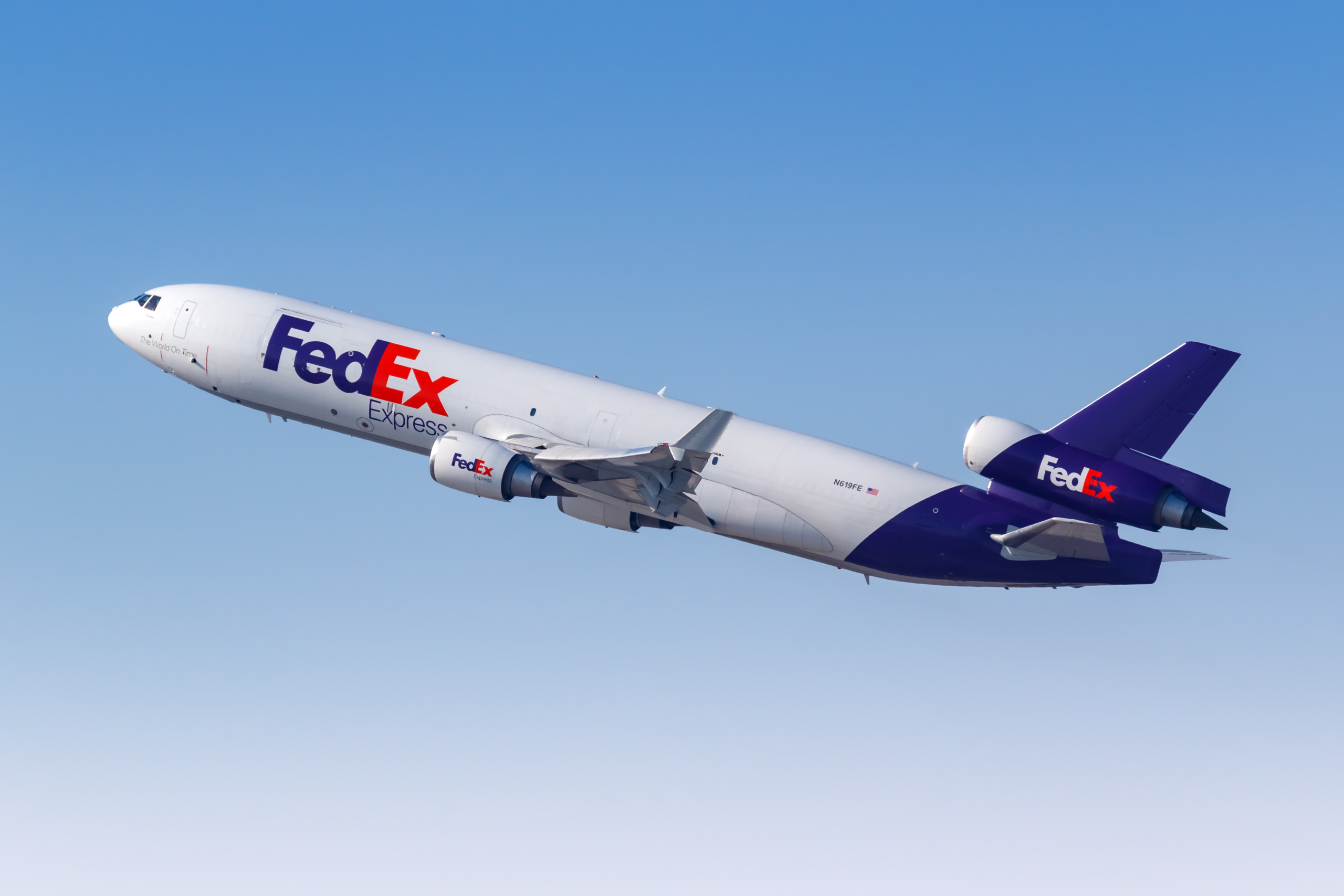
UPS and FedEx were the world’s largest remaining MD-11 operators. The crash pushed UPS to accelerate its fleet transition, and whether FedEx will follow suit remains to be seen. The tragic Louisville crash could bring about the end of an era for the iconic trijet.
Featured Image: Björn Wylezich / stock.adobe.com