Ukraine’s FP-1 drone leads deep strikes on Russia as media focuses on Tomahawks and Flamingos

4 min read
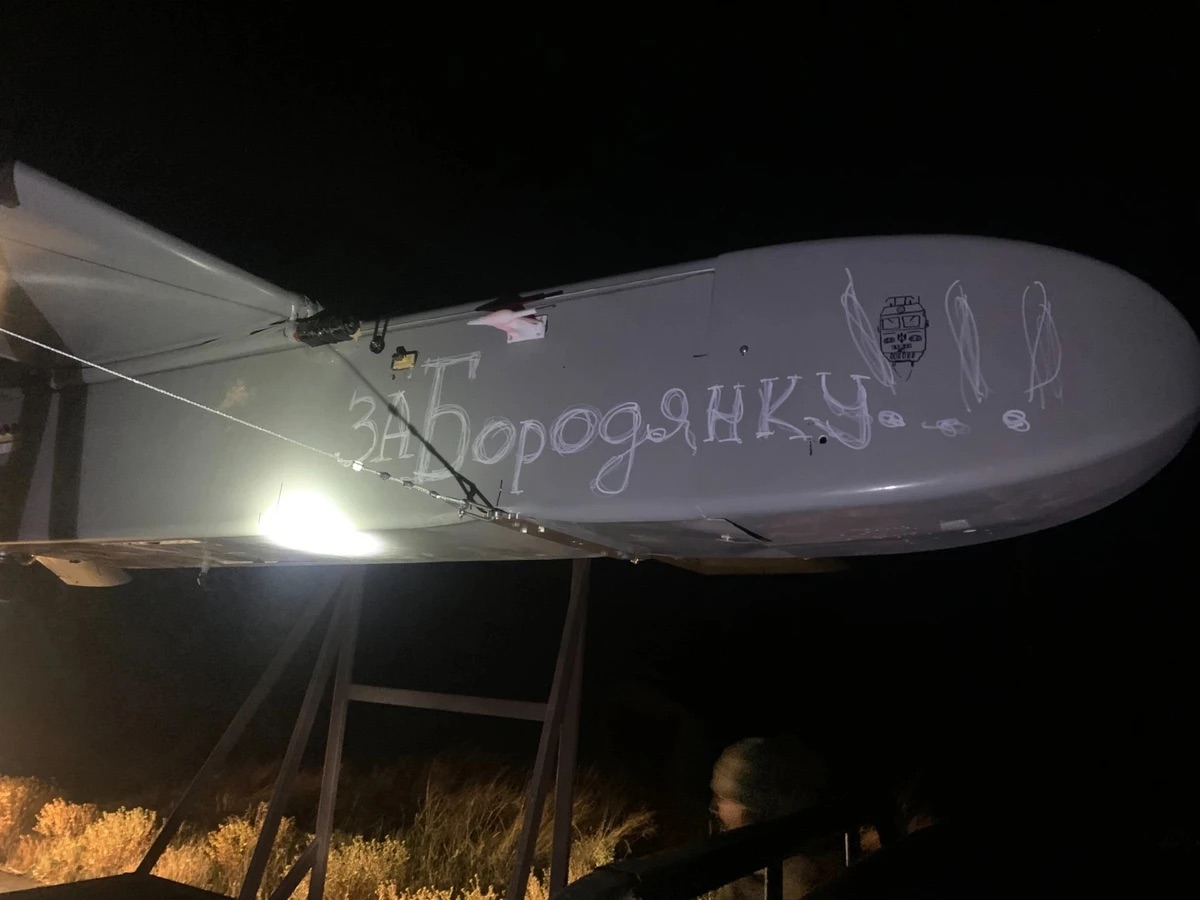
Ukraine is working to ramp up production of its new FP-5 cruise missile. But in the meantime, the cheap, but plentiful, FP-1 drone is the workhorse of Ukraine’s Russian deep strikes.
Ukraine’s FP-1 workhorse
AGN recently reported on Ukraine’s new, larger ground-launched cruise missile, the FP-5 Flamingo. Ukraine has boasted of its ability to produce those missiles at prodigious rates. However, as of early October, only a few are known to have actually been used in combat, and the current workhorse of Ukraine’s deep strikes in Russia is the FP-1 drone.
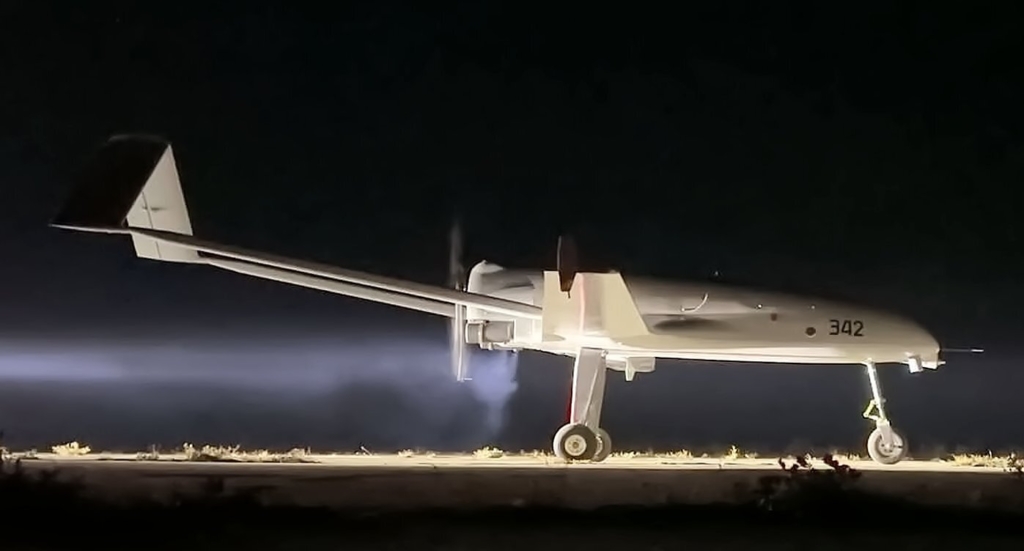
For the first phases of the war, Russia had the advantage of being able to inflict deep strikes, while Ukraine couldn’t. That is now changing as Ukraine develops its own long-range strike capabilities able to hit deep inside Russia.
The Fire Point FP-1 drone accounts for 60% of the deep strikes. These have proven resistant to jamming and are cheap, only costing around $55,000 each. The Economist says Ukraine is able to produce them at a rate in excess of 100 a day. This could be an overestimate with the respected Ukrainian OSINT account, Taraigami, saying the number “doesn’t sound plausible at the moment.”
6/ Just a small addition from me: while this article is certainly inspiring, I have some doubts about the numbers cited. Over 100 drones daily would mean roughly 36,500 long-range drones produced per year. I hope I’m wrong, but it doesn’t sound plausible at the moment
— Tatarigami_UA (@Tatarigami_UA) October 6, 2025
While the slow-flying drone is only able to carry a small warhead, it is able to inflict serious damage on Russia’s refining capability. It also comes with a range of around 1,500 kilometers.
Another drone being used is the heavier, 2,000-kilometer-ranged, but more expensive Lyutyi drone, which features a machine-vision system to guide it onto a target.
Ukraine’s campaign on Russian refineries
On Sunday, The Economist noted that the tempo of Ukraine’s campaign on Russia’s energy infrastructure is accelerating. Strikes have risen from two to three a week to four or five and may soon be daily.
Mass production of the Ukrainian FP-1 long range kamikaze drones https://t.co/vbicLU73EL pic.twitter.com/fKGJ6tX842
— Special Kherson Cat 🐈🇺🇦 (@bayraktar_1love) August 21, 2025
According to some sources, as much as 40% of Russia’s refining capacity is now offline. This is from both Ukraine’s attacks (around 20%) and refineries undergoing maintenance (around 20% at any one time). Regional fuel shortages in Russia are growing increasingly common.
Russia’s ability to maintain its infrastructure is hampered by international sanctions, making it harder to source replacement parts. The Economist cited Argus Media as saying Ukraine has hit 16 of Russia’s 38 refineries.
Ukraine sets a new record for the longest drone strike in warfare — hitting a Russian oil refinery in Tyumen, 2,100 km from the border, surpassing the 1,800 km mark set in August. pic.twitter.com/4shJbS6MFX
— Polymarket Intel (@PolymarketIntel) October 7, 2025
Ukraine’s command-in-chief, Oleksandr Syrsky, noted the effects of striking 85 high-value targets in Russia over the last two months are noticeable on the battlefield.
Making up for the lack of an air force
In April 2025, Israel and, later, the United States were able to enjoy air dominance over Iran and bomb almost anywhere at will with seemingly impunity.
This is not the case in Ukraine. Airspace remains contested, with a status of air parity enduring throughout the conflict.

At the start of the war, Ukraine’s air defence inflicted heavy losses on the Russian Air Force, forcing it to withdraw behind the frontline. Since then, it has relied on using stand-off munitions like cruise missiles, ballistic missiles, and, importantly, FAB bombs with glide kits.
Ukraine is doing the same, using its limited air force to fire FAB bombs and French Hammer bombs into Russia from standoff ranges. Western-supplied munitions, like Storm Shadow/SCALP-EG, lack the range for deep strikes.
🇺🇦 @mil_in_ua reports that Fire Point, the manufacturer of the FP-5 Flamingo Cruise Missile, bought out a large stock of spare AI-25 jet engines that had service lives of about 10 hours remaining before they launched serial production of the FP-5.
— Jeff2146🇧🇪 (@Jeff21461) September 23, 2025
The company also reports that… pic.twitter.com/Uv8kFdlBZI
The FP-1 has provided Ukraine with a cost-effective option, but it is pinning hopes on the much larger and longer-range FP-5 Flamingo. That cruise missile is powered by worn-out Soviet era jet engines that Ukraine reportedly “found in a dump”.
Ukraine claims it carries a 1,150-kilogram warhead and has a range of over 3,000 kilometers, while costing $500,000. Time will tell if the Flamingo lives up to the hype. For now, Ukraine is pushing for the American Tomahawk for more effective long-range strikes while it continues to rely on the FP-1.