The top 6 risks airlines will need to manage in 2026

December 17, 2025

Airlines are on track to surpass the historic $1 trillion revenue mark in 2026, a milestone that reflects sustained global demand for air travel, strong leisure traffic and a continued rebound in long-haul markets. Yet even as the industry enters what should be one of its strongest years on record, a complex mix of geopolitical, health, climate and security risks threatens to undermine that momentum.
New analysis from travel risk intelligence specialist Riskline suggests that while passenger appetite for travel remains robust, the operating environment for airlines is becoming more fragile. The company’s 2026 outlook highlights a convergence of risks that airlines are likely to feel earlier and more acutely than most other sectors.
As Paul Mutter, Risk Analyst at Riskline, told Aerospace Global News:
“The combination of new immigration restrictions and military actions in the Western Hemisphere by the Trump administration will continue to disrupt air travel and risk reducing passenger numbers, despite the US hosting major international sporting events in 2026 and 2028.”
That warning sets the tone for what Riskline identifies as the six most significant challenges facing airlines heading into 2026.
1. Demand will be harder to predict, not weaker
One of the most important distinctions in Riskline’s 2026 outlook is that global travel demand is not expected to weaken, but it is becoming increasingly fragmented. For airlines, this presents a different challenge to downturns seen in previous cycles.
Trends such as bleisure travel, slow travel and wellness tourism are eroding traditional seasonality. Leisure peaks are spreading across longer periods, while business travel continues to return selectively rather than uniformly. At the same time, overtourism controls, tourist taxes and restrictions on short-term rentals are introducing policy-driven demand shocks that can materially affect route performance at short notice.
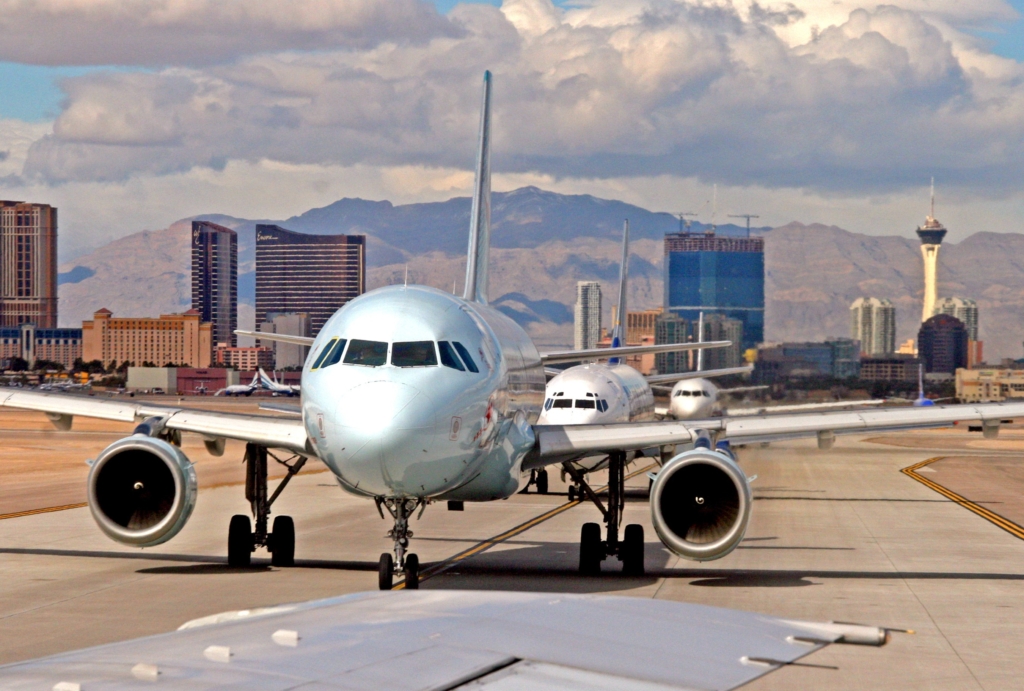
Riskline also highlights a cautious outlook for inbound travel to the United States, where immigration policy uncertainty and shifting perceptions could dampen growth, complicating transatlantic capacity planning even as the country prepares to host major international sporting events.
What this means for airlines
Airlines face higher forecast risk rather than lower traffic. Routes that were previously considered dependable, particularly leisure-heavy destinations, are becoming more volatile. Network planning will need to prioritise flexibility over optimisation, with greater emphasis on short-term capacity adjustments, dynamic pricing and fleet commonality to absorb sudden demand swings.
2. Health risk is now an operational issue, not just a passenger concern
Riskline’s health outlook underscores how far the industry has moved from treating health risk as a purely passenger-facing issue. Respiratory illness remains a central concern, with the potential for overlapping COVID-19, influenza and RSV waves creating sustained pressure through peak travel periods.

New variants may also trigger abrupt regulatory responses, ranging from testing requirements to crew health protocols, even if widespread travel bans remain unlikely. Alongside this, extreme heat and air pollution are increasingly shaping travel patterns and airport operations, particularly in major urban centres and event-hosting regions.
What this means for airlines
Crew resilience is becoming a strategic planning issue. Airlines may need larger reserve pools, more conservative rostering assumptions and greater flexibility around crew base planning. Heat and air quality are also affecting payload limits, turnaround times and on-time performance, pushing airlines to factor environmental conditions more explicitly into scheduling and fleet deployment.
3. Climate risk is becoming routine, not exceptional
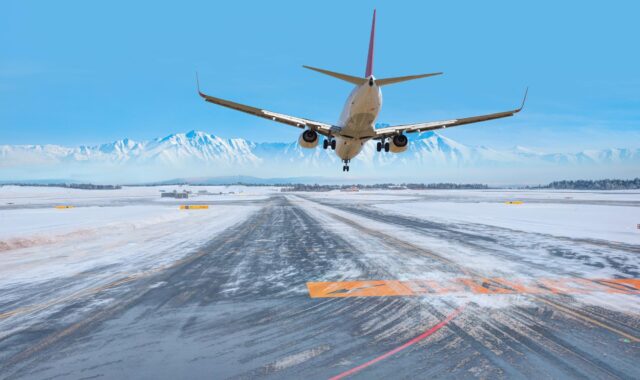
Riskline’s outlook treats climate disruption as a recurring condition rather than an outlier. Wildfires, heatwaves, hurricanes and severe air pollution events are now embedded features of the operating environment, affecting regions across North America, Europe, Asia and Oceania.
Airlines have already experienced this shift in 2025, with repeated airport closures, degraded visibility, aircraft performance penalties and weather-related crew displacement.
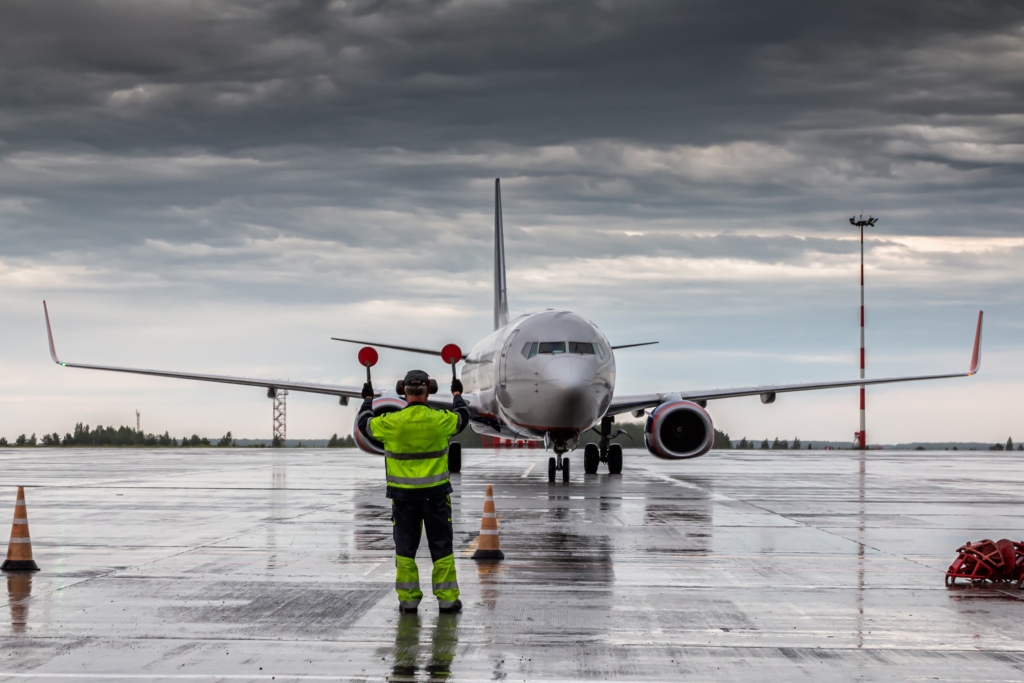
What this means for airlines
Climate-driven disruption is moving from crisis response to baseline operational planning. Airlines face more frequent irregular operations, increased maintenance exposure from heat and particulates, and growing scrutiny from regulators, insurers and passengers on preparedness. Robust disruption handling, realistic schedule padding and clear passenger communication are no longer optional differentiators but core operational requirements.
4. Security risk is increasingly airport- and airspace-centric
Several of Riskline’s safety signals fall squarely within aviation’s risk envelope. Rising drone activity near airports, protests affecting access to terminals and persistent cross-border tensions all directly threaten airline operations, even when aircraft and crews are not the primary targets.
Ongoing geopolitical friction continues to affect overflight permissions and insurance costs, with airspace closures forcing longer routings and higher fuel burn.
🔥 WATCH: Jane and Phoebe speaking after spraying Heathrow Airport in orange paint.
— Just Stop Oil (@JustStop_Oil) July 30, 2024
🧡 21 groups across 12 countries have taken action at 18 airports so far during the @_oilkills international uprising.
🛢️ Demand our government Just Stop Oil by 2030 — https://t.co/xAyrqHDJYe pic.twitter.com/HBbQLUMxwV
What this means for airlines
Airlines remain highly exposed to risks they do not control. Airport disruptions can cascade rapidly across networks, while airspace restrictions increase operating costs and complicate crew duty planning. Even isolated security incidents can undermine passenger confidence, reinforcing the importance of contingency routing, diversified hubs and close coordination with airports and air navigation service providers.
5. Cyber and hybrid threats are a sleeper risk for aviation
Riskline flags cyberattacks, disinformation and infrastructure disruption as growing hybrid threats, an area where aviation’s dependence on tightly integrated digital systems creates particular vulnerability.
Airlines operate with little tolerance for system downtime, relying on real-time data flows across operations control, crew management, ticketing, payments and baggage handling.

What this means for airlines
System outages do not simply inconvenience passengers; they can ground fleets, break crew legality and paralyse operations across multiple stations simultaneously. Cyber resilience is increasingly a safety-adjacent issue, demanding board-level attention rather than being treated solely as an IT concern.
6. Reputation and trust will matter more during disruption
A consistent thread running through Riskline’s 2026 outlook is the assumption that disruption will be persistent rather than exceptional. Health events, climate impacts, security incidents and political shocks are no longer treated as black swans, but as overlapping pressures that travellers are expected to encounter with growing frequency.
Riskline’s analysis places particular emphasis on information quality and response speed. In an environment defined by uncertainty, travellers are more likely to accept disruption if they feel informed, supported and able to make decisions. Where frustration builds is not necessarily from delays or cancellations themselves, but from poor communication, conflicting advice and a lack of visible accountability.
Indigo cancelled my flight, kept me on hold for 47 minutes, and still no help to reschedule.
— Kapil Dhama (@kapildhama) December 16, 2025
DMs unanswered.
Zero accountability, zero empathy.
Worst customer experience.@IndiGo6E #IndiGoFail pic.twitter.com/tCBXniO9IC
The report highlights that travellers increasingly rely on real-time alerts, verified intelligence and clear guidance when navigating disruption. This raises expectations not just of governments and security providers, but of airlines, which are often the most visible and immediate point of contact when plans unravel.
What this means for airlines
In this environment, airlines that manage disruption transparently and empathetically will outperform those that do not. Passenger tolerance for disruption exists, but tolerance for poor communication does not. Clear, timely messaging and visible accountability will increasingly define brand strength when operations are under pressure.
A year defined by resilience, not growth alone
Riskline’s outlook does not suggest that airlines are heading into a downturn. Instead, it paints a picture of strong demand operating within tighter margins for error. In 2026, success is likely to be defined less by growth at any cost and more by an airline’s ability to absorb shocks, adapt quickly and communicate clearly when disruption inevitably occurs.
For an industry approaching a revenue milestone, the challenge will be ensuring that record demand is matched by equally robust resilience.