Revealed: The world’s busiest airline routes in 2025

December 23, 2025

The annual ranking of the world’s busiest airline routes based on OAG’s Global Airline Schedules data shows that an intra-Asia domestic corridor is at the top of the global charts. Asia also dominates the world’s busiest cross-border routes, reflecting the strength of demand in the region.
Jeju (CJU)–Seoul Gimpo (GMP): The world’s busiest air route
For calendar year 2025, the short but high-frequency connection between Jeju International Airport (CJU) and Seoul Gimpo Airport (GMP) was the world’s busiest airline route, with approximately 14.4 million seats scheduled across the year—a 1% increase over 2024. Despite strong demand, capacity on the route remains approximately 17% below 2019 levels.

The route offers approximately 39,000 seats per day. It is an intensely competitive service, with seven carriers vying for traffic between the South Korean capital and the nation’s favourite island leisure destination. That competition has led to lower airfares, which have dropped by 11% year-on-year to $44 one-way.
Jeju–Seoul’s dominance reflects both strong tourism demand and the importance of high-frequency domestic connections in Asia.
Nine out of the top 10 global routes in 2025 have a region in common
The top 10 busiest routes of 2025—measured by total scheduled seats—are dominated by Asia-Pacific domestic services, with nine of the 10 routes in the region. The only non-Asia-Pacific entry in the top ten is a Middle Eastern domestic route (Jeddah–Riyadh) that has grown rapidly.
| Rank | Route | Airports | Country | Scheduled Seats (2025) |
|---|---|---|---|---|
| 1 | CJU–GMP | Jeju International – Seoul Gimpo | South Korea | 14,384,766 |
| 2 | CTS–HND | Sapporo New Chitose – Tokyo Haneda | Japan | 12,099,499 |
| 3 | FUK–HND | Fukuoka – Tokyo Haneda | Japan | 11,496,706 |
| 4 | HAN–SGN | Hanoi – Ho Chi Minh City | Vietnam | 11,078,775 |
| 5 | JED–RUH | Jeddah – Riyadh | Saudi Arabia | 9,819,558 |
| 6 | MEL–SYD | Melbourne – Sydney | Australia | 8,951,497 |
| 7 | HND–OKA | Tokyo Haneda – Okinawa Naha | Japan | 8,052,864 |
| 8 | BOM–DEL | Mumbai – Delhi | India | 7,642,016 |
| 9 | PEK–SHA | Beijing – Shanghai Hongqiao | China | 7,454,950 |
| 10 | SHA–SZX | Shanghai Hongqiao – Shenzhen | China | 7,138,673 |
Growth in many of the top 10 routes reflects post-pandemic recovery
According to OAG, Japan’s domestic market remains strong, with three of the world’s busiest routes located in the country (two of which are among the top three).
- Sapporo New Chitose (CTS) to Tokyo Haneda (HND) has increased by only 1% year-on-year but is now nearly recovered at 3% below its pre-pandemic (2019) seat capacity.
- Fukuoka (FUK) to Tokyo Haneda (HND) grew by 1% compared to 2024 and is 1% above 2019 levels.
Hanoi (HAN) to Ho Chi Minh City (SGN), Vietnam’s largest domestic route, increased 4% year-on-year and is 8% above 2019. There were six airlines competing on this route in 2025, resulting in an average one-way fare of $67, a 11% decrease year-over-year.
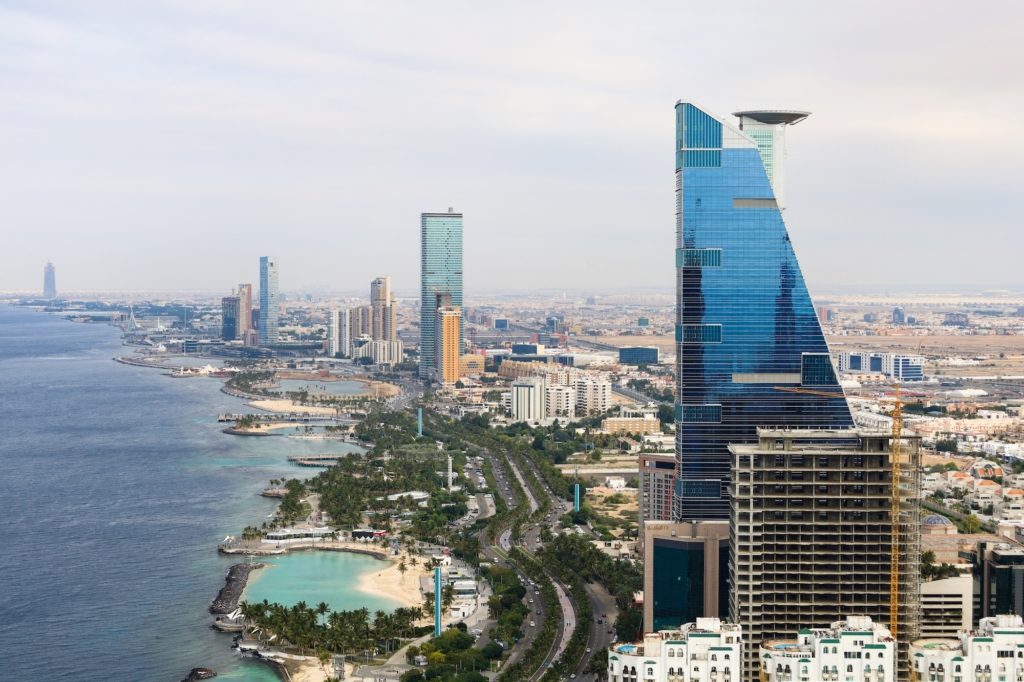
Saudi Arabia’s domestic route—Jeddah (JED) to Riyadh (RUH)—is the only route in the top 10 outside the Asia-Pacific region and also the fastest-growing route in the global top 10. It has increased by 13% year-on-year and is now 22% above 2019 pre-pandemic volume. Three airlines compete on this relatively short (460-mile) route connecting the Kingdom’s two largest cities, with average economy airfares rising by 27% year-on-year to $95 one-way.
The world’s busiest cross-border routes in 2025
While domestic services dominate the top global routes, international traffic patterns also exhibit regional concentration in Asia. Hong Kong (HKG)–Taipei (TPE) retained its position as the world’s busiest international air corridor in 2025, with about 6.8 million seats scheduled. Other key cross-border routes in Asia and the Middle East — such as Cairo (CAI)–Jeddah (JED) and Kuala Lumpur (KUL)–Singapore (SIN) — also rank highly in international seat capacity.
| Rank | Route | Airports | Scheduled Seats (2025) |
|---|---|---|---|
| 1 | HKG–TPE | Hong Kong – Taipei | 6,832,683 |
| 2 | CAI–JED | Cairo – Jeddah | 5,753,491 |
| 3 | KUL–SIN | Kuala Lumpur – Singapore Changi | 5,574,409 |
| 4 | ICN–NRT | Seoul Incheon – Tokyo Narita | 5,069,779 |
| 5 | ICN–KIX | Seoul Incheon – Osaka Kansai | 4,959,596 |
| 6 | CGK–SIN | Jakarta – Singapore Changi | 4,619,323 |
| 7 | DXB–RUH | Dubai – Riyadh | 4,465,632 |
| 8 | BKK–HKG | Bangkok – Hong Kong | 4,169,125 |
| 9 | NRT–TPE | Tokyo Narita – Taipei | 4,021,181 |
| 10 | JFK–LHR | New York JFK – London Heathrow | 3,971,000 |
International traffic leaders
The busiest international airline route in 2025—Hong Kong (HKG) to Taipei (TPE)—has retained its top spot from last year. It was also at the top of the world’s busiest routes in 2019. Volume increased by 1% relative to 2024, but the post-pandemic recovery is not yet complete, as capacity remains 14% below 2019 levels. Seven carriers competed on this route this year, with an average airfare of $115, down 6% from last year.
Cairo-Jeddah is now 71% busier than in 2019
The Middle East trunk route connecting Cairo (CAI) and Jeddah (JED) has seen dramatic growth post-pandemic. It is up 5% from 2024 and 71% above 2019 levels. Low-cost carriers have intensified competition on this route, operating 43% of total capacity and accounting for 81% of the additional seat growth this year. Nine airlines operate on this route in 2025, with average one-way fares down 12% compared to last year to $145.

Kuala Lumpur-Singapore Changi is the world’s cheapest cross-border route
The Kuala Lumpur (KUL)-Singapore Changi (SIN) route is up 4% year-on-year, with capacity returning to 2019 levels. Seven airlines compete aggressively on this route. As a result, KUL-SIN also has the distinction of being the lowest average economy fare among the Top 10 cross-border routes at $62 one-way.
South Korea’s LCCs dominate flights to Japan
Routes between Japan and South Korea are also experiencing significant growth.
- Seoul Incheon (ICN) to Tokyo Narita (NRT) has declined by 6% year-on-year, but it is 58% above the pre-pandemic 2019 volume. One-way fares have declined by 12% year-on-year to $140.
- Seoul Incheon (ICN)-Osaka Kansai (KIX) volume is stable compared with last year and is 44% higher than in 2019. Competition is also tight on this route, with nine airlines operating on it. As a result, one-way airfares are 16% cheaper than last year.
- South Korean LCCs have a significant share of these routes.
- On ICN-NRT, only 7% of flights are operated by Japanese carriers, and LCCs have 68% of the market.
- On ICN-KIX, 13% of flights operate on Japanese carriers, with LCCs holding a 77% share of the market.
More international route standouts
The fastest-growing top 10 international route is Jakarta (CGK) to Singapore (SIN), increasing by 14% compared with 2024, though it remains 16% below 2019 levels. It is a highly competitive route, with eight airlines operating low-fare flights averaging $87 one-way.
The Middle East’s Dubai (DXB) to Riyadh (RUH) route is up 4% year-on-year and 42% above 2019.
The long-standing transatlantic corridor of New York JFK (JFK) and London Heathrow (LHR) remains at the top 10, though at the bottom of the list. Capacity has declined slightly by 1% relative to 2024 but is now 4% higher than in 2019. Although five airlines compete on this route, OAG reports it also has the highest one-way economy fare on the list, at $585, 2% higher than in 2024.
Why Asia Pacific continues to lead in air travel demand
In 2025, the Asia Pacific region accounted for 9 of the top 10 domestic routes and 7 of the top 10 international routes.
Several factors contribute to the region’s high volumes:
- Dense population centres and high demand for mobility between economic hubs and leisure destinations.
- Strong tourism markets—domestic tourism in South Korea, Japan, and China—remain resilient.
- Limited alternative transport options in some corridors, particularly on overseas routes.

Meanwhile, the rapid growth of Middle East routes such as Jeddah–Riyadh and Cairo-Jeddah highlights both the expansion of business and religious travel and the growth that low-cost carriers can generate when they enter a market.
As global air travel continues its post-pandemic rebound, route-level performance will remain central to airline network strategies. Intense competition on many of these world’s busiest routes will likely keep average airfares attractive in the year ahead.
Featured Image: Atakorn | stock.adobe.com