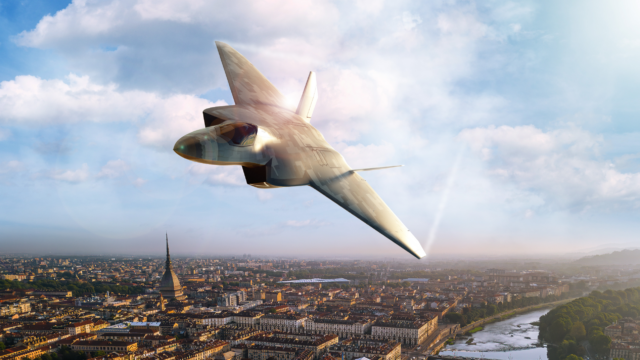
RAF Typhoon and French Rafale strike ISIS targets in Syria under Operation Inherent Resolve

6 min read
European air power was once again on display on 2 January 2026, as the United Kingdom and France conducted coordinated strike missions against Islamic State (ISIS) targets in Syria.
Operating under Operation Inherent Resolve, both nations deployed advanced multirole combat aircraft, precision-guided weapons, and aerial refuelling tankers to engage targets near Palmyra, hundreds of miles from their home bases.
The operation illustrated the growing importance of long-range, tanker-supported air operations as a core element of European counter-terrorism strategy.
Royal Air Force Typhoon FGR4 aircraft spearheaded the UK strike effort
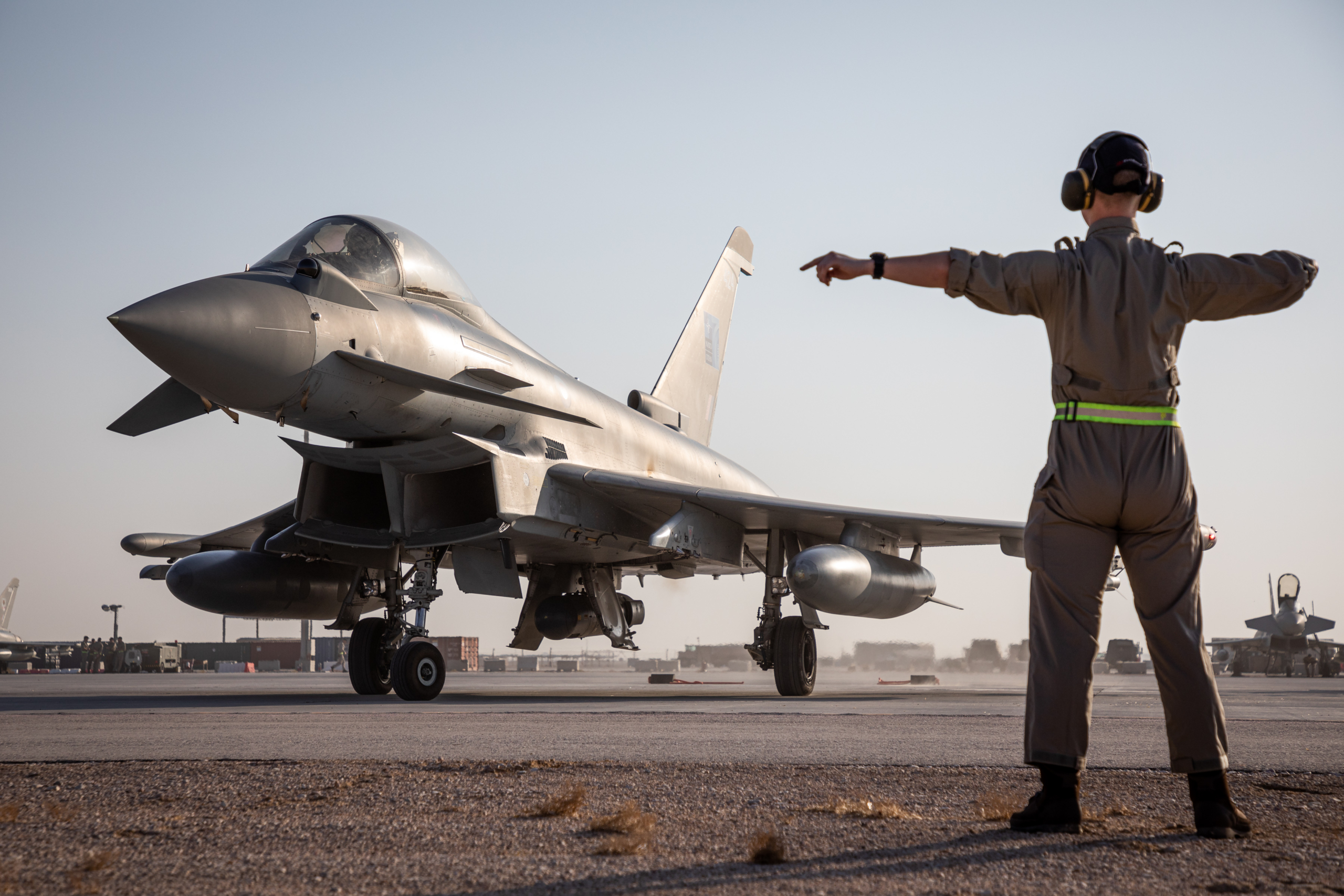
The UK’s contribution to the operation was led by Royal Air Force Eurofighter Typhoon FGR4 aircraft.
The Typhoon FGR4 is the RAF’s principal multirole fast jet, tasked with both air defence and precision ground attack missions. It has been a regular participant in UK combat operations over Iraq and Syria under Operation Shader.

During the Syria strike, RAF Typhoons were tasked with engaging ISIS infrastructure believed to be associated with weapons storage and logistical activity. The target was located in sparsely populated terrain, reducing the risk of civilian casualties.
The Typhoon FGR4 is powered by two Eurojet EJ200 turbofan engines, enabling a maximum speed of over Mach 2 and providing high levels of agility and endurance.
The aircraft is equipped with the Captor-M mechanically scanned radar, an advanced defensive aids suite, and a comprehensive electronic warfare system that enhances survivability in contested airspace.
In the strike role, Typhoon FGR4 is optimised for precision engagement, carrying a wide range of air-to-ground weapons while retaining air-to-air capability for self-protection.
Paveway IV precision-guided bombs provided the RAF’s strike capability
RAF Typhoons employed Paveway IV precision-guided bombs, a weapon that has become the UK’s standard air-to-surface munition for expeditionary operations.
Paveway IV combines GPS and laser guidance, allowing it to engage both fixed and relocatable targets with high accuracy.
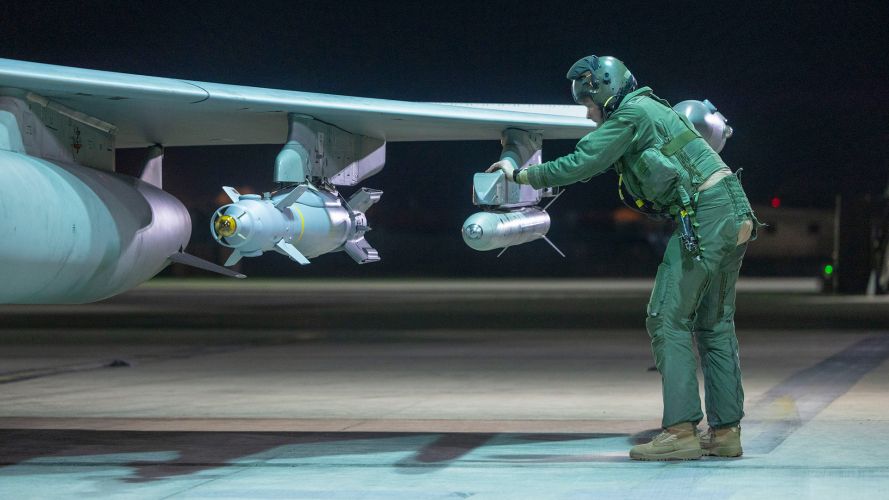
“Our aircraft used Paveway IV guided bombs to target a number of access tunnels down to the facility; whilst detailed assessment is now underway, initial indications are that the target was engaged successfully,” the UK Defence Ministry said in a statement.
The weapon is designed to minimise collateral damage and can be employed in complex operational environments where civilian harm must be avoided.
It has been extensively used by the RAF in previous operations against ISIS and other targets in the Middle East.
Paveway IV weighs approximately 500lb and can be released from medium to high altitude, allowing aircraft to remain outside the range of many short-range air defence systems.
Airbus MRTT Voyager tanker aircraft enabled long-range RAF operations
Supporting the Typhoon strike package were RAF Voyager KC2 aerial refuelling aircraft. Voyager, based on the Airbus A330 airframe, provides the RAF with air-to-air refuelling, strategic transport and aeromedical evacuation capabilities.
For the Syria mission, Voyager tankers enabled Typhoon aircraft to operate at extended ranges without the need for forward basing.
Our aircraft used Paveway IV guided bombs to target a number of access tunnels down to the facility; whilst detailed assessment is now underway, initial indications are that the target was engaged successfully. pic.twitter.com/IPBOv3rCeR
— Ministry of Defence 🇬🇧 (@DefenceHQ) January 3, 2026
This allowed the RAF to project air power into Syria while maintaining operational flexibility and reducing reliance on host-nation facilities.
Voyager aircraft are equipped with both hose-and-drogue refuelling systems, allowing them to support UK and allied fast jets.
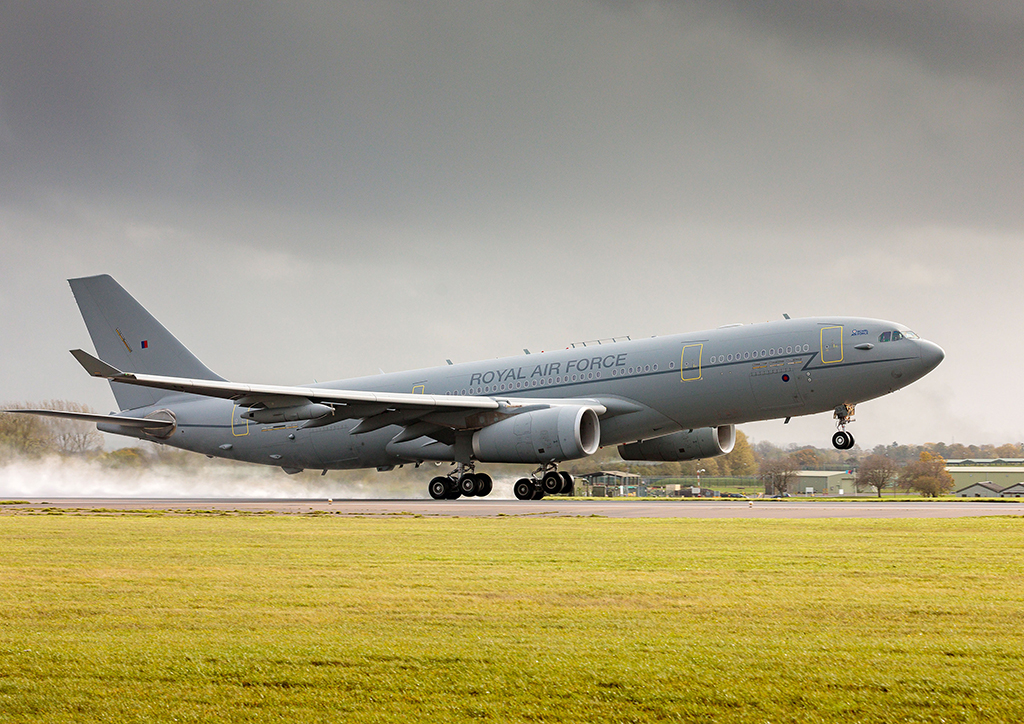
The platform has become a critical enabler for UK air operations in the Middle East and beyond.
French Air and Space Force Rafale fighters conducted parallel strike missions
Sharing a video on X, the French Armed Forces also confirmed that the strikes were carried out under Operation Inherent Resolve, with France and its UK ally targeting positions linked to the Islamic State group.
📍Syrie | Dans le cadre d’OIR (Operation Inherent Resolve) la 🇫🇷 et son allié 🇬🇧 ont réalisé des frappes contre des positions du groupe terroriste de l’État islamique.
— Armée française – Opérations militaires (@EtatMajorFR) January 4, 2026
⁰➡️ Empêcher la résurgence de Daesh: un enjeu majeur pour la sécurité de la région.
⁰➡️ La lutte contre le… pic.twitter.com/bllq9vSHA7
France contributed to the operation with Dassault Rafale multirole combat aircraft, operated by the French Air and Space Force.
Rafale has been France’s primary platform for overseas combat missions for more than a decade and has seen extensive service in Iraq and Syria as part of France’s counter-ISIS operations.
The Rafale is a twin-engine, canard-delta aircraft designed to perform air superiority, deep strike, reconnaissance and nuclear deterrence missions. Its flexibility allows it to carry out multiple mission types on a single sortie.

For the Syria strike, French Rafales were tasked with precision attacks against ISIS targets coordinated with the UK operation, demonstrating continued operational cooperation between the two countries.
The Dassault Rafale’s sensor suite and weapons integration support precision strike missions
The Dassault Rafale is equipped with the RBE2 radar, including active electronically scanned array (AESA) variants, providing long-range detection and tracking of air and ground targets.
The aircraft also features the SPECTRA electronic warfare system, which enhances survivability through threat detection, jamming and decoying.

In the strike role, Rafale can carry a variety of precision-guided weapons. During operations against ISIS, the aircraft has commonly employed AASM Hammer munitions. AASM is a modular guidance kit fitted to conventional bombs, offering GPS, inertial and laser guidance options.
AASM allows Rafale to engage targets with high accuracy from stand-off distances, increasing aircraft survivability while maintaining precision.
French Airbus MRTT aircraft sustained extended-range Rafale missions
French Rafale operations were supported by aerial refuelling assets, most likely A330 MRTT Phénix aircraft.
The A330 MRTT forms the backbone of France’s strategic air mobility and refuelling capability, replacing older tanker platforms.

The Phénix tanker enables Rafale aircraft to conduct long-duration missions from bases in mainland France or forward locations, refuelling fast jets en route to and from the operational area.
The aircraft can refuel multiple receivers on a single mission and also provides strategic airlift capability, allowing France to sustain overseas air operations independently or as part of a coalition.
Operation Inherent Resolve showcases European precision strike capability
The UK–France strike underscores the continued reliance on precision air power to counter Islamic State remnants in Syria, even after the group’s loss of territorial control.
Coalition governments assess that ISIS retains both intent and capability, operating through dispersed cells and logistical networks in remote areas. In response, advanced combat aircraft supported by aerial refuelling and precision-guided weapons allow targeted strikes while limiting risk to civilians and aircrew.
The operation also highlighted the depth of interoperability between European allies. Typhoon and Rafale, though developed independently, operate within shared refuelling standards, compatible strike concepts, and coordinated mission planning frameworks.
Crucially, air-launched precision strike gives governments the ability to respond rapidly to emerging threats without committing large ground forces, preserving both political flexibility and operational control.
As ISIS continues to adapt, the ability to conduct intelligence-led, long-range air operations using platforms such as Typhoon and Rafale is likely to remain a cornerstone of European military strategy in the region.
Featured image: RAF
Sign up for our newsletter and get our latest content in your inbox.


More from


October 17, 20265 min read


October 17, 20264 min read