India puts airpower front and centre with Operation Sindoor Republic Day display

January 26, 2026

As India prepares to celebrate its 77th Republic Day on 26 January, the centrepiece of this year’s parade at Kartavya Path will be a rare, tightly choreographed demonstration of airpower and joint operations, with Operation Sindoor brought to life both on the ground and in the sky.
For the first time, the Indian Armed Forces have aligned the Republic Day tableau and the flying display into a single operational narrative, presenting what officials describe as a phased battle array that mirrors how India now plans and executes modern military operations.
At the heart of that narrative sits the Indian Air Force, whose fighters, missiles and integrated air defence systems dominate both the visual spectacle and the strategic messaging.
The result is less ceremonial flourish and more operational storytelling, as Republic Day places airpower firmly at the centre of India’s contemporary military doctrine.
Operation Sindoor display showcases Indian airpower
A tableau titled “Operation Sindoor: Victory Through Jointness” depicts a sequential combat operation in which air superiority, deep-strike capability and integrated air defence underpin every phase of military action.
While framed as a tri-service display, the visual storyline makes clear that modern Indian operations are increasingly air-led, with the Air Force delivering speed, reach and escalation control.
For aviation and defence observers, the tableau offers a rare public depiction of how India now intends to combine manned fighters, unmanned systems, long-range missiles and layered air defence into a single operational construct.
The Indian Air Force will demonstrate using drones to suppress enemy air defences
At the core of the tableau is the Indian Air Force’s role in shaping the battlespace before ground forces engage.
The strike sequence begins with the suppression of enemy air defences using unmanned systems, reflecting the Air Force’s growing emphasis on remotely piloted and autonomous platforms.

A HAROP loitering munition is shown destroying an adversary air defence radar, illustrating how India has incorporated so-called “kamikaze drones” into its strike doctrine.
Such systems allow time-sensitive targets to be engaged without exposing manned aircraft, a lesson reinforced by recent conflicts worldwide. This unmanned strike sets the conditions for subsequent manned operations, a theme that runs throughout the display.
Rafale fighters and SCALP missiles showcased in India’s Republic Day display
The tableau then shifts decisively into manned airpower, with a Rafale fighter depicted carrying out a precision strike using SCALP long-range cruise missiles against terrorist infrastructure.
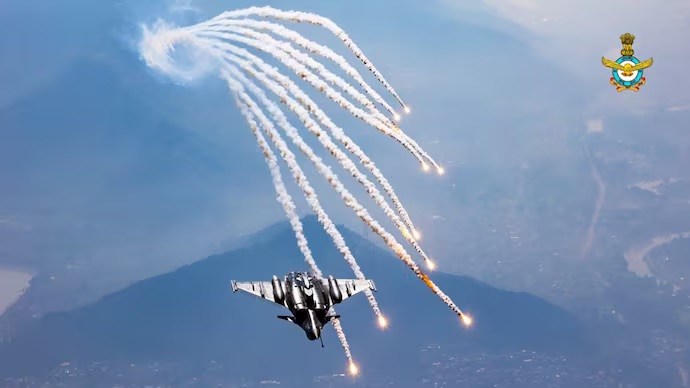
The choice of Rafale is deliberate. Since entering Indian Air Force service, the twin-engine fighter has been positioned as a cornerstone of India’s deep-strike and air-dominance capability, valued for its sensor fusion, survivability and ability to deliver stand-off weapons from outside heavily defended airspace.
SCALP, with its long range and low-observable flight profile, reinforces India’s emphasis on precision engagement with minimal collateral damage. In the tableau, the Rafale strike symbolises controlled escalation: decisive, accurate and proportionate.
Su-30MKI and BrahMos show India’s long-range strike capability
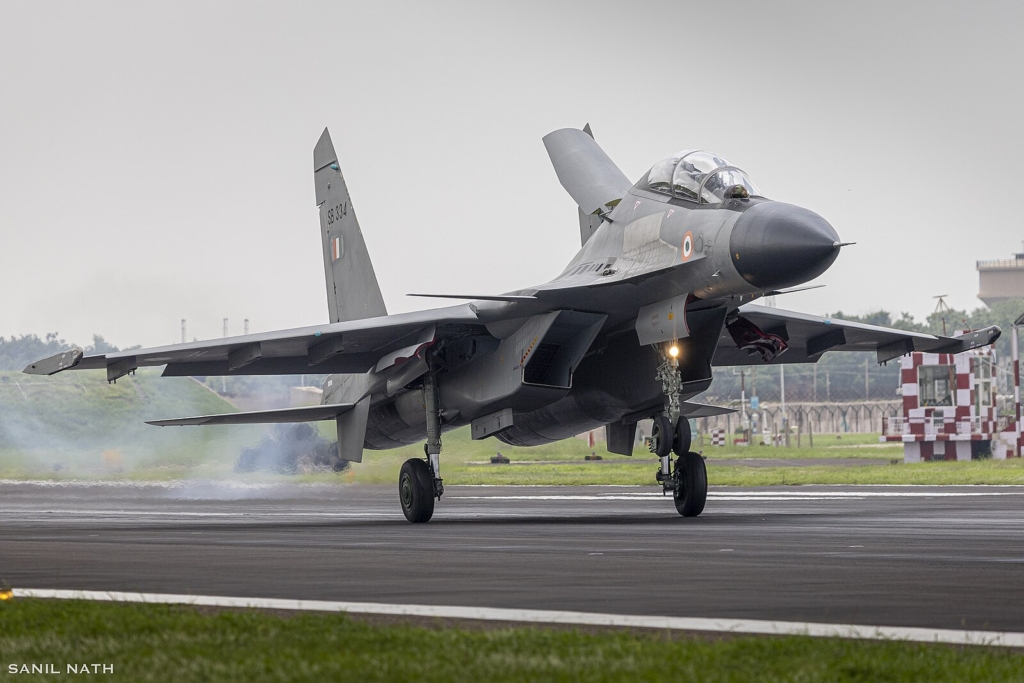
If the Rafale sequence highlights precision, the next phase underscores raw reach and destructive power. A Su-30MKI fighter is shown launching the BrahMos supersonic cruise missile against hardened aircraft shelters deep inside hostile territory.
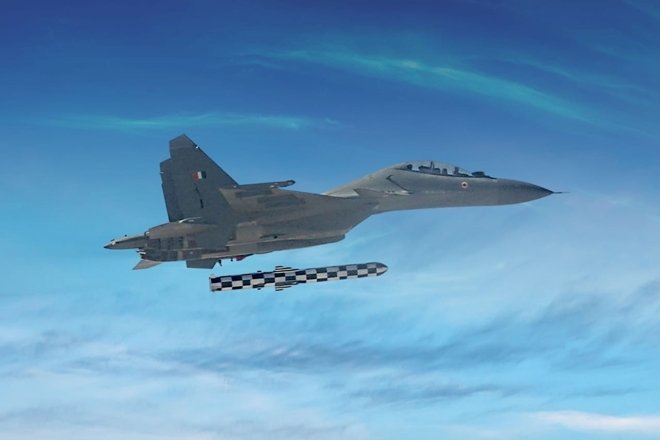
The Su-30MKI–BrahMos combination remains one of the Indian Air Force’s most potent strike options, pairing a long-range, high-payload platform with one of the fastest operational cruise missiles in the world. Capable of overwhelming defences through sheer speed and kinetic energy, BrahMos delivers a clear deterrent message.
Its inclusion signals India’s ability to strike high-value, hardened targets rapidly and at extended ranges, even in contested environments.
Integrated air defence completes the kill chain
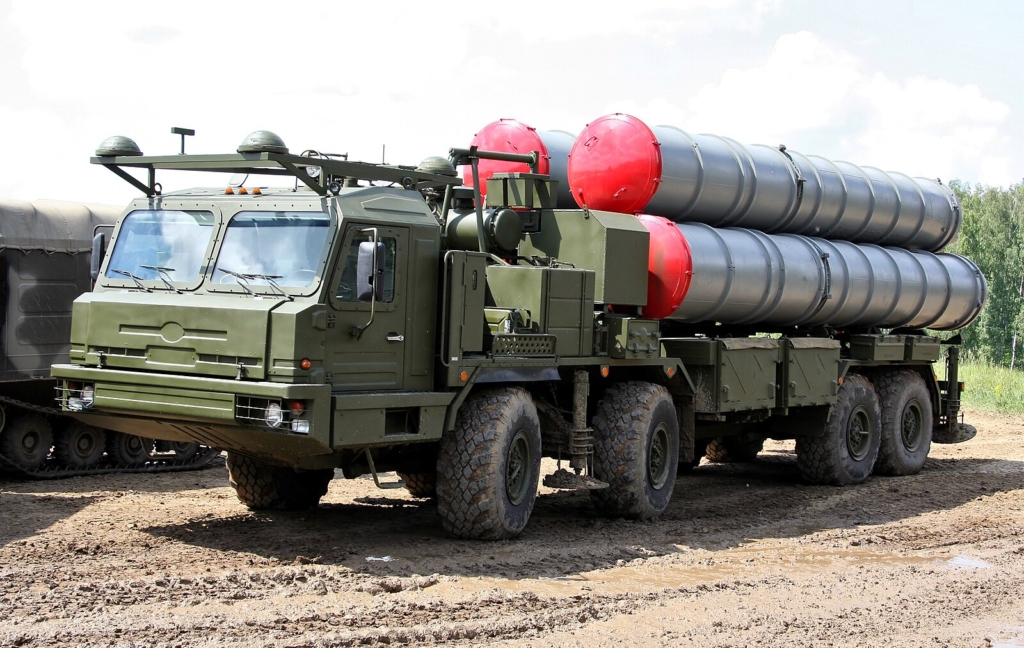
The airpower narrative concludes with the depiction of India’s integrated air defence network, culminating in a long-range engagement by the S-400 system.
Shown neutralising an adversary airborne early warning aircraft at ranges of up to 350 km, the S-400 segment reinforces the idea that India’s air operations are backed by deep defensive coverage. It illustrates the ability to protect critical assets, deny airspace to hostile platforms and degrade enemy situational awareness.
By ending the sequence with air defence, the tableau presents a complete airpower loop: detect, strike, defend.
Army and Navy elements appear as part of this air-enabled campaign. M777 ultra-light howitzers provide calibrated ground fire once the battlespace has been shaped from the air, while the Akash surface-to-air missile system reinforces layered defence. The naval segment emphasises maritime dominance, implicitly underwritten by air cover and long-range surveillance.
Together, the tableau presents airpower not as a supporting arm, but as the decisive enabler of joint operations.
Republic Day flypast: What aircraft and formations will fly this year?
If the tableau explains the doctrine, the flypast demonstrates it in motion.
| Aircraft / platform | Type | Role | Number in flypast |
|---|---|---|---|
| Rafale | Fighter jet | Multirole combat aircraft | 2 (Sindoor formation) |
| Su-30MKI | Fighter jet | Air superiority, multirole | 2 (Sindoor formation) |
| MiG-29 | Fighter jet | Multirole fighter | 2 (Sindoor formation) |
| Jaguar | Ground-attack aircraft | Deep strike | 1 (Sindoor formation) |
| C-130J | Transport aircraft | Tactical airlift | Included |
| C-295 | Transport aircraft | Tactical transport | Included |
| P-8I | Maritime patrol aircraft | Maritime patrol, ISR, ASW | Included |
| Mi-17 IV | Helicopter | Medium-lift utility, transport | Included |
| AH-64E Apache | Attack helicopter | Armed support, close air support | Included |
| ALH Mk IV (Dhruv) | Helicopter | Utility, support | Included |
| ALH WSI (Dhruv) | Attack helicopter | Armed reconnaissance, attack | Included |
| Light Combat Helicopter (LCH) | Attack helicopter | Close air support, anti-armour | Included |
Flypast totals: 29 aircraft in total, comprising 16 fighters, four transport aircraft and nine helicopters.
Note: Where official sources do not specify exact numbers by type, platforms are listed as included.
This year’s aerial display will feature 29 aircraft, comprising 16 fighters, four transport aircraft and nine helicopters, operating from six bases and organised into eight distinct formations.
For the first time, the flypast will be split into two segments, one aligned with the march-past and a second following the parade, reflecting the Air Force’s role within a phased battle sequence.
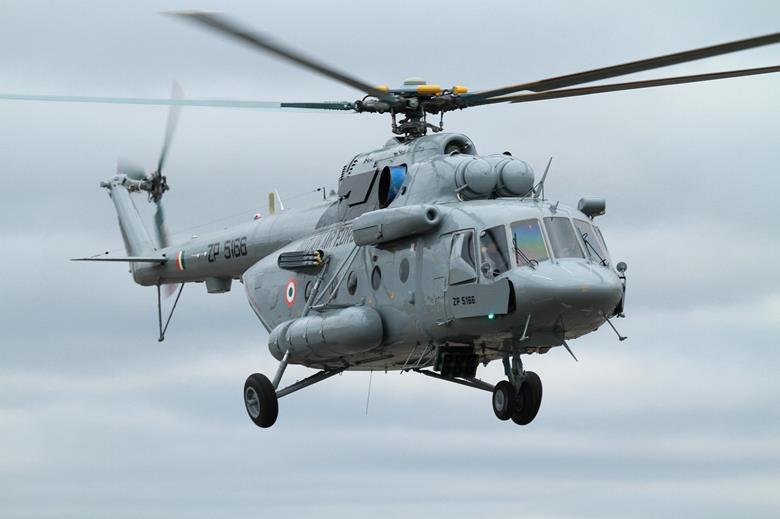
The flypast opens with the Dhwaj formation, as four Mi-17 IV helicopters carry the National Flag alongside the flags of the three services, setting the tone for tri-service integration.
From there, the display builds in intensity, showcasing the Indian Air Force’s frontline combat fleet. Rafale, Su-30MKI, MiG-29 and Jaguar fighters appear in multiple formations, highlighting the depth and diversity of India’s air combat capability.

Strategic and enabling platforms feature prominently. C-130J and C-295 transport aircraft fly in the Arjan formation, while the Indian Navy’s P-8I maritime patrol aircraft joins Su-30MKI fighters in the Varuna formation, reinforcing the air-maritime link central to India’s security planning.
Rotary-wing aviation underscores battlefield jointness. Apache attack helicopters, the Advanced Light Helicopter Mk IV, ALH Weapon System Integrated and the Light Combat Helicopter operate in dedicated formations, reflecting how attack helicopters are integrated with fixed-wing strikes and ground manoeuvre.
The Sindoor formation: Which fighter jets are involved?
The focal point of the flypast is a special ‘Sindoor’ formation, explicitly dedicated to the Indian Air Force’s role in Operation Sindoor, the four-day confrontation in early May following the April 22 terror attack in Pahalgam.
This spearhead formation comprises seven fighter jets, two Rafales, two MiG-29s, two Su-30MKIs and a Jaguar, flying in a compact, aggressive array designed to symbolise aerial dominance and precision strike capability.
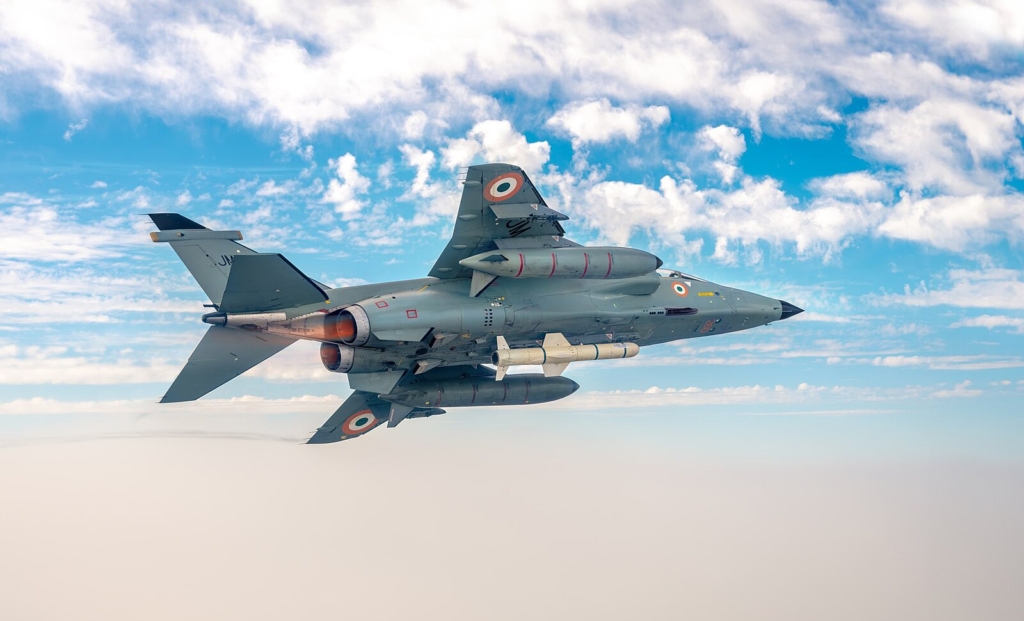
Officials say the formation embodies the Air Force’s doctrinal theme, “Achook, Abhedya aur Sateek”, infallible, impregnable and precise, visually conveying how different fighter types are integrated into a single combat package rather than operating as standalone assets.
India’s Republic Day flypast mirrors real combat operations
Traditionally, the Republic Day flypast has served as a ceremonial finale. This year, it has been deliberately restructured to align with a combat narrative, synchronised with the sequencing of ground forces and weapons systems.
Platforms, from infantry and artillery to missiles and airpower, are presented in the order they would be deployed in an operational scenario. Airpower is woven throughout, reinforcing the message that modern Indian operations are air-led, networked and time-compressed.
The integration of the flypast with the Operation Sindoor tableau marks a clear shift from symbolism towards operational realism.
For domestic audiences, the display is designed to inspire confidence in the Armed Forces’ readiness and cohesion. For regional and international observers, particularly those focused on airpower, the message is unmistakable.
India is signalling that its Air Force now sits at the centre of its military doctrine, delivering rapid response, deep strike and escalation control, backed by layered air defence and enabled by joint operations across land and sea.
As fighters roar overhead and the tableau rolls along Kartavya Path, Republic Day 2026 will offer not just a celebration of the Constitution, but a carefully constructed preview of how India intends to fight, deter and prevail in the air-dominated battlespaces of the future.
Featured image: IAF