How are aircraft engines cooled?

December 6, 2025
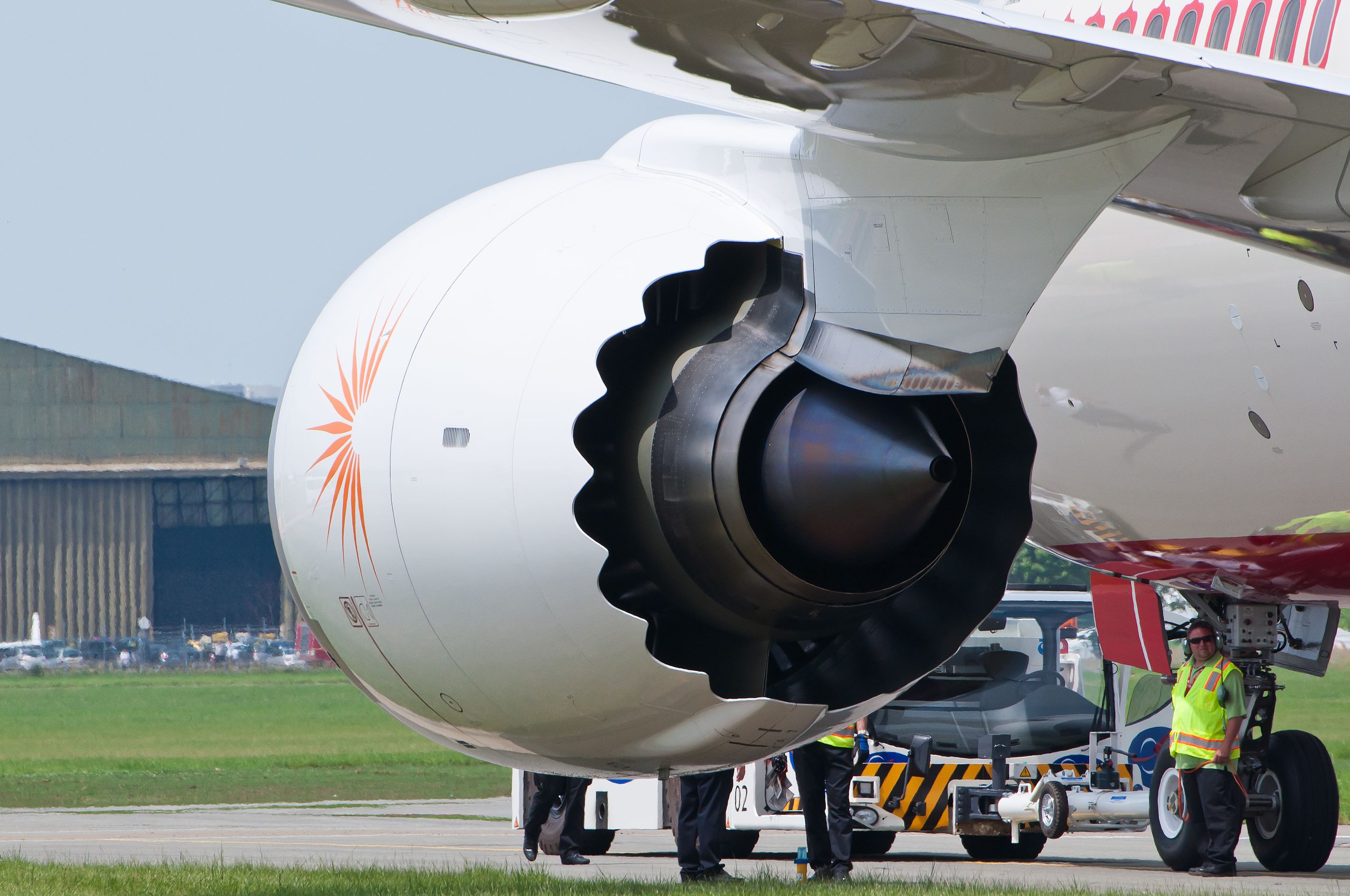
Modern aircraft engines are designed to deliver optimal thrust at different phases of flight. The maximum propulsive efficiency of a jet engine is limited by how much heat engine components can withstand. With internal temperatures reaching upwards of 2,000 °C, aircraft engines require the use of advanced materials and efficient cooling techniques.
The hottest components of a jet engine
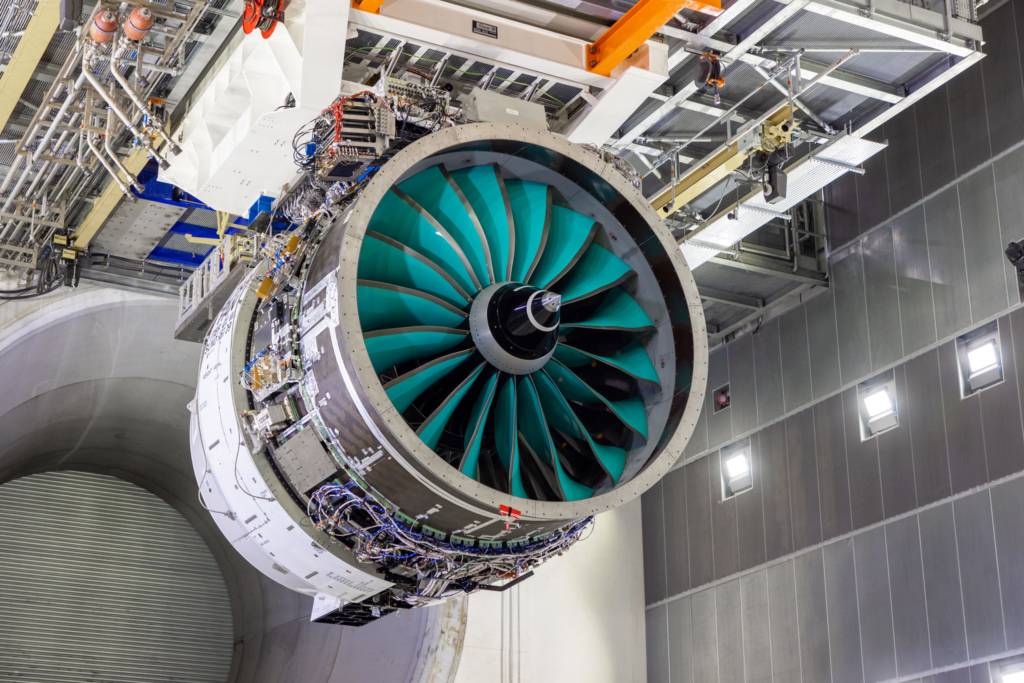
The engine core featuring a high-pressure (HP) compressor and combustor is one of the hottest sections of a jet engine. The incoming air is compressed by the compressor stages and heated up for combustion. Hot gases expand during combustion, massively increasing temperatures in the combustor.
According to Rolls-Royce, “The combustion gases generated during this process expand explosively in the direction of the turbine. While this is going on, temperatures of up to 2,300 °C are generated in the combustor, equivalent to half the temperature of the sun’s surface.”
Energy generation during the process is transferred to the turbines. The HP turbine nozzle is the hottest component of a jet engine, requiring advanced materials and efficient cooling techniques. Rolls-Royce states that “if the structure were not continuously aerated by a sophisticated system of laser-drilled cooling holes introducing air from the compressor, it would melt.”
Cooling of internal components
The internal components of an engine are primarily cooled by bleed air from the compressor. Depending on the compressor stage, relatively colder bleed air is used to cool bearing compartments, the combustor, and the turbine components.
Turbine blades are designed with precision holes in various areas (leading edge, tip cap, trailing edge, etc.) to allow air to circulate during operation. As some of the hottest components, turbine blades generally employ three types of cooling techniques.
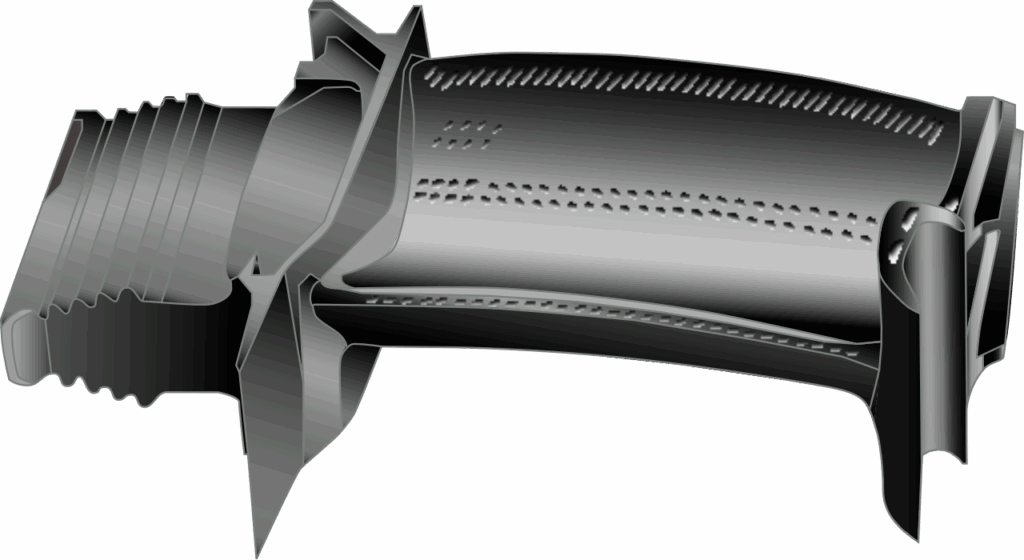
1. Internal convection cooling: A heat transfer method where the surrounding boundaries of the blades interact with the low-temperature air, causing it to cool.
2. Impingement cooling: High-pressure air is sprayed onto the inside of the blade surface at a specific velocity, thereby reducing its internal temperature.
3. Film cooling: Tiny holes on turbine blades allow cooling air to seep through, creating a thin film around the surface. As a protective measure, the thin cooling film limits excessive temperatures.

Engine bearings are cooled by means of lubrication – a continuous supply of cooled engine oil allows bearings to function within the allowed temperature limits.
Cooling of engine externals and accessories
What better method than using ambient air to cool external components of the engine? The secondary bypass air is used for cooling of the nacelle, core compartment, ignition leads and tubes, and turbine active clearance control systems. The cooling air is extracted through multiple variable bypass valves and directed to the cooling manifolds for distribution.
The engine accessory gearbox powers critical systems such as the starter, generator, fuel control unit, and oil pumps. The gearbox is connected to the high-pressure shaft, handling approximately 500 horsepower depending on the engine type.

Typically, oil in the gearbox is used for cooling the accessories. Oil passages within the accessories allow the flow of cold oil during operation. Multiple fuel/oil heat exchangers cool the resultant oil before circulating it back to the internal parts of the accessories.
Advanced technologies such as thermally-resistive materials, protective coatings, and innovative cooling techniques increase the propulsive efficiency of the aircraft engine.
Featured image: Julian Herzog / Wikimedia Commons