HAL’s Unmanned Kiran completes maiden flight in India’s collaborative combat aircraft programme
India’s Hindustan Aeronautics Limited (HAL) has successfully carried out the maiden flight of its Unmanned Kiran aircraft, marking a key step in developing the country’s

October 28, 2025
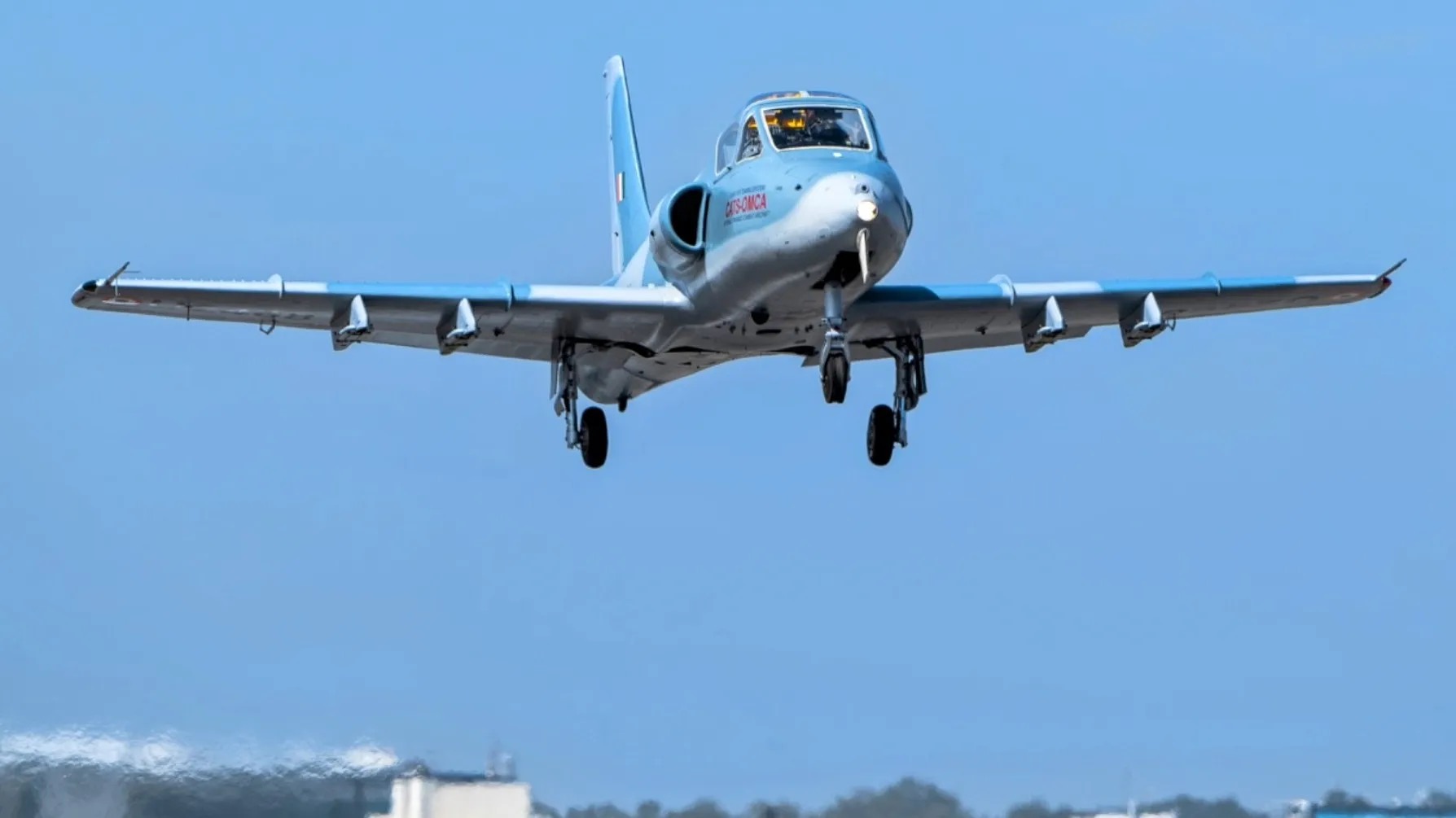
India’s Hindustan Aeronautics Limited (HAL) has successfully carried out the maiden flight of its Unmanned Kiran aircraft, marking a key step in developing the country’s Combat Air Teaming System (CATS).
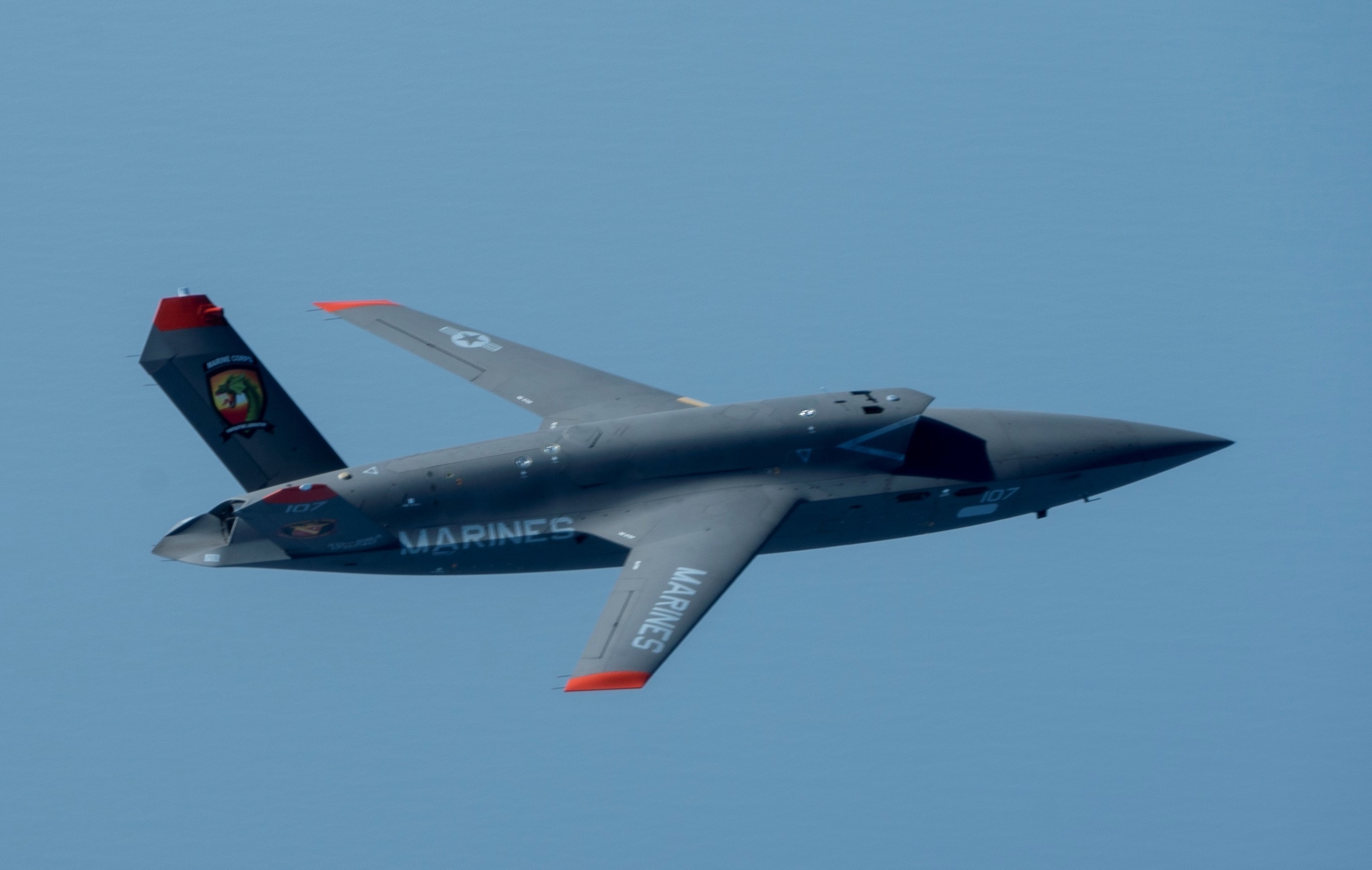
The flight represents a turning point in India’s bid to build a family of advanced unmanned combat aircraft that can operate alongside fighter jets, much like the American MQ-28 Ghost Bat and XQ-58 Valkyrie.
According to an HAL official, the recent flight of the Unmanned Kiran—an adapted version of the Indian Air Force’s (IAF) long-serving Kiran Mk-II jet trainer—signals a new phase for India’s defence aviation sector. “It also reflects a smart, cost-effective approach: turning an ageing trainer into a cutting-edge Optionally Manned Combat Aircraft (OMCA) capable of both piloted and autonomous operations,” the official said.
Read more: Inside HAL: how India’s aerospace giant is driving self-reliance from fighters to space
Inside India’s CATS: a new chapter in autonomous air combat
HAL’s Combat Air Teaming System is one of India’s most technologically ambitious military programmes. Its goal is to create a network of manned and unmanned platforms where a single fighter pilot can command a formation of loyal wingmen, each capable of surveillance, electronic warfare or strike missions.
The Unmanned Kiran serves as the vital testbed in this ecosystem, linking human pilots to next-generation drones such as the upcoming CATS Warrior and CATS Hunter.

The CATS Warrior, in particular, draws comparisons with the US-developed MQ-28 Ghost Bat and XQ-58A Valkyrie, both products of the US Air Force’s Skyborg programme and Boeing’s work in Australia. These efforts have demonstrated the potential for autonomous wingmen to extend the range, situational awareness and survivability of manned aircraft.
HAL’s strategy mirrors these international efforts in a more affordable and modular way. Rather than developing everything from scratch, it is re-engineering proven airframes and partnering with domestic firms such as NewSpace Research & Technologies and Tata Elxsi for digital design and prototype work. Rolls-Royce is also in talks with HAL to co-develop engines for the Warrior, adding a valuable international industrial partnership.
HAL Unmanned Kiran: converting India’s jet trainer into a combat drone testbed
Originally built in the 1970s, the twin-seat Kiran Mk-II was once a familiar sight across IAF airbases as a basic jet trainer. Production ended in 1989, but HAL engineers saw new potential in the platform.
By converting it into an unmanned test aircraft, HAL can experiment with artificial intelligence, data-link systems and mission autonomy without the cost of designing a new prototype.
The Unmanned Kiran can operate in both optionally piloted and fully remote-controlled modes. Early test flights include a safety pilot in the cockpit to monitor systems, but the long-term goal is complete autonomy.
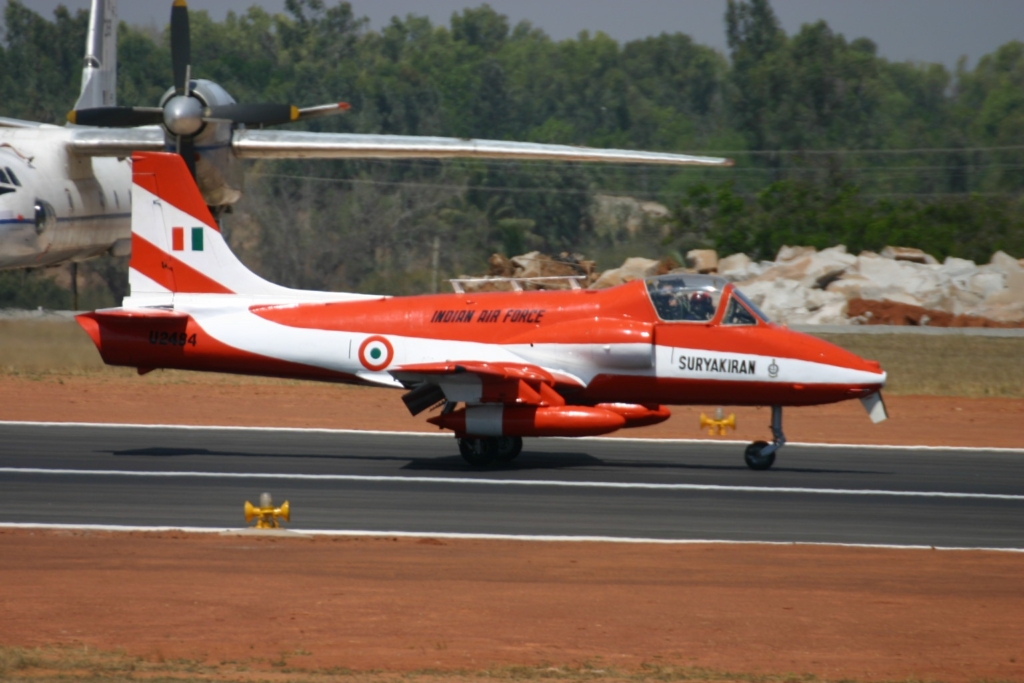
When operated from the ground, the aircraft is guided through secure data links jointly developed by HAL and the Defence Research & Development Organisation (DRDO), specifically its Centre for Artificial Intelligence and Robotics (CAIR).
The aircraft can mimic radar signatures, act as a decoy to confuse enemy defences, and perform reconnaissance or limited strike missions. By combining a robust legacy airframe with new avionics, HAL has created an affordable, flexible test platform that accelerates the development of future combat drones.
Expanding the ecosystem: CATS Warrior, Hunter and beyond
The Unmanned Kiran is just one node in HAL’s growing CATS ecosystem.
At its heart lies the CATS Warrior, India’s first stealthy Unmanned Combat Aerial Vehicle (UCAV). Designed to fly alongside the LCA Tejas and future AMCA stealth jet, it features a serpentine air intake, twin engines, and a blended-wing design optimised for low radar cross-section.
The Warrior’s payload includes an electro-optical/infrared suite, active electronically scanned array (AESA) radar, and electronic warfare systems for jamming and deception. It can carry two DRDO Smart Anti-Airfield Weapons (SAAW) internally and mount air-to-air missiles externally.
Meanwhile, the CATS Hunter is envisioned as a smaller, high-speed missile drone that could detach from the Warrior mid-flight to strike ground targets, adding another layer of autonomy and versatility to the network.
Within this architecture, a pilot in a Tejas or AMCA will act as the “mothership”, controlling several Warrior or Hunter drones simultaneously. Together, these systems could suppress enemy radar, defend the formation, or attack high-value targets—all while keeping human pilots out of the most dangerous zones.
How the Unmanned Kiran strengthens the Indian Air Force’s combat capability
For the Indian Air Force, the successful flight of the Unmanned Kiran represents more than a technical demonstration. It confirms HAL’s ability to integrate automation, mission computers and secure communications into existing aircraft.
Strategically, the timing is critical. The IAF continues to face a fighter squadron shortfall, even as regional threats from China and Pakistan become more complex. CATS offers a force multiplier, enabling a smaller fleet of manned fighters to perform more missions through swarming tactics and coordinated drone operations.
HAL to indigenize UAV datalinks in UHF & C band by 2027. These are for the Kiran UAV / OMCA & CATS Warrior
— Adithya Krishna Menon (@AdithyaKM_) July 15, 2024
Weather radar for ALH, Air to Air refueling probe assembly of LCA Tejas are among a total of 94 items to be indigenized by 2025 – 29 as part of 5th PIL. pic.twitter.com/VGQ1TTKTr4
As a decoy or electronic target, the Kiran can also draw enemy fire or confuse radar systems, allowing manned jets to strike from safer ranges.
Industrial momentum and self-reliance under Aatmanirbhar Bharat
The Unmanned Kiran project embodies the government’s Aatmanirbhar Bharat (Self-Reliant India) vision. By refurbishing legacy platforms and developing cutting-edge combat technologies domestically, HAL is reducing dependence on imports and strengthening India’s defence industrial base.
It also signals a maturing relationship between public and private players. HAL’s collaboration with NewSpace, Tata Elxsi, DRDO, and potential partners such as Rolls-Royce reflects a hybrid model of defence innovation increasingly common in advanced aerospace ecosystems.
If successful, the technology and architecture developed through CATS could later support exportable unmanned systems for friendly nations across Asia, the Middle East and Africa.
From Kiran to Warrior: what’s next for India’s CATS programme
Following the Unmanned Kiran’s successful maiden flight, HAL plans a series of follow-on tests through 2025 and early 2026. The next key milestone will be to validate communication links between the Kiran and the CATS Warrior, demonstrating India’s first manned-unmanned teaming in live flight.
The CATS Warrior, which completed its engine ground run in January 2025, is expected to make its maiden flight by late 2026.
Once fully operational, the CATS network could allow an IAF pilot to command multiple drones simultaneously, executing complex missions with unprecedented flexibility—an achievement that would place India firmly among the world’s leaders in autonomous combat aviation.