Evio emerges from stealth mode: Why Boeing and Pratt & Whitney are backing this hybrid-electric aircraft startup

December 12, 2025
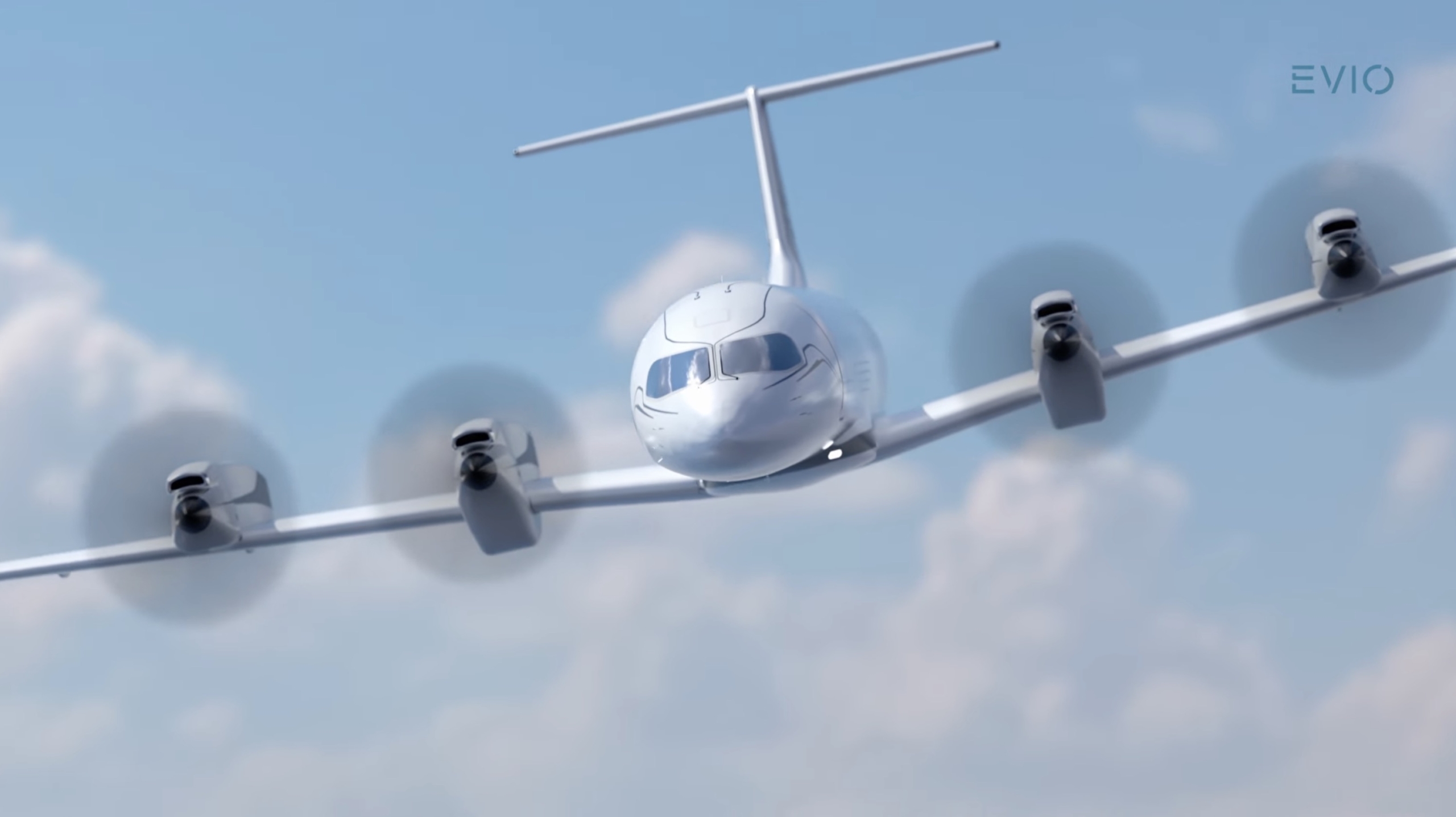
Regional-aircraft newcomer Evio has stepped into the spotlight with the launch of its 810 airframe, a hybrid-electric design targeting the underserved 50–100 seat market.
The Canadian start-up says it has secured conditional purchase agreements and options for 450 aircraft, with entry into service planned for the early 2030s.
After several years of development behind the scenes, Evio emerges with something few electric-aviation start-ups can claim: backing from Boeing, a propulsion collaboration with Pratt & Whitney Canada, and a governance board that includes leaders from major aircraft programmes.
It is a compelling combination, but not one that guarantees success in a field where many ambitious concepts have failed to clear certification, fundraising or engineering hurdles.
The company is positioning the 810, a 76-seat clean-sheet aircraft, as a response to rising fuel prices, tightening emissions regulation and a lack of modern options in the regional space, particularly as new-build turboprop and small-jet production has stagnated.
The aircraft will use what Evio describes as a “strong hybrid-electric design” capable of operating in both fully electric and hybrid modes.
Why aerospace majors are backing Evio’s hybrid-electric aircraft
Evio’s debut has attracted unusual attention for a regional start-up because two major aerospace players — Boeing and Pratt & Whitney Canada (P&WC) — have chosen to get involved. Their participation signals that the 50–100 seat segment may be the next proving ground for hybrid-electric propulsion.
For Boeing, the interest appears strategic rather than product-driven. Supporting Evio gives the manufacturer a low-risk route into early hybrid-electric technologies that could later inform future narrowbody development, while strengthening ties to Canada’s aerospace supply chain.
P&WC’s role is more technical. The company is drawing on its PT6E engine family to help shape Evio’s propulsion system, viewing the programme as a real-world opportunity to mature hybrid-electric integration, energy management and electric-assist architectures.
Evio’s leadership also helps explain the interest. The governance board includes former Skunk Works head Frank Cappuccio and CSeries/A220 programme lead Rob Dewar, giving the start-up a level of systems-engineering and commercial programme experience rarely seen in early-stage electric aviation.
Together, that mix of industrial backing and high-end pedigree makes Evio a more credible entrant than many electric-aviation ventures that came before it — even if significant technical and certification hurdles still lie ahead.
Introducing the 810 — Evio’s hybrid-electric regional airliner
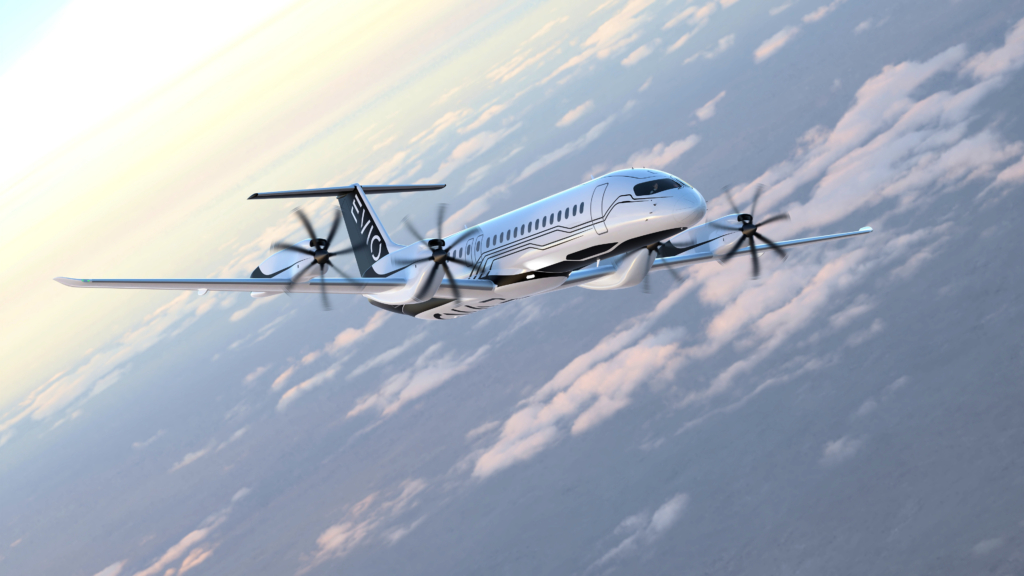
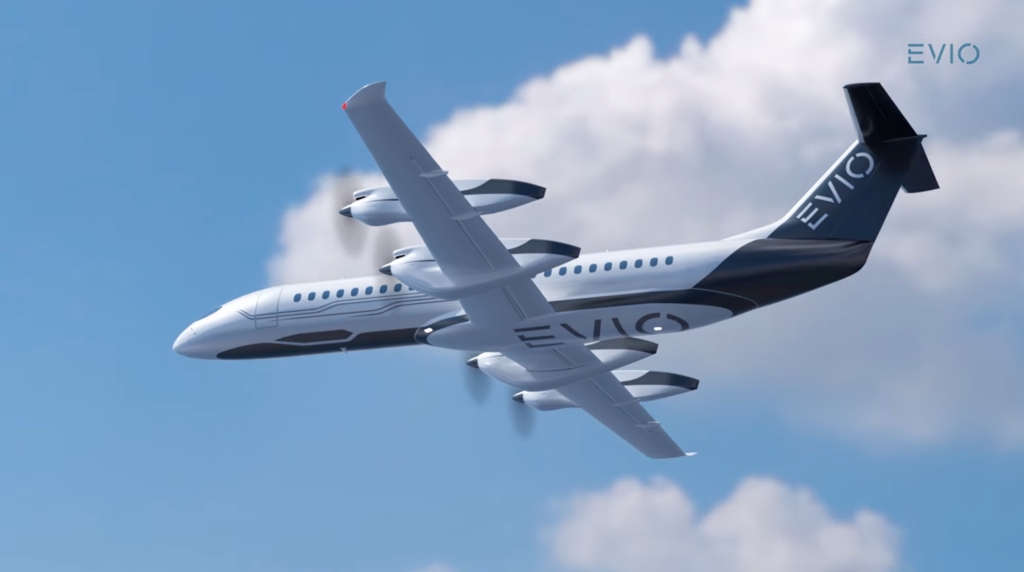
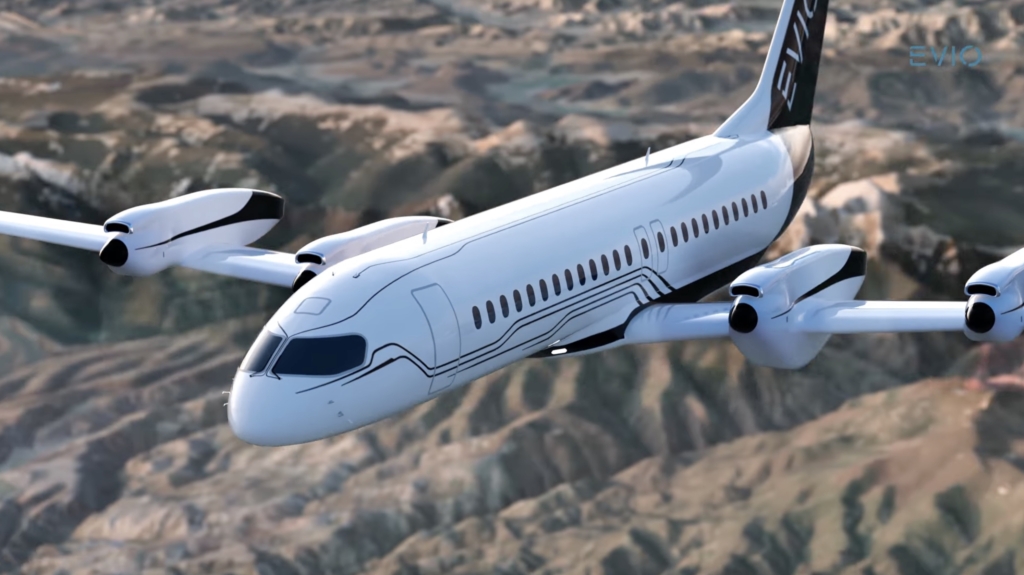
Evio’s 810 is a clean-sheet, 76-seat regional airliner designed around a strong hybrid-electric architecture. The aircraft is intended to operate in both fully electric and hybrid-electric modes, offering airlines lower fuel burn, reduced emissions and improved economics on short-haul sectors.
The company has released only high-level performance details so far, but says the aircraft has been engineered for:
- 50–100 seat market operations
- Short regional sectors under 500 miles
- Low operating costs through hybrid assist
- Flexible mission capability, including cargo and defence variants
Evio has not disclosed full propulsion specifications, but confirms that Pratt & Whitney Canada’s work draws on technologies from the PT6E engine family.
Scott McElvaine, vice-president of sales and marketing at P&WC, described the programme as an opportunity “to advance the potential of novel hybrid-electric aircraft architectures,” noting that the company intends to leverage the PT6E’s proven performance alongside decades of systems-integration expertise to improve fuel efficiency and mission flexibility.
Evio chief executive Michael Derman said the economic case is equally important, arguing that hybrid architecture is not being pursued for novelty but for measurable operator benefit.
“From day one, our focus has been on increasing profitability for regional operators and providing an exceptional passenger experience,” he said, adding that strong-hybrid systems offer airlines “meaningful efficiencies that support cost-effective, sustainable regional networks.”
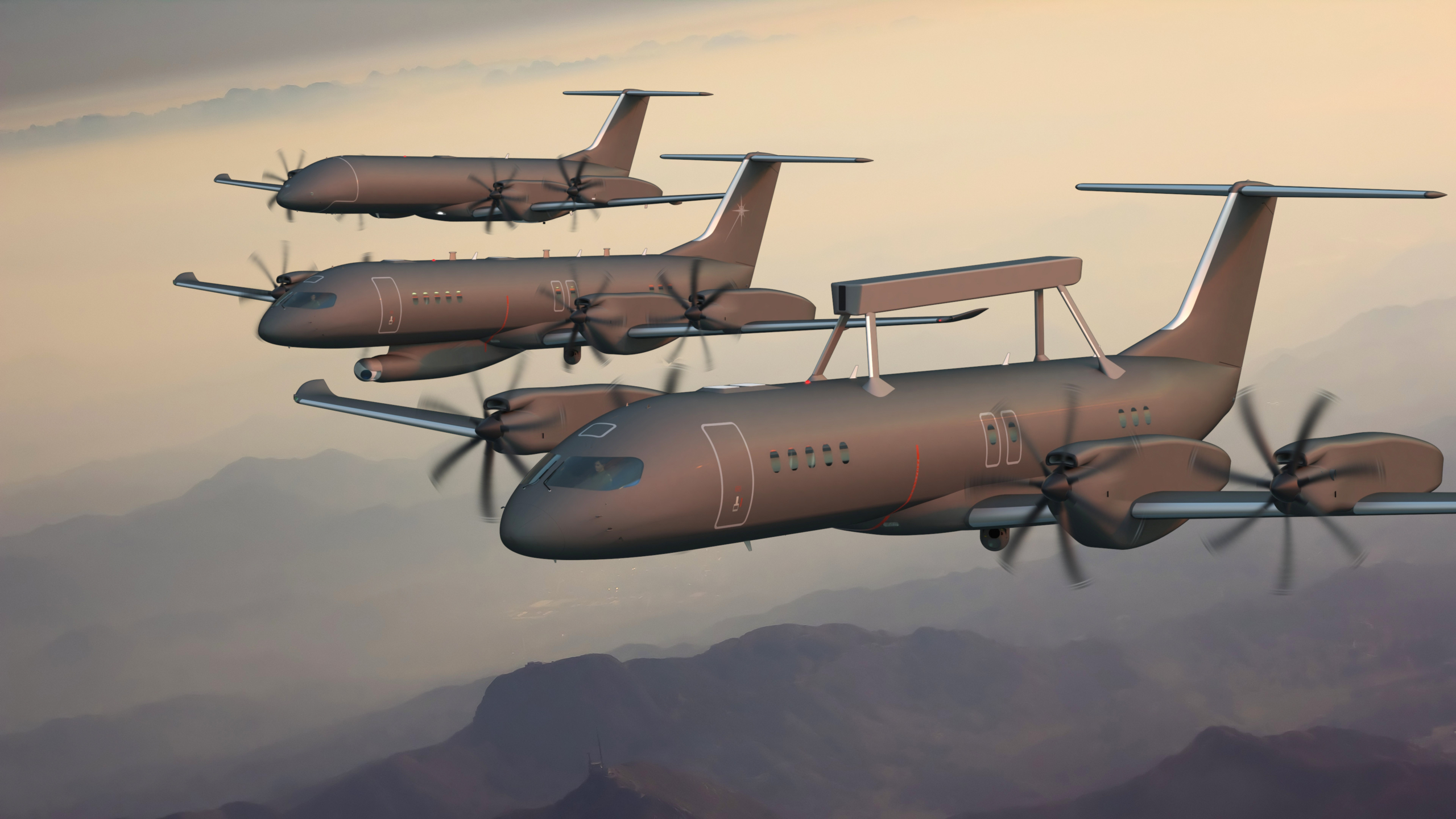
Beyond passenger operations, Evio is also exploring cargo and defence variants, reflecting a belief that the 810’s architecture can support multiple mission types as the design matures.
Why the 50–100 seat regional market is ripe for replacement
The launch comes at a moment of severe contraction in the regional fleet. Around 2,650 regional jets and turboprops have been retired in the past five years, while only 750 new aircraft have entered service.
Evio forecasts demand for more than 7,500 aircraft in the 50–100 seat segment over the next two decades, including the replacement of more than 5,000 ageing aircraft still flying today.
Industry analysts say the regional market is in need of a new airframe.
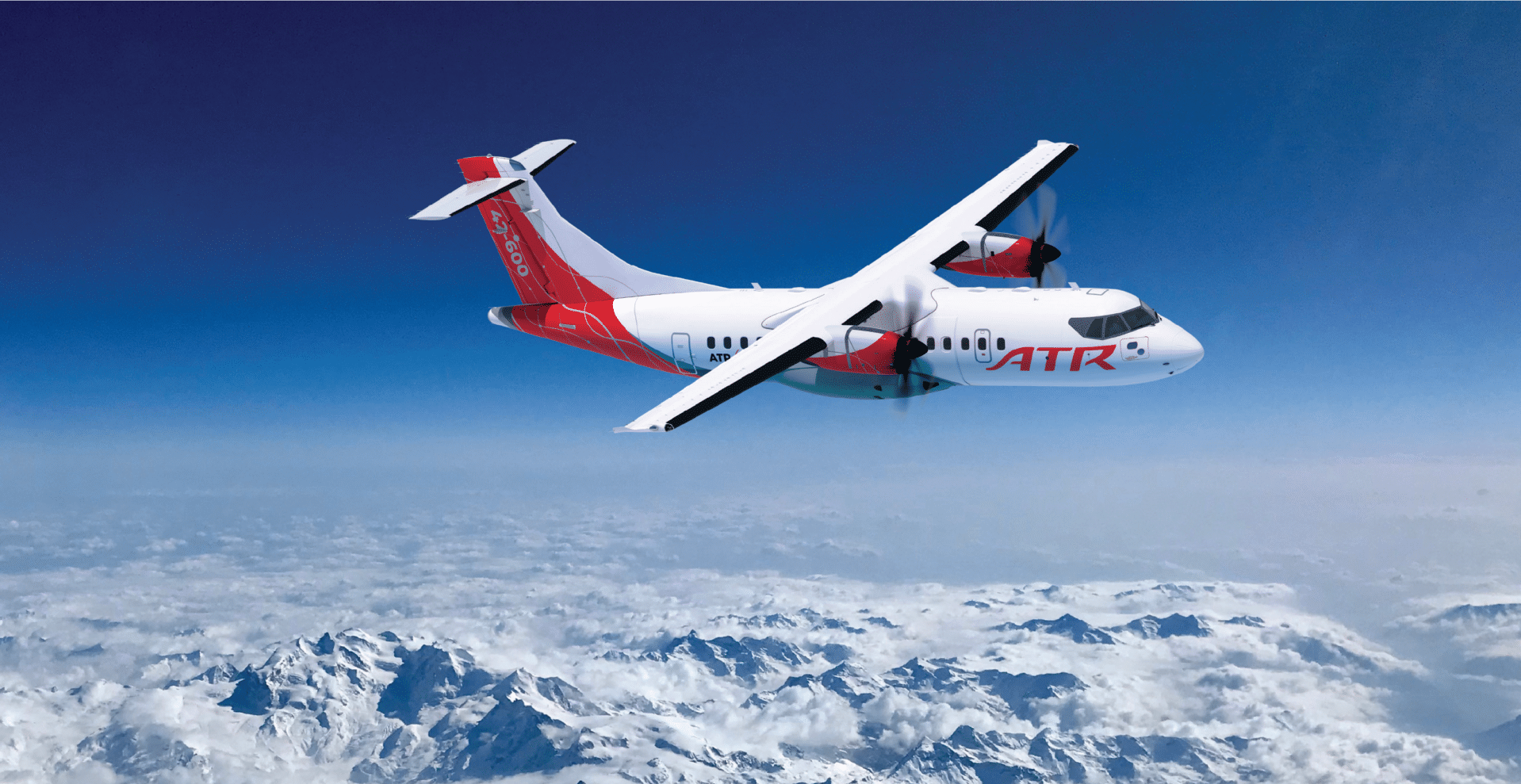
ATR remains the sole major producer of commercial turboprops following the end of new-build output for the De Havilland Dash 8-400.
While ATR’s aircraft have benefited from incremental upgrades over the years, the underlying design dates back several decades – though the type continues to perform reliably for operators.
OAG data shows regional flights under 500 miles still account for 47,000 flights per day, nearly half of global departures. Analysts say this imbalance between demand and available aircraft is precisely why new entrants are gaining attention.
“The challenge in the regional market is not demand, but rather the lack of a modern, economical solution,” says Richard Aboulafia, managing director at Aerodynamic Advisory, who has reviewed the programme. “From what I have observed from their programme review, EVIO appears well-positioned to disrupt the short-haul market with a game-changing solution.”
How Evio compares in the hybrid-electric regional aircraft race
Evio enters a regional market with several hybrid-electric contenders, though few directly match its size or timeline.
Heart Aerospace continues work on its ES-30, a 30-seat hybrid-electric aircraft aimed at shorter regional missions. Heart had planned an experimental flight of its Heart X1 all-electric demonstrator in 2025 at Plattsburgh International Airport, though an announcement on the completion of this is notably absent.
Another entrant is Maeve Aerospace, which is advancing a hybrid-electric regional jet, backed in part by a partnership with Delta Air Lines.
European start-up MAEVE is designing its 80-seat regional jet, to be called the Maeve Jet MJ500. The aircraft design aims to blend narrowbody comfort and economics with hybrid propulsion.

The EU’s HERA project—a large research consortium aiming for a 50–100 seat hybrid-electric demonstrator by the mid-2030s—illustrates the technological ambition in this space, but remains a pre-commercial initiative.
On the conventional side, Germany’s Deutsche Aircraft is advancing the D328eco, a 40-seat next-generation turboprop expected to enter service in the second half of the decade. While not a competitor in size or propulsion, it reflects a broader industry movement toward cleaner, more efficient regional aircraft.
What distinguishes Evio is its attempt to bring hybrid-electric propulsion to a larger regional category, a scale at which no aircraft has yet achieved certification.
The challenges ahead for Evio’s hybrid-electric 810
Evio’s industrial backing and governance pedigree give it a stronger foundation than many electric-aviation start-ups, but the real test lies ahead.
Certification of hybrid-electric propulsion at this scale, supply-chain development and integration of new powertrain technologies will determine whether the 810 becomes a viable regional aircraft or another ambitious concept that struggles to reach the finish line.
For now, Evio has emerged as one of the most credible new entrants in a market hungry for modern solutions — but with a long journey still ahead.
Featured image: EVIO