Achievement unlocked: Eve eVTOL makes its first flight in Brazil

December 19, 2025

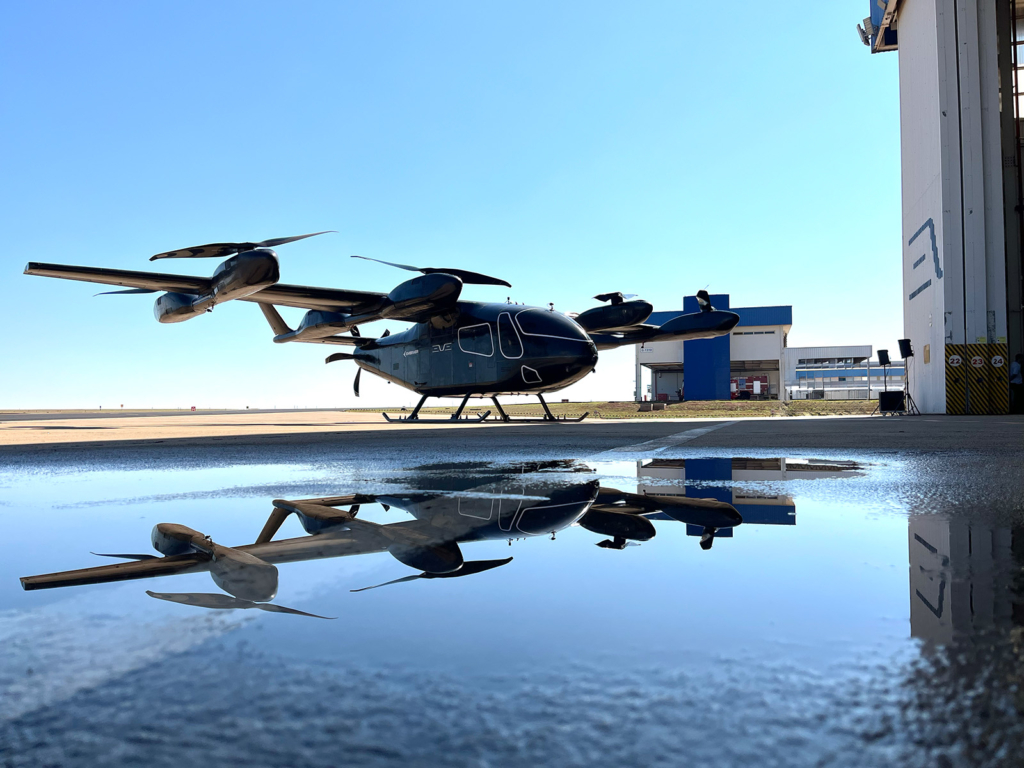
Eve Air Mobility has completed the first flight of its full-scale electric vertical take-off and landing aircraft (eVTOL), marking a major milestone for Embraer’s advanced air mobility subsidiary as it enters the flight-test phase of its certification programme.
The uncrewed prototype flew for the first time on 19 December at Embraer’s test facility in Gavião Peixoto, São Paulo state. The initial sortie focused on a controlled hover and was designed to validate the integration of the aircraft’s core systems, including its fly-by-wire flight controls and fixed-pitch lifter rotor architecture.
The flight represents the transition from ground and systems testing into a progressive flight-test campaign, with Eve planning to gradually expand the operating envelope through 2026. This will ultimately include transition flights from vertical lift to wingborne cruise, a critical step for validating the aircraft’s overall configuration.
Eve’s first flight: The moment everyone has been waiting for
Eve had previously said that the company hoped for a first flight before the end of the year or early in 2026. With 13 days of 2025 remaining, Eve has successfully met this milestone, putting it in a strong position to continue progressing next year.
“Today, Eve flew,” says Johann Bordais, chief executive of Eve Air Mobility. “This is a historical milestone for our employees, customers, investors and the entire ecosystem,” he said. “This flight validates our plan, which has been executed with precision to deliver the best solution for the market. We were able to capture high-fidelity data that will allow us to move forward with safety and confidence towards the certification path.”

According to Eve, the hover flight allowed engineers to exercise the aircraft’s control laws, assess the integration of its eight electric lifters and evaluate key performance parameters such as energy management, dynamic response and noise characteristics.
“The prototype behaved as predicted by our models,” said Luiz Valentini, Eve’s chief technology officer. “With these data points, we will expand the envelope and progress toward transition to wingborne flight in a disciplined manner, ramping up to hundreds of flights throughout 2026 and building the knowledge required for type certification.”
Eve will build 6 confirming prototypes for the eVTOL test campaign
Eve plans to manufacture six conforming prototypes to support the full flight-test campaign. The company is working with Brazil’s civil aviation authority, ANAC, as its primary certifying regulator, while also engaging with validating authorities, including the US Federal Aviation Administration and the European Union Aviation Safety Agency.
The company is targeting type certification, first customer deliveries and entry into service in 2027, placing it among a growing group of eVTOL developers attempting to move from demonstrators into certifiable aircraft programmes.
From a product perspective, Eve says the initial flight confirms its focus on operational simplicity and reliability, key selling points for operators planning high-utilisation urban and regional missions.
“This flight gives the product a clear green light to advance what matters to operators: reliability, efficiency and simplicity,” said Jorge Bittencourt, Eve’s chief product officer. “We validated critical elements, from our lifter architecture to aircraft flight mechanics, and now we move into the flight-test phase, aiming to advance the product maturity.”
Eve’s Embraer backing gives its eVTOL a solid foundation
Eve continues to lean heavily on Embraer’s five decades of experience in aircraft certification, manufacturing and global aftermarket support. That industrial backing remains a central pillar of the programme as the company seeks to differentiate itself in an increasingly crowded advanced air mobility market, where many concepts have yet to reach full-scale flight.
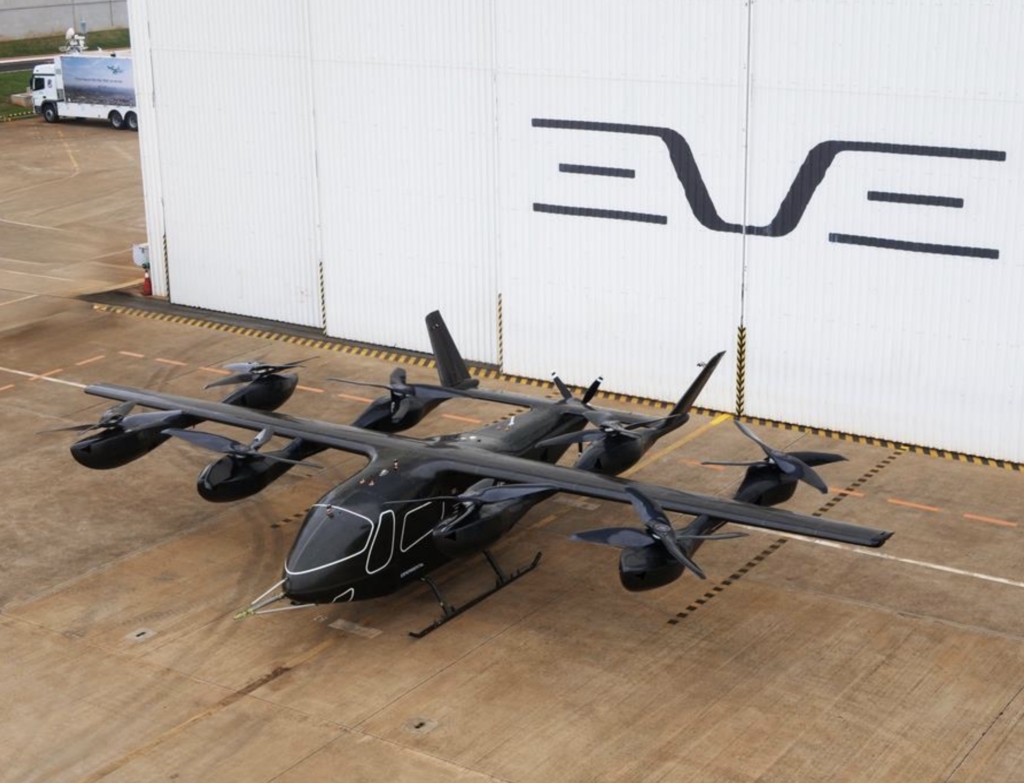
With its first prototype now airborne, Eve’s next challenge will be maintaining momentum through an intensive 2026 test campaign, while keeping its 2027 certification ambitions on track in a regulatory environment that remains cautious but increasingly engaged with eVTOL technology.
Featured image: Eve Air Mobility