What is ASDE-X and why it matters in the LaGuardia Air Canada crash investigation

March 29, 2026
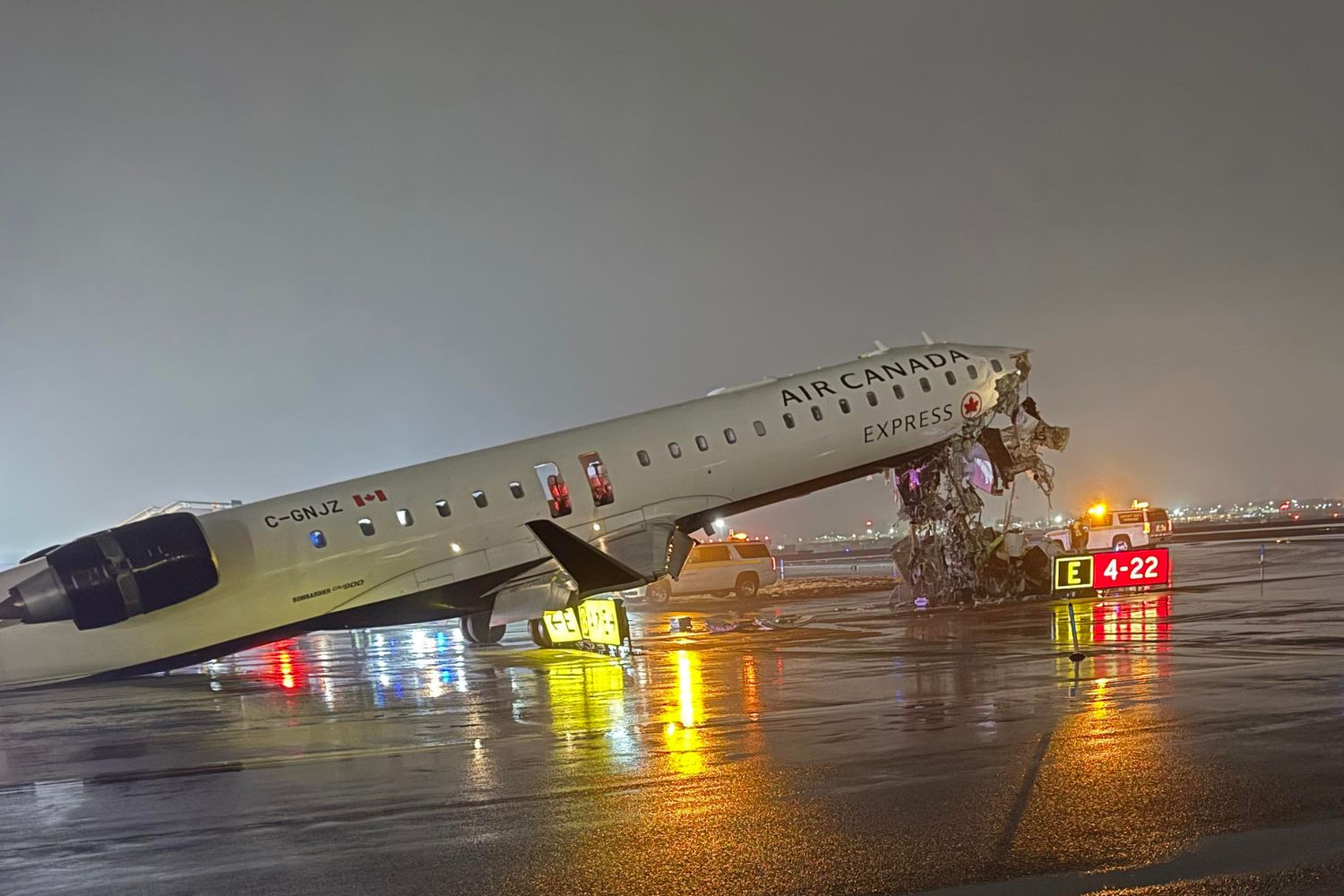
Investigators probing the fatal runway collision between an Air Canada Express regional jet and an airport firefighting vehicle at LaGuardia Airport are examining the role of a key airport surface-monitoring system known as ASDE-X.
The accident occurred shortly before midnight on March 22 when a Bombardier CRJ900 operating as Air Canada Express Flight 8646 collided with an airport rescue and firefighting vehicle while landing on Runway 4.
Officials from the National Transportation Safety Board (NTSB) said during press briefings on their investigation that the ASDE-X system — designed to help air traffic controllers detect potential runway conflicts — did not generate an alert before the crash.
While investigators emphasise that the probe remains in its early stages, ASDE-X’s performance has already become a central part of the technical analysis.
What ASDE-X does
ASDE-X — short for Airport Surface Detection Equipment, Model X — is a runway safety system used at major US airports to monitor aircraft and vehicle movements on the ground.
The system integrates information from surface radar, multilateration sensors and aircraft transponder signals to provide controllers with a detailed display of traffic moving on runways, taxiways and other parts of the airfield.
In addition to improving situational awareness, ASDE-X can generate automated alerts when it detects a potential conflict between aircraft or vehicles on or near a runway.
These warnings give controllers additional time to intervene before a runway incursion or collision occurs.
NTSB: ASDE-X did not generate a warning
During a briefing following the first full day of investigation, NTSB chair Jennifer Homendy said the agency had requested a replay of the system display and a technical analysis from the Federal Aviation Administration.
“Yesterday, I mentioned that we requested from the FAA the ASDE-X replay of the event — that is a replay of the display of information that would have been available in the tower cab,” she said. “We also asked the tech centre for the analysis of ASDE-X.”
That analysis showed the system did not generate a conflict alert before the collision.
“I’m going to quote the analysis here,” Homendy said. “‘ASDE-X did not generate an alert due to the close proximity of vehicles merging and unmerging near the runway, resulting in the inability to create a track of high confidence.’”
In other words, the system could not reliably establish a consistent track of the vehicles, preventing the aircraft controller from properly detecting vehicles approaching the runway. Since the system also did not issue a warning alert, the controller did not notice the firetruck’s runway incursion until just seconds before it collided with the CRJ900.
The firefighting vehicle involved in the crash had no transponder
Homendy also confirmed that the vehicle involved in the collision did not have a transponder installed, and explained why that can affect the performance of surface-tracking systems.
“In order for ASDE-X to work well, you have to know where ground vehicles and aircraft are,” she said.
Without transponder data, controllers rely more heavily on radar returns to identify ground vehicles, which provide less detailed tracking information.
Vehicles appeared as “two blobs” on the taxiway
Homendy also described what investigators saw when reviewing the system replay.
“I saw the replay, and there were two targets… because there’s no transponder, you have radar,” she said. “So two targets with radar returns on taxiway Delta. What it looks like on a replay are two blobs on track on taxiway Delta.”
Homendy said the replay did not clearly show the vehicles crossing in front of the aircraft on the runway. Investigators are continuing to analyse the replay data alongside other evidence and continuing to verify how the system performed during the incident.
“We do also know from the replay that the runway status lights were functioning,” she said, adding that investigators still need to confirm the replay with FAA technical teams.
ASDE-X and ASSC systems should prevent runway collisions
NTSB chair Jennifer Homendy has previously advocated for the ASDE-X and ASSC systems as important safeguards against runway accidents. ASSC (Airport Surface Surveillance Capability) is a newer system that performs a similar function but is designed for airports without the surface radar infrastructure used by ASDE-X.
Speaking at a Federal Aviation Administration Safety Summit in 2023, Homendy said the aviation industry should expand the use of such technology. Her remarks included concerns about an increase in serious runway incursion incidents across the United States.
“We held a forum in 2017 on runway incursions. The FAA, industry, and labor made presentations, with the FAA highlighting pilot deviation and ATC communications as the key concerns,” Homendy said. “We came out of that forum with everyone calling for better data and implementation of technology to prevent runway incursions, like ASDE-X or ASSC.
“Today—6 years later—we have the data. There are roughly 1,500 to 1,700 runway incursions annually. The vast majority are low- or no-risk. But it only takes one. And we have the technology. But ASDE-X is only at 35 airports. ASSC is at 8.”
Homendy comments on why LaGuardia ASDE-X did not prevent the Air Canada crash
During the press briefing on the Air Canada crash, a reporter noted that Homendy had repeatedly said that the adoption of ASDE-X would prevent a critical event. “How upset does it make you that it’s clear that it did not work in this scenario?” the reporter asked.
Homendy replied: “Well, the question is, how upset does it make me that ASDE-X didn’t work because we’ve repeatedly recommended ASDE-X. In order for ASDE-X to work well, you have to know where ground vehicles and aircraft are. So in this case, the ground vehicle did not have a transponder, and it would have been helpful. When you have a radar target, it does not provide you with the information you need, as it would for an aircraft as a controller.”
In other words, ASDE-X can only be as effective in preventing incidents as the quality of information available for the controller to process.
NTSB investigation into deadly Air Canada crash ongoing
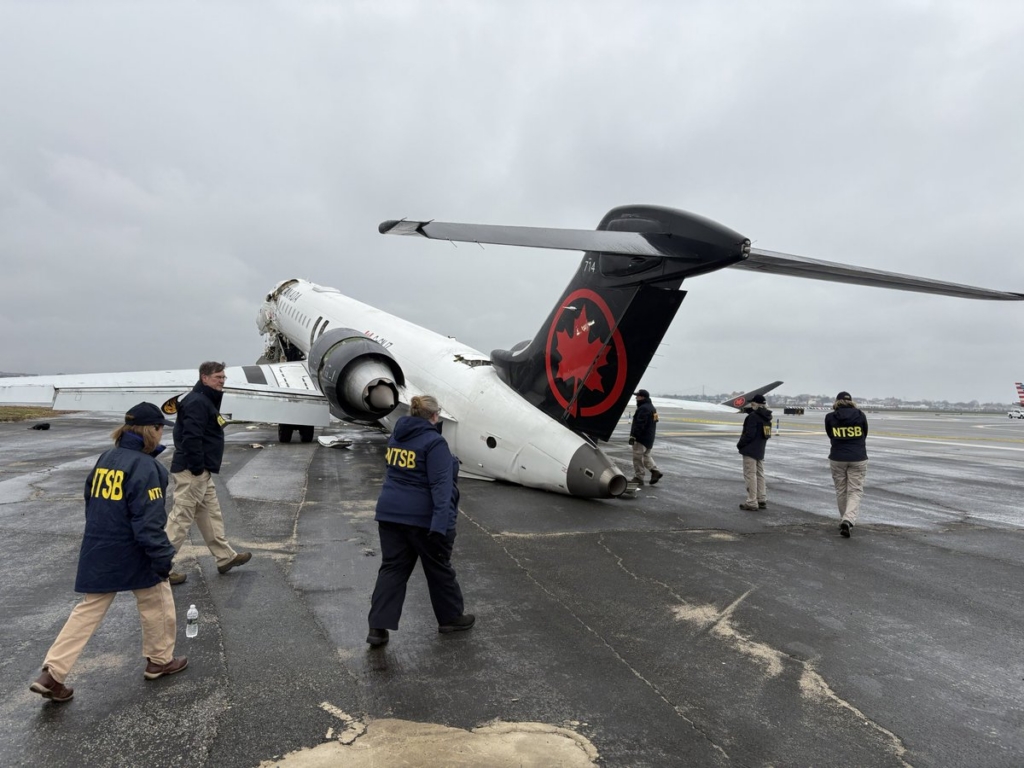
The NTSB is still in the preliminary stages of its investigation into the tragic accident at LaGuardia Airport. It will combine the ASDE-X analysis with cockpit recordings, air traffic control communications and interviews with controllers and emergency responders as the investigation continues. Investigators will likely delve into the lack of a transponder on the ground vehicle involved in the accident and whether other ground vehicles at the airport have transponders installed.
The NTSB’s preliminary factual report on the crash is expected in about 30 days, though publication of the full investigation and its conclusions could take up to two years.
Featured Image: bradysego12 / X