Could we see more self defence systems on commercial aircraft? ‘Unfortunately, yes’ says DIRCM innovator Elbit
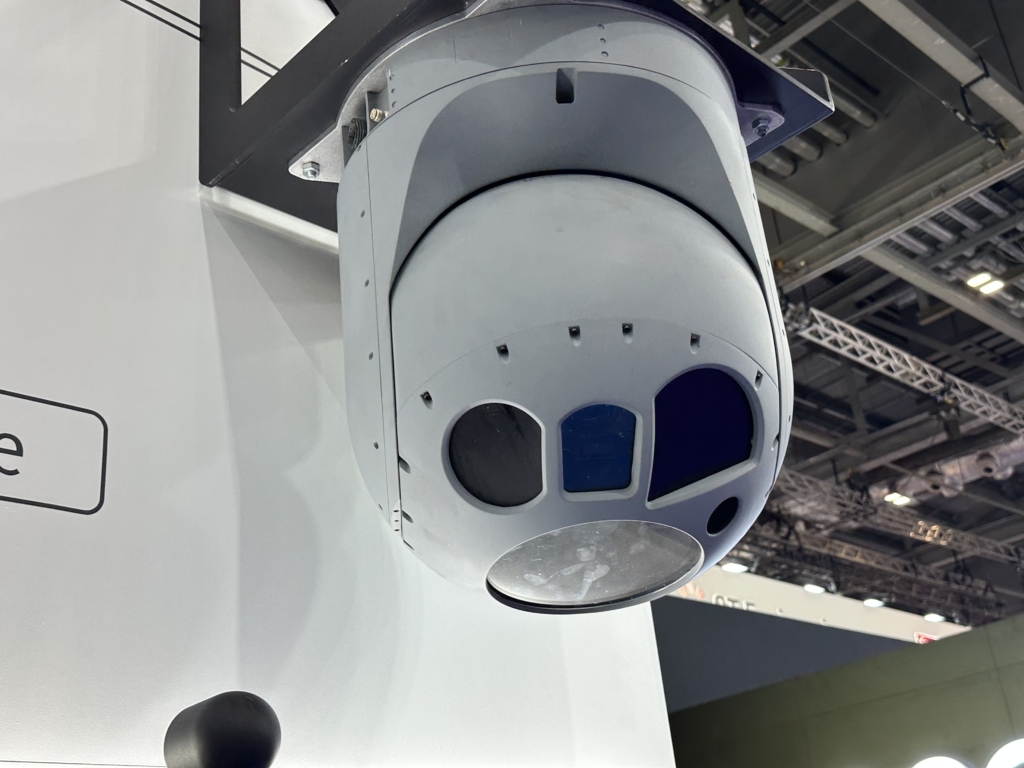
At this year’s DSEI show in London, Elbit Systems UK displayed an array of unassuming black boxes, sensors and turrets. Together, these devices form the MUSIC DIRCM system, a compact self-defence product for aircraft of all shapes and sizes.
DIRCM is already in use today by all of Israel’s civilian airlines. Numerous military platforms, VIP airliners and even helicopters are benefiting from the quiet protection the system offers, and new customers are joining all the time.
Yet, despite a proven threat to passenger airliners from ground-launched missiles and an increasing concern around drone interference, the penetration of such self-defence systems in commercial aviation is limited to Israeli carriers.
Given current geopolitical tensions, AGN asked Elbit Vice President of Business Development and Marketing, Yoel Link, whether they foresaw a greater take-up of the technology in the commercial sector.
“Unfortunately, yes,” he replied, without hesitation. “I’m not saying I want to see that happen; we’re not looking for more business. But Israel decided to use DIRCMS out of necessity, and other nations or airlines could take that decision too.”
That stark admission reflects the uncomfortable reality: the proliferation of shoulder-launched missiles (MANPADS) and the increasing use of laser- and radar-guided threats are putting airliners at risk.
Inside DIRCM: Giving aircraft self-defence
At the heart of Elbit’s offering is an electronic warfare (EW) controller, the “brain” that manages incoming threat data and decides on the right response in milliseconds. Around it sits a family of detection systems:
- Radar warning receivers pick up hostile radars locking on.
- Laser warning systems detect targeting beams from laser-guided weapons.
- Infrared missile warning systems spot the heat signature of shoulder-fired SAMs.
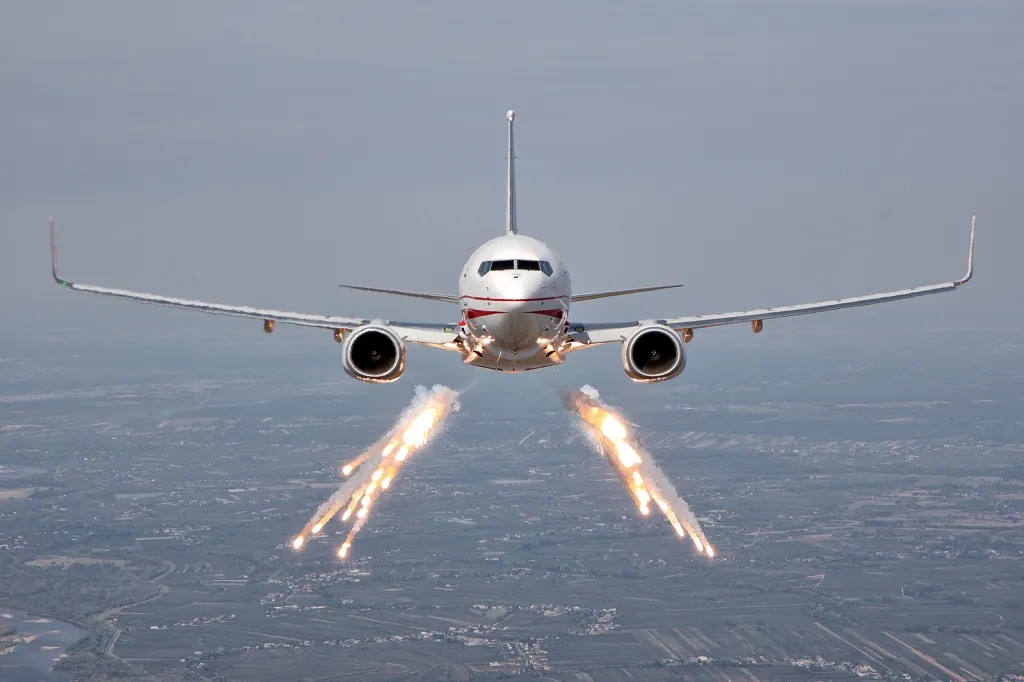
Once a threat is confirmed, the controller triggers countermeasures. Against radar-guided weapons, it deploys chaff; against heat-seekers, it fires flares. Both are time-honoured defences, but not foolproof.
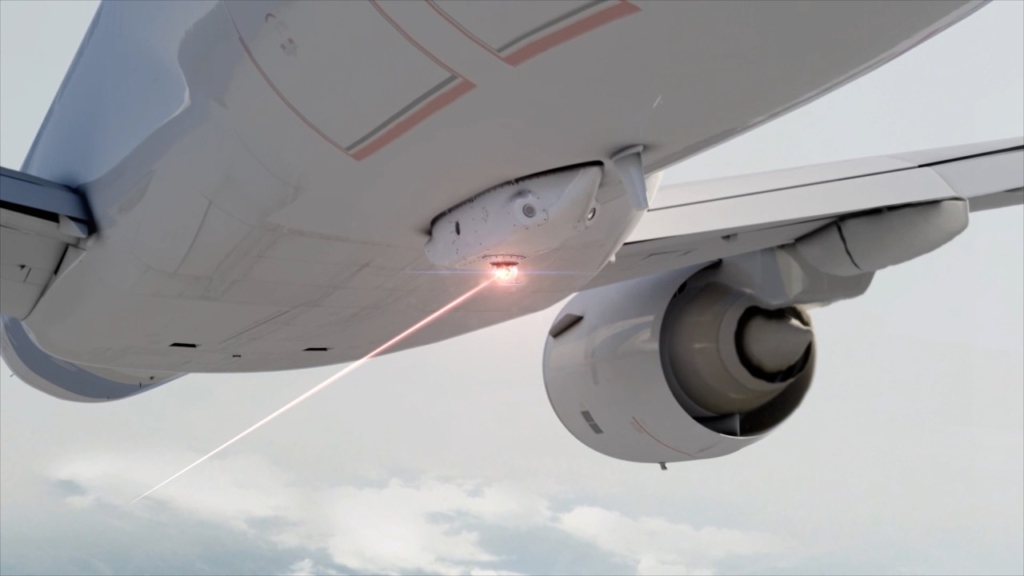
That is where DIRCM — directed infrared countermeasures — come in. Instead of just distracting a missile, a gimballed turret slews towards the incoming threat and fires a coded laser beam straight into its seeker head, blinding it and sending it off course.
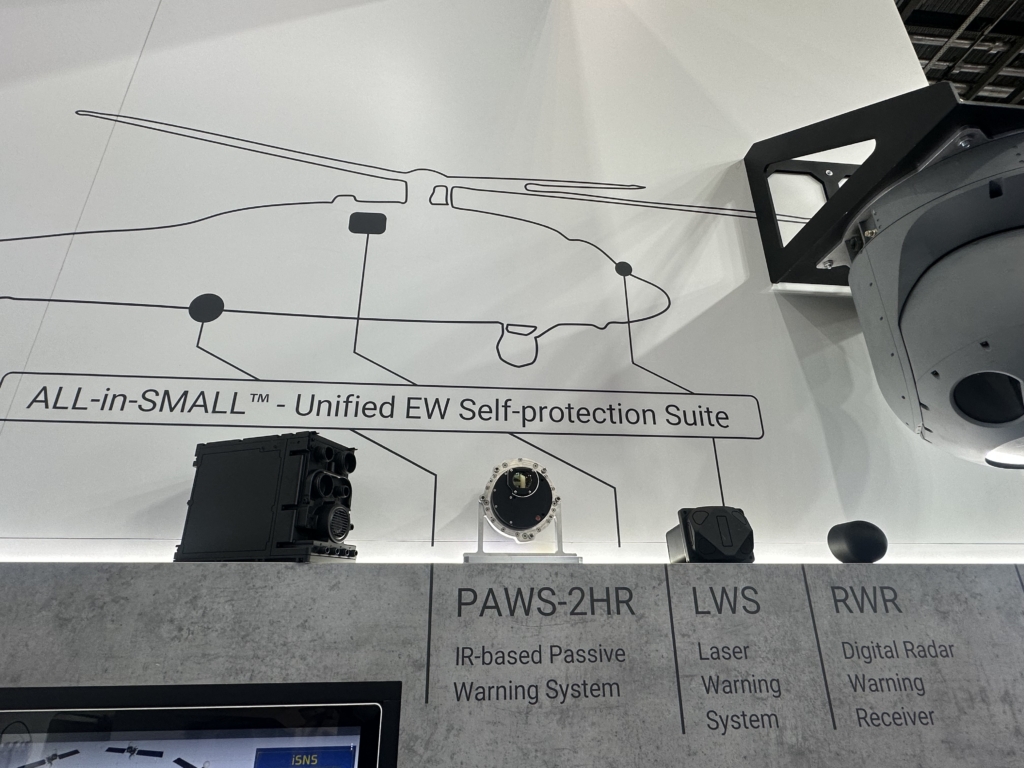
Elbit has developed a whole family of systems under its MUSIC brand:
- Mini-MUSIC: lightweight, sized for helicopters and smaller transports.
- J-MUSIC: distributed across large military platforms such as A330 MRTTs, C-130s and A400Ms.
- C-MUSIC: podded for civil and VIP fleets, combining missile warning sensors and DIRCM in one transferable package.
These systems are now installed across platforms from Apache and Black Hawk helicopters to NATO tankers, Embraer’s C-390 and even Israel’s commercial airlines.
Crucially, they operate automatically. A pilot may never know that the system has spotted a missile, locked on and jammed it. In fact, as Link stressed, that’s the point: “You don’t want an airline pilot making radical counter-manoeuvres on takeoff. The system just does its job.”
How many lives have been saved? Nobody knows
The history of DIRCM is rooted in a near miss. Two decades ago, an Arkia Airlines Boeing 757 was departing Mozambique when a MANPADS was fired at it. By sheer luck, the missile missed. In response, Israel worked with Elbit to develop what became the MUSIC suite.
Since then, the systems have intervened more than once. On 7 October 2023, terrorists fired missiles from inside Israel at aircraft. The missile warning systems automatically deployed flares, saving pilots who never even realised they had been under attack. Post-flight data analysis revealed what had happened.
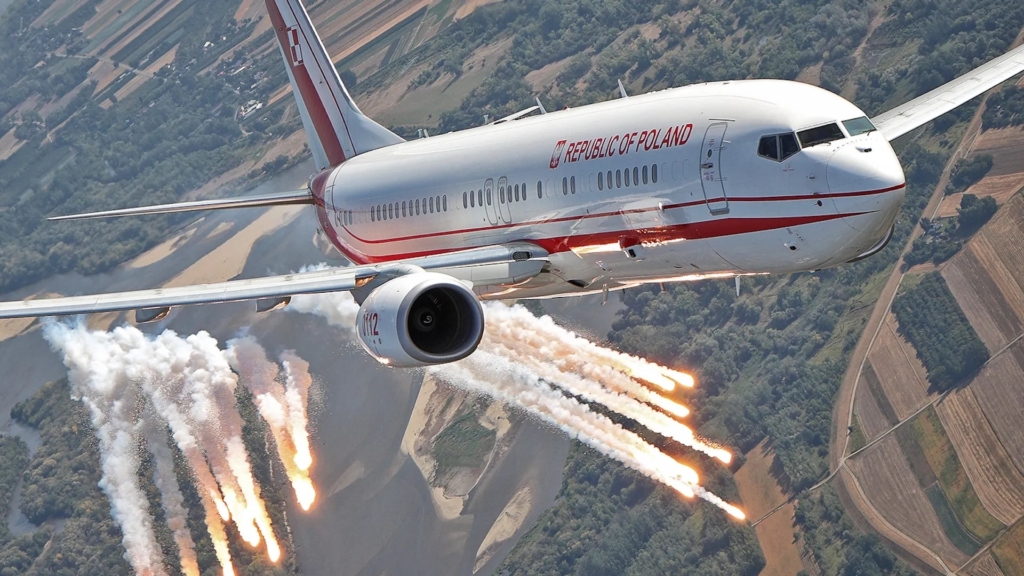
That’s the paradox of these technologies: they are designed to act invisibly. Pilots carry on with their checklists, passengers stay oblivious, and in many cases, no one knows until afterwards that a missile was deflected.
As Link put it, “That little box is doing a lot of things… It’s managing the entire suite, recording every threat, and sometimes protecting lives without anyone realising.”
Which means the true tally of lives saved may never be known.
Aircraft self-defence systems: Niche or necessity?
For now, commercial adoption remains limited. The systems add weight and cost, and the optics of fitting passenger jets with military-style defensive pods are not universally welcome. Regulators are cautious; airlines are reluctant to take on added expense without a clear and present danger.
But history suggests adoption follows tragedy. Poland equipped its VIP fleet after losing an aircraft carrying its president over Ukraine. Israel fitted its civil airliners after the Arkia incident.
“If one or two commercial airliners were to be brought down on takeoff by terrorists with MANPADS,” Link warned, “you would see the Boeings and Airbuses start to include these systems as standard.”
No one in the industry wants that moment to arrive. Yet as geopolitical instability grows, the case for invisible shields on more of the world’s airliners may become harder to ignore.
With thanks to Bartek Bera | Facebook | Instagram for the kind permission to use his images.